
Matcha cereal stays crisp in milk when piece thickness, bake or drying endpoint, cooling and bowl-life targets are designed together. A tiny baked piece can taste crisp when dry yet soften before a consumer finishes the bowl. Fix the cereal architecture first, then compare matcha grades in that same dough. AdoroHu supplies pure matcha powder rather than finished cereal; its matcha for baking page is a useful ingredient starting point.
This article covers small formed or cookie-style cereal pieces, not industrial extrusion and not granola clusters. The published recipe supplies a home-scale benchmark for dough, shaping and baking. Commercial teams still need their own process, safety and shelf-life evidence.
In short:
Key points:
- Control thickness and piece geometry before adjusting matcha.
- Measure both dry fracture and timed milk-bowl texture.
- Cool completely before packaging trials so residual heat does not distort crispness.
What does the Homemade Matcha Cereal reference establish?
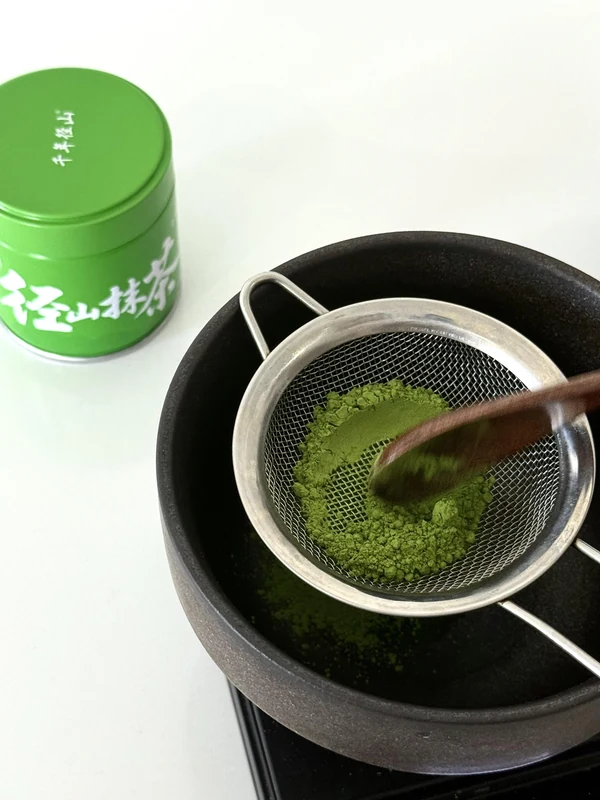
The Veggiekins reference establishes a six-ingredient, cookie-style cereal benchmark rather than an extrusion process. It combines almond butter, maple syrup and vanilla, then adds oat flour, sifted matcha and salt. The dough is rolled to roughly one-eighth inch, cut into small shapes or squares, baked at 325°F for 8–10 minutes and cooled completely.
Those quantities and conditions belong to that home recipe. They identify variables worth screening—binder, flour addition, thickness, shape, bake and cooling—but do not establish industrial throughput, lethality, shelf life or a universal matcha dose.
Key Takeaway: Use the reference as a formed-piece benchmark and preserve the boundary from extruded cereal and granola.
Should matcha be mixed into the cereal piece or applied later?
For this article’s small formed cereal, matcha belongs inside the dough when the goal is an even green piece with tea flavor through the bite. A later coating creates a different product: it changes surface sweetness, dusting, milk release and packaging behavior. That route deserves a separate coating brief rather than being treated as a minor adjustment.
| Route | Best use | Main tradeoff | First check |
|---|---|---|---|
| In-piece | Uniform flavor and color | Full bake exposure | Dough distribution and baked color |
| Surface dust | Fast aroma release | Rub-off and milk clouding | Package dust and bowl appearance |
| Bound coating | Strong surface signal | Added binder and moisture | Tack, set and bowl life |
Key Takeaway: Select one architecture before comparing powder lots; in-piece and coated cereal are different systems.
How should dough handling be controlled?
Dough handling should be controlled through a defined flour-addition endpoint, protected hold and repeatable sheet thickness. The reference adds part of the flour first, then more until a workable dough forms, and covers the dough with a damp cloth during cutting. In production, subjective “workable” language needs observable criteria.
Record dough mass, mixing sequence, rest time, sheet gap and scrap rework. Excess flour may reduce spread but increase fracture; excess binder can improve forming while extending milk softening. Compare the same dough before and after the longest expected forming hold.
Key Takeaway: Define workability by sheeting, cutting and rework behavior instead of adding flour until the operator feels finished.
Why do thickness and shape change crispness?
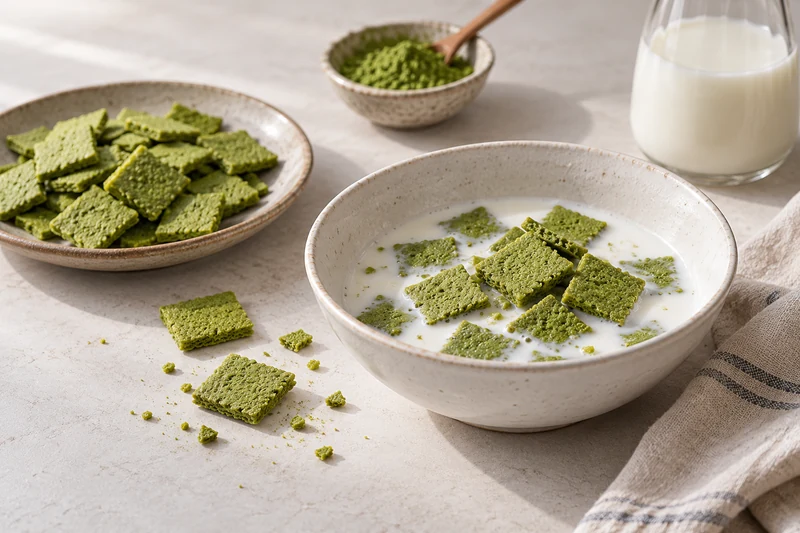
Thickness and shape change crispness because they control the distance moisture must leave and the amount of edge exposed during baking. The reference’s small stars and squares at about one-eighth inch offer a concrete home benchmark. A thicker center or rounded piece can retain more moisture even when the surface looks done.
Run a bounded geometry comparison with the same dough and tray position. Measure piece weight, thickness distribution, break force or a defined sensory fracture score, then repeat after milk contact.
| Trial | Changed variable | Keep fixed | Decision output |
|---|---|---|---|
| A | Reference sheet gap | Dough and bake | Baseline fracture |
| B | One alternate gap | Dough and bake | Dry and bowl-life difference |
| C | Square versus shaped piece | Thickness and mass target | Edge damage and yield |
Key Takeaway: Approve geometry from both fracture and yield, not from appearance alone.
How should the bake and cooling endpoint be defined?
The endpoint should include dry-piece structure, residual moisture behavior and performance after complete cooling. The reference bakes briefly and explicitly cools the pieces before storage. Packaging warm cereal can trap moisture and erase a crisp result that looked acceptable on the tray.
A commercial pilot should record oven load, actual product observations and cooling time to the packaging point. Do not copy the reference temperature and time into another oven as a validated setting. Compare center texture, edge color, breakage and package condensation after the intended cooling route.
Key Takeaway: Treat cooling as part of crispness development, not idle time after baking.
How can matcha dose be screened without hiding process defects?
Matcha dose should be screened only after one dough, thickness and bake route are stable. The home recipe uses two tablespoons in its stated small batch, which is a reference-specific quantity rather than a commercial recommendation. Changing powder and flour together would make any texture result ambiguous.
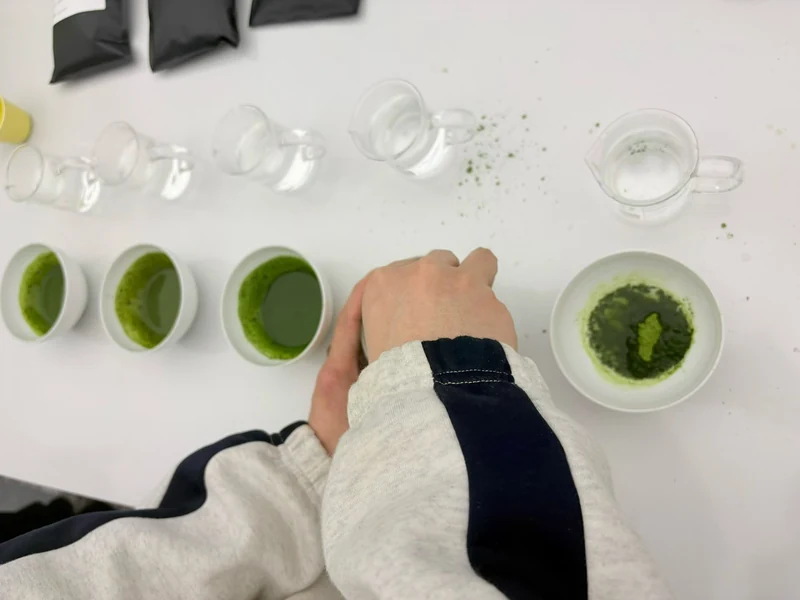
Use coded samples from one matcha lot at a baseline and adjacent test level chosen by the developer. Keep binder, flour, piece mass and bake fixed. Score bitterness, aroma, green color, dough handling and milk release. AdoroHu’s E-1/E-2 and O-1/O-2 are approved culinary tiers; higher numbers within each series indicate higher quality. Grade codes organize supplier samples, while the finished cereal trial decides fit.
Key Takeaway: Stabilize the piece first, then screen matcha level and grade without moving the rest of the formula.
How should crispness in milk be measured?
Crispness in milk should be measured at defined elapsed times and serving conditions, not by tasting one dry piece. Milk temperature, piece-to-liquid ratio, agitation and serving size all change hydration. Use the intended dairy or plant beverage because fat, protein and dissolved solids affect wetting.
A useful bowl-life protocol records initial fracture, the first acceptable bite and the point at which the piece becomes objectionably soft. Report the times as internal trial results, never as universal cereal claims. Also observe milk color and sediment, since fast green release may be desirable in one concept and a defect in another.
Key Takeaway: Define a consumer-relevant bowl window and test every candidate under the same milk conditions.
What do water activity and packaging tell the cereal team?
Water activity and packaging help explain moisture pickup, but one water-activity result cannot establish shelf life. FDA explains that water activity affects food stability. The finished cereal still needs product-specific work covering package barrier, seal, storage humidity, texture and applicable microbiological risks.
Test the actual filled package after complete cooling. Track net weight, package integrity, fracture, odor, color and the chosen stability measures across the intended route. Keep the reference’s refrigerated one-week home advice separate from any commercial label.
Key Takeaway: Use water activity as one measured input within a package study, not as a shelf-life shortcut.
Which allergens and controls need review?
The actual formula determines the allergen declaration and cross-contact plan. The reference contains almond butter and oat flour; almond is a tree nut, while other commercial versions may introduce wheat, milk or soy. Matcha itself is not one of the nine U.S. major allergens.
The FDA major-allergen guidance supports food-source labeling. Covered facilities also need appropriate written controls under 21 CFR 117.135. A gluten-free home-recipe description does not prove that another formula, ingredient supply or facility meets a gluten-free claim.
Key Takeaway: Review ingredients, suppliers, rework and shared equipment before making allergen or gluten claims.
What should a cereal buyer include in the matcha brief?
A cereal buyer should state the piece architecture, binder and flour system, thickness, bake exposure, target bowl life, package and benchmark. Include coded results for color, bitterness, fracture, milk softening and package dust. The brief should also identify required grade series and documentation.
Keep this scope separate from matcha granola, where clusters, binder distribution and bed drying dominate, and from matcha noodles, where cooked structure is the buyer task.
Key Takeaway: Give the supplier a formed-piece test method, while keeping final cereal validation with the manufacturer.
FAQ
- Is this matcha cereal an extruded cereal guide?
- No. It covers small formed or cookie-style pieces based on the observed reference and does not claim industrial extrusion parameters.
- Why does matcha cereal soften quickly in milk?
- Piece thickness, residual moisture, porosity, binder, milk conditions and package moisture pickup can all shorten bowl life.
- Should matcha be added inside the cereal or as a coating?
- Choose one architecture first; in-piece matcha and surface coating have different processing, dusting and milk-release behavior.
- Can the home recipe’s bake settings be used commercially?
- No. Its settings are a published benchmark, not validated parameters for another oven, formula or batch size.
- Does water activity prove cereal shelf life?
- No. Shelf life requires evidence for the finished cereal, process, package and storage route.
- Does AdoroHu manufacture finished matcha cereal?
- No. AdoroHu supplies pure matcha powder as an ingredient; the cereal manufacturer owns formulation, processing and validation.
Conclusion
A crisp matcha cereal starts with a defined piece, controlled bake and complete cooling, then proves itself in a timed milk test. Keep the home benchmark separate from commercial validation and compare powder only in a stable baseline. Contact AdoroHu Matcha with the cereal architecture and trial results.