
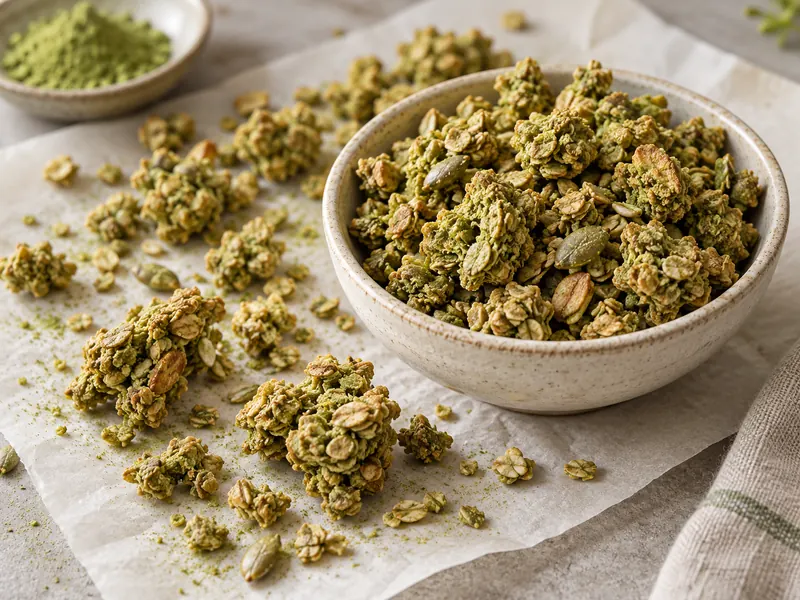
Matcha granola needs a locked cluster format and bake process before buyers compare powder lots. Loose cereal, large clusters, and inclusion-style pieces respond differently to binder solids, bed depth, cooling, and handling. Start with culinary matcha powder for baked cereal trials in one defined formula.
The commercial risk extends past fresh crunch. Uneven drying, edge scorching, fines, moisture pickup, oxidation, and color drift can appear after an attractive pilot leaves the oven.
Fix the sellable format, binder, oil, bed depth, bake profile, and cooling method first. Then compare matcha lots through cluster size, fines, color, texture, water activity, oxidation, and packaged storage.
In short: Matcha granola approval connects cluster mechanics with drying, oxidation, and package performance.
Key points:
- Lock loose cereal or cluster format before powder-dose work.
- Measure crispness, moisture, water activity, and oxidation separately.
- Sample across the full tray or belt instead of approving the center alone.
Which matcha granola format should the product brief lock first?
Choose loose cereal, large clusters, or matcha granola inclusions before dose trials. Binder solids, oil, piece size, bed depth, and cooling disturbance all change cluster formation. One texture target cannot describe all three formats.
Define target cluster distribution, allowable fines, serving use, and package before the first supplier comparison. Large clusters may need more binder or gentler cooling, while loose cereal needs controlled separation without excessive dust.
| Format | Main process variable | Release question |
|---|---|---|
| Loose cereal | Separation during cooling | Are pieces crisp without excess fines? |
| Large clusters | Binder and breakage | Does the target size survive packing? |
| Inclusion pieces | Size and moisture migration | Do pieces remain distinct in the final product? |
Key Takeaway: Set the physical format first so cluster mechanics do not distort the powder comparison.
How should a matcha granola team compare powder lots?
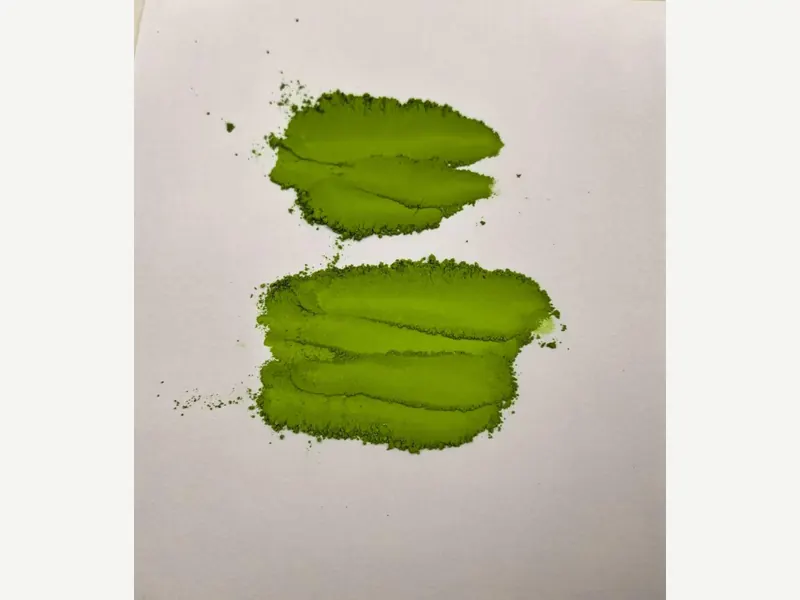
Compare matcha granola powder lots with one oat, binder, oil, dose, bed depth, bake profile, and cooling method. Record raw-powder identity and color, then measure finished Lab*, flavor, cluster-size distribution, break force, and fines.
Use a retained control lot and randomize the trial order. Powder grades remain candidates until the finished granola passes. The matcha bakery heat and color guide can support the ingredient brief, but it does not prevalidate a granola formula.
Key Takeaway: Rank powder lots through one repeatable granola process and a retained control.
What bake profile protects matcha granola color without underdrying it?
Build a time, temperature, and bed-depth trial that reads color beside final moisture and water activity. The 2020 paper Effect of storage temperature on the antioxidant activity and catechins stability of Matcha (Camellia sinensis) found that higher temperature reduced its green-color response and changed catechin stability. That powder-storage work supplies no granola baking limit.
Map oven entry and exit conditions, product temperature where practical, turning or mixing steps, and cooling time. Compare surface and interior pieces from several tray or belt locations. A greener center sample cannot approve a batch if edge pieces scorch or remain structurally different.
Key Takeaway: Optimize baked color together with drying and spatial uniformity.
Which matcha granola measurements separate crispness from shelf stability?
Measure matcha granola break force or acoustic crispness, moisture, water activity, and fines separately. The FDA water activity guide defines water activity as an equilibrium vapor-pressure ratio and notes its temperature dependence. The matcha water activity testing guide provides related ingredient context, while water activity remains distinct from texture.
Fix cluster size, test orientation, product temperature, conditioning time, and instrument method. A crisp sample can still have unsuitable storage behavior, while a stable water-activity reading does not guarantee the target bite.
| Measurement | Method control | What it answers |
|---|---|---|
| Break force or acoustic response | Cluster size, orientation, age | Immediate crispness |
| Moisture | Sampling and drying method | Total water |
| Water activity | Temperature and equilibration | Water availability under test conditions |
| Fines | Sieve or size rule | Handling damage and saleable yield |
Key Takeaway: Keep crispness and water-activity decisions separate, then interpret them together.
How should oxidation be screened in matcha granola?
Screen oxidation in the actual matcha granola oil, nut, and cereal system. The 2012 paper Development of shelf stable protein rich composite cereal bar tested water activities of 0.0, 0.33, 0.57, and 0.73 and found the lowest peroxide and free-fatty-acid values at 0.33 among those conditions.
This adjacent cereal-bar result does not make 0.33 a universal granola target. Measure peroxide value, free fatty acid, and sensory rancidity at defined storage points. Record oil and nut lots, oxygen exposure, package, light, and temperature so a powder comparison is not confounded by lipid variation.
Key Takeaway: Use the cereal-bar result to design oxidation testing, not to declare a universal granola limit.
What package challenge should matcha granola pass?
Challenge matcha granola in the intended pack at defined humidity and temperature. In the 2012 cereal-bar experiment, equilibrium moisture was 4.2% at water activity 0.33 and 8.0% at 0.57 after 45 days under ambient conditions ranging from 15°C to 34°C.
Those values belong to that cereal-bar matrix and storage design. For granola, track water activity, crispness, cluster breakage, oxidation, color, and seal condition. Compare the chosen package with a relevant barrier alternative rather than treating a dry day-zero result as shelf evidence.
Key Takeaway: Bind package approval to moisture pickup, texture, oxidation, and color in the target granola.
How can matcha granola scale-up avoid edge scorching and fines?
Map matcha granola bed depth, exit moisture, color, and cluster size across tray or belt positions. Sample leading, center, trailing, and edge zones after full cooling. Center-bed samples alone can hide hot spots and underdried zones.
Record transfer height, turning, cooler residence time, and packaging feed because mechanical damage can create fines after the oven. The commercial matcha cookie process guide offers adjacent baked-process controls, while the granola trial must set its own spatial sampling plan.
Key Takeaway: Approve scale-up from a mapped line sample, not one convenient location.
What belongs in a matcha granola pilot-release sheet?
Record powder, oat, binder, oil, and inclusion lots; dose; bed depth; bake profile; cooling time; cluster distribution; fines; texture; color; moisture; water activity; oxidation method; package; and storage condition. Include measurement temperature and product age.
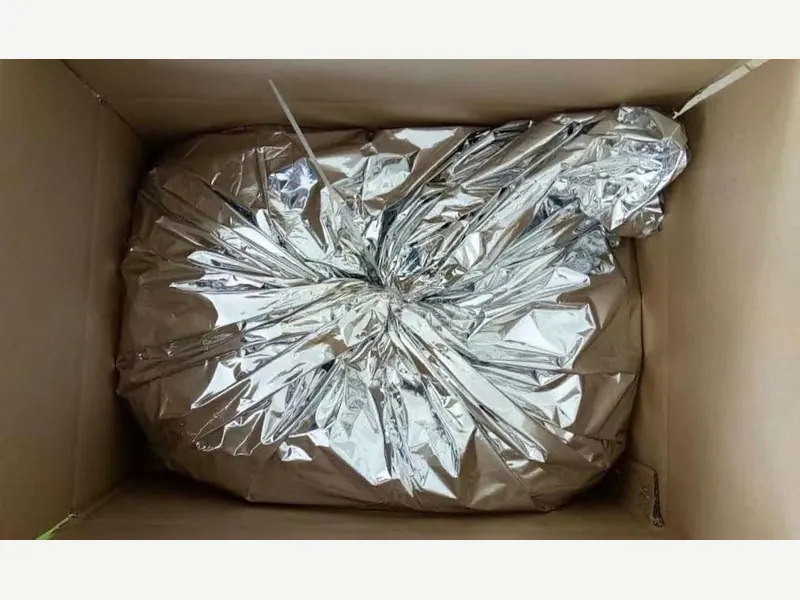
AdoroHu Matcha supplies raw powder; the granola manufacturer owns finished-food manufacture, safety, and shelf validation. Keep deviations and corrective actions linked to the exact pilot revision.
Key Takeaway: A release sheet must connect ingredient identity, process conditions, finished measurements, and package evidence.
FAQ
- Should loose and clustered matcha granola use one texture limit?
- No. Define format-specific cluster size, breakage, crispness, and fines requirements.
- Does greener granola prove the bake profile is correct?
- No. Color must be assessed with moisture, water activity, uniformity, and sensory results.
- Is water activity a measure of granola crispness?
- No. Water activity and texture answer different questions and require separate methods.
- Is water activity 0.33 a universal matcha granola target?
- No. It produced the lowest peroxide and free-fatty-acid values among four conditions in one adjacent cereal-bar study.
- Can a center-tray sample approve commercial scale-up?
- No. Sample edges and multiple belt or tray positions after full cooling to detect scorching, underdrying, and fines.
Conclusion
Lock format, bake geometry, cooling, oxidation tests, and package conditions before supplier approval. To arrange raw-powder samples, contact AdoroHu about raw-powder samples.
Institutional author: AdoroHu Matcha