
A consistent matcha cocktail service starts with a weighed, testable prep standard that every bartender can repeat. A good drink can still fail commercially when powder dose, slurry condition, dilution, and handoff change from shift to shift.
Those differences show up as pale drinks, sediment, slow tickets, and avoidable waste. Build the matcha cocktail standard around the bar’s real equipment and menu, using a controlled trial rather than a scaled-up home recipe. Our matcha powder recipe test menu can help teams separate early recipe exploration from the final service specification.
Commercial matcha cocktail consistency comes from controlling the powder-to-liquid ratio, per-drink dose, mixing order, hold window, remix rule, and transfer loss. The bar should approve these controls with repeated drinks made by representative staff on the actual station. Recipe benchmarks can guide the first trial, but they do not set a universal formula.
In short:
Key points:
- Specify the matcha base by mass and finished yield, not by spoon size alone.
- Validate dose, hold, remix, dilution, and carbonation under real service conditions.
- Release the standard only after different bartenders can reproduce the sensory and cost result.
What should a commercial matcha cocktail standard control?
A commercial matcha cocktail standard should control variables that change color, texture, balance, ticket time, or saleable yield. The useful document is a service specification, not an ingredient list.
Record the powder lot, base concentration, dose, mixers, ice, mixing action, glass, garnish, and finished fill. Add checks for color, tea aroma, balance, foam, and sediment. These controls let a manager trace a weak drink to one step.
| Control point | What to record | Business consequence |
|---|---|---|
| Matcha base | Powder mass, liquid mass, finished yield | Prevents concentration drift between prep batches |
| Per-drink build | Dose, mixer, ice, mixing action | Stabilizes flavor and fill across bartenders |
| Service window | Prep time, checks, remix and discard rule | Limits settling and uncontrolled rework |
| Finished drink | Color, sediment, balance, fill and ticket time | Connects process control to the guest experience |
Key Takeaway: Approve one complete service system, including prep, dose, assembly, and finished-drink checks.
Which matcha cocktail prep route best fits the service model?
The best prep route is the one the station can dose accurately without damaging the drink’s intended texture or aroma. Commercial trials may compare direct powder, water slurry, syrup, infused spirit, and prepared-matcha routes, then select the format that fits the menu and throughput.
A weighed slurry controls matcha and water, but it can settle. A syrup may pour predictably, yet locks sweetness into the base. Direct powder reduces prep but raises dispersion risk. An infusion changes extraction and is harder to adjust.
Choose one route before optimizing flavor. Parallel routes hide whether differences came from matcha, sugar, alcohol, or mixing.
Key Takeaway: Select the prep route from dosing accuracy, service speed, and recipe flexibility, then validate only that route.
How should a matcha cocktail slurry be specified?
A matcha cocktail slurry should be specified by powder mass, liquid mass, finished slurry mass, preparation method, and usable yield. This makes concentration comparable after foam, residue, and transfer loss are included.
Published consumer formulas illustrate why spoon measures cannot serve as a commercial specification. Their examples range from one teaspoon in one ounce of water to one teaspoon in two ounces, while another uses one-quarter teaspoon without a separate slurry. These are not equivalent concentrations or AHM validation data.
For the trial, calculate powder mass ÷ finished slurry mass × 100 and tie the result to the tested lot and liquid. Record water temperature, mixer, time, vessel, rest, and recovered yield. The matcha dose-per-cup guide offers a separate test framework without making a starting point universal.
Key Takeaway: Define slurry concentration by weighed inputs and recovered output; teaspoons are a development note, not a production control.
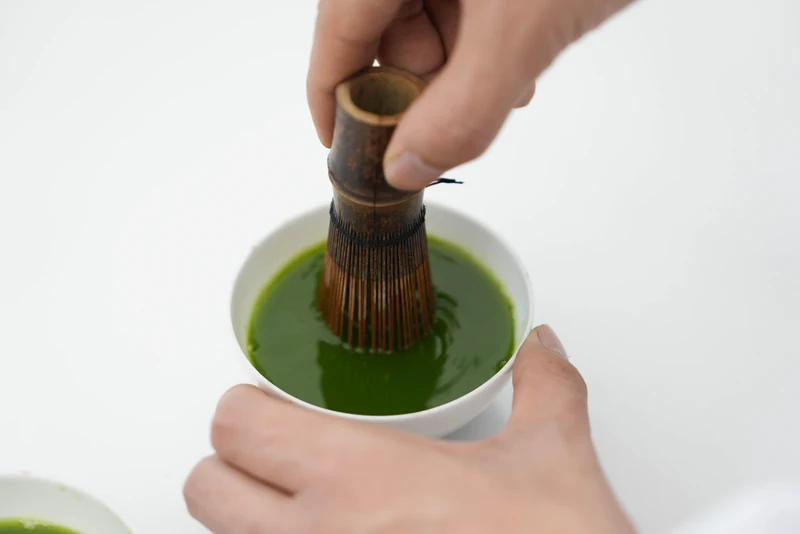
How can bartenders dose the same matcha cocktail every time?
Bartenders can repeat a matcha cocktail dose when the dispensing method has been checked for actual delivered mass or volume. A marked pour line, pump, jigger, bottle, or scale is useful only if its result stays inside the bar’s approved tolerance.
Use a tare scale to compare repeated dispenses. Check the first, middle, and last usable portions because viscosity, foam, and sediment can change delivery. Retest after a pause, refill, container change, or cleaning.
| Dosing option | Main advantage | What can distort the dose | Suitable check |
|---|---|---|---|
| Weighed dose | Direct mass control | Slower service | Periodic scale verification |
| Jigger or marked cup | Familiar workflow | Meniscus, foam, residue | Repeated delivered-mass check |
| Pump | Fast and portioned | Stroke length, air, viscosity | Full-stroke repeatability test |
| Squeeze bottle | Flexible and simple | Operator pressure, nozzle buildup | Timed or weighed dispense series |
Do not approve a pump from its label alone. Wide delivery variation changes color and cost in every round.
Key Takeaway: Qualify the dispensing tool with the actual slurry, container, and service motion before writing the dose into the recipe.
How long can matcha cocktail slurry be held and remixed?
The slurry can be held only for the quality window demonstrated by the bar’s own trial and applicable food-safety plan. A matcha cocktail hold rule should never be copied from a consumer make-ahead note or treated as a safety limit without evidence.
Evaluate the base after preparation and at planned checkpoints. Record color, aroma, foam, sediment, redispersion effort, delivered dose, and finished-drink balance. Define the remix tool and action, then state when remixing no longer restores the result.
Set a discard trigger before service. “Stir when needed” makes the last drink depend on personal judgment and can conceal loss.
Key Takeaway: Write a product-quality hold and remix rule from timed observations, while managing food safety under the applicable local plan.
Which assembly sequence keeps a matcha cocktail smooth and balanced?
The best assembly sequence disperses matcha before carbonation, final ice, or delicate foam makes correction difficult. Trial pre-whisking with water, mixing into milk, shaking with ice, or adding prepared matcha to the full build according to the intended drink.
For shaken drinks, compare when the base enters. For sparkling drinks, carbonate after still ingredients are uniform; later shaking wastes gas and changes fill. For layered drinks, standardize the base before testing foam.
Published formulas include a roughly 30-second shake for one pre-whisked build and 45–50 seconds of frothing for one topping. Those times belong to their formulas and tools; copying them can over-dilute or slow a different bar’s drink.
Key Takeaway: Lock the order of operations and validate its dilution, foam, and sediment effects on the actual equipment.
How should the matcha cocktail station and shift handoff work?
The station should make the correct matcha cocktail action obvious through labeled containers, dedicated tools, visible batch identity, and a written handoff. The goal is to prevent an acceptable prep batch from losing control between the prep bench and the next bartender.
Label the base with formula version, powder lot, prep time, initials, station, and status. Keep its dosing tool with the container and document checks, remixes, quantity, and exceptions. The current FDA Food Code is a model for retail and food-service safety rules; use it with state and local requirements for cleaning, containers, and utensils.
Do not let the service-quality hold window double as a food-safety decision. That shortcut can make an operational test appear to authorize storage conditions it never assessed.
Key Takeaway: Treat labeling, tools, hygiene controls, and handoff records as part of the recipe’s execution standard.
How can managers measure matcha cocktail yield, waste, and cost?
Managers should measure saleable drinks from each prep batch, not assume theoretical yield equals service yield. A matcha cocktail batch can lose material on the whisk, vessel, strainer, transfer bottle, dosing tool, and final unusable heel.
Record ingredient cost, theoretical and recovered slurry, transferred mass, conforming drinks, rework, and discard. Compare actual cost per conforming drink between trials. This exposes hidden foam, sediment, and container losses.
| Measure | Calculation | Decision use |
|---|---|---|
| Recovery | Recovered slurry ÷ theoretical slurry | Finds prep and vessel loss |
| Dose yield | Usable slurry ÷ approved dose | Forecasts potential drinks |
| Saleable yield | Conforming drinks ÷ expected drinks | Captures service failures and waste |
| Actual unit cost | Batch ingredient cost ÷ conforming drinks | Compares commercial performance |
Prefer stable saleable yield over high theoretical yield. Residue and remakes can reverse the apparent saving.
Key Takeaway: Cost the conforming drink after real losses, not the ingredient list before service.
What evidence should approve a matcha cocktail for service?
Approval should require a controlled formula, representative service trial, sensory limits, yield result, and signed change rule. The matcha cocktail standard is ready only when different bartenders can reproduce it with the chosen powder lot, equipment, and station layout.
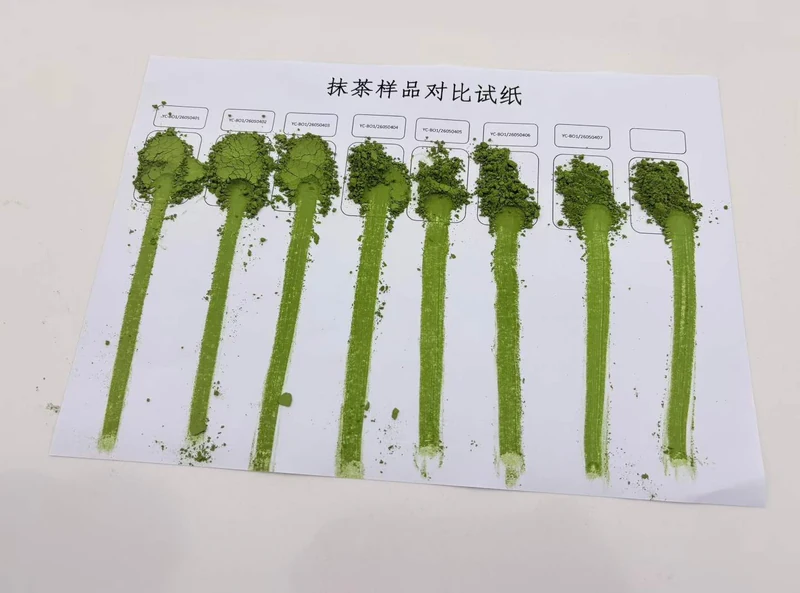
Use a named matcha code and current specification. AdoroHu’s EU Standard Series places E-1/E-2 in Culinary, E-3/E-4 in Premium, and E-5/E-6/E-7 in Ceremonial. Its Organic Series places O-1/O-2 in Culinary, O-3 in Premium, and O-4/O-5/O-6 in Ceremonial. These codes preserve sample identity; they do not prove cocktail performance.
AdoroHu’s in-house microbiology and physical-chemical laboratories can support powder-side checks within approved methods. Dose, hold, texture, balance, and waste still need bar validation. Buyers evaluating matcha for beverage applications should connect the supplier specification to a finished-drink approval record.
Key Takeaway: Release the exact powder, formula, equipment, and service method together, with changes routed back through review.
FAQ
- Should a bar batch matcha cocktail slurry in advance?
- It can, provided the bar validates a concentration, short quality hold, remix method, delivered dose, and discard rule on the actual station.
- Is a teaspoon accurate enough for commercial matcha cocktail prep?
- A teaspoon can guide early recipe work, but commercial prep should weigh the powder and finished slurry because spoon fill and packing change the delivered amount.
- Can matcha cocktail slurry be remixed after it settles?
- Yes, if the approved remix action restores color, texture, dose, and finished-drink balance inside the tested hold window.
- What should a matcha cocktail batch record contain?
- Record formula version, matcha lot, weighed inputs, finished yield, prep time, operator, checks, remix events, waste, and disposition.
- How should a bar compare two matcha cocktail prep routes?
- Keep the finished recipe and service conditions constant, then compare dose repeatability, ticket time, sediment, sensory result, saleable yield, and unit cost.
- When should a matcha cocktail standard be revalidated?
- Review it after a material powder, formula, equipment, container, dose, station, or process change that could alter the approved result.
Conclusion
A reliable matcha cocktail program controls the base, dose, hold, assembly, and losses as one service system. Test the standard across real staff and shifts, then keep every approval inside the conditions that were evaluated. Contact AdoroHu Matcha to align powder samples and specification records with your beverage trial.