
Matcha cream liqueur stays uniform when the dairy base, matcha dispersion, alcohol addition and final pourability are developed as one cold process. A freshly blended sample can look smooth yet thicken, settle or form a ring during refrigerated hold. AdoroHu supplies culinary matcha powder rather than liqueur, alcohol base or premix; buyers should compare powder in their own controlled finished-product system.
A home blender recipe can identify useful sequence questions, but it cannot establish manufacturing stability, alcohol content or shelf life. Add alcohol by a defined route, avoid accidental whipping, and judge the filled product after cold storage. Measure final ABV rather than calculating it by adding ingredient volumes.
In short:
Key points:
- Disperse matcha in the fixed dairy base before changing alcohol-addition conditions.
- Define pourability, sediment and ring formation after refrigerated hold.
- Treat alcohol compliance, preservation and label review as finished-product responsibilities.
What does the Proportional Plate reference establish?
The reference establishes a four-ingredient home benchmark using sweetened condensed milk, heavy cream or half-and-half, whiskey and culinary matcha. Its recipe card lists 14 ounces condensed milk, 1 cup cream, 1⅔ cups whiskey and 1 tablespoon matcha. It combines condensed milk, cream and matcha first, then blends at low speed while slowly adding whiskey for roughly 20–30 seconds. It recommends sifting matcha, avoiding longer blending that thickens cream, refrigerating in a sealed container and shaking before service.
Those values belong to one household recipe. They do not establish a manufacturing specification, measured final ABV, commercial shelf life or validated safety control.
Key Takeaway: Use the source for sequence and observation points, not for commercial guarantees.
Which dairy base should be fixed before matcha trials?
The dairy base should be fixed by condensed-milk identity, cream fat level, sweetness and target flow before powder samples are compared. The reference warns that sweetened condensed milk is not interchangeable with evaporated milk and notes that half-and-half changes the rich whipped texture. Those substitutions alter much more than viscosity.
| Base decision | Likely product effect | Trial consequence |
|---|---|---|
| Condensed milk identity | Sugar, milk solids and body | Rebuild the baseline if changed |
| Heavy cream versus half-and-half | Fat and initial flow | Compare pour and cold thickening |
| Dairy versus non-dairy creamer | Protein, fat and sweetness system | Treat as a separate formula |
Key Takeaway: Lock one named dairy architecture; a plant-based version is a new development program.
How should matcha be dispersed without whipping the cream?
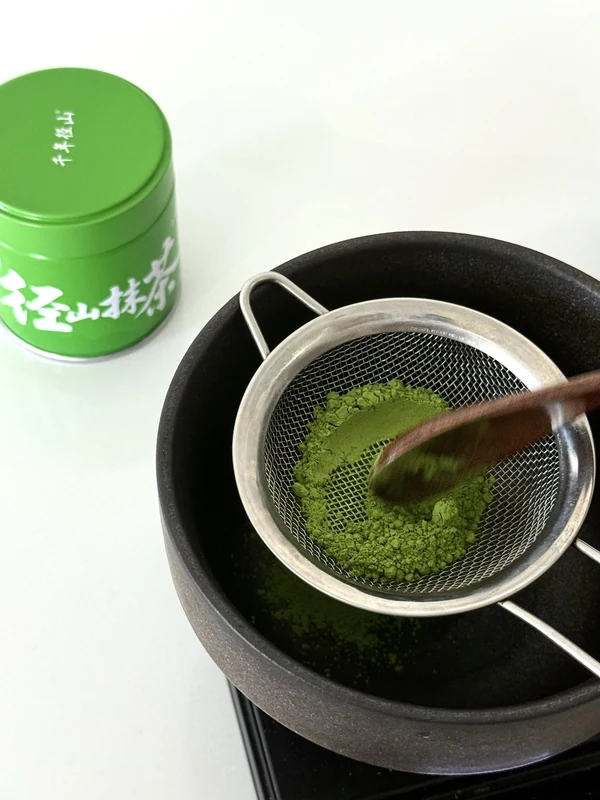
Matcha should be sifted into the condensed-milk and cream phase and mixed only enough to remove visible agglomerates. The reference pulses and uses low speed because extended blending can thicken the cream. A commercial mixer may impose different shear, so the home timing cannot be copied as a machine setting.
Compare a dry sift with a controlled pre-dispersion that uses liquid already present in the formula. Keep total composition unchanged. Evaluate specks, foam, flow, sediment and color after cold hold; a smooth fresh cup alone is not enough.
Key Takeaway: Choose the lowest-work route that remains uniform after storage, not the route that looks fastest in the blender.
Why should the alcohol be added gradually?
Alcohol should be added through a defined gradual feed because the reference’s sequence is designed to incorporate it while the dairy base is moving. Dumping the full portion at once changes the local composition sharply and may expose sequence sensitivity. The mechanism and acceptable feed rate must be tested in the actual formula rather than asserted from the blog.
Run a sequence A/B with the same ingredients and final measured composition: one controlled gradual feed and one alternative justified by the plant process. Compare immediate separation, viscosity, foam, refrigerated ring formation and pourability.
Key Takeaway: Validate the addition route in the real equipment; “slowly” must become a reproducible process instruction.
How should matcha level and grade be screened?
Matcha level and grade should be screened after the dairy and alcohol sequence is stable. The reference’s tablespoon is a home benchmark, not a universal dose and not a basis for density conversion. Increasing powder may deepen color while also raising bitterness, visible sediment and viscosity.
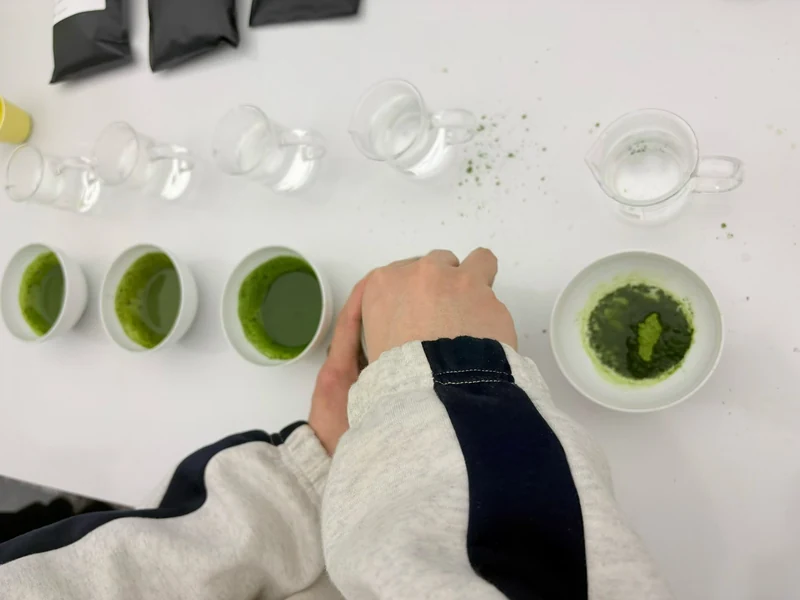
AdoroHu’s E-1/E-2 and O-1/O-2 are culinary tiers, with higher numbers within each series indicating higher quality. Use traceable coded lots and compare aroma, color, bitterness, sediment and cold pour. Grade codes support sample identity; they do not predict finished-product stability.
Key Takeaway: Compare coded powder lots in one locked liqueur base and record the finished cold result.
How should pourability be specified?
Pourability should be specified at a defined product temperature, container and elapsed storage time. The reference describes a thick product that can layer on drinks and warns that extra blending can further thicken cream. A manufacturer must decide whether the product should free-pour, coat a glass or hold a distinct layer.
| Use case | Useful observation | Failure signal |
|---|---|---|
| Bottle pour | Time or mass through a defined opening | Plugging or glugging |
| Layered drink | Layer position after a defined interval | Immediate mixing or clumping |
| Cocktail dose | Repeatable portion at service temperature | Large dose variation |
These are test designs, not claimed specifications.
Key Takeaway: Define flow from the intended serving job and measure it at the actual cold temperature.
What should sediment and ring tests examine?
Sediment and ring tests should distinguish reversible settling from persistent agglomeration, fat separation or package-wall deposition. The reference tells home users to shake before serving, which signals that stored appearance deserves review. A commercial product needs a defined acceptance decision rather than an informal shake instruction alone.
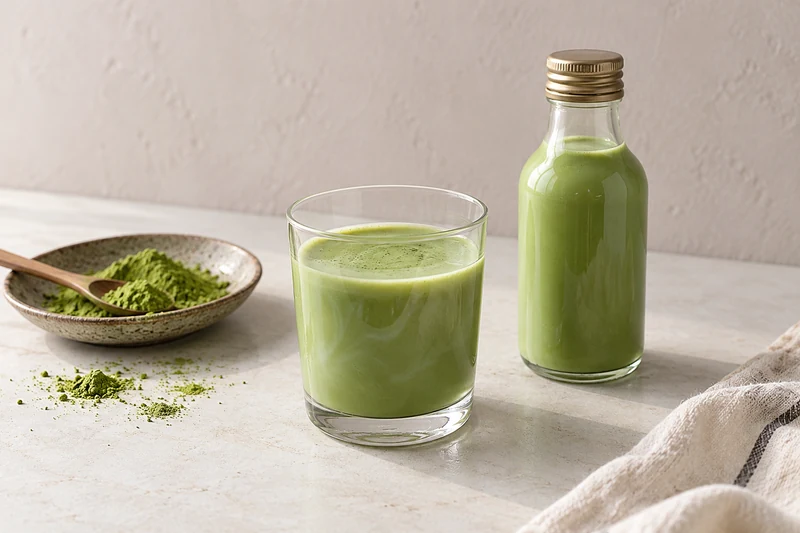
Record top, middle and bottom appearance before agitation, the effort required to redisperse, and the result after repeated holds. Inspect the closure and shoulder of the actual bottle because deposits may be hidden in a beaker.
Key Takeaway: Approve redispersion and package appearance together; a shakeable sample can still be commercially unacceptable.
Can ingredient volumes be used to calculate final ABV?
Ingredient volumes should not be added to claim final ABV because mixing can change final volume and the alcohol input itself needs a verified strength. The article therefore makes no ABV calculation from the reference’s cups and ounces. Commercial labeling and classification require appropriate finished-product measurement and specialist review.
A fermented-tea alcohol threshold is not a cream-liqueur manufacturing rule. the presence of alcohol does not prove preservation, pathogen control or a kill step.
Key Takeaway: Base ABV and alcohol compliance on verified finished-product evidence, not recipe arithmetic.
How should refrigerated stability and safety be validated?
Refrigerated stability should be validated for the complete formula, process, package and intended distribution route. The reference offers a household storage duration and ties it to cream freshness, container cleanliness and air exposure. That advice cannot support a commercial date code.
For covered facilities, 21 CFR 117.135 requires appropriate written preventive controls, and 21 CFR 117.160 addresses validation. Product testing, process evidence and shelf-life work belong to the manufacturer; alcohol must not be treated as automatic sanitation.
Key Takeaway: Validate safety and shelf life independently from sensory stability and alcohol presence.
Which allergens and label responsibilities apply?
Milk is a major U.S. allergen in a conventional condensed-milk and cream formula. A non-dairy creamer may introduce soy, tree nuts or other declarable ingredients depending on its composition. The FDA allergen resource supports food-source labeling, while alcohol labeling and market rules require separate qualified review.
Do not use a protected or third-party brand identity as the generic name for an AHM ingredient application. AdoroHu does not manufacture the liqueur, approve its alcohol label or supply a finished premix.
Key Takeaway: Review the actual dairy or alternative base, alcohol category, market and finished label before launch.
What should a cream-liqueur buyer include in the matcha brief?
A buyer should send the named dairy base, alcohol type and verified strength, matcha addition route, mixer constraints, target cold flow, package, storage route and coded stability observations. Include whether the desired use is free-pour, cocktail dosing or drink layering.
The site’s matcha milkshake guide can inform cold dairy dispersion, while matcha RTD stability frames packaged beverage observation. Neither page validates an alcoholic cream product.
Key Takeaway: Give the supplier a measured cold-product brief, while keeping alcohol, process and label validation with the manufacturer.
FAQ
- Why does matcha cream liqueur form sediment?
- Powder agglomeration, settling or changes in the dairy system may contribute; inspect the stored bottle and test redispersion.
- When should alcohol be added?
- The home reference adds it gradually after combining condensed milk, cream and matcha, but the manufacturing feed route needs its own trial.
- Can the recipe volumes determine final ABV?
- No. Verify the alcohol input and measure or otherwise establish the finished product through an appropriate method and qualified review.
- Does alcohol make the cream liqueur shelf stable?
- No automatic preservation or kill-step claim is justified; validate the complete formula, process, package and storage route.
- Can a non-dairy creamer replace heavy cream directly?
- It creates a different fat, protein and sweetness system and should be developed as a separate formula.
- Does AdoroHu manufacture matcha cream liqueur?
- No. AdoroHu supplies pure matcha powder as an ingredient, not liqueur, alcohol base or premix.
Conclusion
A uniform matcha cream liqueur needs a locked dairy base, controlled matcha dispersion, reproducible alcohol feed and evidence from the refrigerated bottle. Keep the home method as a sequence benchmark and leave ABV, safety, shelf life and label approval to the finished-product manufacturer. Contact AdoroHu Matcha with the base and cold-stability observations.