
Matcha marzipan becomes easy to shape when almond particle size, syrup addition, mixing order and handling temperature are fixed before the powder is compared. A paste can form a ball at the bench yet oil, crack or deform during depositing, filling and coating. AdoroHu supplies pure matcha powder rather than marzipan or coated confectionery; buyers can start with culinary matcha in a controlled almond-paste trial.
Treat the almond paste as a fat-rich particulate system, not as ganache. Build cohesion without squeezing out almond oil, then test forming and coating at the intended piece size. Keep the published home formula as a benchmark rather than a commercial specification.
In short:
Key points:
- Fix almond grind and syrup route before adjusting matcha.
- Approve the paste through mixing, forming, filling and pre-coat handling.
- Review almond and coating allergens from the actual formula and facility.
What does the TokyoPony matcha marzipan source establish?
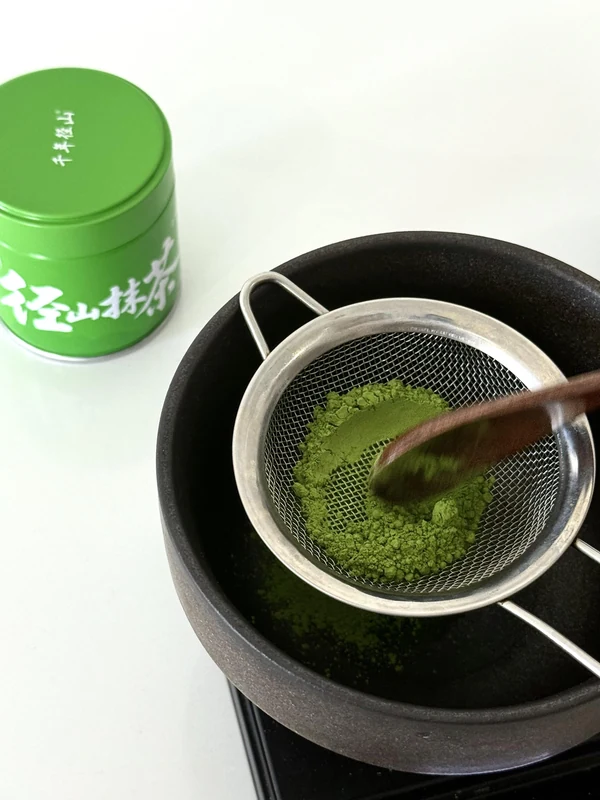
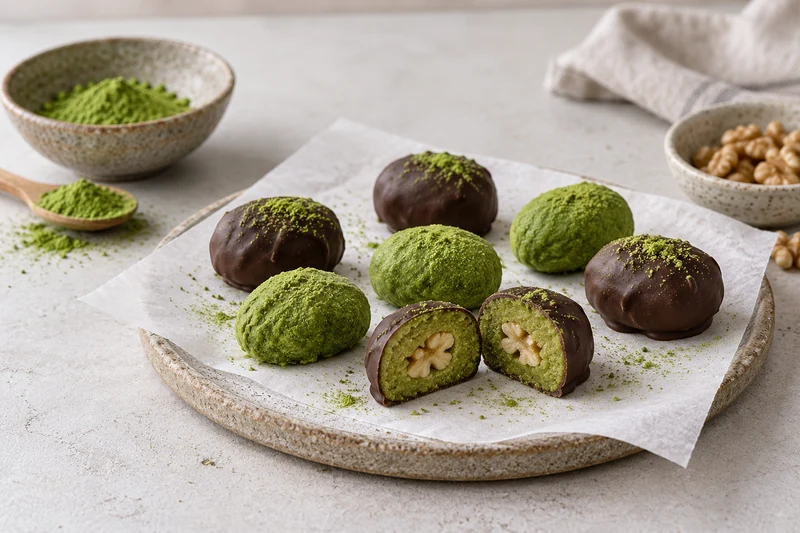
The TokyoPony source establishes a simple home benchmark: a 200 g bag of ground almonds is mixed with 2 tablespoons of sifted matcha and 4 tablespoons of maple syrup, then tested by rolling a small piece into a cohesive ball. The author forms heaped-tablespoon pieces, optionally inserts a hazelnut or crystallized ginger, rolls again, coats them in 150 g chocolate and chills them.
Those amounts must remain in their published units because the source supplies no density basis for converting tablespoons to grams. They describe one home formula, not a commercial yield, shelf life, validated process or universal matcha dose.
Key Takeaway: Use the source to identify cohesion, filling and coating questions without scaling its spoon measures by assumption.
How should ground almonds be specified for matcha marzipan?
Ground almonds should be specified by the particle distribution and oil behavior needed for a smooth, cohesive paste. Coarse particles can create a sandy bite and weak edges; very fine or overworked almonds may release oil during mixing. Matcha can make these defects easier to see without being their root cause.
Run an almond-grind comparison with the same syrup, matcha lot and mixing work. Score surface smoothness, edge cracking, oil film and bite. This is a real A/B material screen because the almond grind is the only changed input.
| Almond condition | Likely benefit | Main risk | Forming check |
|---|---|---|---|
| Coarser grind | More particulate bite | Cracks and rough surface | Edge integrity |
| Finer grind | Smoother finish | Oiling under work | Surface sheen and release |
Key Takeaway: Lock almond grind before blaming matcha for roughness or oiling.
When should matcha enter the almond-paste mix?
Matcha should be dispersed through the dry ground almonds before syrup addition when uniform color is the priority. That follows the source’s sequence and gives the powder more dry surface to distribute across. Adding concentrated matcha after the paste has formed raises the risk of streaks and extra working.
Compare dry preblend against one controlled later-addition route while keeping total syrup and mixing work recorded. Reject a route that needs repeated folding, because additional work can warm the paste and mobilize almond oil.
Key Takeaway: Prefer the sequence that reaches even color with the least corrective mixing.
How should syrup addition be controlled?
Syrup should be added to reach a defined forming window rather than poured until the paste merely feels soft. The reference uses maple syrup as both sweetener and binder. In a commercial trial, syrup identity and solids must stay fixed because changing them changes tack, moisture and flavor.
Use staged additions within the approved formula and record paste mass, mixer load response and final yield. A ball test is helpful, but it should be paired with piece-weight consistency, crack resistance and deformation during hold.
| Endpoint | Too little binder | Working window | Too much binder |
|---|---|---|---|
| Hand forming | Crumbly edges | Clean cohesion | Sticky surface |
| Depositing | Breaks or tears | Releases consistently | Smears or strings |
| Holding | Sheds crumbs | Retains shape | Slumps or sweats |
Key Takeaway: Define the binder endpoint by the forming method and hold, not by softness alone.
What causes matcha marzipan to oil out?
Oiling occurs when almond fat separates under excess mixing, warmth or compression. Matcha may darken the visible film, but adding more powder is not a reliable correction. A dry rescue can also make the bite chalky while leaving the process cause untouched.
Run a bounded work-input comparison: mix two samples to the same initial cohesion, then expose one to the longest expected production handling. Compare surface oil, temperature, mass loss and forming quality. The consequence is operational—an oily paste sticks to tooling and can weaken coating adhesion.
Key Takeaway: Correct heat and work input before changing powder or binder to hide oil release.
How should pieces be formed and filled?
Pieces should be formed to a controlled weight and wall thickness before a filling is introduced. TokyoPony’s hazelnut or crystallized-ginger option demonstrates that an inclusion changes the rolling step. In production it also changes allergens, center position, rupture risk and coating coverage.
Compare an unfilled control with one specified filling at the same finished piece weight. Record shell thickness, center exposure, cracks and weight variation. This A/B is specific to the intended product and does not turn the article into a truffle or ganache guide.
Key Takeaway: Prove the unfilled shell first, then add one filling without changing finished piece weight.
What handling window is needed before coating?
The pre-coat window should leave the marzipan firm enough to move and coat without surface oil, condensation or cracks. Chilling can improve handling, as the reference does after coating, but cold pieces may collect condensation if moved into a humid room. Warm pieces can deform in the coating stream.
Define piece temperature state, uncovered hold and room conditions for the coating trial. Evaluate pickup, bare spots, tails and adhesion after the coating sets. Keep this separate from chocolate tempering or ganache formulation, which are outside the marzipan core.
Key Takeaway: Specify the piece condition entering coating, because a good paste can fail at the transfer step.
How should matcha grade and level be compared?
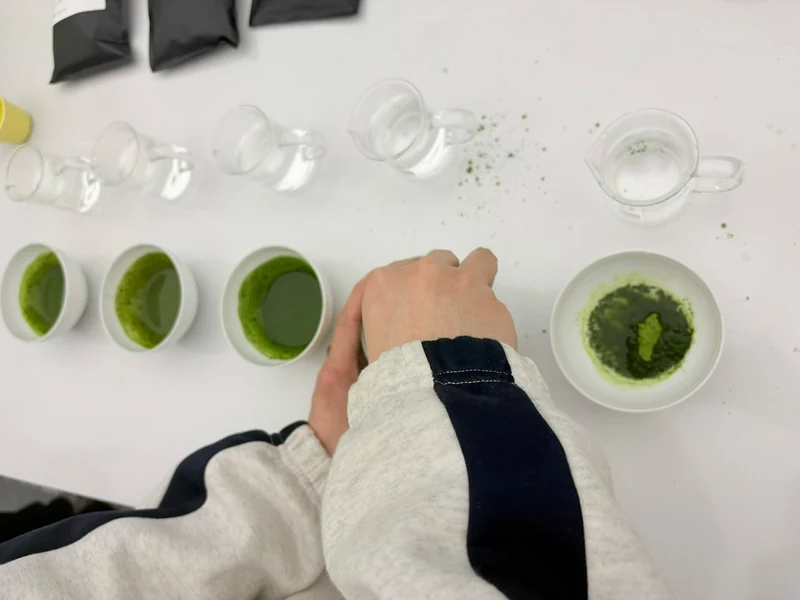
Matcha grade and level should be compared in the locked almond-syrup system, using coded pieces at the same age and temperature. TokyoPony’s 2-tablespoon use is a home benchmark only. It cannot be converted into a commercial percentage without the complete measured batch and ingredient densities.
AdoroHu’s E-1/E-2 and O-1/O-2 are culinary tiers, with higher numbers within each series indicating higher quality. Compare selected lots for green color, almond balance, bitterness, aroma and surface appearance. Grade codes organize traceable samples; they do not predict the winning formula.
Key Takeaway: Keep every supplier sample tied to its grade code and actual application result.
Where is the boundary between marzipan and almond frangipane?
Marzipan here is a dense almond-sweetener paste designed for shaping, filling and coating. Frangipane is a bakeable almond filling with a different liquid, fat and often egg structure. A powder that works in shaped marzipan therefore cannot be assumed to behave the same way in frangipane.
The practical consequence is test ownership: marzipan trials track cohesion, oiling and shape retention, while frangipane trials track bake set, expansion and moisture. Combining them would blur the buyer question and produce weak supplier evidence.
Key Takeaway: Keep shaped almond paste and baked almond filling as separate development programs.
Which allergens and labels need review?
Almond is a U.S. major allergen as a specific tree nut, and an optional hazelnut center adds another specific tree nut. Chocolate coatings may also introduce milk or soy depending on the actual ingredient statement. Matcha is not one of the nine major allergens.
The FDA major-allergen resource requires the relevant food source names on applicable labels. Review supplier specifications, rework, shared equipment and changeovers; do not infer allergen-free status from a short recipe.
Key Takeaway: Review the finished piece, including center and coating, and name each applicable tree nut specifically.
What should a marzipan buyer include in the matcha brief?
A buyer should send the almond specification, syrup system, mixing sequence, forming method, piece weight, optional center, coating route and coded trial results. Include photos of cut pieces and notes on oiling, cracks, bitterness and color after the intended hold.
Keep the scope separate from ganache systems. The published matcha macaron guide covers an almond-meringue bake, while the matcha protein bar guide covers a different dense binder system. AdoroHu can help compare pure powder grades, while the confectionery manufacturer owns the marzipan formula, process, package and shelf-life validation.
Key Takeaway: Send a traceable almond-paste brief rather than asking for a universal marzipan dose.
FAQ
- Why is matcha marzipan crumbly?
- Almond grind, insufficient binder, uneven syrup distribution or excessive dry correction can prevent clean cohesion.
- Why does matcha marzipan release oil?
- Excess work, warmth or compression can mobilize almond oil; correct the process before adding more powder.
- Should matcha be mixed with the almonds first?
- A dry preblend is a strong starting route because it can distribute color before the paste becomes dense.
- Can the TokyoPony spoon measures be converted directly to grams?
- No. The source gives no density basis for converting its matcha and maple-syrup tablespoons to grams.
- Is marzipan the same as frangipane?
- No. This marzipan is a shaped almond paste, while frangipane is a bakeable almond filling with a different structure.
- Does AdoroHu manufacture finished marzipan?
- No. AdoroHu supplies pure matcha powder as an ingredient; the confectionery manufacturer owns formulation and validation.
Conclusion
Reliable matcha marzipan starts with specified almonds, controlled syrup addition and a forming window that survives filling and coating. Keep the home benchmark in its original units and build commercial decisions from traceable trials. Contact AdoroHu Matcha with the almond system and observed results.