
A matcha mooncake reaches a clean mold and balanced bite only when the wrapper system, filling firmness, portion ratio and set are designed together. Snow-skin and baked products solve different channel needs, and a ratio that works in a 50 g mold will not transfer blindly to a 100 g unit. Use the matcha baking application to frame powder selection, then pilot one wrapper system at a time.
A commercial matcha mooncake brief should choose snow skin or baked pastry before optimizing color and flavor. Teams should weigh wrapper and filling separately, control firmness and approve the finished unit after its intended set or maturation.
In short:
Key points:
- Separate snow-skin and baked systems from the first trial.
- Preserve publisher quantities and ratios in their original units.
- Approve color, mold definition and bite after the full set.
Should a matcha mooncake use snow skin or a baked wrapper?
For a matcha mooncake, choose snow skin for a chilled, soft and pale format or baked pastry for a browned shell and a different distribution model. Cooking Therapy provides a nine-piece snow-skin benchmark, while other sources use baked pastry, brownie or mung-bean systems.
Do not split one pilot between both architectures. Choose the route around channel and handling. Avoid treating a two-day refrigerated home-recipe note as commercial life for snow skin, because formula, hygiene and distribution are unvalidated.
The commercial matcha dessert guide helps teams compare adjacent formats and service conditions.
Key Takeaway: Select the wrapper system before discussing dose or shelf life.
Where should matcha sit in the wrapper, filling or both?
Place matcha where the concept needs visible color and flavor, then keep a plain component as a diagnostic control. What To Cook Today uses 1 tsp in pastry and 1 tsp in filling; Freddy’s Harajuku uses 2 g in each.
Run wrapper-only, filling-only and both only if the project can support three clear samples. Avoid starting with matcha in both, because heat, sweetness and filling flavor become hard to separate when the result is dull or bitter.
| Publisher benchmark | Original unit design | Mold implication |
|---|---|---|
| Cooking Therapy | 25 g skin + 25 g red bean paste; 50 g total | Equal wrapper and filling in a snow-skin mold |
| What To Cook Today | 18 g dough + 25 g mung bean paste + 7 g white chocolate; about 50 g | Thin baked wrapper around two-part filling |
| Eat Cho Food | About 50 g dough + 50 g filling; 100 g total | Large mold with equal component mass |
Key Takeaway: Choose one primary matcha location before building complexity.
How much matcha should the first mooncake pilot evaluate?
Use publisher doses only with their stated batch and component. Cooking Therapy uses 1 tsp for nine snow-skin mooncakes; Eat Cho Food uses 10 g, stated as 2 tablespoons, for eleven large 100 g pieces.
Those numbers are not comparable without wrapper and filling mass. Create a dose ladder inside one fixed system and score color, aroma, bitterness and mold definition.
Key Takeaway: Tie matcha dose to component mass and unit design.
Which filling best supports matcha mooncake texture and flavor?
Choose red bean, mung bean, white chocolate, brownie or shiroan according to sweetness, firmness and matcha contrast. Each reference filling carries different fat, water and flavor intensity.
Test the filling alone for balling, oil release and shape retention, then inside the wrapper. A soft filling can distort the mold; a dry filling can crack the shell. Choose the least sweet filling that still gives cohesive handling when matcha clarity is the priority.
The professional pastry sourcing guide adds baked-application sourcing context.
Key Takeaway: Approve filling handling before judging the assembled bite.
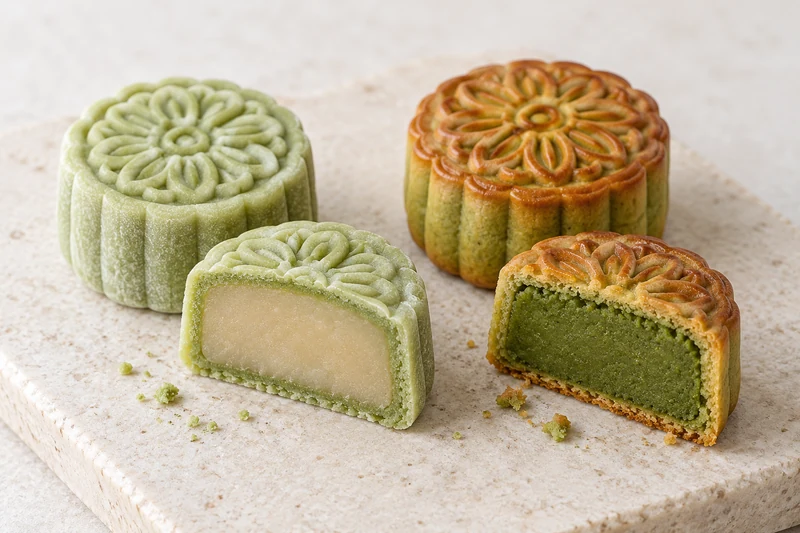
What matcha mooncake wrapper-to-filling ratio fits the mold?
Match ratio to mold volume and desired shell thickness. Cooking Therapy uses 25 g skin and 25 g red bean paste for a 50 g piece; What To Cook Today uses 18 g dough, 25 g paste and 7 g chocolate for about 50 g.
SideChef uses 18 g skin with 30 g filling, while Eat Cho Food uses roughly 50 g and 50 g for a 100 g unit. Weigh every component. A thin shell improves filling share but raises tearing and mold-show-through risk.
Key Takeaway: Set ratio in grams for one mold and unit weight.
How should matcha mooncake filling firmness be controlled?
The filling should portion cleanly, hold a ball and accept wrapper pressure without leaking oil or water. Its condition controls seam closure and pattern definition.
Record cooking endpoint or supplier specification, cooling, rest time, portion temperature and balling loss. Choose a firm, smooth filling for high-detail molds; avoid adding loose liquid to repair dryness at the bench, because moisture migration can soften the wrapper later.
Key Takeaway: Control filling endpoint before molding begins.
How do syrup, lye water and egg wash affect matcha mooncake color?
These ingredients belong to specific baked-wrapper systems and can change browning, handling and surface appearance. They should not be borrowed into snow skin or moved between formulas without a controlled trial.
Keep the glaze or egg-wash mass and application timing consistent. Matcha green competes with browning, so choose the lightest finish that meets appearance and bake requirements. Avoid repeated heavy egg wash when green visibility is the sales cue; the consequence can be a brown surface with little matcha identity.
| Mooncake release check | Measure | Commercial consequence |
|---|---|---|
| Portioning | Wrapper, filling and total weight | Ratio drift changes seam strength and food cost |
| Mold | Pattern fill, edge cracks, release loss | Soft filling or warm dough reduces visual yield |
| Set or bake | Surface color, migration, cooled bite | Premature packing damages pattern and texture |
Key Takeaway: Treat surface color as a formula-and-process output.
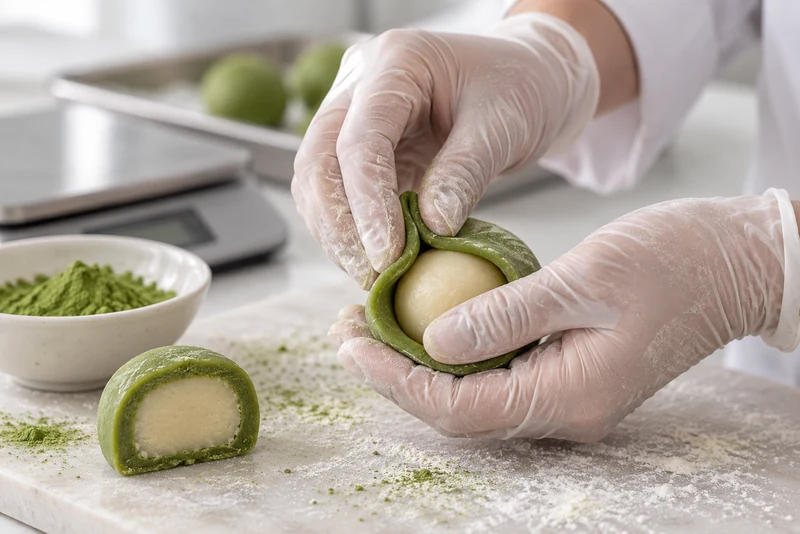
Which matcha mooncake mold size fits the channel?
Choose unit weight from occasion, package and price architecture, then buy the matching mold. The research includes 50 g pieces with ±5 g tolerance and 100 g mooncakes, plus other ratios around 45–50 g.
Run a mold-capacity check with the actual dough and filling, not water alone. Record total weight, diameter, height, pattern fill and release defects. Oversized pieces may look premium but increase bite imbalance and pack cost.
Key Takeaway: Lock mold, target weight and component tolerance together.
Which bake and maturation schedule should matcha mooncake use?
Validate the schedule for the chosen wrapper. What To Cook Today publishes 350°F/180°C conventional or 330°F/165°C convection for 14–15 minutes; Eat Cho Food uses two 10-minute bake stages.
Keep original temperatures and oven modes visible in the research record. One SideChef display contains an apparent 340°C/170°C inconsistency, so do not treat the 340°C value as validated. Avoid silent corrections; use coherent sources and your measured oven trial.
Key Takeaway: Bind release to one verified thermal schedule and cooled result.
Which allergens require review in a U.S. packaged matcha mooncake?
Review the exact mooncake formula for milk, egg, wheat, peanuts, sesame and other applicable major allergens. White chocolate, pastry, egg wash and nut or seed fillings can change the declaration.
For U.S. packaged foods, 21 U.S.C. §343(w) requires declaration of nine major allergens under FALCPA as expanded by the FASTER Act: milk, egg, fish, Crustacean shellfish, tree nuts, peanuts, wheat, soybeans and sesame. Apply the FDA major food allergen guidance and qualified label review to the finished SKU. Avoid copying an allergen list from another mooncake because wrapper and filling compositions vary sharply.
Key Takeaway: Review allergens at finished-SKU level.
What belongs in a supplier-ready matcha mooncake brief?
Specify snow-skin or baked system, matcha location and dose, filling, ratio, mold, unit weight, set or bake, package and acceptance criteria. Add grade, certification and demand requirements.
AdoroHu’s culinary and premium grade series allow a controlled sample request, while its in-house laboratories can support powder documentation. The mooncake producer remains responsible for formula, finished-product testing and shelf-life validation.
Key Takeaway: Send the powder supplier a precise application brief with clear responsibility boundaries.
FAQ
- Is matcha mooncake usually baked or unbaked?
- Both exist. Snow-skin mooncakes are chilled soft systems, while baked versions use pastry and a thermal process.
- Can matcha go in both wrapper and filling?
- Yes, but start with one primary location so color, heat exposure and bitterness remain diagnosable.
- What is a common wrapper-to-filling ratio?
- Published examples include 25 g to 25 g for a 50 g snow-skin piece and 18 g dough with 32 g combined filling components for about 50 g.
- Why does a mooncake lose its mold pattern?
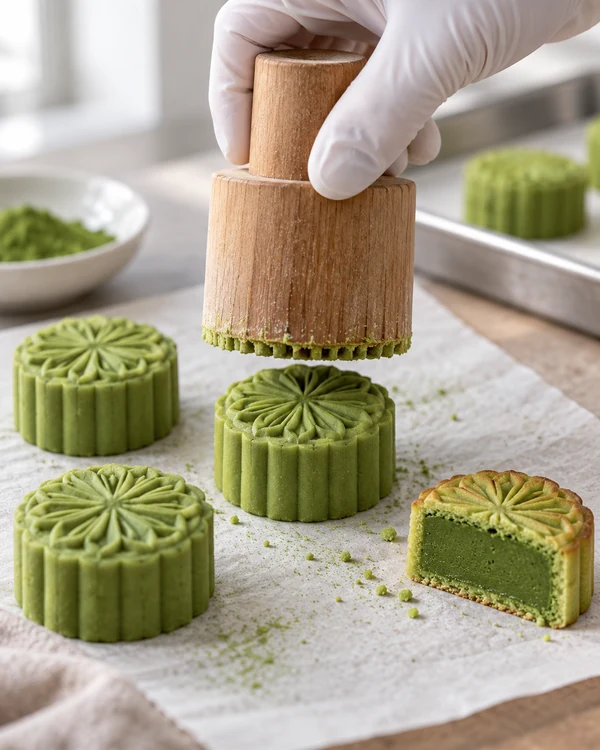
- Soft filling, warm dough, excess moisture, poor dusting or a mismatched mold load can blur the pattern.
- Does a recipe storage note prove commercial shelf life?
- No. The finished formula, hygiene, package and distribution require qualified validation.
- Which matcha grade should a buyer test?
- Compare culinary and premium samples in the chosen wrapper and filling, then approve by color, flavor and cost.
Conclusion
Lock the wrapper system, filling firmness and gram ratio before evaluating matcha intensity. Approve pattern definition and bite only after the specified cooling or maturation step. Contact AdoroHu Matcha with the wrapper, filling, matcha location, mold weight, certifications and seasonal volume.