
Matcha nougat becomes repeatable only when the buyer defines the product system and production endpoint. Matcha nougat succeeds when the team treats the marshmallow binder, milk-powder blend, inclusions, pressing, and cutting as one high-solids system. The supplied article is a snowflake-crisp style made with marshmallow, biscuits, nuts, raisins, milk powder, butter, and matcha. It is not the same task as a traditional egg-white nougat or the existing matcha marshmallow article. Start powder comparison with culinary matcha in one fixed formulation.
Published recipes supply useful quantities, sequences, and failure observations. They do not validate commercial equipment, safety, or shelf life. The article below uses those benchmarks as questions for a controlled pilot.
Matcha nougat should be approved against a written product brief, controlled process record, and finished-product checks. A change in the structural base, process route, or package can invalidate an earlier matcha comparison.
In short:
Key points:
- Define the exact product architecture before comparing powder.
- Use published measurements to identify variables, not to set factory limits.
- Approve the cooled, packed product under its intended route.
Which nougat family is being developed?
Name the product as a marshmallow-based snowflake-crisp nougat, a traditional cooked-syrup nougat, or another defined system. The supplied article uses a shortcut marshmallow binder, so its controls cannot be transferred to egg-white aeration or cooked honey syrup. Buyers need this identity before comparing texture or cost.
Key Takeaway: Name the product as a marshmallow-based snowflake-crisp nougat, a traditional cooked-syrup nougat, or another defined system.
Which pure matcha should enter the first nougat screen?
Compare culinary matcha in one fixed binder and inclusion mix. AdoroHu E-1/E-2 and O-1/O-2 are current culinary tiers; a higher tier should be used only when cooled pieces show a buyer-visible gain. Milk powder, butter, toasted nuts, biscuits, and dried fruit can mask differences visible in water.
The matcha marshmallow formulation guide defines the nearest existing technical boundary.
Key Takeaway: Compare culinary matcha in one fixed binder and inclusion mix.
What do the published quantities reveal about structure?
The article combines 220 g marshmallow, 50 g milk powder, 50 g butter, 10 g matcha, and about 270 g of crackers, almonds, and raisins. That ratio shows how much solid inclusion the binder must coat. It is a home benchmark, not a commercial formula or a promise that the same ratio will run on another mixer.
| Reference input | Published amount | Commercial question |
|---|---|---|
| Marshmallow | 220 g | Binder condition and melt window |
| Milk powder | 50 g | Powder blend and dairy allergen |
| Matcha | 10 g | Dose and distribution |
| Crackers, almonds, raisins | 270 g total | Binder coverage and piece variation |
Key Takeaway: The article combines 220 g marshmallow, 50 g milk powder, 50 g butter, 10 g matcha, and about 270 g of crackers, almonds, and raisins.
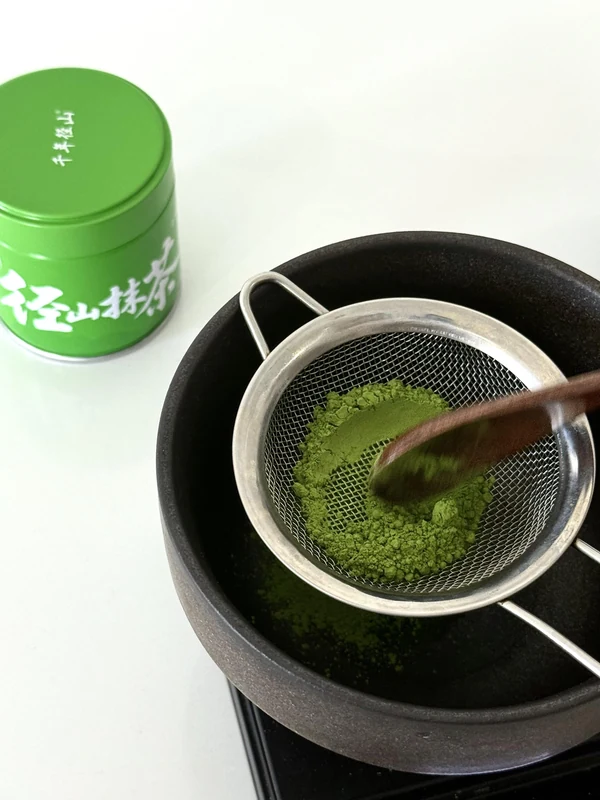
How should matcha enter the marshmallow binder?
Pre-blend matcha with milk powder, then add that blend after most marshmallow has melted and the heat is turned off, as the reference describes. This route reduces dry green pockets and limits extra hot hold. A plant should compare it with any approved alternative under the same binder temperature and inclusion load.
Key Takeaway: Pre-blend matcha with milk powder, then add that blend after most marshmallow has melted and the heat is turned off, as the reference describes.
Why do marshmallow age and heating matter?
The article warns that stale marshmallows make the nougat tough and dry and that overcooking the melt has the same effect. These observations create two separate receiving and process checks: binder condition before use and heat exposure during melting. Rejecting a matcha lot cannot fix either failure.
Key Takeaway: The article warns that stale marshmallows make the nougat tough and dry and that overcooking the melt has the same effect.
How can inclusion distribution be approved?
Cut pieces from several tray locations and score biscuit, nut, fruit, and matcha distribution. The reference keeps replacement inclusions near the same total weight, which recognizes that load changes binder coverage. A higher inclusion load may improve appearance yet increase dry pockets, fracture, and weight variation.
Batch evidence worth keeping
- Ingredient and formula identities.
- The process condition tied to the failure mode.
- Finished-unit evidence from more than one tray or location.
| Failure | Check first | Buyer consequence |
|---|---|---|
| Tough, dry bite | Marshmallow age and heat exposure | Rejects otherwise usable powder |
| Green pockets | Milk-powder pre-blend and mixing | Uneven flavor and appearance |
| Pieces fall apart | Inclusion load and pressing | Low packing yield |
| Smeared cut | Conditioning and cut point | Poor piece definition |
Key Takeaway: Cut pieces from several tray locations and score biscuit, nut, fruit, and matcha distribution.
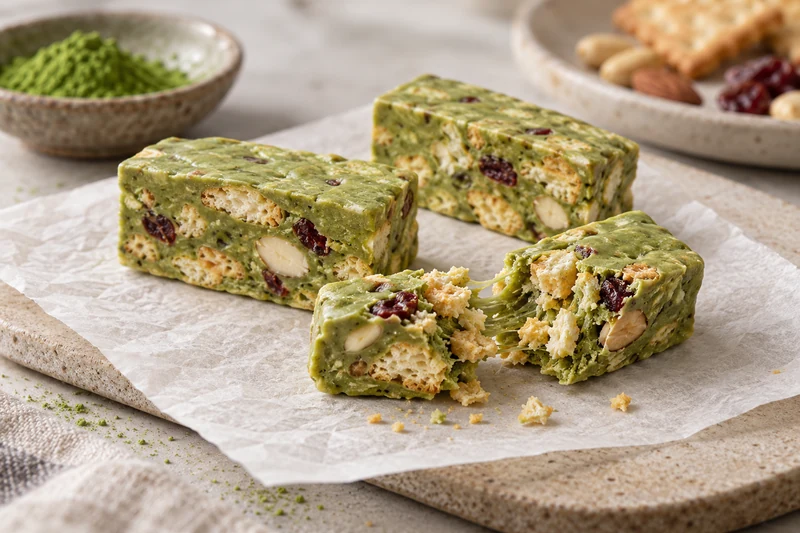
What pressing and cutting trade-offs control chew?
Press enough to bind the mass without crushing the crisp inclusions, then cut at a defined conditioning point. The article chills for 30 minutes and uses a dusted tray; those cues identify release and cut timing as trial variables. I would choose the lightest pressing method that produces clean, coherent pieces because dense compression defeats the product’s crisp contrast.
The matcha caramel production guide provides a useful adjacent comparison without taking over this product task.
Key Takeaway: Press enough to bind the mass without crushing the crisp inclusions, then cut at a defined conditioning point.
Which allergen and safety reviews apply?
Milk, wheat, almonds or other tree nuts, soy, peanuts, sesame, and egg may enter through the actual binder, biscuits, inclusions, or line. FDA requires declaration of major-allergen food sources when present. Any heat, sanitation, and storage controls belong to the manufacturer’s hazard analysis; the recipe’s one-week storage comment is not commercial shelf-life evidence.
Use the FDA major-allergen factsheet for ingredients actually present. Do not infer a finished-food safety limit from an ingredient blog.
Key Takeaway: Milk, wheat, almonds or other tree nuts, soy, peanuts, sesame, and egg may enter through the actual binder, biscuits, inclusions, or line.
What record should support buyer approval?
Keep the binder specification, matcha lot, powder-blend step, melt condition, inclusion weights, tray and press method, cut point, piece-weight spread, sensory result, and package hold. AdoroHu supplies pure matcha powder, not marshmallow, nougat premix, inclusions, or finished candy. A changed binder or inclusion system requires affected checks to be repeated.
Key Takeaway: Keep the binder specification, matcha lot, powder-blend step, melt condition, inclusion weights, tray and press method, cut point, piece-weight spread, sensory result, and package hold.
FAQ
- Is snowflake-crisp nougat the same as traditional nougat?
- No. The supplied version uses a marshmallow binder with biscuits and inclusions; traditional cooked-syrup and egg-white systems require different controls.
- Can the 10 g matcha benchmark be scaled directly?
- No. It belongs to the published home formula and must be rebuilt for the commercial binder, inclusion load, piece size, and flavor target.
- Why does matcha nougat turn hard?
- Stale marshmallow, excess heat, binder balance, pressing, and storage can all harden the piece.
- When should matcha be added?
- The supplied method pre-blends matcha with milk powder and adds it after most marshmallow has melted; a plant should verify that route in its own equipment.
- Does an airtight container prove one week of shelf life?
- No. The recipe comment is not commercial shelf-life validation under the actual formula, package, and distribution conditions.
Conclusion
A useful matcha nougat approval joins one matcha lot to a defined formula, process, finished-product result, and change rule. Send the application constraints through the AdoroHu Matcha contact page when requesting pure matcha powder samples.