
Matcha kombucha works commercially when fermentation, matcha addition, alcohol control, carbonation, sediment, and package behavior are developed as one product system. A household brew can show that matcha and kombucha are compatible, but it cannot establish regulatory status or control continued fermentation. Begin with a fixed fermented base and a culinary matcha powder trial.
The hard part arrives after the tank looks acceptable. Suspended matcha can settle, package opening can change, and yeast can keep producing alcohol after filling. A commercial brief therefore needs lifecycle evidence rather than one tasting result.
Matcha kombucha requires separate decisions for fermentation, powder dispersion, alcohol, carbonation, and sediment. Approve the product only when the chosen addition route and package remain within the buyer’s defined limits through the intended distribution period.
In short:
Key points:
- Treat published recipe figures as variables to test, not validated process limits.
- Measure alcohol and package behavior over time because fermentation may continue after bottling.
- Use matched controls to separate culture changes from physical matcha settling.
What should a commercial matcha kombucha brief lock first?
Define the base tea, culture system, matcha addition point, sweetness and acidity targets, package, distribution temperature, and alcohol-positioning goal. These choices belong together because fermentation can continue after filling while matcha remains a suspended whole-leaf powder. A buyer who changes the tea base and matcha at once cannot tell which input changed flavor, sediment, or fermentation behavior.
Key Takeaway: Define the base tea, culture system, matcha addition point, sweetness and acidity targets, package, distribution temperature, and alcohol-positioning goal.
What does the published matcha kombucha method contribute to a pilot?
The published method uses 8 g matcha and 120 g sugar for 2 L, ferments 7–14 days, and describes 22–24°C as its preferred home-brew range. It also recommends a separate vessel because matcha sediment accumulates and can carry flavor into later brews. These figures identify variables worth controlling; they are not commercial targets, validated alcohol controls, or shelf-life evidence.
| Published home benchmark | What it helps identify | What it cannot prove |
|---|---|---|
| 8 g matcha per 2 L | Starting-dose variable | Commercial sensory optimum |
| 7–14 day fermentation | Sampling timeline matters | A fixed plant endpoint |
| 22–24°C preference | Temperature affects the brew | Validated control range |
| Separate vessel | Sediment and carryover matter | Sanitation or safety validation |
Key Takeaway: The published method uses 8 g matcha and 120 g sugar for 2 L, ferments 7–14 days, and describes 22–24°C as its preferred home-brew range.
Should matcha enter before or after fermentation?
Pre-fermentation addition tests culture contact, long settling time, and powder carryover. Post-fermentation addition isolates the matcha flavor more clearly but creates a late dispersion and hygiene step. I would begin with post-fermentation addition when the buyer wants to compare powders, then test pre-fermentation only if culture interaction is part of the product concept. The consequence is cleaner diagnosis with fewer wasted fermentation runs.
The matcha RTD stability guide covers the adjacent non-fermented stability task.
Key Takeaway: Pre-fermentation addition tests culture contact, long settling time, and powder carryover.
How should pure matcha be dispersed in fermented tea?
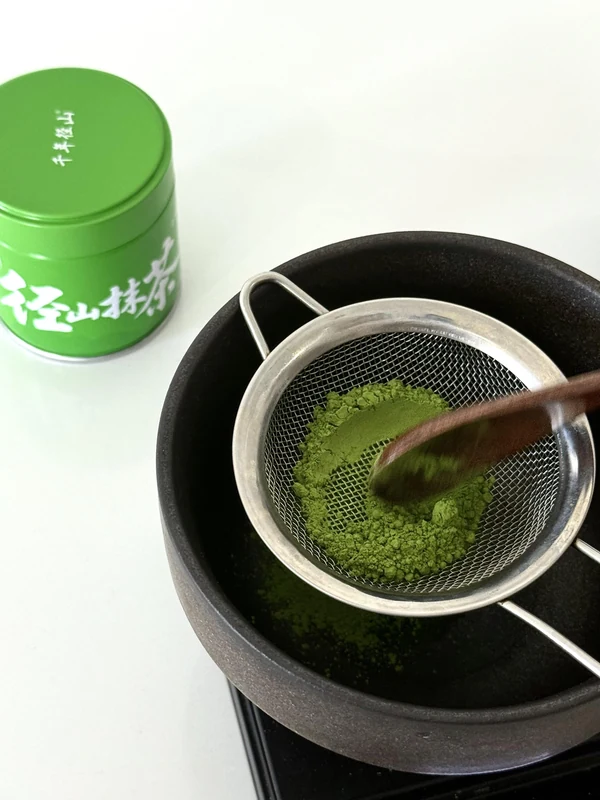
Build a smooth pre-dispersion with a measured portion of formula liquid, then add it under controlled shear before high carbonation develops. The home reference whisks powder into cooled sweet tea and suggests sieving visible lumps. In a plant trial, inspect tank uniformity, fill-to-fill color, sediment depth, and redispersion rather than treating an immediately green tank as proof of stability.
The matcha solubility test guide explains why matcha behaves as a suspension rather than a fully dissolved extract.
Key Takeaway: Build a smooth pre-dispersion with a measured portion of formula liquid, then add it under controlled shear before high carbonation develops.
How can controls separate fermentation drift from matcha sediment?
Run a fermented base without matcha, the same base with matcha added after fermentation, and the intended process route. The clear control shows acidity and gas changes from the culture; the post-addition control reveals physical settling without the same culture exposure. This three-way comparison costs more than a single batch, but it stops the team from changing fermentation conditions to solve a suspension problem.
Minimum comparison set
- Fermented base without matcha.
- Matcha added after fermentation.
- Matcha exposed to the intended fermentation route.
Key Takeaway: Run a fermented base without matcha, the same base with matcha added after fermentation, and the intended process route.
What must the alcohol-control plan address in matcha kombucha?
The plan must evaluate alcohol through the product lifecycle, not only at bottling. The U.S. Alcohol and Tobacco Tax and Trade Bureau states that its alcohol-beverage requirements apply when kombucha contains 0.5% alcohol by volume or more. TTB also warns that a product below 0.5% at bottling can become subject if continued fermentation raises it later. Matcha dose, taste, pH, or a recipe timeline cannot prove the product will remain below that threshold.
Read the TTB kombucha requirements before defining U.S. alcohol positioning. Classification can also depend on formulation and applicable federal and state requirements.
| Lifecycle point | Evidence question | Buyer risk |
|---|---|---|
| Bottling | What is the measured ABV? | Incorrect initial classification |
| Distribution hold | Can fermentation continue? | ABV rises to 0.5% or more |
| End of stated life | Is the position still supported? | Label and regulatory exposure |
Key Takeaway: The plan must evaluate alcohol through the product lifecycle, not only at bottling.
How should carbonation and package opening be tested?
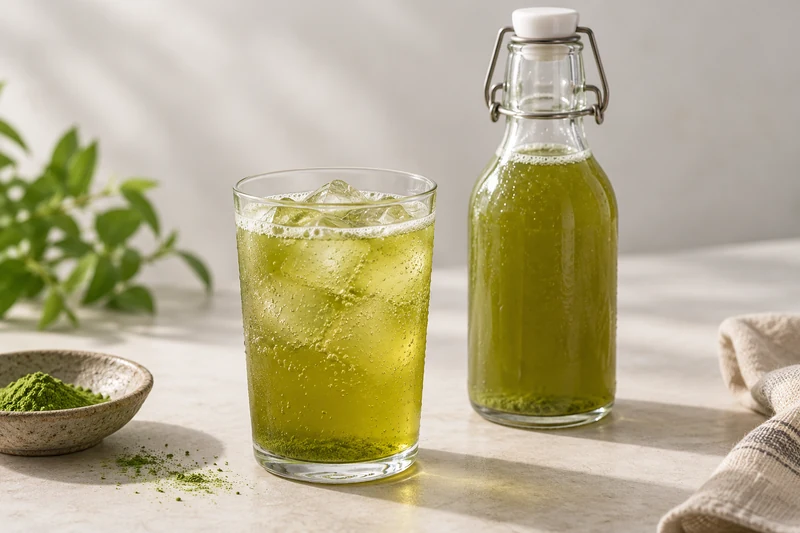
Matcha particles can provide nucleation sites, so record foam-over, opening behavior, sediment release, fill consistency, and package condition after the intended hold. Compare matched packages from the start, middle, and end of filling. More agitation may improve tank uniformity yet increase entrained gas or foam; the useful setting is the lowest agitation that keeps fills consistent without creating a packaging problem.
Package observations
- Opening foam and gas release.
- Sediment depth before and after gentle inversion.
- Fill-to-fill color and solids consistency.
Key Takeaway: Matcha particles can provide nucleation sites, so record foam-over, opening behavior, sediment release, fill consistency, and package condition after the intended hold.
Which sensory trade-offs should a buyer decide?
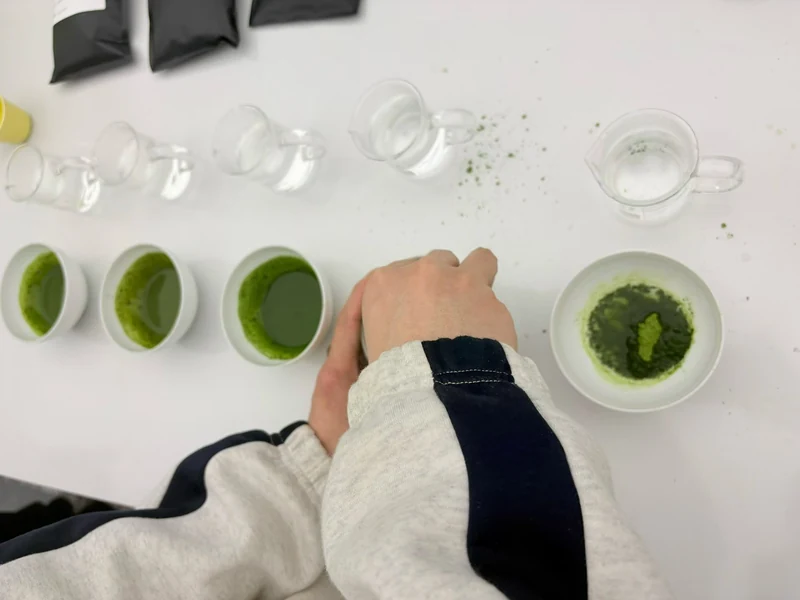
Score acidity, residual sweetness, tea aroma, matcha bitterness, color, visible sediment, and ease of redispersion at the same temperature. More matcha can strengthen identity but deepen sediment and dryness; more sweetness can soften bitterness while changing the brief. The buyer should approve a defined balance, not ask production to maximize greenness.
Key Takeaway: Score acidity, residual sweetness, tea aroma, matcha bitterness, color, visible sediment, and ease of redispersion at the same temperature.
What evidence supports approval and scale-up?
Keep the formula and culture identities, matcha lot, fermentation and alcohol records, addition sequence, dispersion observations, package results, sensory decision, and deviation rules. 21 CFR 117.135 requires written preventive controls when a facility hazard analysis identifies a hazard requiring one, but it supplies no universal kombucha fermentation limit. AdoroHu supplies pure matcha powder, not finished kombucha or a validated fermentation process.
Key Takeaway: Keep the formula and culture identities, matcha lot, fermentation and alcohol records, addition sequence, dispersion observations, package results, sensory decision, and deviation rules.
FAQ
- Can matcha be fermented directly with kombucha culture?
- It can be tested, but pre-fermentation and post-fermentation addition create different culture, sediment, and process-control questions.
- Does a bottling result below 0.5% ABV settle U.S. alcohol status?
- No. TTB notes that continued fermentation can raise kombucha to 0.5% ABV or more after bottling, so lifecycle control and reliable testing matter.
- Why does matcha kombucha foam strongly when opened?
- Carbonation and suspended matcha particles can affect nucleation and sediment release, so test the intended package through its planned hold.
- Can the reference’s 7–14 day fermentation be used as a factory range?
- No. It is a home-brew benchmark, not a validated commercial fermentation or alcohol-control range.
- What should a buyer include in a matcha sample request?
- Include the base tea, culture route, addition stage, sweetness and acidity targets, package, alcohol-positioning goal, and sediment and sensory checks.
Conclusion
A defensible matcha kombucha project tracks fermentation, alcohol, solids, carbonation, and the package across the intended lifecycle. Share the base-tea system, addition route, package, and target sensory profile through the AdoroHu Matcha contact page when requesting pure matcha powder samples.