
Pallet stacking patterns become reliable when the shipper connects carton geometry and strength to layer support, center of gravity, pallet condition, unitization, and route stress. A pattern that fills the deck efficiently can still crush cartons or shift in transit.
For pallet stacking patterns, matcha buyers should validate the exact carton, pack count, pallet, wrap or straps, warehouse handling, and shipping route. For orders using wholesale matcha supply, align the pallet decision with the approved pack specification rather than a generic calculator result.
A pallet pattern is a load-path design. Each carton needs adequate support from the layer below, while the completed unit load must resist movement during handling and transport. Geometric fit is useful input, but it does not prove compression strength or stability.
In short:
Key points:
- Screen patterns for deck fit, support, overhang, gaps, and center of gravity.
- Validate the carton, pallet, interlayers, and containment as one unit load.
- Approve the pattern after warehouse and route-representative testing.
What should a pallet stacking pattern specification include?
A specification should identify the carton and revision, external dimensions, gross mass, orientation limits, pallet type and condition, cartons per layer, layer count, pattern drawing, interlayers, edge protection, wrap or strap setup, total height and mass, label faces, and handling restrictions.
State tolerances and reference photographs. Nominal carton dimensions alone can hide bulge, flap variation, and compression after conditioning.
Key Takeaway: Define the physical unit load and its handling conditions, not only boxes per pallet.
How do column and interlocked pallet patterns differ?
Column stacking aligns carton corners vertically, which can create a direct compression path when cartons and layers are well supported. Interlocked stacking rotates or offsets cartons between layers to improve lateral engagement, but the offset may place carton panels over gaps and reduce vertical support.
| Pattern | Potential advantage | Main risk to validate |
|---|---|---|
| Column | Direct corner alignment | Lower lateral stability without containment |
| Interlock | Greater layer engagement | Reduced compression support |
| Brick or split | Flexible deck coverage | Repeated unsupported edges |
| Pinwheel | Useful orientation and engagement | Central gaps and complex support |
No pattern is universally strongest. The actual carton construction, contents, conditioning, pallet deck, and route decide the result.
ISO 2234:2000 covers static-load stacking tests for complete, filled transport packages and unit loads. Its published scope includes deformation, creep, collapse, and failure under stacking, including cases involving an open-decked pallet or eccentric superimposed load. The ISO 2234 scope supports testing the actual support condition; it does not rank column and interlock patterns universally.
Key Takeaway: Compare vertical support and lateral stability for the same packed carton.
How should carton dimensions for pallet patterns be measured?
Measure packed cartons in the condition used for palletizing, including bulge and closures. Sample across production and note orientation. A calculator using an empty-carton drawing may overstate fit and create forced compression or overhang on the line.
Record length, width, height, mass, squareness, and any dimension that changes with settling. Use the upper practical envelope for fit checks, then confirm the pattern physically.
Consider a geometric screen using a nominal 1,200 × 1,000 mm pallet and a packed carton measured at 390 × 290 mm. Three cartons along the 1,200 mm side use 1,170 mm, while three along the 1,000 mm side use 870 mm. That nine-carton rectangle leaves 30 mm and 130 mm respectively before tolerances, gaps, or restraint. This geometric example does not prove compression support, permissible mass, or stability.
Key Takeaway: Base deck fit on representative packed-carton dimensions and variation.
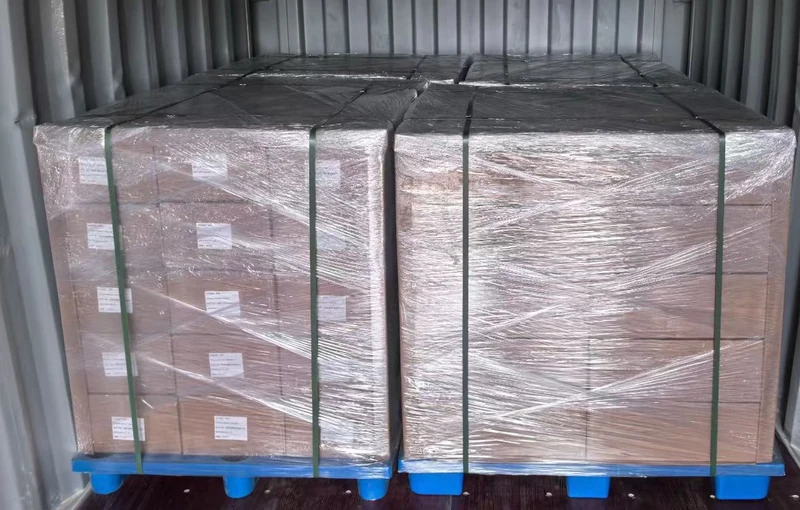
Why do pallet overhang and unsupported gaps matter?
Pallet overhang removes support from carton edges and exposes them to impact. Internal gaps can place upper cartons on panel centers instead of stronger edges and corners. Underhang may appear safer but can leave unused deck area and permit movement if containment is weak.
Map the support footprint layer by layer. Reject a neat top-view pattern when lower-layer cartons bridge wide deck-board or pattern gaps; appearance does not show where compression force travels.
Key Takeaway: Trace support under every carton edge and corner through the stack.
How should pallet weight and center of gravity be managed?
Keep the load’s center of gravity low and near the pallet center. Place heavier compatible cases in lower layers when mixed loads are unavoidable, while preserving crush limits and receiving sequence.
| Check | Evidence | Failure consequence |
|---|---|---|
| Layer mass | Carton count and actual mass | Uneven load path |
| Load center | Pattern and mass distribution | Tip or fork-handling instability |
| Total mass | Scale or controlled calculation | Pallet or handling overload |
| Height | Finished measured load | Excess sway or clearance conflict |
Do not infer legal or equipment limits from an online pattern. Confirm pallet, rack, vehicle, lift-truck, and workplace requirements with responsible parties.
Key Takeaway: Calculate mass distribution and verify it on the completed load.
What role do pallets and interlayers play in stacking patterns?
The pallet is part of the support system. Inspect deck boards, blocks, fasteners, damage, contamination, and suitability for the load and destination. Slipsheets or anti-slip interlayers may improve friction or load distribution, but they can also change compression and automated handling.
Trial interlayers with the actual carton surfaces and moisture conditions. Do not make them mandatory from vendor guidance alone.
ISO 2234 specifically recognizes that an open-decked pallet changes the support condition in a stacking test. That matters when a layer bridges deck openings: the same carton may see different panel loading on a solid test platen and on the shipping pallet. Specify the deck arrangement in the test record and inspect deformation above unsupported regions.
Key Takeaway: Qualify every support and friction component with the chosen pattern.
How should a patterned pallet load be unitized?
Specify containment by material identity, application equipment, cycle, attachment to pallet where appropriate, overlaps, force or tension controls, strap position, protectors, and inspection. Too little containment permits movement; too much can deform cartons and damage seals.
Observe lower, middle, and upper layers after wrapping. Corners drawn inward or crushed top cases show that the containment system is changing the load geometry.
ASTM D6055 provides mechanical-handling methods for unitized loads and large shipping cases, including fork-truck handling. Its role is to reproduce defined handling hazards, not to certify one wrap setting. Use the applicable current method through a qualified test plan and pair handling observations with the unitization specification.
Key Takeaway: Validate containment force and coverage without deforming the cartons.
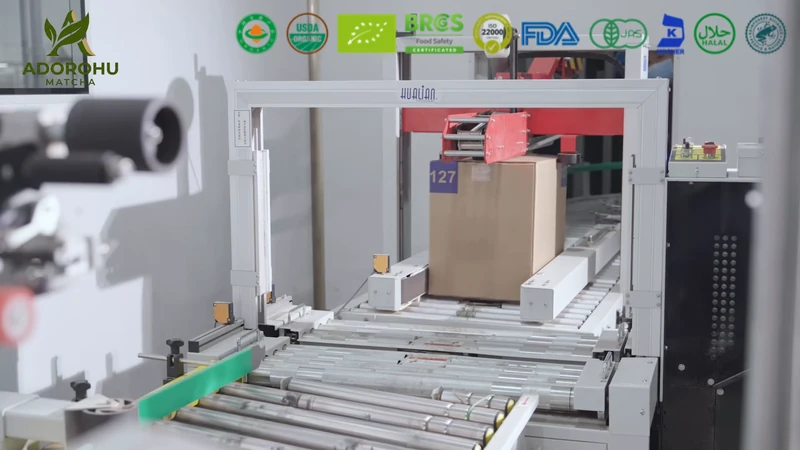
How can a shipper compare candidate pallet stacking patterns?
Create two or three feasible pallet patterns, then compare deck use, cartons per layer, support continuity, overhang, gaps, total height, center of gravity, build practicality, label visibility, and containment demand. Keep carton and route constant.
| Evaluation | Method | Pass evidence |
|---|---|---|
| Geometric fit | Drawing and physical dry build | No forced fit or unacceptable overhang |
| Load path | Layer support map | Supported edges and corners |
| Build repeatability | Multiple operators or automation cycles | Correct orientation and count |
| Handling | Lift, stage, turn, and stop trials | No shift or damage |
| Route simulation | Qualified challenge | Acceptable cartons and stability afterward |
Favor a slightly lower cube utilization when it materially improves repeatability and damage resistance. One extra carton per layer has little value if receiving rejects the load.
Key Takeaway: Compare total delivered performance, not deck utilization alone.
What trials should approve a pallet stacking pattern?
Trial the completed load through palletizing, staging, fork entry, turning, braking, rack or floor storage, loading, and representative transport challenges. Inspect after each stage so the origin of damage remains visible.
ASTM D4169-23e1 is a distribution-cycle practice for shipping containers and systems. It combines selected hazards into a planned sequence rather than treating vibration, compression, and handling as interchangeable. Choose the distribution cycle and assurance basis for the real route; citing D4169 alone does not show that a particular unit load passed.
Record the sequence and inspect between hazards when diagnosis matters. A load that survives vibration before compression may respond differently from one tested in the reverse order. The approved sequence should reflect the intended distribution system and preserve any deviations from the plan.
Instrumented testing can help compare candidate loads, but ordinary observations remain valuable. Mark carton positions, photograph all faces, measure lean and height, and note wrap displacement, corner crushing, panel bulge, pallet deflection, and broken components. After the challenge, inspect lower layers before dismantling destroys the evidence. Separate cosmetic scuffing from defects that affect product protection or safe handling.
Use the intended conditioning state. Carton performance can change with humidity, time under load, and temperature, so a freshly packed dry load may not represent warehouse or route exposure. State the conditioning and challenge boundaries in the approval; do not convert one successful trial into a claim for all seasons and destinations.
Coordinate the unit-load trial with the response plan for a matcha transport temperature excursion so receiving teams preserve both physical-damage and environmental evidence when a shipment arrives outside expectations.
US OSHA 29 CFR 1910.176(b) requires bagged, bundled, stacked, and tiered material in covered general-industry workplaces to be stacked, blocked, interlocked, and limited in height so it is stable and secure against sliding or collapse. Apply all relevant regulations and site rules; the cited rule does not supply a universal pallet height.
Key Takeaway: Validate the unit load through its real handling sequence and applicable safety rules.
How should mixed-SKU pallet patterns be controlled?
Use mixed-SKU pallet patterns only with a written layer plan, compatibility check, mass distribution, count verification, label visibility, and receiving sequence. Avoid placing small cartons where they create point loads or unsupported upper cases.
Separate SKUs with clear visual controls where appropriate and prevent substitutions from changing the center of gravity. If the pattern depends on exact carton combinations, treat a short pick as a deviation requiring a revised plan.
Key Takeaway: Make every mixed-load position and substitution rule explicit.
What evidence should release a pallet stacking pattern?
Release a pattern with controlled drawings, carton and pallet revisions, measured finished load, component identities, photographs, trial conditions, observed damage, acceptance, and approvers. Keep a retained reference or visual standard at the palletizing station.
Train builders and lift-truck operators on the features that protect the load: carton orientation, layer count, gap location, interlayer placement, label face, containment start and finish, and fork-entry direction. Audit several normal loads after training. A trial built slowly by the engineering team does not demonstrate that the line can repeat the pattern at production pace.
At receiving, capture lean, wrap or strap condition, crushed locations, wetting, pallet damage, and count discrepancies before breakdown. Link repeated damage positions back to the pattern drawing. This feedback can show whether the unit load failed during construction, warehousing, vehicle loading, transit, or unloading.
Connect the decision to matcha export logistics guidance without claiming that an individual-box test proves unit-load stability. Revalidate after changes to carton, contents, pallet, pattern, interlayer, containment, height, equipment, storage, or route. Contact AdoroHu Matcha to align case-pack information and shipping documentation.
Key Takeaway: Release one revision-controlled unit-load system and control its changes.

FAQ
- What are the main pallet stacking patterns?
- Common families include column, interlocked, brick or split, row, and pinwheel arrangements, each requiring validation for the actual carton and route.
- Is column stacking stronger than interlocking?
- Column alignment can support vertical compression well, while interlocking can aid lateral engagement; neither is universally better.
- Should boxes overhang a pallet?
- Avoid unvalidated overhang because it removes edge support and increases exposure to impact and compression damage.
- How high can pallets be stacked?
- Height depends on the carton, pallet, mass, stability, equipment, storage, vehicle, workplace rules, and destination requirements.
- Can a pallet calculator approve a load?
- A calculator can screen geometric fit, but it cannot prove carton strength, containment, handling stability, or route performance.
- When should a pallet pattern be revalidated?
- Revalidate after material changes to cartons, contents, pallets, pattern, containment, equipment, storage, or distribution route.
Conclusion
Reliable pallet patterns trace force through the cartons, keep the center of gravity controlled, and survive actual containment and handling. Record the approved unit load precisely enough that another shift and receiving site can recognize it.