
Matcha praline layers work together when shell, centers, crisp layer, cap, and demolding are designed as one piece. A good ganache cannot rescue a thin shell, incompatible water activity, trapped air, or a base that prevents a clean seal. Begin with pure culinary matcha and assign it a clear role before adjusting dose.
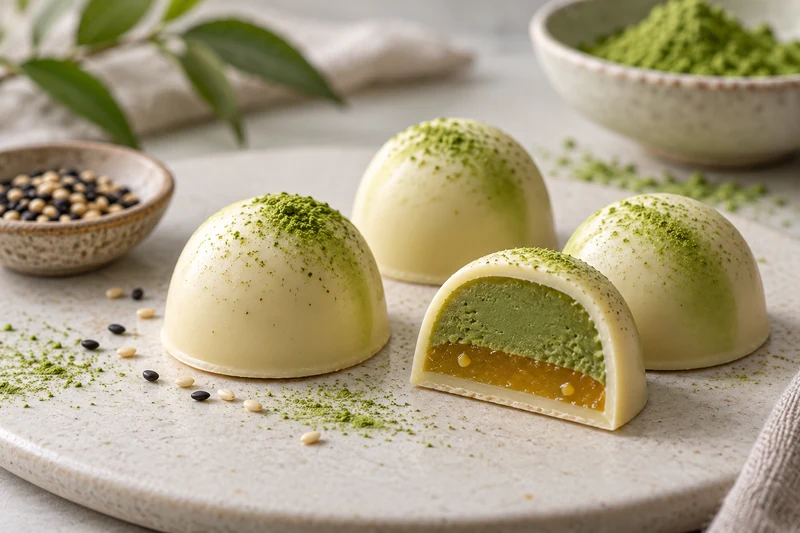
The current Callebaut reference builds a molded bonbon with calamansi jelly, sesame-matcha ganache, and a matcha-sesame crisp base. It proves a layered architecture, but its branded ingredients and recipe quantities do not validate another plant’s formulation, shelf life, or label.
A repeatable matcha praline needs a stable shell, compatible center layers, controlled fill heights, a clean capping surface, and an undamaged release. Matcha can sit in one or more layers, but every placement changes flavor, color, solids, and process behavior. Validate the complete piece in its actual package.
In short:
Key points:
- Give each layer one sensory and structural job.
- Control shell, fill, set, cap, and release conditions as a linked sequence.
- Confirm water activity, allergens, naming, and shelf life for the actual bonbon.
What should a matcha praline design brief define?
The brief should define mold geometry, shell or coating system, layer order, target piece mass, cutaway appearance, eating sequence, package, and market. This prevents a team from improving one center while making the whole bonbon harder to cap or release.
| Design choice | Record | Buyer consequence |
|---|---|---|
| Matcha location | Shell, ganache, jelly, crisp base | Changes color visibility and flavor timing |
| Layer order | Deposit and set sequence | Controls adhesion and clean boundaries |
| Headspace | Target cap clearance | Prevents weak seals and exposed filling |
| Piece geometry | Mold cavity and target mass | Controls shell demand and demolding stress |
Key Takeaway: Approve the architecture on paper before optimizing individual centers.
Where should matcha sit in a layered praline?
Matcha should sit where it delivers the intended color and flavor without destabilizing the layer. A ganache placement gives a creamy release; a crisp base gives late texture; a shell placement gives immediate color but can complicate viscosity and temper behavior.
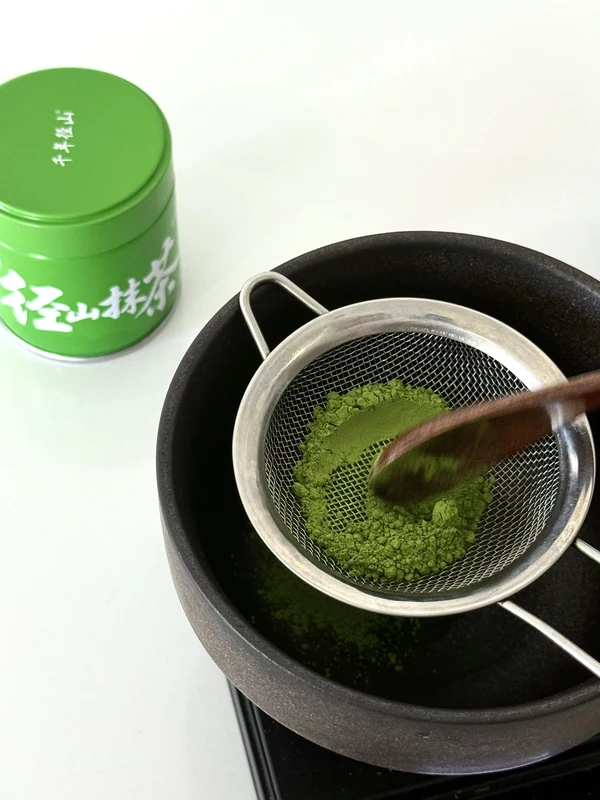
The reference uses sieved matcha in a sesame ganache and matcha in a crisp base. That is concrete design evidence, not a universal recommendation. Screen one placement first, then add a second only when it creates a clear sensory benefit.
The tradeoff is impact versus process load. Multiple green layers can strengthen recognition, yet they add weighing, dispersion, allergen, and rework complexity. A single controlled layer is often easier to scale.
Key Takeaway: Use the fewest matcha placements that deliver the desired eating sequence.
How should the molded shell be prepared?
The molded shell should have complete cavity coverage, controlled thickness, and a clean rim before filling. Record mold condition, chocolate or coating identity, working condition, vibration, inversion, scrape, and set time.
Do not call every vegetable-fat cacao coating chocolate. 21 CFR Part 163 distinguishes standardized chocolate categories and named vegetable-fat coatings in the United States. The buyer consequence is label and specification risk, so confirm the actual formulation and market name before artwork.
| Shell fault | Likely process question | Consequence |
|---|---|---|
| Thin top edge | Was drain or scrape excessive? | Cracks during release or transport |
| Dull patches | Were mold and working conditions controlled? | Cosmetic rejects |
| Pinholes | Was air removed after casting? | Leaks and weak barrier |
Key Takeaway: Release shell preparation against cavity coverage and rim quality, not average piece weight alone.
How can distinct center layers stay clean?
Distinct center layers stay clean when each deposit has controlled temperature, flow, mass, and set condition before the next layer arrives. A warm second deposit can disturb a jelly or melt a crisp interface. A cold, set surface may resist adhesion.
Use fixed fill weights and inspect cut pieces from the beginning, middle, and end of the run. Record interface smearing, trapped air, off-center layers, and total height. The published matcha fudge guide offers adjacent center-setting context; this article owns molded assembly and interface control.
In the Callebaut reference, the sesame-matcha ganache is piped onto the jelly at 28°C and left to crystallize for eight hours before the crisp base is spread above it. Those are actual sequencing conditions for that named formulation. They are not plant targets for another couverture, ganache, jelly, mold, or room; the useful buyer requirement is to define and verify a layer-specific deposit condition and set criterion before the next layer.
Key Takeaway: Define a deposit window and acceptance condition for every interface.
How should water activity and moisture migration be managed?
Water activity and moisture migration should be managed across the complete layered center, not inferred from one component. A wet jelly can soften a crisp base; a dry inclusion can pull moisture from ganache. Matcha solids may change the system, but they do not guarantee stability.
The FDA’s Water Activity (aw) in Foods, Inspection Technical Guide 39, dated April 16, 1984, defines water activity through the vapor-pressure ratio under identical conditions and explains that temperature affects the measurement and microbial-growth relationship. The official ITG 39 page supports measuring the actual layers and finished piece. It does not supply a praline target or prove shelf life, so arithmetic averages and a single reading are not release evidence.
The operational choice may be to add a barrier, reformulate a layer, shorten the intended life, or remove a texture contrast. Protecting a crisp layer at the cost of an unreliable seal is a poor trade.
Key Takeaway: Validate migration and safety in the assembled praline over the intended storage, not from component recipes.
What makes capping reliable?
Capping is reliable when the filling surface is clean, level, sufficiently set, and below a defined rim clearance. Smears on the rim interrupt the seal; excess fill creates thin caps; long open holds expose centers and reduce throughput.
Set a maximum fill height and a visual rim-cleanliness check. Record cap material condition, application, scrape, set, and rejects. If rework is allowed, define which defect types can be recovered without obscuring lot identity or allergen status.
Key Takeaway: Treat rim condition and headspace as measured assembly controls.
How should demolding and packing be tested?
Demolding and packing should be tested after the defined crystallization or set period, using the actual mold and handling method. Record release force indicators, shell cracks, cap separation, fingerprints, scuffing, and piece orientation.
Test tray, divider, pouch, or box contact through expected transport. A perfect demold can still fail when pieces collide or warm during packing. Compare package designs by damage pattern and labor, not appearance alone.
Use the published matcha caramel guide only for adjacent center and cutting context; molded praline release remains a different task.
Key Takeaway: Approve the piece only after demolding and package handling preserve every layer and seal.
What should the final praline release record include?
The release record should include material lots, matcha lot, mold, layer formulas, deposit order, weights, temperatures or conditions, set times, cap checks, cutaways, water-activity plan, allergen review, package, and sensory result. AdoroHu supplies pure matcha powder, not ganache, praline paste, jelly, sesame filling, or finished bonbons.
Tree nuts, milk, soy, and sesame may apply depending on the chosen ingredients. The actual formula, supplier records, target market, and line determine declarations and cross-contact controls; the matcha ingredient does not resolve that review.
Key Takeaway: Bind the commercial decision to the complete piece, its exact ingredients, and its actual package.
FAQ
- Can matcha be added to both ganache and a crisp praline layer?
- Yes, but each placement should have a clear sensory purpose and its own dispersion and process checks.
- Does a stable ganache guarantee a stable praline?
- No; shell integrity, layer interfaces, migration, capping, demolding, packaging, and storage also determine performance.
- How much headspace should a molded praline have?
- The chocolatier should define and validate the clearance for the actual mold, centers, and capping process rather than copy a universal number.
- Can a vegetable-fat coating be called chocolate?
- Naming depends on formulation and market rules, so verify the applicable standard before label approval.
- Does matcha control water activity?
- No; water activity must be measured and managed in the actual layers and assembled product.
- What should be cut open during a pilot?
- Inspect pieces across the run for shell thickness, layer height, clean interfaces, voids, cap seal, and migration over time.
Conclusion
A strong matcha praline is an assembly system, not a stack of individually attractive recipes. To compare pure matcha grades in a defined shell and center design, contact AdoroHu Matcha with the matrix, target flavor, package, and market.