
Matcha banana bread stays moist without losing color when fruit mass and condition, batter consistency, matcha dispersion, mixing, and bake endpoint are controlled together. Banana maturity changes softness, flavor, sugar and starch condition, but the bound recipe does not establish that riper fruit adds water or causes a gummy center. Measure the prepared fruit and batter instead of assigning that fault from ripeness alone. Start with one culinary matcha and a defined banana specification before adjusting either dose.
The published Maritime Glutton recipe divides a banana-bread batter, colors one portion with matcha, and swirls the two. That is a useful household benchmark. A bakery still needs controls for fruit variability, batter deposit, loaf geometry, endpoint, cooling, and pack-out.
Commercial matcha banana bread needs a measured banana input, restrained mixing, repeatable deposit pattern, and a validated bake endpoint. Color should be judged beside moisture, slice strength, and flavor after cooling. A bright hot loaf is not enough evidence for release.
In short:
Key points:
- Standardize banana maturity and usable fruit mass before changing matcha.
- Protect crumb structure by controlling dispersion, mixing, deposit, and loaf geometry.
- Release against measured bake and cooled-loaf checks rather than color alone.
What should the matcha banana bread product brief lock first?
The brief should lock loaf mass, pan geometry, banana form, target crumb, matcha pattern, package, and serving channel. A café slice, wrapped retail loaf, and frozen foodservice loaf face different cutting and holding demands.
Define whether matcha covers the whole crumb or appears as a marble. Record acceptable color variation, banana pieces, top decoration, slice thickness, and the point at which the loaf is packed. These choices determine whether the team should optimize batter flow, pattern definition, or uniform green color.
| Brief item | Fixed decision | Buyer consequence |
|---|---|---|
| Banana input | Maturity band and usable mass | Controls water and flavor variation |
| Pan and deposit | Geometry and target fill | Controls bake path and yield |
| Matcha design | Full crumb or marble | Changes mixing and appearance checks |
| Pack format | Whole, sliced, wrapped, frozen | Changes cooling and breakage risks |
Key Takeaway: Define the saleable loaf before running matcha or oven trials.
How should banana variability be controlled?
Banana variability should be controlled by an incoming maturity description, prepared-fruit mass, and a consistent mashing method. Counting bananas is weak control because fruit size, peel loss, and ripeness vary.
Track the usable mass and condition actually entering the batter. If frozen puree or a prepared ingredient is used, record its specification and thaw condition. Then hold flour, sugar, fat, egg system, and leavening constant during the first matcha comparison.
The practical tradeoff is between ripe-fruit flavor and process consistency. Different fruit lots may change batter behavior, but the mechanism must be measured in the bakery’s formula. Rejecting out-of-spec prepared fruit is cheaper than using longer bake time to correct an unexplained batter change.
The published matcha bread formulation guide covers the separate yeast-bread task; its documentation discipline is useful here even though banana bread uses a quick-bread system.
Key Takeaway: Control prepared banana mass and condition so matcha trials are not really fruit-moisture trials.
How should matcha enter the batter?
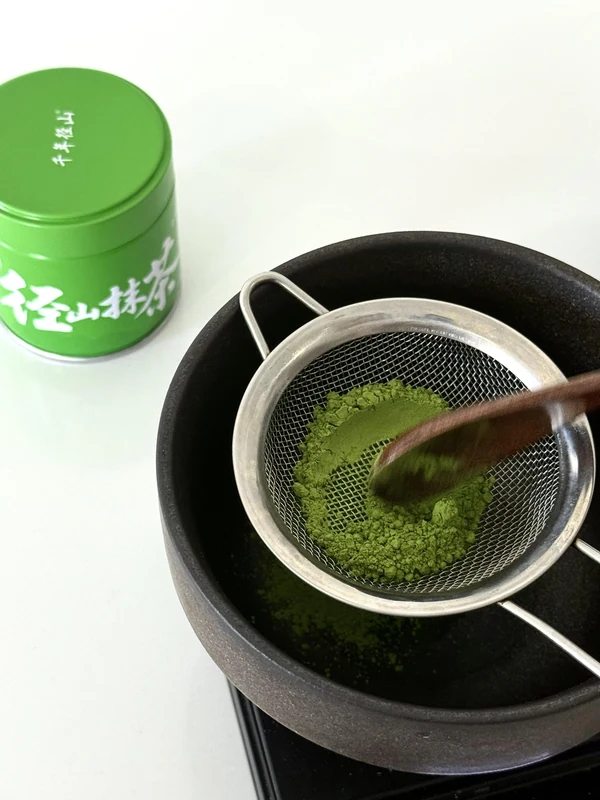
Matcha should enter through a sifted dry blend or a tested small preblend that distributes powder without adding uncontrolled liquid. For a full-green loaf, blend matcha consistently with the dry phase. For a marble loaf, divide batter by weight and mix matcha into the designated portion with minimal extra strokes.
The published recipe uses 12 g of matcha in a household loaf and divides the batter before swirling. That amount is recipe evidence, not a universal commercial dose. A production team must screen its own flour, banana, sugar, pan, and matcha lot.
Use the matcha particle-size guide when powder pockets persist. Do not compensate for poor distribution by overmixing the whole batter.
Key Takeaway: Disperse matcha before the final mixing limit is reached.
How can a bakery avoid a dense or tunneled crumb?
A bakery can avoid dense or tunneled crumb by separating dry and wet preparation, limiting final mixing, and controlling deposit delay. The reference article identifies overmixing as a common cause of dense banana bread. At scale, mixer load, tool, speed, scrape pattern, and hold time also matter.
What should the mixing record include?
- Ingredient and batter temperatures.
- Mixer tool, speed, time, and scrape points.
- Time from final mix to deposit.
- Deposit weight at the beginning and end of the batch.
Compare crumb height, tunnels, gummy streaks, and slice breakage after full cooling. A batter that looks smooth may already be overworked.
For another aerated baked-product benchmark, compare the controls in the matcha chiffon cake guide without importing its foam system into banana bread.
Key Takeaway: Set a mixing endpoint and deposit window instead of mixing until the batter looks perfectly uniform.
How can the matcha swirl remain visible after baking?
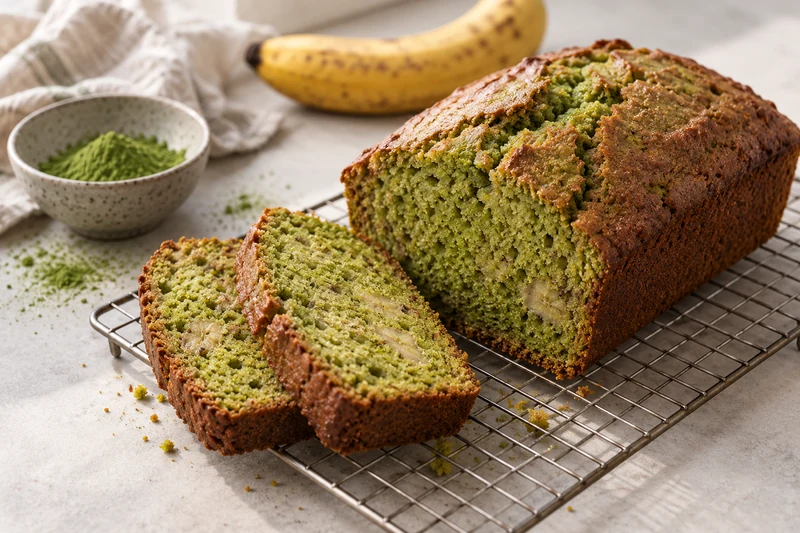
The matcha swirl remains visible when the two batter portions have compatible flow and the deposit pattern is repeatable. If the matcha portion becomes much thicker, it can sink into isolated green plugs. If it becomes thinner, it can smear into a muddy crumb.
Use a fixed number and weight of alternating deposits, then a defined swirl motion. This is an illustrative process design, not a claim about the reference bakery. Photograph cut slices from fixed loaf positions under stable lighting and compare pattern continuity, not just the best slice.
| Pattern fault | Process question | Commercial effect |
|---|---|---|
| Green pockets | Was matcha dispersed before batter division? | Bitter spots and rejects |
| Blurred pattern | Were viscosities or swirl strokes unequal? | Weak shelf impact |
| Uneven bands | Did deposit weights drift? | Slice-to-slice inconsistency |
Key Takeaway: Specify the deposit and swirl pattern as tightly as the formula.
How should bake endpoint protect moisture and color?
Bake endpoint should protect moisture and color by using a product-specific measurement plus visual and structural checks. A household toothpick test can help, but it does not define a commercial endpoint by itself. Pan material, loaf mass, oven loading, airflow, and probe location alter the result.
Create an oven map with representative loaf positions. Record time, setpoint, actual observations, endpoint measurement, cooled mass, edge dryness, center set, and crumb color. Any numeric endpoint must come from the bakery’s validated process rather than this article.
Choose the shortest validated bake that achieves the required structure and food-safety controls. Extending every loaf to fix one cold spot sacrifices moisture and color elsewhere; correcting oven balance may be the better action.
Key Takeaway: Validate the coldest acceptable loaf, then control the oven instead of overbaking the entire load.
What cooling and packaging checks are required?
Cooling and packaging checks should confirm that the loaf reaches the defined pack condition without condensation, collapse, or excessive moisture loss. Cutting or wrapping too warm can smear slices and trap moisture. Excessive open cooling can dry the crust and fade aroma.
For a cooked food that is actually time/temperature control for safety, the 2022 FDA Food Code §3-501.14 provides model cooling guidance. The Food Code PDF is not automatically binding, and applicability depends on the product, local adoption, and qualified hazard assessment. It does not establish a universal cooling limit for banana bread.
Check whole-loaf and sliced formats separately. Record cooling time, product condition, condensation, seal integrity, slice breakage, and appearance through the intended distribution trial. Do not infer shelf life from one day of bench storage.
Key Takeaway: Pack at a defined product condition and validate the actual format through its planned distribution.
What should procurement compare between matcha lots?
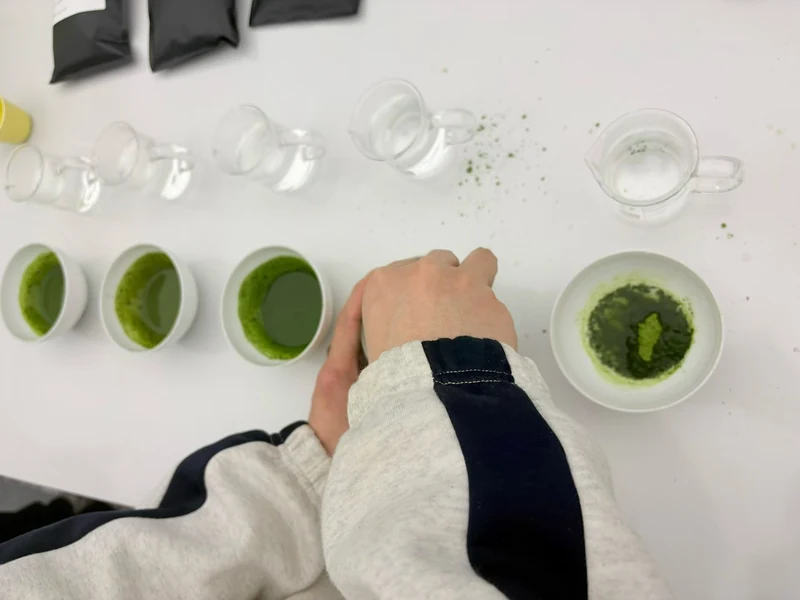
Procurement should compare matcha lots in the same banana-bread process using coded, position-matched loaves. Review dry powder identity and documentation, then judge baked color, aroma, bitterness, pattern, crumb, and cost in use.
AdoroHu’s E-1/E-2 culinary grades are the logical starting tier for baking trials, while the final choice depends on the bakery’s formula and target. The matcha color measurement guide can support a controlled visual program, but instrument results should not replace sensory acceptance.
| Comparison layer | Evidence | Decision |
|---|---|---|
| Incoming powder | Lot ID, specification, COA | Eligible for trial |
| Batter | Dispersion and pattern flow | Process compatibility |
| Cooled loaf | Color, flavor, crumb, slice | Product acceptance |
| Packed trial | Condensation, breakage, drift | Commercial release |
Key Takeaway: Buy against finished-loaf performance and documentation, not powder color alone.
FAQ
- Why does matcha banana bread turn brown?
- Heat exposure, formula chemistry, bake duration, ingredient color, and storage can all affect the finished crumb, so compare controlled loaves before blaming the matcha lot.
- Can a bakery copy a household matcha dose directly?
- No; a household dose is a starting reference, while the commercial formula, pan, process, flavor target, and cost require their own trial.
- Should matcha be mixed into all the batter?
- Use the whole batter for a uniform green loaf or a weighed portion for a defined marble pattern.
- How can gummy centers be reduced?
- Standardize banana input, deposit mass, pan geometry, mixing, oven loading, and the validated bake endpoint.
- Does a toothpick prove commercial bake completion?
- It is one observation, but a bakery should use a product-specific endpoint and representative oven-position checks.
- Which matcha grade fits banana bread?
- Culinary matcha is a practical starting tier, followed by finished-loaf comparison for color, flavor, documentation, and cost.
Conclusion
Matcha banana bread becomes repeatable when fruit input, batter handling, deposit, bake, cooling, and pack-out are recorded as one system. For pure matcha samples matched to a commercial loaf trial, contact AdoroHu Matcha with the formula type, pan, target pattern, and market requirements.