
Matcha soft serve must recover after repeated draws, not merely taste balanced in a fresh cup. Mix temperature, air incorporation, cylinder recovery, and hopper hold can change portion shape and tea intensity during a rush.
Develop matcha soft serve on the actual machine and service cadence. The commercial matcha ice cream guide covers adjacent frozen-dessert decisions; soft serve requires draw-by-draw operating limits.
Approve the mix through first draw, repeated service, recovery, and end-of-hold checks. A good formula keeps portion mass, shape, flavor, and melt behavior within the operator’s defined window.
In short:
Key points:
- Measure consecutive draws and recovery after a simulated rush.
- Treat air setting, feed rate, and mix temperature as linked controls.
- Set a hopper and cylinder hold rule that operators can execute.
What should a commercial soft-serve brief define?
Define the machine model, dairy or plant base, serving temperature, target tea intensity, draw shape, hold period, daily throughput, and cleaning cycle. Matcha soft serve must work across the operating day, not only in a freshly frozen bench sample.
Specify the acceptable first draw, mid-service draw, and end-of-hold result. These checkpoints turn a subjective flavor project into an operating decision.
Key Takeaway: Define the machine and service window before the formula.
How should the base and matcha dose be screened?
AdoroHu’s grade ladder identifies E-3/E-4 as conventional Premium and O-3 as Organic Premium. Use those codes for controlled samples, then choose from actual frozen draws. Cross a small range of matcha doses with one fixed soft-serve base. Record sweetness, bitterness, color, dry finish, and cost per serving. Cold suppresses aroma, while fat and milk solids can soften tea impact, so taste the frozen product rather than approving the liquid mix.
Avoid chasing a dark green color with dose alone. Excess powder can raise astringency and sediment without giving a cleaner tea flavor.
| Machine trial point | Record | What it reveals |
|---|---|---|
| First stable draw | Portion mass, shape, temperature | Initial freeze and feed condition |
| Consecutive rush draws | Mass, draw time, shape drift | Cylinder capacity and recovery |
| Post-rush recovery | Time to acceptable draw | Operational throughput limit |
Key Takeaway: Choose dose from the frozen draw, not the liquid mix.
Why does powder dispersion matter before freezing?
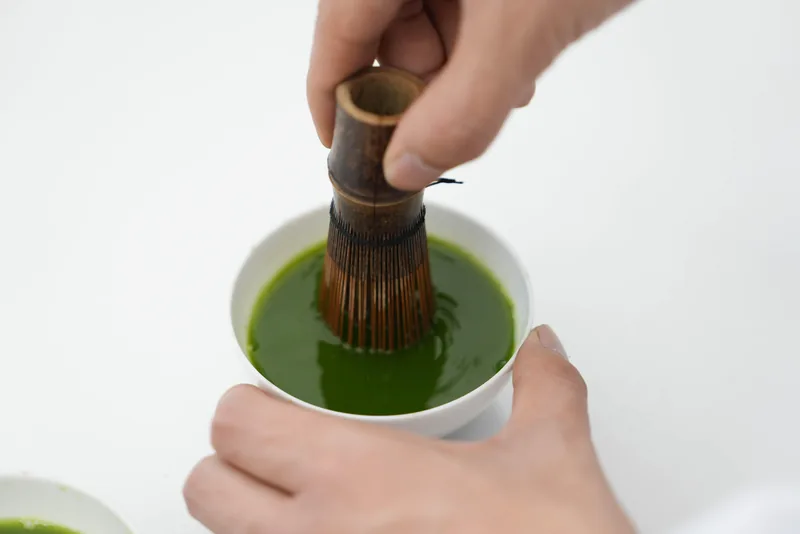
AdoroHu uses ultrasonic screening and multiple milling routes, including 20 stone mills, 56 ball mills, and 8 continuous ball mills. Confirm that comparison lots follow the agreed process and specification. Fine matcha agglomerates can survive freezing and appear as dark specks or sandy pockets. Pre-disperse the powder under a recorded sequence, then inspect the mix before it enters the hopper. A production sieve may catch foreign material but should not substitute for proper wetting.
Compare the first and last portion loaded into the machine. Unequal color or flavor signals settling in the feed mix.
For sourcing trials, compare representative samples against the application target rather than relying on labels alone. The premium matcha powder page provides the relevant product route.
Key Takeaway: Verify dispersion across the full feed batch.
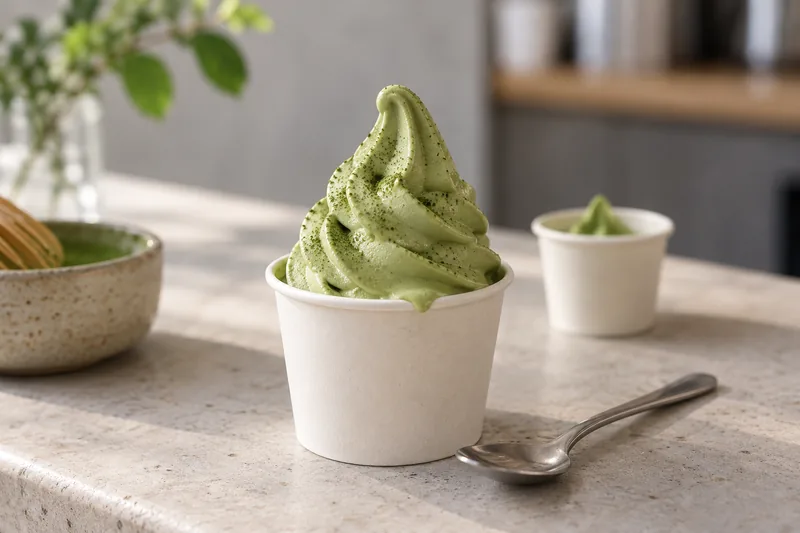
How should overrun be handled in matcha soft serve?
Overrun changes flavor density, body, yield, and melt. More air can soften tea intensity and improve yield, while too little air can make the product heavy and slow to release flavor. Measure finished volume against mix volume under the actual machine setting.
The commercial choice is not maximum overrun. Choose the range that holds a clear matcha identity and stable draw while meeting portion economics.
Key Takeaway: Set an overrun window tied to flavor and yield.
What makes a draw consistent during service?
Draw consistency depends on mix temperature, cylinder freezing, feed rate, viscosity, air setting, and serving cadence. Record several consecutive portions by mass and shape at defined times. Watch recovery after a rush because the machine may behave differently under repeated draws.
If the product becomes soft after demand spikes, changing matcha is unlikely to fix it. Check machine recovery and mix balance first.
| Air and mix condition | Visible result | Decision |
|---|---|---|
| More incorporated air | Lighter body, lower flavor density | Check yield against tea identity |
| Less incorporated air | Denser body, slower flavor release | Check heaviness and melt |
| Warm or inconsistent feed | Soft draw and slow recovery | Correct machine or mix condition first |
Key Takeaway: Separate machine recovery failures from ingredient failures.
How should machine hold affect color and flavor approval?
Approve the product at the maximum intended hopper or cylinder hold, using the operator’s real remix and refill procedure. Compare color under fixed lighting and taste for dullness, bitterness, and stale dairy notes. Record the time, not vague labels such as later or end of day.
A shorter validated hold with planned smaller refills may protect quality better than forcing the formula to survive an unrealistic window.
Key Takeaway: Choose a realistic hold limit and enforce it.
What should a soft-serve trial measure?
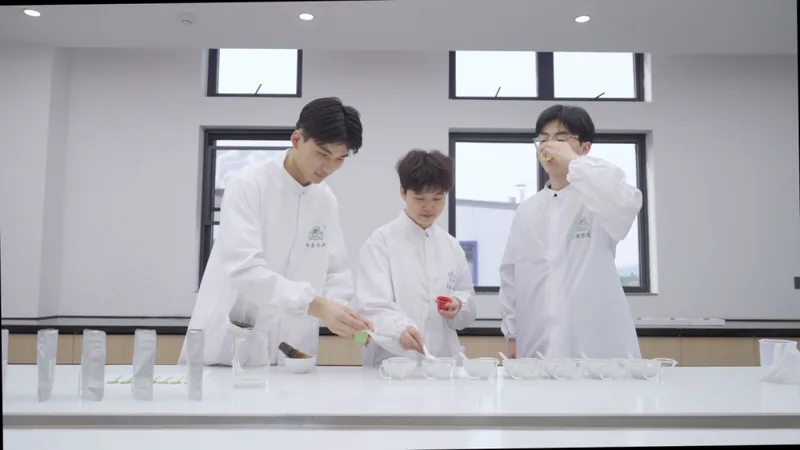
AdoroHu’s in-house microbiology and physical-chemical laboratories can support lot-linked powder COA inputs; the buyer must validate the finished soft serve. Track mix temperature, draw temperature, portion mass, draw time, overrun, shape retention, drip or melt behavior, color, and sensory balance. Use the same cup or cone and the same elapsed times for each comparison.
Measurements should support an operator limit. A target without a corrective action does not help during service.
Keep this decision connected to the wider application context in bulk matcha for food manufacturing.
Key Takeaway: Pair every limit with an adjustment or stop action.
How do sanitation and allergen controls enter the trial?
The process must include the machine’s cleaning and sanitizing instructions, mix holding controls, allergen identity, and rework rules. Under 21 CFR 117.80, food processing and holding must minimize microbial growth, allergen cross-contact, contamination, and deterioration.
Do not extend a mix hold because the product still looks green. Follow the validated process and equipment instructions, then discard or escalate outside-limit material.
| Hold checkpoint | Check | Operator action |
|---|---|---|
| Hopper refill | Mix identity, temperature, remix | Accept or hold refill |
| Mid-service | Draw shape, flavor, portion mass | Adjust within approved setting |
| End of approved hold | Color, flavor, draw consistency | Continue, replace, or stop |
Key Takeaway: Safety limits outrank color and yield.
What evidence releases matcha soft serve?
AdoroHu’s 10 kg and 20 kg formats use sealed food-grade liners. Match pack size to trial and service consumption so post-opening storage remains controlled. Release requires repeat runs that meet formula, machine, sensory, portion, hold, and cleaning limits. Keep the approved mix specification, matcha lot, machine settings, measured draws, deviations, and operator instructions.
A product that works only with one expert operator is not ready. Run the final protocol with normal trained staff and define the escalation path.
Key Takeaway: Approve the system that routine operators can reproduce.
FAQ
- What matcha grade is best for soft serve?
- Use the grade that keeps a clear tea flavor and acceptable color at a practical dose in the actual frozen base; supplier grade names alone are not enough.
- Why does matcha soft serve taste weaker than the liquid mix?
- Cold temperature, air, fat, sugar, and milk solids change flavor release, so the frozen draw must be the approval sample.
- How can a team reduce specks in matcha soft serve?
- Standardize sifting, pre-dispersion, liquid temperature, mixing time, and feed-batch uniformity before changing the matcha grade.
- Should matcha soft serve be tested at the end of machine hold?
- Yes. End-of-hold checks reveal color, flavor, viscosity, and draw changes that a fresh sample cannot show.
- What records belong in a commercial soft-serve trial?
- Keep ingredient lots, formula weights, machine settings, temperatures, overrun, portion checks, hold times, cleaning records, deviations, and approvals.
Conclusion
Matcha soft serve is ready when the machine, mix, and operator can repeat the same draw window across service. Share the machine model, base, target portion, service cadence, and trial volume through the contact page for sample planning.