
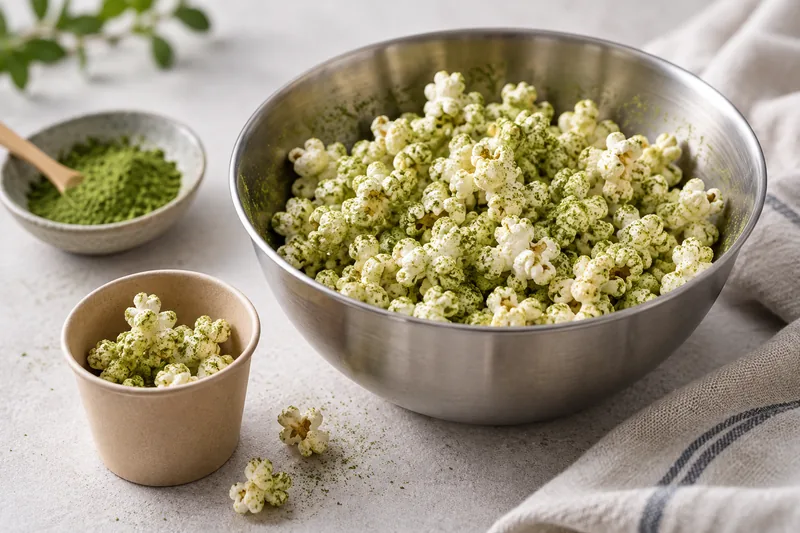
Matcha popcorn succeeds commercially when the seasoning adheres evenly without sacrificing crispness. A promising kitchen bowl can become dusty, bitter, patchy, or soft when the coating system and package move to production. Snack teams need to choose the format before choosing the matcha.
For matcha popcorn, define the carrier, flavor target, allergen route, and distribution conditions first. AdoroHu’s culinary matcha for food manufacturing gives developers a sensible starting range for dry, fat-carried, chocolate-coated, and glazed concepts.
Commercial matcha popcorn is a coating and moisture-control problem as much as a flavor idea. Select the format, grade, adhesion system, and package as one product. A controlled pilot should prove coverage, crispness, flavor balance, and line behavior before launch.
In short:
Key points:
- Choose dry seasoning, fat carrier, chocolate, or glaze before setting the matcha dose.
- Measure coating coverage and crispness instead of judging the seasoning blend alone.
- Approve supplier documents and final-package trials with the sensory sample.
Which commercial matcha popcorn format should a brand choose?
The brand should choose a format that matches its equipment, label position, allergen plan, and desired eating experience. Dry seasoning gives a light finish, while chocolate or glaze produces stronger adhesion and a richer snack.
| Format | Strength | Main production risk |
|---|---|---|
| Dry powder seasoning | Light bite and simple flavor | Dust loss and uneven coverage |
| Oil or clarified-fat carrier | Better adhesion | Over-application can soften kernels |
| White chocolate coating | Strong matcha color and indulgence | Milk allergen and coating set |
| Sugar glaze | Sweet, firm shell | Moisture exposure and clumping |
Do not treat these as interchangeable recipes. Each format requires a different matcha dose, addition sequence, cleaning plan, and package trial.
Key Takeaway: Lock the coating format before comparing powders.
Which matcha grade fits matcha popcorn?
Culinary matcha usually fits matcha popcorn because salt, fat, sugar, chocolate, and toasted corn create a strong flavor system. AdoroHu’s E-1 and E-2 grades are culinary within its EU Standard Series, while E-3 and E-4 are premium. Organic O-1 and O-2 are culinary, and O-3 is premium.
Begin with culinary candidates in the finished coating. Move upward only if a coded tasting shows that premium grade creates a valuable aroma or cleaner finish after processing. Ceremonial grade is often poor value here because delicate notes can disappear beneath fat or chocolate.
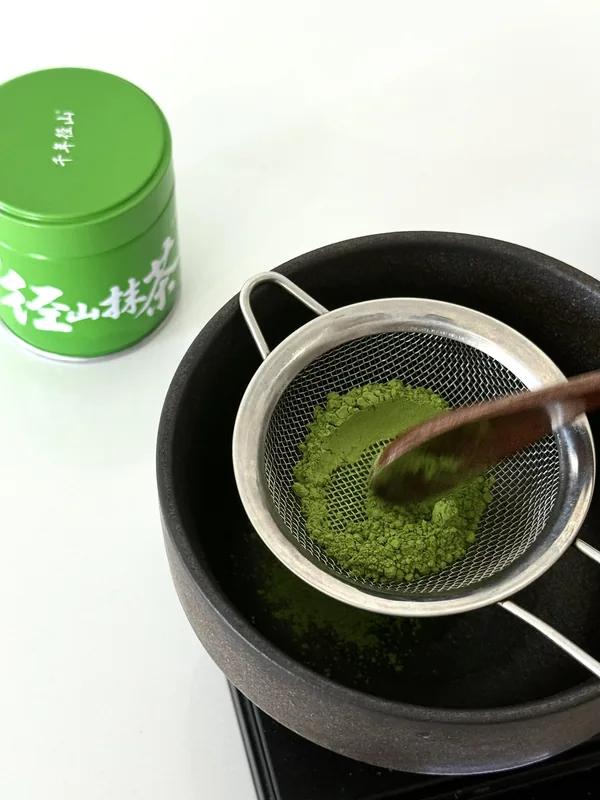
The buyer should also compare powder behavior. Color uniformity, sieve condition, coating pickup, and bitterness at the planned dose matter more than a bright dry sample.
Key Takeaway: Select matcha through the coated kernel, not the dry powder.
How can matcha adhere without making popcorn soggy?
Matcha adheres evenly when the coating system is distributed before powder addition and avoids uncontrolled water. Aqueous sprays, steam, and condensation can soften popcorn; an oil or fat carrier creates different risks, including greasy handling, uneven pickup, and later oxidative flavor change.
The practical judgment is to avoid solving poor adhesion with more oil. That may improve immediate coverage but leave greasy fingers, increase seasoning pickup unevenly, and expose more fat to oxidation. Improve spray distribution, tumble pattern, particle compatibility, and application sequence first.
Record carrier pickup, seasoning loss, visible bare kernels, clumps, and crispness after packaging. A controlled catch test can compare the seasoning left in the tumbler and package across pilot runs.
Key Takeaway: Improve carrier distribution before increasing carrier quantity.
How do dry, fat, chocolate, and glaze systems affect matcha flavor?
Each coating system changes how quickly matcha reaches the palate and how strongly bitterness appears. Dry powder gives an immediate tea hit, fat rounds the edges, chocolate adds sweetness, and glaze can delay flavor until the shell dissolves.
This creates a clear product-development choice:
- use dry seasoning for a lighter, tea-forward snack;
- use a thin fat carrier for savory or sweet-salty concepts;
- use white chocolate for a rich, high-coverage product;
- use glaze where a crisp shell and sweetness define the brief.
AdoroHu uses ultrasonic screening for ultra-fine matcha. Fine, screened powder supports more even blending, but the line must still validate how the powder moves through its feeder and tumbler.
Key Takeaway: Match the coating system to the intended flavor release.
How should teams balance matcha, sweetness, and salt?
Teams should balance matcha, sweetness, and salt through a small sensory matrix rather than one-factor adjustments. Raising sugar can hide bitterness but may also flatten tea aroma; raising salt can sharpen contrast but quickly dominate a delicate green-tea profile.
Create coded variants around the planned matcha dose and carrier. Score tea identity, bitterness, sweetness, salt impact, aftertaste, and willingness to take another bite. Evaluate fresh product and packaged retains because the balance can shift as aroma fades or texture changes.
Avoid chasing a vivid color with excess matcha. A darker coating that tastes dusty or astringent will not become a better snack through branding.
Key Takeaway: Approve flavor balance and repeat eating, not color alone.
What should a matcha popcorn pilot measure?
A pilot should measure coating pickup, coverage, dust loss, breakage, clumping, crispness, and finished yield. These measures connect the seasoning concept to line speed and saleable product.
Record kernel and matcha lots, popping method, carrier temperature, application rate, tumble time, seasoning sequence, room conditions, and package time. Photograph a fixed sample under consistent lighting and count visibly bare or heavily coated pieces within that sample.
| Pilot check | What it reveals | Buyer consequence |
|---|---|---|
| Coating pickup | How much applied seasoning stays on kernels | Ingredient yield and flavor repeatability |
| Bare-kernel count | Distribution quality | Visual consistency in every pack |
| Bag dust | Seasoning lost after packing | Waste, mess, and weak delivered flavor |
| Breakage | Mechanical damage through the line | Saleable yield and pack appearance |
AdoroHu’s in-house microbiology and physical-chemical laboratories support lot documentation. For buyers, this matters when a powder change must be separated from popping, coating, or packaging variation.
Key Takeaway: Measure distribution and loss, not only the average flavor of the batch.
How should packaging protect matcha popcorn?
Packaging should protect matcha popcorn from moisture, oxygen, light, crushing, and seal failure. Crispness often fails before color, so barrier selection must serve the whole snack.
Run trials in the final film and pack size under the intended distribution conditions. Inspect headspace, seals, seasoning rub-off, oil transfer, broken kernels, aroma, and color at defined checkpoints. The AHM guide to matcha oxygen-barrier packaging explains how oxygen exposure affects the ingredient side of the system.
Do not copy a storage period from a home recipe. Commercial shelf life must come from the final product, package, process, and test plan.
Key Takeaway: Validate crispness and matcha quality in the sale package.
How do coating ingredients change allergen controls?
Coating ingredients can introduce milk, soy, sesame, peanuts, or tree nuts even when the base concept sounds simple. White chocolate, flavored fats, and compound seasonings need full ingredient and allergen review.
The FDA’s food-allergen guidance identifies nine major food allergens in the United States. This named list affects label checks, scheduling, cleaning, and rework controls for US products.
Map every carrier, flavor, processing aid, and shared line. The AHM article on matcha allergen review can help teams connect ingredient declarations with supplier evidence.
Key Takeaway: Choose the carrier with the plant’s allergen route in mind.
What evidence should a matcha supplier provide?
A supplier should provide a current specification, lot-specific Certificate of Analysis, allergen statement, traceability information, storage guidance, and applicable certification documents. These records let procurement compare products beyond color and unit price.
AdoroHu lists USDA Organic (NOP), EU Organic, JAS Organic, BRCGS Food Safety, FDA registration, ISO 22000, Halal, and Kosher among its certifications. Each supports a different requirement, so buyers should verify the documents relevant to the target market and claim.
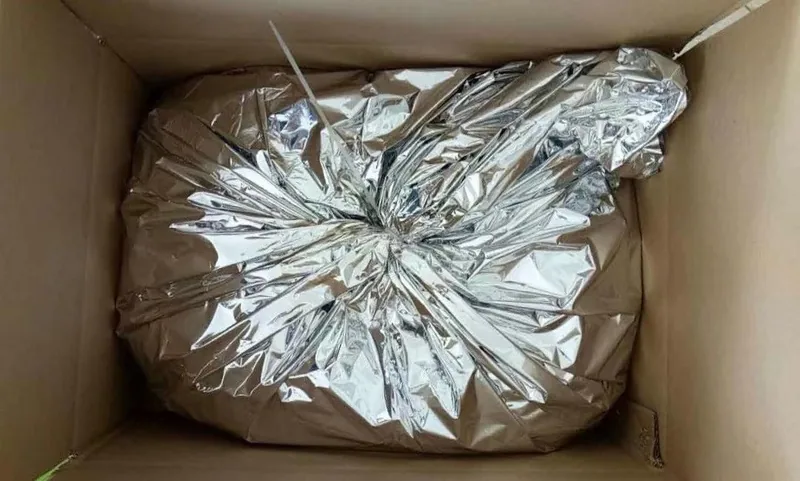
AdoroHu supplies bulk matcha in sealed food-grade liners within 10 kg or 20 kg cartons. That format lets plants plan opening, resealing, and line-side staging around actual consumption rather than exposing unnecessary powder.
Key Takeaway: Approve the specification, lot evidence, and handling plan together.
When does a custom premix help a popcorn line?
A custom premix helps when a plant needs matcha, salt, sugar, and a carrier powder to feed and distribute as one controlled seasoning. It can reduce line-side weighing and blending, but only after the flavor target and equipment behavior are understood.
Send the supplier the popcorn type, coating format, feeder or tumbler constraints, allergen limits, target market, and approved reference. AdoroHu’s custom formula development becomes more useful when the brief names measurable problems such as dust loss or uneven coverage.
Do not customize to hide a weak process. First confirm that spraying, tumbling, and packaging are stable.
Key Takeaway: Use a premix to control a defined operation, not to replace process development.
How should procurement compare matcha popcorn samples?
Procurement should compare samples through the same coating system, line settings, package, and evaluation schedule. Dry-powder tasting cannot show adhesion, dust, crispness, or flavor release.
Blind the supplier codes and score coverage, green color, tea aroma, bitterness, salt balance, crispness, finger residue, and bag dust. Review results beside the documents and projected cost per saleable pack.
Reject a cheaper candidate if it needs more carrier or creates more dust and cleaning. Those losses can cost more than the powder saving.
Key Takeaway: Compare cost per acceptable packed unit, not cost per kilogram.
FAQ
- What type of matcha is best for commercial matcha popcorn?
- Culinary matcha is the usual starting point because popcorn coatings often contain strong fat, salt, sugar, or chocolate flavors.
- How can manufacturers make matcha stick to popcorn?
- Use a controlled carrier and tumble sequence, then measure coating pickup, bare kernels, clumps, and seasoning loss.
- Does more oil make matcha popcorn better?
- More oil may improve immediate adhesion, but excess can create greasy handling, uneven coating, and greater oxidative flavor risk; water, steam, and condensation are the direct moisture threats to crispness.
- Can matcha popcorn be made with white chocolate?
- Yes, but the formula then needs milk-allergen review, coating-set control, and packaging trials for clumping and texture.
- How should matcha popcorn shelf life be set?
- Test the final coating and popcorn in the final package through intended distribution conditions using defined quality and safety criteria.
- What documents should a matcha supplier provide?
- Request a specification, lot-specific Certificate of Analysis, allergen statement, traceability information, storage guidance, and applicable certification evidence.
Conclusion
Commercial matcha popcorn needs a deliberate coating format, controlled adhesion, measured pilots, and package validation. Compare matcha in the finished snack and include dust, crispness, allergens, and line cost in the decision. Contact AdoroHu Matcha to discuss a matcha or premix brief for your snack line.