
Matcha third party testing should connect an independently collected sample to a defined purchase decision, a competent laboratory, and an agreed acceptance rule. A second report adds little when nobody can prove which lot was sampled. The resulting dispute can leave stock on hold while production waits for an answer.
For matcha sourcing, use the commissioning plan below to make the evidence usable before you pay for analysis. Matcha third party testing is most valuable when it resolves a specific uncertainty about a supplier, shipment, or conflicting result.
Commission independent matcha testing by defining the decision, sample custody, laboratory scope, method, and acceptance rule before samples leave the lot. Review the result against that agreement and document who may release, hold, or reject the material.
In short: A defensible independent report needs both a credible measurement and a traceable connection to the material being purchased.
Key points:
- Choose the verification activity from the hazard and supplier history.
- Confirm the performing laboratory, sample identity, and decision rule in writing.
- Investigate conflicting results before authorizing stock release or repeated testing.
When should a buyer commission independent matcha testing?
Commission matcha testing when an independent result could change supplier approval, a lot disposition, or the response to a specific discrepancy. Start with the decision: what would you do if the result were acceptable, unacceptable, or inconclusive? If every outcome leads to the same action, revise the brief before spending money.
For a U.S. receiving facility subject to the supply-chain program, 21 CFR 117.410 lists sampling and testing alongside onsite audits, relevant supplier-record reviews, and other appropriate activities. It requires activity and frequency decisions to consider the hazard, who controls it, supplier performance, and relevant storage or transport factors. The regulation therefore supports a risk-based choice, not a universal requirement to independently test every matcha shipment.
Keep routine report interpretation in your matcha COA review. Here, the added task is commissioning evidence whose selection, custody, and interpretation the buyer can defend.
Key Takeaway: Write the decision that independent testing must resolve before choosing a panel or laboratory.
How can matcha buyers make the commission independent?
Make the matcha testing commission independent by controlling who chooses the sample, instructs the laboratory, receives the original report, and authorizes retesting. A laboratory outside the supplier's company can still receive a supplier-selected sample with no buyer-visible custody record. That arrangement may answer a narrower question than the buyer intended.
In practice, agree the roles before the quotation. Ask for disclosure of commercial relationships and subcontracting, and arrange direct delivery of the complete report to the named buyer contact. Separate the person negotiating the purchase from the person approving a disputed release where staffing allows.
Choose witnessed or independently performed sampling for a contested lot. Sending another convenient pouch supplied by the same party saves sampling effort but can leave the original representativeness dispute unresolved.
Key Takeaway: Independence must cover sample selection and reporting instructions as well as the laboratory's ownership.
Which laboratory scope should matcha buyers verify?
Verify the performing site and the specific matcha test, rather than accepting an accreditation logo as coverage for the entire quotation. ISO/IEC 17025:2017 addresses laboratory competence, impartiality, and consistent operation; ISO confirms that the 2017 edition remained current after its 2023 review. This identifies the relevant standard, but it does not establish any particular laboratory's scope.
Before booking, obtain the accreditation scope and check its laboratory address, method, analyte, matrix description, and any exclusions. If tea powder is not explicit, request a written explanation of applicable matrix coverage and method suitability. Ask which tests will be subcontracted and which report will identify the performing site.
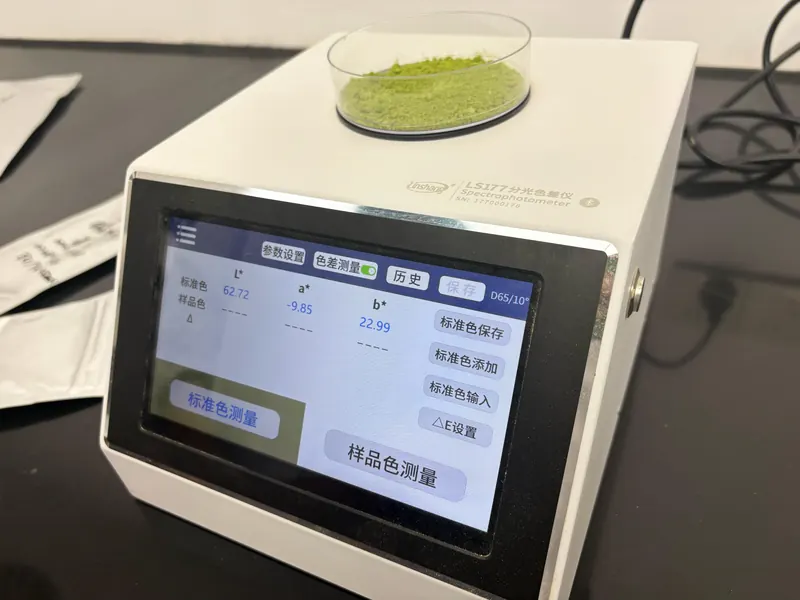
AdoroHu Matcha has in-house microbiology and physical-chemical laboratories. Those facilities can support ingredient discussions, while an independent commission needs its own evidence of laboratory competence and scope.
Key Takeaway: Approve the named test at the named performing site, with subcontracted work identified before dispatch.

What should the matcha testing instruction contain?
The instruction should specify the analytes, sampling plan, lot identifiers, methods, laboratory, frequency, and response to an unacceptable result. That makes a matcha testing quotation comparable across providers and reduces the chance of receiving a technically valid but commercially unusable report.
There is a useful regulatory distinction here. For applicable U.S. preventive-control verification, 21 CFR 117.165(b)(2) requires scientifically valid product-testing procedures with these elements. It explicitly includes sample-to-lot identification, sample number and frequency, analytical methods, the testing laboratory, and corrective-action procedures. This provision governs the relevant facility's food-safety system; it does not automatically make every independent raw-material purchase test mandatory.
| Instruction field | Resolve before analysis | Cost of leaving it open |
|---|---|---|
| Analyte and reporting limit | Exact substance or organism and usable sensitivity | Paying for a result that cannot address the specification |
| Matrix and method | Suitability for matcha powder | A second method-development or confirmation exercise |
| Units and result basis | Comparable basis across reports | False disagreement during release review |
| Decision and reporting | Result only, or conformity statement with agreed rule | Conflicting pass/fail conclusions |
Key Takeaway: Make the testing instruction detailed enough that two laboratories can quote the same question.
How should sampling and custody connect matcha to the report?
Connect the matcha report to the lot through a sampling record, sealed sample identifiers, and a documented transfer history. The report describes the submitted material; the sampling plan determines how confidently that material represents the purchase.
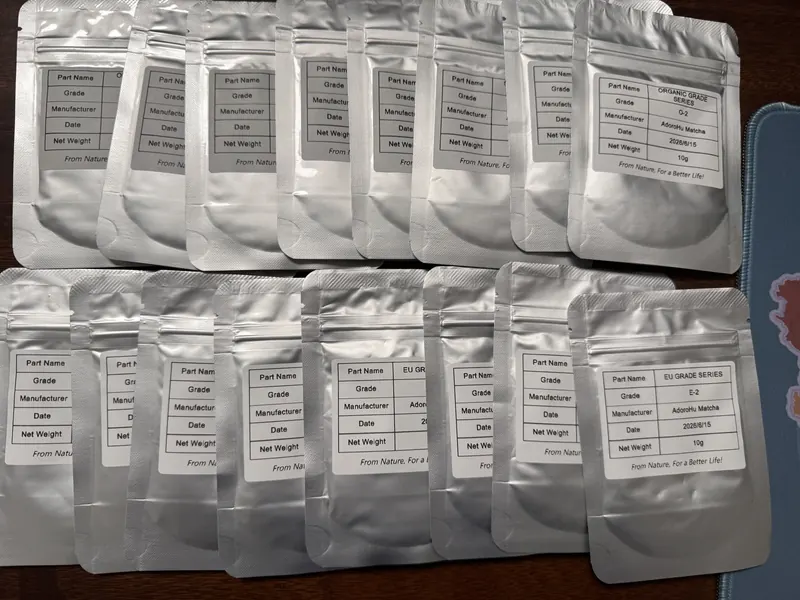
Work backwards from a possible dispute. Record the lot and container identifiers, sampling locations, sampler, date, tools, increments, compositing procedure, sample mass, and seal numbers. Record receipt condition at the laboratory and any deviation from the requested transport conditions. Preserve a retained sample when the method and storage plan allow a meaningful later comparison.
Avoid a single universal sampling recipe. Heterogeneous contamination and a sensory complaint may need different sampling designs. Ask the responsible technical team to justify the plan for the hazard and the lot, then ensure the warehouse can execute it without losing container identity.
Key Takeaway: Keep sample selection, seal identity, and each custody transfer traceable to the received lot.
Which acceptance rule should govern matcha test results?
Agree the matcha acceptance rule before the result is known, especially when a value may approach a specification limit. ISO/IEC 17025 clause 7.8.6 addresses statements of conformity. The ISO technical committee's explanation describes documenting and applying the decision rule, including consideration of false acceptance, false rejection, and statistical assumptions.
Put that into the purchase agreement. Ask whether measurement uncertainty affects the decision, whether an applicable regulatory rule determines the treatment, and what happens in an unresolved interval. A numerical result and a pass statement are separate outputs: laboratories can measure similarly yet reach different conformity statements when the rules differ.
For a limit-sensitive purchase, prefer an agreed rule with an escalation route over a bare “pass/fail” request. The extra commissioning discussion can prevent a release dispute after the shipment arrives.
Key Takeaway: Specify how uncertainty and borderline results affect acceptance before anyone sees the result.
How should buyers compare two matcha laboratory reports?
Compare matcha reports in a fixed sequence: identity, sampling, analyte, method, units, reporting limit, uncertainty, and decision rule. Start with identity because a method comparison cannot repair reports covering different lots or different retained samples.
Next, distinguish a numerical disagreement from a difference in reporting. “Not detected” means the analyte was not detected under the stated method and limit; it should not be read as zero. A lower reporting limit can produce a reported value where another method reports no detection. Use the market-specific pesticide testing guide when the unresolved issue concerns the destination panel or residue requirement.
| Apparent conflict | First check | Next useful action |
|---|---|---|
| Value versus “not detected” | Reporting limits and units | Ask whether both methods answer the purchase specification |
| Two different values | Sample identity and preparation | Review sampling and method comparability |
| Same value, different verdict | Acceptance rule and uncertainty | Apply the agreed conformity rule |
| Missing lot connection | Sample and custody records | Withhold reliance on that report for lot disposition |
Key Takeaway: Classify the disagreement before commissioning another test; different problems need different evidence.
What should happen when independent matcha results conflict?
Place the affected matcha under the agreed hold procedure while the responsible team checks whether the conflict concerns safety, specification, sampling, or reporting. Preserve both reports and the original instructions. Do not average incompatible results or keep ordering tests until one passes.
For relevant U.S. facilities, 21 CFR 117.410(e) connects evidence of an uncontrolled supply-chain hazard to prompt documented action. Section 117.150 requires applicable corrective-action procedures to identify and correct the problem, reduce recurrence when necessary, evaluate affected food, and prevent its entry into commerce when the required assurance cannot be made. These are obligations within the applicable Part 117 framework, rather than a universal disposition rule for all matcha buyers.
Before retesting, decide what the new sample or method can resolve. A retained split may address laboratory disagreement; a fresh representative draw addresses a different question about the lot.
Key Takeaway: Keep the lot decision separate from the retest decision, and document why new evidence is needed.
How can buyers control independent matcha testing costs?
Control matcha testing costs by removing ambiguity from the commission and concentrating spend on evidence that changes a decision. Compare the total cost of sampling, courier service, testing, confirmation, report review, and stock hold. The lowest laboratory line item may create the most expensive delay.
For example, ask whether the quoted turnaround begins at sample receipt or after technical acceptance, and whether confirmatory work is included. Build the purchasing calendar around the complete review, not the first promised number. Agree who can authorize extra work and require an explanation of what it will resolve.
Use supplier history to review frequency through the applicable verification program. Do not quietly reduce a food-safety activity because recent invoices were expensive; technical approval and documented rationale must come before the commercial change.
Key Takeaway: Compare the full time and cost to a usable decision, including sampling and review.
Which evidence should close the matcha testing commission?
Close the matcha commission with a signed disposition record that references the specification, lot, custody record, laboratory report, decision rule, and reviewer. A report sitting in an email folder does not show who authorized the material's next use.
Before closing, check that amendments are retained with the original, any deviations have a stated effect on interpretation, and corrective actions have an owner. Link unresolved supplier-system issues to a separate supplier due-diligence review. That preserves the distinction between deciding this lot and deciding whether to buy again.
Make the final outcome explicit: release for the specified use, continued hold, rejection, or another technically authorized disposition. Record the basis and communication date so the warehouse and purchasing team act on the same decision.
Key Takeaway: Close with an authorized lot disposition and a separate owner for any continuing supplier investigation.
FAQ
- Does every matcha shipment need independent testing?
- No. Choose activities and frequency from the applicable requirements, hazard assessment, supplier history, and purchase decision.
- Does ISO/IEC 17025 accreditation cover every test a laboratory sells?
- No. Check the performing site's current scope and the relevant method, analyte, and matrix coverage.
- Can a supplier-selected sample support a purchase decision?
- It can provide evidence about the submitted material, but the buyer must assess whether its selection and custody support conclusions about the purchased lot.
- Why can two laboratories report different pass or fail conclusions?
- Differences in samples, methods, reporting limits, units, uncertainty, or decision rules can change the conclusion; compare these before retesting.
- Should a passing retest automatically replace a failing result?
- No. Preserve both results and require a documented technical explanation before changing the lot disposition.
Conclusion
Prepare the commission before the shipment: identify the decision, sample plan, performing laboratory, and acceptance rule. For ingredient specifications and lot documentation needed to plan independent analysis, contact AdoroHu Matcha.
Institutional author: AdoroHu Matcha