
Matcha lemonade can be easier to control when the powder is pre-dispersed separately, then added to sweetened water before the lemon. Pouring powder straight into acidic lemonade can leave clumps, uneven colour, and a drink that changes before the rush ends.
For a quick café starting point, pre-disperse the matcha, dissolve sweetener in the main water phase, add the dispersion, then add lemon gradually. The broader matcha drink recipe collection can supply menu ideas; this guide turns one idea into a controlled service trial.
Start with a fresh-service recipe, then measure what happens during the intended prep and hold period. Keep matcha dispersion, lemon addition, sweetness, colour, and yield as separate decisions so the team can trace any failure.
In short: A repeatable café formula comes from a fixed addition order, a written batch sheet, and acceptance checks at time zero and through service.
Key points:
- Pre-disperse matcha before it meets the acidic lemon base.
- Record ingredient mass, finished yield, pH, soluble solids, colour, and settling at fixed times.
- Treat refrigerated or shelf-stable packaged drinks as separate validation projects.
How do you make matcha lemonade for a café trial?
Make café matcha lemonade by pre-dispersing the powder separately, adding that dispersion to sweetened water, then adding lemon gradually. This fixed baseline gives the team a useful reference for later order-of-addition trials.
Build a bench batch by mass
- Weigh water, matcha, lemon juice, and sweetener instead of relying on spoons or cup marks.
- Sift the powder, add it to a small portion of water, and mix until no dry pockets remain.
- Dissolve the sweetener in the main water phase, add the matcha concentrate, then add lemon gradually.
- Top up to the target finished mass, mix gently, and serve over a separately weighed ice portion.
Do not copy a consumer ratio directly into a production specification. Lemon strength, sweetener solids, ice melt, matcha lot, and cup size all change the result. Run at least three coded variants around one reference so the panel can compare tartness, sweetness, tea character, and aftertaste.
| Bench record | What to write down | Why it affects the cup |
|---|---|---|
| Ingredient mass | Each component and supplier lot | Makes the recipe reproducible |
| Addition order | Exact sequence and mixing time | Helps trace clumps or foam |
| Finished mass | Yield before ice and number of servings | Reveals transfer and portion loss |
| Service build | Beverage and ice mass per cup | Keeps dilution consistent |
Key Takeaway: Use the familiar two-part recipe as a measured bench trial, not as an unrecorded pour-and-taste exercise.
Which matcha should you screen for lemonade?
Screen matcha in the finished lemonade because raw-powder colour and grade names cannot predict performance in an acidic, sweet drink. A practical shortlist compares powders at equal dose, using the same lemon base, water, mixing method, and hold time.
Compare the drink, not the label
- Score green appearance, aroma, bitterness, astringency, tea intensity, and finish.
- Photograph equal samples under the same lighting and background.
- Repeat the test after the intended service hold, not only immediately after mixing.
- Retain the powder lot codes and a time-zero sample for investigation.
AdoroHu's E and O series provide candidates across culinary, premium, and ceremonial positions, but the finished drink decides the fit. For many cafés, a culinary matcha that remains clear in flavour after citrus can be a better commercial choice than paying for subtleties the formula hides.
Select the lowest-cost candidate that repeatedly passes the finished-drink target. Choosing by powder appearance alone can raise ingredient cost while leaving bitterness or colour drift unresolved.
Key Takeaway: Approve the powder against the actual lemon base, service time, and sensory target.
What matcha lemonade baseline measurements should the first pilot include?
The first matcha lemonade pilot should record pH, soluble solids, colour, yield, temperature, and visible settling alongside sensory notes. These values describe different parts of the drink, so none should stand in for the others.
Keep each measurement tied to a decision
- Use pH to compare acid-addition variants and monitor drift under a defined method.
- Use soluble solids as a process-control reading for the sweetened base, while remembering that acids and other dissolved solids also affect it.
- Use Lab* colour or a fixed photo station to compare appearance consistently.
- Record sediment height and the effort needed to redisperse it.
A 2023 study of ten matcha powders measured colour and several powder properties, then measured pH and Brix in 2.5% aqueous preparations. Its mean pH of 5.71 describes those study samples, not a lemonade target or safety limit. The useful lesson from the study methods is to separate incoming-powder and prepared-drink measurements.
| Response | Fixed method detail | Decision supported |
|---|---|---|
| pH | Calibration, sample temperature, reading time | Compare acid steps and repeat batches |
| Soluble solids | Instrument, temperature correction, sample prep | Check sweetened-base consistency |
| Colour | Lighting or instrument geometry | Compare immediate and held appearance |
| Settling | Container, fill height, observation time | Judge service uniformity |
| Yield | Final mass and serving mass | Calculate repeatable cup output |
Key Takeaway: Build a small baseline panel in which every reading answers a specific formulation or service question.
Why should lemon be added after matcha dispersion?
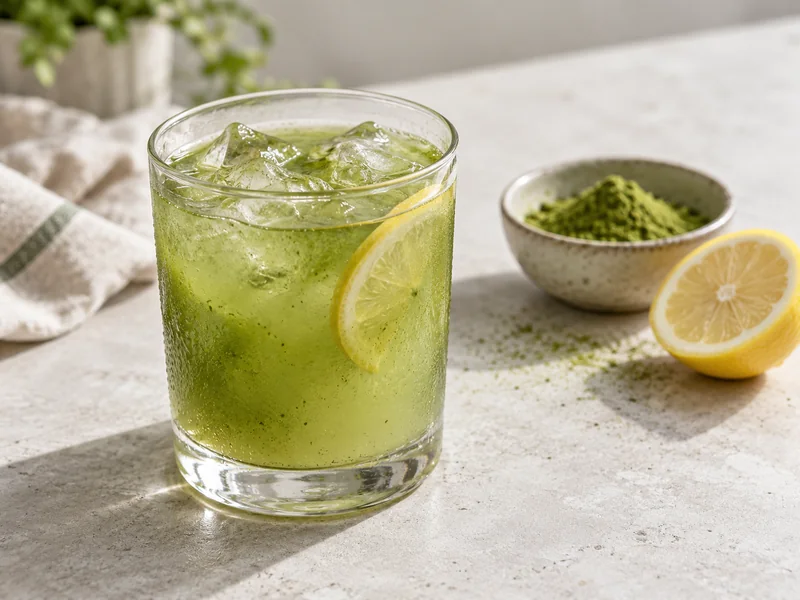
Add lemon after matcha dispersion so dry particles first meet a simpler water phase rather than a sweet, acidic mixture. This sequence cannot make matcha soluble, but it gives the mixer a better chance to wet and separate the particles before the full formula is present.
Test order as a controlled variable
- Baseline: disperse matcha in water, add it to sweetened water, then add lemon.
- Trial B: disperse matcha in water, add lemon, then add sweetened water.
- Trial C: add matcha directly to the finished lemonade as a stress comparison.
- Hold powder lot, ingredient masses, mixer, vessel, and temperature constant.
Inspect each version immediately and after the service interval. Look for dry specks, floating clusters, foam, ring formation, sediment, and colour differences. A lower pH reading does not explain all these effects; the mixing history and dissolved-solids environment also changed.
Avoid choosing direct-to-lemonade addition merely because it removes a prep step. If that shortcut creates rework, inconsistent cups, or extra straining, the saved seconds become waste during peak service.
Key Takeaway: Make acid-addition order an explicit A/B/C trial and choose the sequence that reduces defects under real service conditions.
How should sweetness and acidity be balanced without hiding matcha?
Balance sweetness and acidity in matcha lemonade by changing one axis at a time around an approved matcha dose. If lemon, sugar, and tea concentration all move together, the panel may prefer a sample without knowing which change earned the preference.
Use a compact sensory grid
- Fix the matcha dose and compare two or three lemon levels at one sweetness level.
- Fix the preferred lemon level and compare two or three sweetness levels.
- Randomize sample codes and serving order.
- Ask tasters to score tartness, sweetness, tea intensity, bitterness, and overall fit separately.
Record pH and soluble solids for process comparison, but do not treat either reading as a flavour score. Two drinks with the same pH can have different titratable acidity and sensory impact. Likewise, a refractometer reading in a mixed formula is not a direct sugar assay.
Once the team chooses a region, confirm it with the intended ice and cup build. Dilution can soften tartness and tea intensity at different rates, especially when ice mass varies by operator.
Key Takeaway: Map lemon and sweetness sequentially, then confirm the winning area in the real serving build.
How can a café control matcha lemonade clumps, settling, and redispersion?
Control matcha lemonade suspension by standardizing powder addition, shear, hold time, and remixing rather than calling the drink soluble. Matcha contains suspended leaf particles, so some settling may be acceptable if the drink remains visually and sensorially uniform during service.
Define an observable hold protocol
- Fill identical clear containers to the same height.
- Inspect at fixed times without moving the samples first.
- Record sediment height, a top ring, floating particles, and colour separation.
- Apply a fixed number of gentle inversions and note whether hard sediment remains.
A 2003 water study reported that finer matcha settled more slowly than normal powder. The reported particle ranges were 1–20 micrometres and 1–100 micrometres, with reported diameters of 3.2 and 11.5 micrometres. The primary study supports a particle-size comparison, but it does not set a lemonade specification or identify the diameter value as D50.
Use the matcha solubility testing guide for the broader distinction between wetting, dispersion, settling, and redispersion. For café service, reject a method that produces hard-packed sediment or visibly different first and last portions, even if the drink looks smooth at time zero.
Key Takeaway: Judge suspension by what settles and how it returns, using a fixed container, time, and remix procedure.
How should matcha lemonade batch yield and cost per serving be checked?
Check matcha lemonade batch yield by weighing the finished base and every served portion, then calculate saleable cups from actual output. Theoretical ingredient totals miss residue on whisks, blender walls, sieves, transfer jugs, and overfilled cups.
Convert the recipe into an operating sheet
- Record starting ingredient mass and finished base mass.
- Weigh the target drink portion and ice separately.
- Track leftover base and transfer loss after the batch.
- Note prep time, rework, discarded cups, and end-of-hold waste.
| Calculation | Formula | Operational use |
|---|---|---|
| Saleable servings | Finished base mass ÷ base mass per serving | Sets realistic batch output |
| Base yield | Finished base mass ÷ total input mass | Flags transfer or processing loss |
| Ingredient cost per serving | Batch ingredient cost ÷ saleable servings | Compares formula variants |
| Waste-adjusted cost | Total used cost ÷ portions actually sold | Tests whether the hold plan protects margin |
Favour the formula that stays within sensory and appearance limits with the least rework. A cheaper powder or faster mixing method loses its advantage when staff strain clumps, remake drinks, or discard an unstable batch.
Key Takeaway: Cost the saleable, held drink rather than the ideal sum of ingredients on paper.
How long can matcha lemonade be held for café service?
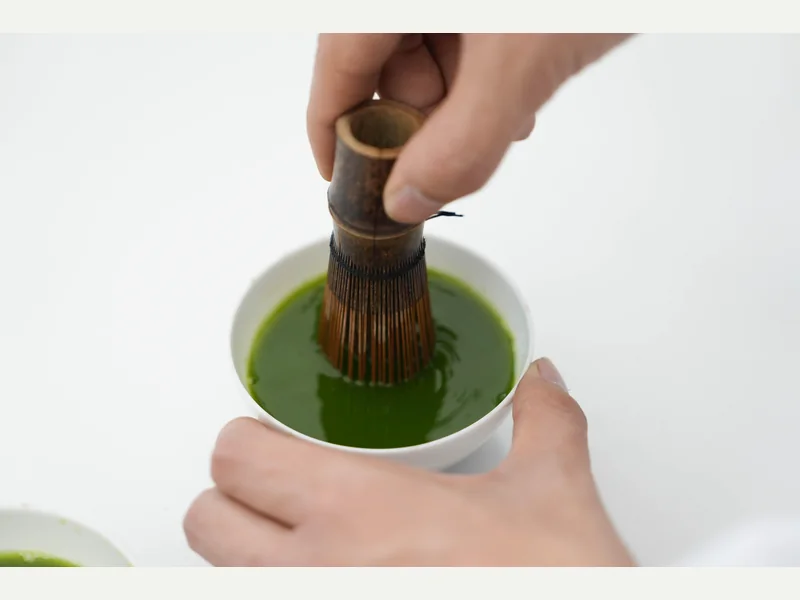
Set the café hold time as the shorter of an independently established food-safety maximum and the quality limit observed in the actual container and temperature conditions. If no food-safety maximum has been established for the recipe and handling plan, use fresh preparation and immediate service until a qualified assessment sets one.
Sample the beginning, middle, and end
- Assess appearance, aroma, flavour, temperature, pH, and redispersibility at time zero.
- Repeat at planned checkpoints through the proposed service period.
- Use separate clean samples when repeated opening or tasting would alter the container.
- Stop the trial when any preset rejection condition appears.
Temperature and light exposure belong in the record. A dry-powder study found that brightness and green value declined more as storage temperature and time increased, but it does not establish a beverage hold time. Likewise, a green-tea infusion package study found different outcomes under different light protection, yet its 20-day refrigerated design cannot become a matcha lemonade shelf-life claim.
For service, use these studies to justify controlled temperature and light comparisons. Choose an opaque or protected holding vessel when the actual side-by-side trial shows it preserves the approved appearance without creating other service problems.
Key Takeaway: Use the shorter of the established food-safety maximum and the quality limit; without the safety maximum, keep the drink to fresh preparation and immediate service.
What changes when matcha lemonade moves from café service to packaging?
Moving matcha lemonade into a sealed package creates a new product-development project covering formula, process, package, distribution, and safety. A café recipe and short hold trial do not establish refrigerated shelf life or ambient stability.
Rebuild the evidence around the sale format
- Define whether distribution is refrigerated, frozen, or ambient.
- Evaluate the actual container, closure, fill conditions, headspace, light, and handling.
- Establish the applicable hazard analysis and process authority or qualified technical review.
- Run product-specific microbiological, chemical, physical, and sensory validation as required.
For applicable U.S. shelf-stable acidified foods, 21 CFR Part 114 includes finished equilibrium pH and scheduled-process controls. Applicability depends on the actual product, water activity, package, and distribution. Lemon juice or one pH reading does not prove that a drink is safe, shelf-stable, or covered by a particular regulation.
Keep this boundary firm: do not reduce thermal treatment, preservatives, refrigeration, or other controls to protect colour without the responsible safety review. Quality optimization must operate inside the validated safety design.
Key Takeaway: Treat packaged matcha lemonade as a separate validated system, not a longer version of the café hold test.
What should a matcha lemonade supplier brief include before scale-up?
A matcha lemonade supplier brief should define the sensory target, formula context, process, service or distribution model, acceptance tests, and required documentation. “Bright green, not bitter” is a useful direction, but it is not enough to compare lots or troubleshoot a failed pilot.
Send the variables that shape the recommendation
- Intended market, serving size, price position, and expected volume.
- Lemon source, sweetener system, matcha dose range, and addition order.
- Mixing equipment, batch size, hold time, temperature, and package or service vessel.
- Approved reference, rejection descriptors, colour method, and suspension test.
- Required specifications, certificates, sample quantity, and decision date.
A custom formula development discussion becomes more productive when the buyer shares a measured failure: for example, a hard sediment layer after a defined hold or a colour shift after light exposure. AdoroHu supplies matcha and formulation support; the finished beverage manufacturer or operator remains responsible for validating its own recipe, process, labels, and safety program.
Key Takeaway: Give suppliers a testable target and the operating context needed to recommend a relevant sample set.
FAQ
- Is matcha good with lemonade?
- Yes. Lemon's tartness can balance matcha's vegetal and bitter notes, while sweetener rounds the blend; the café still needs to test its own matcha, lemon source, and serving dilution.
- How do I make matcha lemonade without clumps?
- Sift and pre-disperse the matcha in a small water phase, combine it with the sweetened base, then add lemon gradually under a fixed mixing procedure.
- Does matcha dissolve in lemonade?
- No. Matcha is suspended leaf powder, so a smooth drink depends on wetting, dispersion, particle behaviour, and an appropriate remix plan rather than true dissolution.
- Why does matcha lemonade change colour?
- Acid level, matcha lot, temperature, light, oxygen exposure, process, and hold time can all affect appearance, so compare colour under controlled conditions.
- Can a café prepare matcha lemonade in advance?
- Yes, but the advance-prep window must be the shorter of an independently established food-safety maximum and the tested quality limit; if no safety maximum exists, use fresh preparation and immediate service until a qualified assessment sets one.
- Can a café recipe be bottled for retail sale?
- Bottling creates a separate development and validation task involving the finished formula, process, package, distribution, shelf-life evidence, and applicable food-safety requirements.
Conclusion
A profitable matcha lemonade begins as a simple two-part recipe, then earns its place on the menu through controlled acid addition, suspension checks, sensory balance, and measured yield. Bring AdoroHu your formula context and acceptance criteria through the contact page to plan a relevant matcha sample comparison.