
HACCP vs HARPC describes two prevention-oriented ways to organize food-safety hazards and controls, but the governing rule depends on the product and operation. A buyer should ask which legal framework applies, how the plan is structured, and which records connect that structure to the supplied ingredient.
For matcha procurement, HACCP vs HARPC questions belong in supplier approval before a commercial order. The published matcha supplier audit guide helps buyers place the plan beside facility, process, and document evidence instead of treating an acronym as a certificate.
HACCP organizes significant hazards around critical control points when that model and governing rule apply. “HARPC” is industry shorthand for the FDA risk-based preventive-controls framework, not the term used in the regulation. Buyers should compare applicability, hazard scope, control categories, ownership, and records.
In short:
Key points:
- Determine the governing rule from the product, activity, facility, and market.
- Compare CCP architecture with the broader applicable preventive-control categories.
- Request scoped plan evidence without assuming one acronym proves supplier approval.
What does HACCP vs HARPC mean for food buyers?
HACCP vs HARPC compares a critical-control-point system with the FDA hazard-analysis and risk-based preventive-controls framework. HACCP uses hazard analysis to identify significant hazards, then establishes critical control points, critical limits, monitoring, corrective action, verification, and records. “HARPC” is useful industry shorthand, but FDA’s rule uses terms such as food safety plan, hazard analysis, and preventive controls.
Both systems aim to prevent harm rather than rely on finished-product testing. Their architecture differs, so buyers should avoid asking only whether a supplier is “HACCP certified.” The useful question is which framework governs the facility and how the written plan covers the ingredient and process in scope.
Record the terms used by the supplier and translate them into the governing requirements. A document titled “HARPC plan” may contain the correct FDA food-safety-plan elements, while a document titled “HACCP plan” may need additions. The title alone cannot settle architecture or applicability.
Preserve that translation in the approval record so later reviewers understand which duties were evaluated and which label was merely shorthand.
The FDA preventive-controls rule overview explains that covered facilities need a written food safety plan with hazard analysis and risk-based preventive controls. Coverage and exceptions still require review against the current rule.
Key Takeaway: Treat HACCP and the preventive-controls framework as related architectures whose applicability must be established before comparing records.
Which US rule applies to a matcha supplier?
The applicable US rule depends on what the facility does, what food it handles, and whether an exemption or modified requirement applies. Facilities required to register under the Federal Food, Drug, and Cosmetic Act are generally within the preventive-controls framework unless a provision changes that result. Farms, retail food establishments, and other excluded operations need separate analysis.
Seafood and juice activities covered by and compliant with 21 CFR Parts 123 and 120 follow their HACCP rules for those activities. Section 117.5 also addresses conditional exemptions from preventive-controls requirements for those activities, low-acid canned-food microbiological hazards, dietary supplements, and specified others. A matcha buyer should not borrow a seafood or juice conclusion merely because the supplier has a HACCP document.
Very small businesses may qualify for modified requirements under Part 117, but status and required submissions or records must be supported. Ask the supplier to identify the facility, activity, product scope, cited provision, and evidence behind its conclusion. Do not ask it to reveal unrelated confidential plan details.
Separate the supplier’s manufacturing duties from the buyer’s downstream duties. Repacking, further processing, foodservice preparation, or use in another regulated product can introduce a different framework. One supplier statement should not be extended across facilities or activities without review.
| Applicability input | Buyer question | Evidence expected |
|---|---|---|
| Product and activity | What is manufactured, packed, or held? | Process and product scope |
| Facility status | Is registration or an exception relevant? | Facility-specific rationale |
| Specialized rule | Do seafood, juice, or another provisions apply? | Cited rule and activity boundary |
| Market | Which destination requirements govern? | Market-specific review |
Key Takeaway: Decide applicability from the actual facility and activity, not from a supplier’s preferred acronym.
How does the hazard scope differ between HACCP and preventive controls?
The hazard scope differs in how the plan identifies and manages hazards requiring control. Traditional HACCP analysis considers biological, chemical, and physical hazards and determines which are significant enough for control at critical control points. FDA preventive controls require evaluation of known or reasonably foreseeable hazards and whether any require a preventive control.
The preventive-controls analysis can address process, food-allergen, sanitation, and supply-chain controls as applicable. It must also consider hazards that may be intentionally introduced for economic gain when they can affect food safety. That does not turn every authenticity or quality dispute into a preventive-controls hazard.
For matcha, the buyer should connect the supplier’s hazard categories to intended use and downstream processing. A powder used in a ready-to-drink product may face different downstream controls from one used in a fully validated baked process. The supplier’s conclusion should not silently assume the buyer will remove a hazard unless that use is agreed and documented.
Require a written rationale when a known or reasonably foreseeable hazard does not require a preventive control. The rationale may depend on severity, probability, product formulation, process, facility history, or a downstream customer control. That reasoning is more useful than an unchecked “not applicable” box.
Key Takeaway: Compare the hazards requiring control and their intended-use assumptions, not the length of the hazard list.
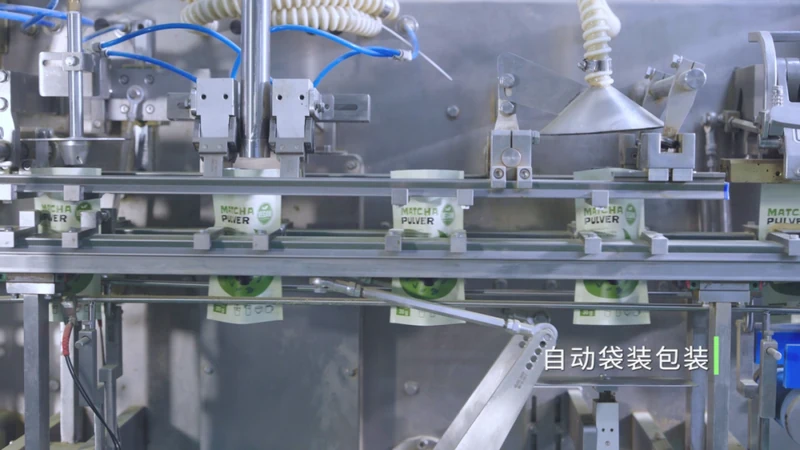
How do critical control points differ from preventive controls?
Critical control points are steps where control can be applied and is essential to prevent, eliminate, or reduce a food-safety hazard to an acceptable level. Each CCP has defined critical limits and associated monitoring, corrective action, verification, and records. This creates a concentrated control architecture.
Preventive controls may sit at a process step, but they can also be allergen, sanitation, or supply-chain controls. Their management components depend on the control and rule. The comparison is therefore not “strict limits versus no limits”; it is which control type fits the hazard and what management elements apply.
Management components also differ by control. Monitoring, corrective actions or corrections, verification, validation when required, and records should be assigned according to the rule. Buyers should review this design boundary here and reserve detailed proof of day-to-day execution for the separate operational verification review.
Prefer the architecture that follows the governing rule and actual hazard analysis. Forcing every control into a CCP can hide supplier approval or sanitation measures that do not fit that shape. Calling every routine prerequisite a preventive control can also overload the plan and dilute attention.
Key Takeaway: A CCP is one control structure; preventive controls can cover several applicable categories outside a single processing point.
What role does a PCQI have in the preventive-controls plan?
A preventive controls qualified individual, or PCQI, performs or oversees preparation of the food safety plan, validation of preventive controls when required, record review, and reanalysis. Qualification comes through appropriate training or job experience that develops equivalent competencies; it is not established by a buyer’s title check alone.
The PCQI does not replace the operating owners who monitor controls or carry out corrections. Buyers should ask who owns the plan, how the role is covered during absence, and whether the named competence matches the facility’s process. Personal certificates may support competence but should remain appropriately protected.
The responsible individual also needs access to current process, supplier, complaint, and deviation information. A remote consultant can support plan preparation, but the facility must still route changes and records into the review. Otherwise, technically qualified oversight can remain detached from actual operations.
HACCP plans also rely on trained people and responsible plan ownership, though the precise training duty depends on the applicable rule. The useful comparison is whether authority, knowledge, and responsibility are assigned to the correct system.
Key Takeaway: Confirm qualified plan ownership and decision authority instead of treating one training certificate as the food safety plan.
Which preventive-control categories should a buyer expect?
A buyer should expect only the preventive-control categories supported by the facility’s hazard analysis. Process controls manage parameters at operations such as heating or another controlled step. Food-allergen controls address cross-contact and labeling where allergens are relevant. Sanitation controls address environmental or employee-practice conditions when those controls are needed for a hazard.
Supply-chain controls apply when a receiving facility relies on a supplier to control a hazard. The program then needs approved-supplier and verification activities appropriate to the hazard and supplier performance. A broad supplier questionnaire is not automatically the required verification activity.
Define where each hazard is controlled and prevent duplicate assumptions. If the supplier controls a hazard, the receiving facility’s program should identify the supplier and verification approach. If the buyer controls it downstream, both parties need the intended-use statement and a dependable communication route.
| Control category | Architecture question | Buyer-facing evidence |
|---|---|---|
| Process | Which parameter controls which hazard? | Scoped plan summary and responsibility |
| Allergen | Is cross-contact or label control required? | Applicable program and exception handling |
| Sanitation | Which condition requires managed sanitation? | Defined procedure and accountable record |
| Supply chain | Which hazard is controlled before receipt? | Approval basis and verification approach |
Key Takeaway: Expect categories justified by the hazard analysis, with ownership and scope that connect to the supplied matcha.
When does the preventive-controls plan need a recall plan?
A recall plan is required when the hazard analysis identifies a hazard requiring a preventive control. The written plan assigns steps for direct consignee notification, public notification when appropriate, effectiveness checks, and disposition of recalled food. This requirement is connected to the preventive-controls conclusion, not added as a generic appendix to every operation.
The supplier’s plan architecture should connect lot identity, distribution records, and authorized decisions. Buyers can review their own responsibilities through the matcha recall plan guide without confusing customer response with the supplier’s hazard-control architecture.
Ask for evidence that roles and interfaces are defined, while avoiding a demand for personal contact lists or unrestricted emergency details. The contract and quality agreement should clarify how the supplier alerts the buyer when affected lots entered the buyer’s chain.
Check that product identifiers survive the commercial handoff. The recall architecture depends on matching production lots with invoices, shipment records, and customer inventory. A plan with complete response roles still fails the buyer if lot identity disappears during relabeling or repacking.
Key Takeaway: Link recall-plan expectations to the preventive-control conclusion and the lot handoff between supplier and buyer.

What HACCP or preventive-controls evidence should buyers request?
Buyers should request an applicability statement, plan scope, hazard-analysis summary, applicable control categories, responsible roles, revision date, and evidence that the supplied product is within scope. They may also review certifications or audit reports, but neither substitutes for a facility-specific regulatory conclusion.
Match the depth of evidence to risk and confidentiality. A controlled review can confirm that hazards and controls exist without circulating exact process parameters. The matcha production-process verification guide helps connect supplier statements to lot and release records without taking ownership of the supplier’s plan.
Record evidence status rather than a binary pass. Mark which materials were reviewed, which were redacted, who assessed them, and what remains open. This supports a conditional approval without implying that an audit sample established continuous operation or complete legal compliance.
| Buyer evidence | What it answers | What it does not prove |
|---|---|---|
| Applicability rationale | Why this framework governs | That every control operated |
| Plan scope and revision | Which product and process are covered | That a different facility is covered |
| Audit or certification | What an assessment sampled | Universal legal compliance |
| Lot-linked release record | Which decision applied to the lot | The design of every plan element |
Key Takeaway: Request enough evidence to connect framework, facility, product, and lot while respecting controlled plan details.
When should HACCP and preventive-controls plans be reassessed?
Plans should be reassessed when the applicable rule requires it and when changes undermine the existing hazard analysis. New products, suppliers, equipment, layouts, intended uses, hazards, or control failures may change the plan. FDA’s preventive-controls framework requires reanalysis at least every three years and sooner after specified triggers for covered plans.
HACCP reassessment timing depends on the governing rule. Juice and seafood HACCP have their own requirements, so a generic annual statement should not be copied across systems. Ask the supplier for the applicable trigger, reviewer, affected sections, and revision decision.
Keep this architectural review separate from a later operational proof exercise. The plan can be appropriately designed yet poorly followed; it can also be followed exactly while its hazard assumptions have become stale. Buyers need both questions, but this comparison settles the first.
Change control should feed reanalysis rather than rely on a calendar reminder. Procurement sees new suppliers, operations sees equipment changes, and regulatory teams see market changes. Assign one owner to decide whether each signal affects the hazard analysis and document the decision.
Key Takeaway: Reassess against the governing rule and meaningful changes, preserving what changed and why.
How should a buyer decide between HACCP and HARPC claims?
A buyer should decide whether the supplier identified the correct governing framework and can show a coherent plan architecture for the supplied product. The supplier does not choose between HACCP and “HARPC” as a marketing preference. Specialized HACCP rules and FDA preventive controls follow legal and operational scope.
Reject claims that present a generic HACCP certificate as proof of all preventive-controls duties. Also reject the opposite claim that an FDA food safety plan automatically proves CCP management required by a specialized HACCP rule. The practical consequence is an approval gap hidden by familiar acronyms.
Use a conditional approval when the governing framework is clear but a bounded document remains outstanding. Block approval when the supplier cannot identify the facility, activity, plan scope, or responsible owner. This distinction keeps minor document follow-up from masking a basic architecture failure.
For a matcha supply review, combine the framework decision with wholesale matcha sourcing and documented product requirements. Record accepted scope, open evidence, and who resolves the remaining regulatory question.
Key Takeaway: Approve the framework only when its legal basis, plan scope, hazard architecture, and buyer evidence align.

FAQ
- Is HARPC an FDA regulatory term?
- No. HARPC is industry shorthand; FDA uses hazard analysis and risk-based preventive-controls terminology.
- Is HACCP required for every US food facility?
- No. Applicability depends on the product, activity, facility, and governing rule.
- Do seafood and juice use the preventive-controls plan instead of HACCP?
- Covered seafood and juice activities follow their specialized HACCP rules, subject to the exact regulatory boundaries.
- Can a supplier use both HACCP and preventive-controls elements?
- Yes. A facility may retain useful HACCP architecture while adding the controls and plan elements required by its governing rule.
- Does a HACCP certificate prove FSMA compliance?
- No. Certification scope and FDA regulatory duties must be assessed separately.
- What should a buyer request first?
- Request the facility-specific applicability rationale, plan scope, hazard architecture, responsible role, and product coverage.
Conclusion
The next buyer decision is whether the supplier’s named framework matches its actual product and operation. Document the governing rule, plan boundary, applicable control categories, and open evidence before approval. Contact AdoroHu Matcha to align that review with a specific matcha product and intended use.