
Matcha affogato becomes easy to serve when a café fixes the shot weight, frozen portion, pour temperature, and handoff time. Without those controls, the first order can arrive layered and vivid while the fifth reaches the table thin, half-melted, or bitter. The commercial matcha ice cream guide covers the frozen base; this guide focuses on the made-to-order service step.
A useful matcha affogato standard must describe what staff weigh, what they observe, and when they reject a serving. It should also leave room for the café’s actual ice cream, glassware, equipment, and local food rules.
A commercial affogato is a timed assembly, not merely matcha poured over a scoop. Set the shot, frozen portion, vessel, and handoff together. Judge the first spoon and the final melt before approving the item.
In short:
Key points:
- Choose one affogato format before testing ratios.
- Validate shot strength and melt with a fixed frozen portion.
- Train and release the item with measured service checks.
What matcha affogato format should a café standardize?
A café should standardize either warm matcha over a neutral frozen base or espresso over matcha ice cream. Published examples cover both formats. The two designs create different purchasing, flavor, caffeine, and equipment decisions.
For a matcha-led menu item, warm matcha over vanilla or lightly flavored ice cream gives the tea a clear role. Espresso over matcha ice cream makes coffee the hot component and moves matcha control into frozen-dessert production. Write the format into the recipe card so staff do not improvise between them.
| Format | Main control | Operational risk |
|---|---|---|
| Warm matcha over ice cream | Shot strength and pour | Fast melt or watery finish |
| Espresso over matcha ice cream | Frozen matcha formula | Coffee can dominate tea |
| Matcha over plant-based frozen base | Base flavor and allergens | Texture and claim variation |
Key Takeaway: Approve one affogato architecture before comparing grades, toppings, or prices.
What matcha-shot ratio should an affogato pilot compare?
A matcha affogato pilot should compare at least two weighed shot strengths against the same frozen portion. Published examples span about 3 grams in 40 milliliters to 3–4 grams in 90 milliliters, with other recipes measured only by teaspoons. Treat these as pilot anchors, not universal specifications.
Start with one frozen portion and prepare a concentrated and a lighter shot. Record matcha grams, water grams, final shot weight, bitterness, aroma, pour coverage, and remaining liquid after the first spoon. A proposed pilot might compare 3 grams in 45 grams of water with 3 grams in 75 grams of water. That illustration must be tested in the café’s actual base.
More water spreads matcha across the scoop but also transfers more heat. A concentrated shot can protect shape, yet it may taste harsh if the frozen base is lightly sweetened. Cost the grams of matcha and the saleable portion, not the bowl alone.
Key Takeaway: Set shot concentration through a matched frozen-portion trial, then lock grams and final shot weight.
How should matcha be dispersed for a smooth affogato pour?
Matcha should be sifted and dispersed into a smooth shot before it reaches the frozen base. Published methods include a paste-first route: wet the powder with a small amount of water, remove dry pockets, then add the remaining water. Other examples sift and whisk the full shot directly.
Test both methods with the same powder and tool. Check visible clumps, foam height, sediment, preparation time, and whether the shot pours as a clean ribbon. AdoroHu uses ultrasonic screening for ultra-fine matcha, but the café still needs a controlled wetting method; fine powder does not make whole-leaf matcha dissolve.
For rush service, pre-portion dry matcha by weight and keep the final wet mixing close to assembly. Do not hold an unvalidated wet shot merely to save seconds. The broader café drink recipe guide can help teams compare equipment and menu workflow.
Key Takeaway: Choose a dispersion method by smoothness and repeatable prep time, not by foam appearance alone.
Which matcha grade fits a commercial affogato?
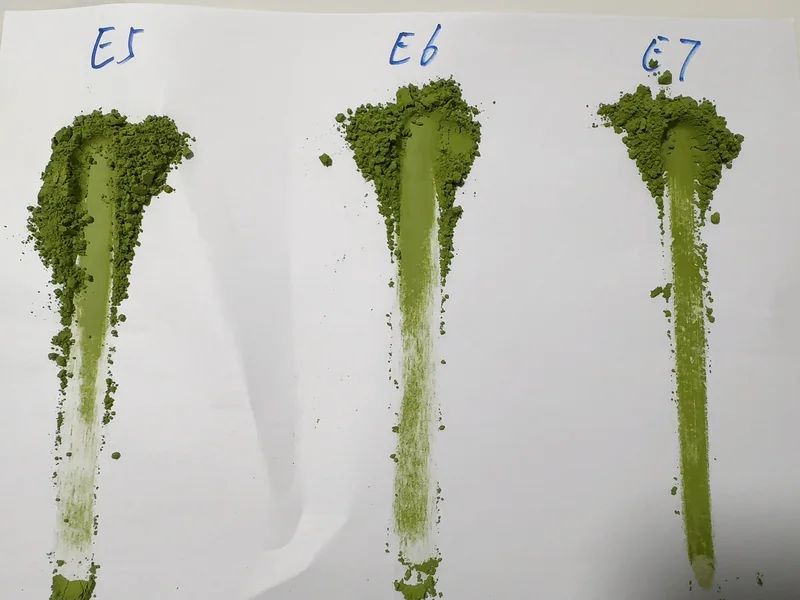
The right matcha grade is the lowest-cost candidate that passes the finished dessert test. Sweetness, milk fat, pistachio, chocolate, or toppings can hide delicate aroma. Buying the most expensive grade without a coded comparison can raise cost without improving the customer’s spoonful.
AdoroHu’s EU Standard Series provides E-1 and E-2 culinary grades and E-3 and E-4 premium grades. The Organic Series provides O-1 and O-2 culinary grades and O-3 premium. Request two coded samples from the culinary matcha range and compare them blind in one frozen base.
Score green color before and after pouring, bitterness, tea aroma, sweet-cream balance, and aftertaste. Keep shot grams fixed. If the premium sample wins only when tasted in water, it has not yet earned a place in the dessert.
Key Takeaway: Approve grade in the complete affogato, with portion cost beside the sensory result.
How should a matcha affogato frozen portion and vessel be standardized?
A matcha affogato frozen portion should be set by weight, shape, base flavor, and serving temperature. “One scoop” changes with the scoop, operator, product hardness, and overrun. Weigh ten normal scoops to see the real spread before choosing a target.
Use one ice cream or gelato lot during the pilot. Record portion weight, scoop diameter, starting temperature, vessel type, and time outside the freezer. A chilled glass may slow edge melt and improve presentation, but it adds storage and handling work.
| Check | Record | Reject when |
|---|---|---|
| Frozen portion | Gram weight and shape | Portion drift changes ratio |
| Vessel | Material and starting condition | Warm vessel collapses edges early |
| Base | Flavor, lot, allergen identity | Substitution changes approved result |
| Toppings | Type and weight | Topping masks tea or slows handoff |
Key Takeaway: Replace “one scoop” with a practical weight range and one approved vessel setup.
What pour temperature and handoff time protect matcha affogato contrast?
Matcha affogato pour temperature and handoff time should preserve a warm-cold contrast without turning the bowl into sweet liquid. Several published examples use water around 175°F or 80°C, but that is a reference point rather than a universal café setting. The final shot cools during whisking and transfer.
Measure shot temperature at pour, then time the pour, garnish, pickup, and first-spoon checkpoint. Compare the shape and liquid pool at 30, 60, and 120 seconds as a proposed pilot. Select a window that the real service line can meet.
A hotter or larger shot can intensify aroma and visual melt. It also shortens the useful handoff window. A slightly cooler, concentrated shot may travel better, but the café must confirm smoothness and flavor rather than chase temperature alone.
Key Takeaway: Set shot temperature and maximum handoff time as one linked service rule.
How should a café test matcha affogato during a rush?
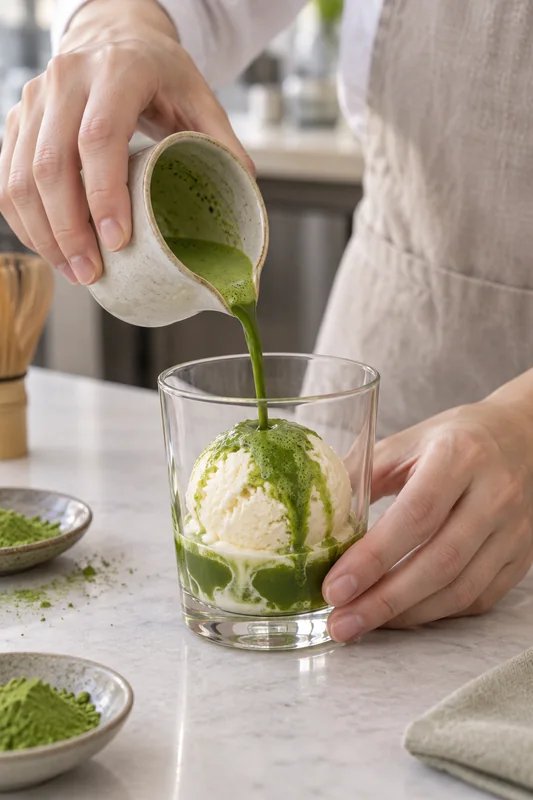
A café should test matcha affogato as a sequence of orders, not as one styled sample. Run at least a first, middle, and last serving with the intended staff, freezer access, whisking tool, glassware, and garnish station.
Record shot weight, frozen weight, assembly seconds, pickup seconds, visible melt, and waste. Note whether the operator can recover after another drink interrupts the sequence. If dry matcha portions, water, scoops, or vessels migrate across the station, the recipe card alone will not protect consistency.
Use the same acceptance language for every order: smooth pour, defined frozen shape at pickup, no dry pockets, and portion inside the approved range. A batch passes when normal staff reproduce it without coaching.
Key Takeaway: Release the item only after the service line repeats the same portion and handoff under load.
Which food controls apply to matcha affogato service?
Food controls depend on the actual frozen base, toppings, equipment, and service method. Dry matcha powder is not automatically a time/temperature control for safety food. Dairy ice cream, plant-based alternatives, opened ingredients, and assembled portions must be classified under the operation’s locally adopted rules.
The FDA Food Code 2022 provides a model framework. Section 3-501.16 addresses hot and cold holding for foods that meet the TCS definition. Section 3-501.19 allows time as a public-health control only when its written procedures, marking, time, and disposition conditions are met.
Made-to-order assembly and immediate service reduce the quality problem of prolonged melt, but they do not replace sanitation, allergen, or temperature procedures. Confirm the applicable method with the person responsible for the café’s food-safety system and local regulator.
Key Takeaway: Apply holding rules to the actual classified ingredients and process, not to the word “matcha.”
What belongs in an affogato supplier brief and cost model?
An affogato supplier brief should state grade candidates, grams per serving, projected portions, frozen-base identity, target color, bitterness limit, certifications, and receiving documents. It should also define the coded trial and the person who approves it.
AdoroHu bulk matcha is available in 10 kg and 20 kg cartons with sealed food-grade liners. Those are pack formats, not minimum-order promises. Convert the approved grams per serving into projected powder use, then add trial loss, station waste, and expected menu volume.
For a defined application trial, the matcha private-label service can support a clear brief. Keep ingredient cost, labor seconds, frozen portion cost, topping cost, and rejected servings visible in the same model.
Key Takeaway: Buy against an approved serving specification and realistic usage forecast, not a broad grade label.
FAQ
- What is a matcha affogato?
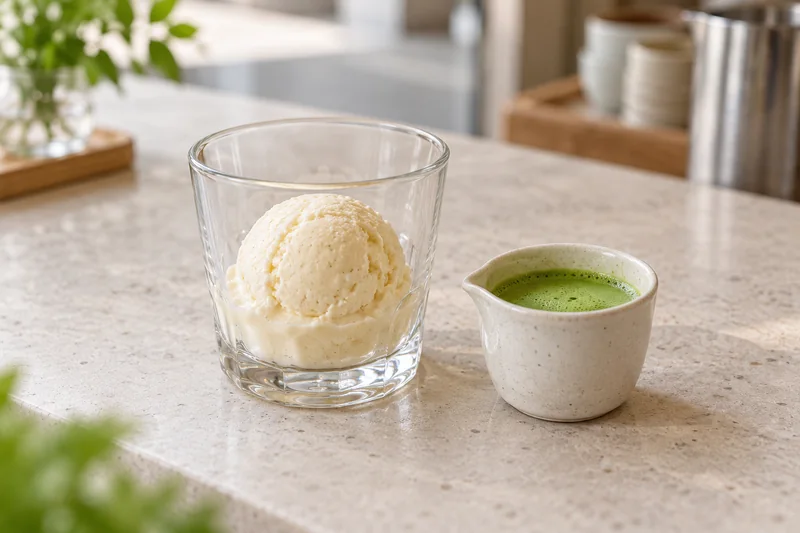
- It is a made-to-order dessert that pairs a measured warm matcha shot with a fixed portion of ice cream or gelato.
- Which matcha grade works in affogato?
- Compare suitable culinary and premium samples in the finished dessert, then choose by color, bitterness, aroma, and usable portion cost.
- How much matcha should a café use per serving?
- Use published single-serving formulas only as pilot anchors, then set grams per serving through a controlled shot-strength and frozen-portion trial.
- Why does a matcha affogato become watery?
- A large or overly hot shot, a small frozen portion, slow handoff, or a warm serving vessel can melt the base before the customer receives it.
- Can a café prepare matcha affogato in advance?
- The assembled dessert should be treated as a made-to-order item unless the operation validates another method for quality and applicable food controls.
- Can matcha affogato be dairy-free?
- Yes, when the selected frozen base, toppings, equipment, and supplier records support the intended dairy-free and allergen handling statements.
Conclusion
Approve matcha affogato as a measured service system: shot, frozen portion, vessel, pour, and handoff. Run the sequence under real café load and cost the saleable serving. Contact AdoroHu Matcha with the chosen format, projected portions, certification needs, and trial criteria.