
A matcha allocation contract is an agreement in which you commit to buying a defined volume over a defined period, and in exchange the supplier reserves that volume for you with priority over spot buyers. Here’s the trade at its core: you give up flexibility, and you receive certainty in a market where certainty has become the scarce commodity.
That trade only works if it is written properly. A buyer who commits volume without securing a matching supply obligation has taken on all the risk and none of the protection. One who signs a take-or-pay clause without understanding it discovers they owe payment for matcha they never received. One who fails to negotiate a shortfall mechanism finds that in a poor harvest year, their “guaranteed” allocation quietly becomes a partial one.
Understanding how these contracts actually work, and which clauses matter, is what separates a genuine supply guarantee from an expensive promise. This guide sets out both, for any matcha supplier relationship you are structuring.
The commitments an allocation agreement creates
A matcha allocation contract commits you to a minimum volume over a set term, for a negotiated measurement period aligned to the buyer’s planning cycle, in return for reserved capacity and priority access.
The essential clauses are: a defined minimum volume and measurement period; a reciprocal supply obligation binding the supplier to deliver, not just you to buy; a shortfall mechanism specifying what each side owes if they fall short; a delivery schedule with staggered instalments; a pricing mechanism, whether fixed, indexed, or fixed-with-cap; and a harvest-shortfall clause defining how allocations are reduced proportionally in a poor crop year. Without the reciprocal obligation, you have committed volume without securing supply.
In short: an allocation contract exchanges a negotiated buyer commitment for defined reservation and supply duties, and it works commercially only when the supplier’s duties, exceptions, and remedies are written as clearly as the buyer’s commitment.
Key points:
- Commitment must be reciprocal: your volume obligation needs a matching supply obligation.
- Take-or-pay means paying for the shortfall whether or not you take delivery.
- Agree in advance how allocations are cut in a poor harvest year.
What is a matcha allocation contract and why does it exist?
A matcha allocation contract reserves a defined production volume for a specific buyer, in exchange for that buyer committing to purchase it. Here’s the structural reason these contracts appeared in matcha: production is annual, so when demand exceeds a harvest, allocation becomes the only mechanism for distributing what exists.
The logic is simple once you see the supply side. A producer plans cultivation, shading, and processing capacity months ahead of harvest, and needs demand visibility to do it. A buyer needs assurance that the volume will exist when their peak season arrives. An allocation agreement resolves both: the supplier gains predictable revenue and can plan production, and the buyer gains reserved capacity and priority when supply tightens.
This differs fundamentally from spot purchasing, where you buy what is available at the price of the day, and it differs from a simple annual price agreement, which fixes cost but not availability. The experienced framing: in a tight matcha market, the scarce resource is not price, it is access, which is why negotiations have shifted from discounting to allocation, a shift examined in our guide to matcha wholesale negotiation.
Key Takeaway: Matcha is produced annually, so when demand exceeds a harvest, allocation is how supply gets distributed; the contract gives the producer demand visibility for planning and gives the buyer reserved capacity and priority, which spot purchasing and price-only agreements cannot.
How does an allocation contract differ from a standard supply contract?
An allocation contract adds a volume commitment and a reservation of capacity to what a standard supply agreement covers. Here’s the distinction that matters commercially: a supply contract governs how transactions happen, while an allocation contract governs whether the product will be there at all.
The two operate at different levels. A standard supply agreement sets quality specifications, payment terms, delivery conditions, remedies, and dispute resolution, the mechanics of trading, as covered in our guide to matcha supply contracts. An allocation contract sits on top, adding a committed volume from you and a reserved capacity from them, typically over a defined term aligned to production cycles.
In practice the allocation terms are often written as a schedule or annex within the broader supply agreement rather than as a separate document, which is generally preferable because it keeps quality and remedy provisions attached to the volume commitment. The judgment: if you sign an allocation commitment without the underlying quality specification and remedies, you have guaranteed yourself a quantity without guaranteeing what that quantity must be.
Key Takeaway: A supply contract governs how trading works, quality, payment, remedies; an allocation contract adds committed volume and reserved capacity governing whether product exists at all. Write allocation terms as a schedule within the supply agreement so quality and remedy provisions stay attached to the volume commitment.
What does take-or-pay mean in a matcha allocation contract?
A clause labelled take-or-pay may require payment when the buyer takes less than a stated quantity, but its operation and enforceability depend on the exact drafting and governing law. Here’s the clause that catches buyers unprepared: the payment obligation is triggered by the calendar, not by your consumption.
Understand the mechanism precisely. Under a proposed take-or-pay structure, define what event triggers any shortfall payment, how the shortfall is calculated, and what exceptions apply, which protects the supplier’s revenue and their ability to plan production. The legal characterization and enforceability of a shortfall payment vary by jurisdiction and drafting; qualified counsel should review the clause under the chosen governing law. Negotiate three things if you accept such a clause. First, make-up rights, allowing you to carry an unused shortfall forward into the next period rather than losing it.
Second, a negotiated shortfall formula, if any, that reflects the commercial allocation of risk and is reviewed under the governing law. Third, a realistic minimum: commit only to the volume you are confident of consuming in a weak year, and buy above it on a flexible basis. The experienced caution: your downside risk here is real, since demand can fall while your obligation does not.
Key Takeaway: Do not rely on a clause label. Define the trigger, calculation, exceptions, make-up rights, supplier duties, and remedies, then have qualified counsel assess enforceability under the governing law.

Which clauses protect the buyer in a matcha allocation contract?
The clauses that protect you are the ones binding the supplier as tightly as they bind you. Here’s the asymmetry to watch for: many draft allocation agreements commit the buyer to volume while leaving the supplier’s delivery obligation soft.
Tie commitments to supplier performance
Insist on these provisions.
- Reciprocal supply obligation: the supplier must deliver the committed volume, with a negotiated remedy if they fail, subject to agreed exclusions, mitigation duties, liability limits, and governing law.
- Allocation priority: an explicit statement that your volume ranks ahead of spot and uncommitted buyers when supply is constrained.
- Harvest-shortfall mechanism: a defined method for reducing allocations proportionally across customers in a poor crop year, so you are not the one cut first.
- Quality specification attached: the committed volume must meet your agreed specification, not merely be matcha.
- Delivery schedule: staggered instalments timed to your usage, protecting freshness rather than forcing one large shipment.
- Force majeure symmetry: relief provisions that apply to genuine events on both sides, rather than excusing only the supplier.
Define the supplier’s reservation and delivery duties as carefully as the buyer’s commitment. If the parties negotiate an alternative-sourcing remedy, state its trigger, calculation, evidence, mitigation duties, exclusions, liability limits, and interaction with force majeure; its availability and enforceability depend on the agreement and governing law. Delivery scheduling should also connect to your replenishment planning, as covered in our guide to matcha reorder management.
For U.S.-bound orders, use the FDA guidance on importing human foods as an initial documentation checklist, then confirm the requirements for the product and shipment with the responsible parties.
Key Takeaway: Negotiate clear reciprocal duties: defined reservation and delivery commitments, allocation priority, shortfall triggers and exceptions, an attached quality specification, delivery scheduling, remedies, liability limits, and force-majeure terms reviewed under the governing law.
How should pricing work in a matcha allocation contract?
Pricing should use a defined mechanism rather than a single number, since the contract spans a period in which costs will move. Here’s what a mechanism buys you: predictability without annual renegotiation.
Three structures dominate, with different risk profiles. A fixed price for the full term gives complete cost certainty but requires the supplier to price in risk, so it usually sits above the expected average. An indexed price adjusts against a reference such as tencha market clearing prices, which is transparent and fair but transfers market volatility to you.
A fixed-with-cap arrangement fixes a base and limits how far it can rise within a period, which is usually the most buyer-friendly structure in a rising market because it caps your downside while remaining acceptable to the supplier. Whichever you choose, define the adjustment trigger, frequency, and reference source precisely, and require that any adjustment be evidenced rather than asserted. Some commodity agreements fix price for an initial year then allow quarterly adjustment tied to documented raw material cost movements, which is a workable model.
Understanding what actually drives the underlying cost makes these negotiations far more productive, which is the purpose of our breakdown of matcha pricing factors.
Key Takeaway: Choose between fixed price (certainty at a premium), indexed price (transparent but volatile), or fixed-with-cap (usually most buyer-friendly in a rising market); define the adjustment trigger, frequency and reference source precisely, and require adjustments to be evidenced rather than asserted.
What term length and volume should you commit to?
Commit to the shortest term and smallest volume that still secures meaningful priority, then expand as the relationship proves itself. Here’s the principle that limits your downside: commitment should follow demonstrated performance, not precede it.
Calibrate on three dimensions. Term: choose a period supported by the buyer’s forecast confidence, the supplier’s production cycle, demonstrated performance, and the cost of exit; there is no universal commodity benchmark that determines the right matcha term. Volume: commit to a defensible base load and negotiate how additional volume, forecast error, and unused allocation are handled. Structure: compare fixed, renewable, and rolling terms against the notice, repricing, exit, and make-up provisions. Complete qualification, samples, a representative trial order, and risk-based audit work before concentrating supply.
Minimum order structures interact with this directly, as discussed in our matcha MOQ guide.
Key Takeaway: Choose term and volume from forecast confidence, production timing, demonstrated performance, and exit risk; negotiate additional volume and forecast error explicitly, and complete qualification before concentrating supply.
When is a matcha allocation contract not worth signing?
An allocation contract is not worth signing when your demand is too uncertain to commit, or when the supplier’s obligations are too soft to be worth the commitment. Here’s the honest counterweight to the case for allocation: certainty of supply is only valuable if you are certain of your own demand.
Identify commitments that add risk without protection
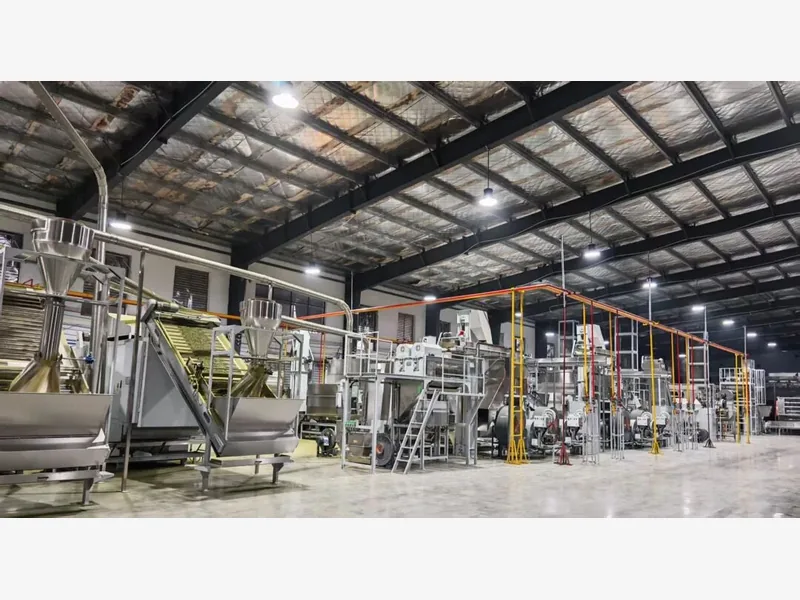
Several situations argue against signing. If your volumes are small or highly variable, the flexibility you surrender may cost more than the priority you gain, and spot purchasing with a good supplier relationship may serve you better. If the agreement commits you to volume without a reciprocal supply obligation, you are accepting risk without receiving protection. If the supplier is a trader rather than a producer, they cannot genuinely reserve capacity they do not control, so the allocation is only as good as their own upstream position.
If pricing is fixed at a level well above market with no adjustment mechanism, you may be locking in a bad deal for the duration. And if the qualification process is incomplete, an allocation contract converts an unproven relationship into a binding one. The judgment: stress-test at least one documented downside-demand scenario, and if the answer is unaffordable, either reduce the committed minimum or do not sign.
Supply reliability without a formal allocation is still achievable through forecast sharing and forward ordering, as covered in our guide to bulk matcha buying.
Key Takeaway: Avoid signing when demand is small or volatile, when the supplier’s delivery obligation is not reciprocal, when the counterparty is a trader who cannot reserve capacity they do not control, or when qualification is incomplete; test the deal against a documented downside-demand scenario before committing.
How do you negotiate a matcha allocation contract?
Negotiate from demonstrated commitment and evidenced performance, since those are what a producer values when allocating scarce capacity. Here’s what gives you leverage in this specific negotiation: predictability, not price pressure.
Approach it in sequence. Time the discussion for the post-harvest window, before the coming cycle’s capacity is allocated, since negotiating after allocation means competing for leftovers. Bring evidence: your usage history, forecast, and performance as a payer, all of which reduce the supplier’s risk and justify better terms. Trade explicitly: offer volume commitment, longer notice periods, or forecast sharing, and ask in return for allocation priority, price protection, flexible instalment scheduling, and the reciprocal supply obligation.
Address the difficult scenarios directly rather than avoiding them, specifically what happens in a short-harvest year and what happens if your demand falls, since both will eventually occur. The experienced view: a supplier who engages constructively on shortfall and harvest-failure scenarios is showing you how they will behave when one arrives, which is itself valuable information. Lead-time expectations should be settled in the same conversation, using the seasonal realities in our guide to matcha lead times, and the same principles apply to complementary lines such as hojicha powder.
Key Takeaway: Negotiate in the post-harvest window before capacity is allocated, bring usage history and forecasts as evidence, trade commitment and forecast sharing for allocation priority and price protection, and insist on discussing short-harvest and demand-fall scenarios, since how a supplier engages there predicts their behaviour when it happens.
FAQ
What is a matcha allocation contract?
It is an agreement where you commit to purchasing a defined minimum volume over a set period, for a negotiated measurement period aligned to the buyer’s planning cycle, and in return the supplier reserves that production capacity for you with priority over spot and uncommitted buyers. It differs from a standard supply contract, which governs quality, payment and delivery mechanics, by additionally governing whether the volume will exist at all.
What does take-or-pay mean for a matcha buyer?
A clause labelled take-or-pay may require a payment when the buyer takes less than a stated quantity, but the label alone does not define the obligation. Negotiate the trigger, measurement period, calculation, exclusions, make-up rights, supplier performance conditions, remedies, and liability limits, then have qualified counsel assess the clause under the governing law.
Which clause is most often missing from allocation agreements?
A clearly defined reciprocal supply obligation. State what capacity or volume is reserved, when delivery is due, what exceptions apply, and what evidence supports any shortfall. If the parties negotiate an alternative-sourcing remedy, define its trigger, calculation, mitigation duties, exclusions, and liability limits; the agreement and governing law determine its effect.
How long should a matcha allocation contract run?
There is no universal term. Choose a period supported by forecast confidence, the supplier’s production cycle, demonstrated performance, repricing and notice provisions, and the cost of exit. Compare fixed, renewable, and rolling structures, and use qualified counsel to review the resulting obligations under the governing law.
When should you avoid signing an allocation contract?
When your demand is small or highly variable, when the supplier’s delivery obligation is not reciprocal to yours, when the counterparty is a trader who cannot genuinely reserve capacity they do not control, when pricing is fixed above market with no adjustment mechanism, or when qualification through samples, trial order and audit is incomplete.
Conclusion
A matcha allocation contract converts your volume commitment into reserved capacity and priority access, which is the most reliable protection available in a market where an annual harvest must be distributed among competing buyers. The decisive takeaway is symmetry: the value of the contract lies entirely in whether the supplier’s obligation to deliver is drafted as tightly as your obligation to buy, and a commitment given without a reciprocal supply guarantee, a harvest-shortfall mechanism, and an attached quality specification is exposure rather than security.
To discuss allocation terms backed by owned production capacity, contact AdoroHu Matcha to request samples, specifications, and a wholesale quote for your volume and season.