
Matcha reorder management means setting a reorder point that accounts for seasonal lead-time swings, sizing safety stock against a product that degrades in storage, and committing volume ahead of harvest rather than reacting to depletion. Here’s the tension that makes matcha harder than ordinary dry goods: the obvious defence against stockouts is holding more stock, but matcha loses colour and flavour while it sits, so over-ordering destroys the quality you were protecting.
That contradiction catches buyers out repeatedly. A buyer using one untested lead-time assumption can run short when receipts slow. A buyer who overcorrects with excess stock can create freshness and working-capital risk. A manufacturer that never separates peak from off-peak planning treats a predictable annual event as a recurring surprise. Reorder management resolves this by planning against three moving parts at once: usage, lead time, and shelf life. This guide sets out how, whichever matcha supplier you buy from.
The variables behind a reliable reorder point
Matcha reorder management rests on three calculations. First, the reorder point: (average daily usage × lead time in days) + safety stock, using your longest realistic lead time rather than the average, since matcha lead times vary from the buyer’s measured regular- and peak-season receipt history. Second, safety stock sized against shelf life: matcha is best used within the validated open-life for the exact product and pack, so buffer stock should cover lead-time risk without exceeding what you can consume fresh.
Third, seasonal commitment: work backward from your own peak demand using measured lead time, review time, and an agreed buffer and secure allocation before the harvest window, since matcha production is annual rather than continuous.
In short: set the reorder point on your worst-case lead time, size safety stock to what you can use fresh, and commit volume ahead of harvest rather than reacting to depletion.
Key points:
- Use your longest seasonal lead time in the reorder point, not the average.
- Safety stock is capped by shelf life; more buffer is not always better with matcha.
- Matcha is produced annually, so peak-season supply must be committed in advance.
How do you calculate a matcha reorder point?
You calculate a matcha reorder point with the standard formula, then correct it for seasonal lead-time variability. Here’s the adjustment that matters most: the standard formula assumes a stable lead time, and matcha’s is anything but.
The base calculation is straightforward: reorder point = (average daily usage × lead time in days) + safety stock. Average daily usage comes from dividing total consumption over a period by the number of days in it. Lead time should come from your own purchase order history rather than a supplier quote, calculated across the past six to twelve months of actual shipments.
The matcha-specific correction: because the buyer’s measured lead-time distribution may differ materially between regular and peak periods, a single blended average produces a reorder point that is too low precisely when you most need it to be high. The practical approach is to maintain two reorder points, one for regular season and one that applies from a defined date ahead of peak, and to switch between them on the calendar rather than reactively. The seasonal ranges to plan around are set out in our guide to matcha lead times.
Key Takeaway: Use reorder point = (average daily usage × lead time) + safety stock, but calculate lead time from your own order history and maintain two reorder points, regular-season and peak-season, switching on the calendar; a blended average leaves you underprotected exactly when lead times stretch.
How much matcha safety stock should you hold?
Safety stock should cover your lead-time and demand variability without exceeding what you can consume while the matcha is still fresh. Here’s the constraint that makes matcha different from most ingredients: the buffer that protects against stockouts also creates spoilage risk.
Model demand and lead-time uncertainty
Two forces set the ceiling and the floor. The floor is variability: the more your demand fluctuates or your lead time varies, the more buffer you need, with a common general starting point a buyer-selected service level calculated from demand and lead-time variability. The ceiling is freshness: matcha is typically best used within the validated open-life for the exact product and pack, and colour and flavour degrade over time even sealed, so buffer stock that sits beyond your usable window becomes a quality problem rather than an insurance policy.
For perishable goods generally, the guidance is to keep safety stock deliberately smaller than you would for shelf-stable items and accept slightly higher stockout risk in exchange for freshness. The experienced adjustment: express safety stock in days of cover rather than kilograms, so it scales automatically as your usage changes, and set that number of days below your usable freshness window with margin. Storage conditions determine how much of that window you actually get, as covered in our guide to storing matcha powder.
Key Takeaway: Size safety stock between two limits: enough to absorb lead-time and demand variability (a common starting point is a buyer-selected service level calculated from demand and lead-time variability), but never more than you can consume within the freshness window, since matcha degrades in storage; express it in days of cover rather than kilograms.
How does shelf life change matcha reorder calculations?
Shelf life caps how far ahead you can buy, which means matcha reorder points need a freshness constraint the standard formula does not include. Here’s the failure mode this prevents: technically in-stock matcha that no longer performs.
Build the constraint in explicitly. The adjusted approach for perishable goods subtracts a shelf-life buffer from the calculated reorder quantity, so that ordering is triggered by both stock level and remaining freshness rather than quantity alone. In practice this means three habits. Order in smaller, more frequent lots rather than fewer large ones, accepting slightly higher freight cost in exchange for fresher material. Operate strict FIFO rotation with clear labelling of production date, best-before date, and lot number on every package.
And set an internal use-by policy that is stricter than the printed best-before, based on when your own product quality visibly changes rather than when the material becomes unsafe. The judgment worth applying: track spoilage or quality-related write-offs as a metric, because a rising figure means your reorder quantities are too large regardless of what the formula says. The degradation mechanism itself, and how to recognise it early, is covered in our guide on why matcha turns brown.
Key Takeaway: Add a freshness constraint to the reorder calculation: order smaller lots more frequently, enforce FIFO with production date, best-before and lot number labelling, and set an internal use-by stricter than the printed date; track quality write-offs, since a rising figure means order quantities are too large.
How should harvest seasonality shape your reorder plan?
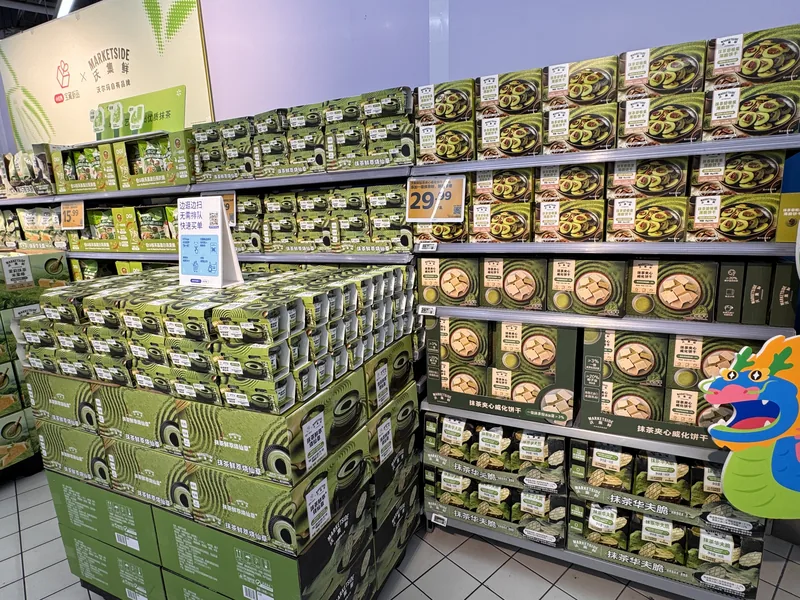
Harvest seasonality should shift your reordering from reactive to committed, because matcha is produced annually rather than continuously. Here’s the structural fact that reactive ordering ignores: once a harvest is allocated, no amount of urgency creates more of that year’s crop.
Plan around the buyer’s measured demand pattern and the supplier’s documented production, reservation, and peak-period lead times. Build a calendar that connects required receipt dates with specification and document review, production booking, transit, customs, receiving, and a risk-based buffer. Confirm whether a volume commitment actually reserves capacity, how release dates may change, and what happens when forecast demand differs from actual demand. Work backward from evidence rather than applying a universal number of months. The relationship between forward commitment and commercial terms is discussed in our guide to bulk matcha buying.
Key Takeaway: Matcha is produced annually, so shift from reactive to committed ordering: map your demand peaks against the harvest window on a twelve-month calendar, work backwards using peak-season lead times, and commit volume before allocation rather than after, which also earns better terms.
Should you use staggered deliveries or single bulk orders?
Staggered delivery against a committed volume resolves the conflict between securing supply and keeping matcha fresh. Here’s why this structure exists: it lets you commit to the quantity while spreading the freshness risk.
The mechanism is simple and widely available. You agree a total annual or seasonal volume with the supplier, which secures your allocation and usually improves your pricing, but schedule delivery in instalments timed to your consumption rather than taking everything at once. This gives you three advantages simultaneously: supply security from the commitment, freshness from receiving material closer to when you use it, and reduced working capital tied up in stored inventory. It also reduces your storage burden, which matters because matcha needs conditioned storage to hold quality.
The trade-off to negotiate carefully is flexibility: agree in advance how much you can adjust instalment timing or quantity if your demand shifts, and what notice period applies. Delivery scheduling should be written into the agreement rather than left to goodwill, alongside the other terms covered in our guide to matcha supply contracts.
Key Takeaway: Use staggered delivery against a committed volume: the commitment secures allocation and pricing while instalment delivery keeps material fresh, cuts working capital, and reduces storage burden; negotiate flexibility on instalment timing and notice periods, and write the schedule into the contract.
What data do you need to run matcha reordering well?
You need three data streams: actual usage, actual lead times, and quality outcomes over time. Here’s the common weakness: most buyers have sales data but not supply data, so they forecast demand accurately and misjudge replenishment.
Track these deliberately. Usage: consumption per period by grade and format, so each product line gets its own reorder point rather than a blended one. Lead time history: actual days from order placement to receipt for every shipment, recorded with the season, since this is what feeds your reorder point and reveals variability. Quality and freshness outcomes: age at consumption, and any write-offs, which tells you whether your order sizes match your turnover.
The practical warning from inventory practice: persistently high safety stock usually masks a root cause, whether poor forecast accuracy, unreliable supply, or weak supplier communication, so treat a rising buffer as a diagnostic signal rather than a solution. Reviewing lead-time and reliability data with your supplier turns these numbers into improvement, which is the purpose of the measures in our guide to matcha supplier KPIs.
Key Takeaway: Track usage by grade and format, actual lead time per shipment with the season recorded, and freshness outcomes including age at consumption and write-offs; a persistently rising safety stock is a diagnostic signal of forecast or supply problems, not a solution to them.

How do you reduce reorder risk without holding more stock?
You reduce reorder risk through supply arrangements rather than inventory, since holding more matcha trades one risk for another. Here’s the reframe: the alternative to a big buffer is a better commitment.
Four mechanisms work without adding stock. An allocation agreement secures priority access to a defined volume, protecting you when supply tightens without requiring you to hold it. Forecast sharing gives your supplier visibility of your expected demand, letting them plan production capacity for you rather than reacting to your orders, which typically shortens effective lead times. Rolling commitments, where you confirm the next period while a standing volume remains agreed, balance certainty for the supplier against flexibility for you.
And keeping a small local buffer, whether at a distributor or a bonded warehouse, covers short-term gaps without holding a full cycle. The judgment: each of these converts an inventory problem into a supplier arrangement that may reduce the cost of holding matcha and avoids treating excess stored inventory as the default solution. Order sizing interacts with these arrangements through minimums, which is where the trade-offs in our matcha MOQ guide become relevant.
For U.S.-bound orders, use the FDA guidance on importing human foods as an initial documentation checklist, then confirm the requirements for the product and shipment with the responsible parties.
Key Takeaway: Reduce reorder risk through supply structure rather than inventory: allocation agreements for priority access, forecast sharing so the supplier plans capacity for you, rolling commitments balancing certainty and flexibility, and a small local buffer for short-term gaps, none of which degrade in storage.
What reorder mistakes cause matcha stockouts?
The most common cause of a matcha stockout is applying a regular-season reorder point during peak season. Here’s the pattern: each mistake substitutes an assumption for a measurement.
Watch for these errors, each with its specific consequence.
- Using an averaged lead time that hides the seasonal peak, so the reorder point is too low exactly when it matters.
- Ordering reactively after stock drops rather than committing ahead of the harvest window, arriving after allocation is decided.
- Overcompensating with a large buffer, converting a stockout risk into a quality and spoilage problem.
- Using one reorder point across grades and formats, when each has different usage rates and lead times.
- Relying on the supplier’s quoted lead time rather than your own measured history.
- Ignoring your own peak demand calendar, so the order lands after your busy period has started.
Each of these is fixed by measurement rather than by holding more stock. A supplier with owned production capacity can support forward commitment and staggered delivery in a way a trader reselling allocated stock cannot, and the same planning discipline applies across complementary lines such as hojicha powder.
Key Takeaway: Stockouts come from substituting assumptions for measurements: averaged lead times hiding the peak, reactive ordering after allocation is decided, oversized buffers creating spoilage, one reorder point across all grades, quoted rather than measured lead times, and ignoring your own demand calendar.
FAQ
- How do you calculate a reorder point for matcha?
- Use a reorder model based on measured demand during replenishment, the actual lead-time distribution, the chosen service level, and current inventory position. Review enough buyer history to represent regular and peak conditions rather than assuming a universal lookback window or supplier estimate.
- How much matcha safety stock should I hold?
- Set safety stock from measured demand and lead-time variability, the chosen service level, supply alternatives, and the validated shelf life and open life for the exact product, pack, and storage conditions. Compare the protection gained with freshness, expiry, storage, and working-capital risk.
- Why do matcha stockouts happen even with a reorder point in place?
- Common causes include using one average that hides lead-time and demand variability, failing to update inventory and open orders, ignoring supplier allocation or review time, and using stale consumption data. Test the model against the buyer’s observed regular and peak conditions.
- Is it better to place one large matcha order or several small ones?
- Compare one shipment, staggered releases, and flexible call-offs against allocation certainty, price, freight, shelf life, storage, working capital, and forecast risk. If volume is committed, define whether capacity is truly reserved and how release timing or quantity may change.
- How far ahead should I order matcha before my peak season?
- Work backward from the required receipt date using the buyer’s measured peak-period lead-time distribution, specification and document review, production booking, transit, customs, receiving, and a risk-based buffer. Confirm reservation and cutoff dates with the supplier rather than applying a universal number of months.
Conclusion
Matcha reorder management works when you plan against three moving parts simultaneously: usage that you measure rather than estimate, lead times that vary sharply by season and must be taken at their worst case, and a shelf life that caps how much buffer is useful. The decisive takeaway is that the instinctive answer to stockout risk, holding more stock, is partly wrong for matcha, because the buffer degrades; the better protection is forward commitment with staggered delivery, which secures supply without sacrificing freshness.
To set up a supply schedule matched to your usage and season, contact AdoroHu Matcha to request samples and a wholesale quote with delivery scheduling options.