
Matcha brioche must build gluten around butter and egg while keeping fermentation, proof, crumb, and tea color under control. A green dough is not evidence of a finished loaf with the right volume or texture.
Develop matcha brioche with one flour, fat-addition sequence, dough temperature, and proof method. The matcha powder for baking helps with adjacent powder selection, while the production trial must prove dough strength and baked crumb.
Fix matcha placement, mixing sequence, fat incorporation, proof endpoint, and bake before comparing powders. Release depends on repeatable dough development, volume, crumb, color, flavor, and allergen controls.
In short:
Key points:
- Decide whether matcha belongs in the dough, a filling, or both.
- Record dough temperature and development before and after butter addition.
- Compare proof, baked yield, crumb, and crust against a same-day control.
What should a commercial matcha brioche brief define?
Define loaf or roll format, piece weight, crumb, crust color, tea intensity, sweetness, proof schedule, cooling, and packout. A direct-dough loaf and a filled laminated-style brioche require different matcha placement and controls.
Lock the flour, butter, egg, yeast, and mixer before comparing matcha. Otherwise, formula drift can be mistaken for powder performance.
Key Takeaway: Lock one enriched-dough system and one finished target.
Where should matcha enter the brioche process?
Compare matcha in the dough, in a filling, or split between both. Dough addition gives even color but exposes matcha to fermentation and baking. A filling can concentrate flavor and protect some color, but it adds layering, leakage, and portion-control work.
Choose placement from the product promise and line capability. Do not select a decorative swirl that routine operators cannot portion consistently.
| Matcha placement | Main benefit | Production risk |
|---|---|---|
| Dough | Even crumb color | Longer exposure to mixing, proof, and heat |
| Filling | Concentrated flavor and visual layer | Leakage and portion variation |
| Split placement | Layered flavor and color | More steps and control points |
Key Takeaway: Match placement to process capability and sensory target.
Which matcha candidates should be screened?
AdoroHu’s grade ladder identifies E-1/E-2 as Culinary, E-3/E-4 as Premium, and O-3 as Organic Premium. Use these stable codes to request controlled samples, then compare them in the same enriched dough.
A higher code is not automatic approval. Select the candidate that retains recognizable tea flavor and acceptable color without forcing dose or sugar upward.
For controlled trials, the premium matcha powder page is the relevant product route.
Key Takeaway: Choose from baked results, not grade names.
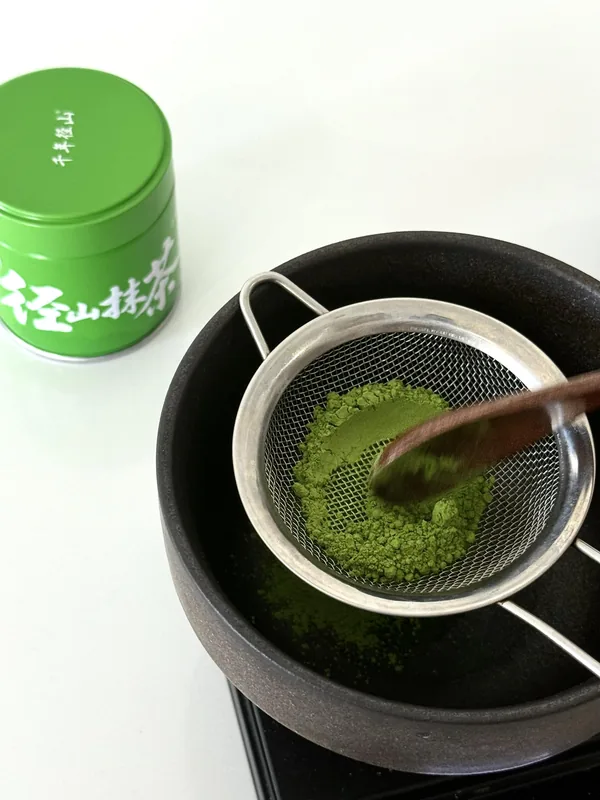
How should matcha dispersion be controlled in dough?
AdoroHu uses ultrasonic screening and multiple milling routes, including 20 stone mills, 56 ball mills, and 8 continuous ball mills. Confirm comparison lots share the agreed process and specification, then standardize sifting and dry blending before liquid addition.
Watch for green streaks at the bowl wall and within cut crumb. More mixing can correct poor distribution but may overwork warm, butter-rich dough.
Keep the powder decision connected to bakery matcha guide.
Key Takeaway: Control powder input before changing mixer time.
How do butter and egg affect dough development?
Butter coats flour and delays gluten development, while egg changes water, fat, and protein balance. Add butter according to a defined dough-development point and record dough temperature after mixing.
The practical tradeoff is speed versus structure. Faster fat addition shortens mixing but can produce weak dough, uneven proof, and poor volume.
| Dough checkpoint | Record | Decision |
|---|---|---|
| Before butter | Dough development and temperature | Ready for gradual fat addition |
| After butter | Cohesion, elasticity, temperature | Continue or correct mixing |
| End of mix | Defined development cue | Release to fermentation |
Key Takeaway: Use a repeatable development cue before fat addition.
How should fermentation and proof be compared?
Record dough temperature, fermentation time, proof time, piece size, and a defined readiness cue. Matcha color does not show yeast activity, so use dough height, volume, or another plant-approved measure.
Run a control brioche beside the matcha sample. The control shows whether a slow proof comes from the matcha formula or the day’s dough and environment.
Key Takeaway: Compare matcha dough against a same-day control.
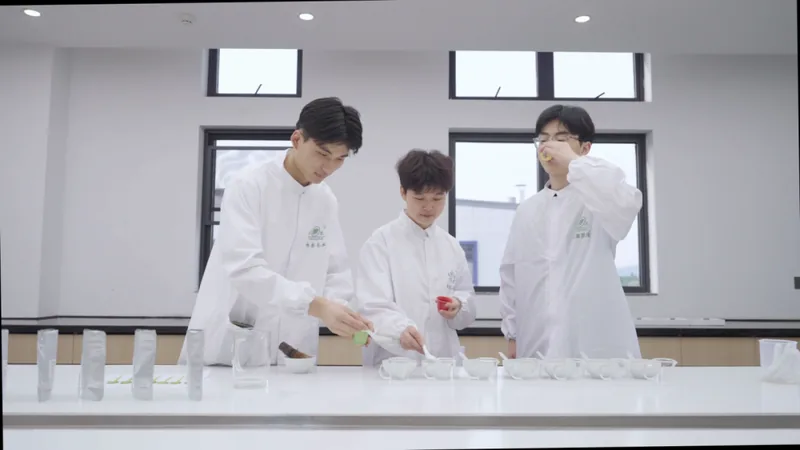
What measurements belong in a bake trial?
AdoroHu’s in-house microbiology and physical-chemical laboratories can support lot-linked powder COA inputs; the bakery still validates finished brioche. Record dough temperature, proof change, baked mass, yield, dimensions, crumb color, crust color, and sensory results.
Cut samples from fixed loaf positions after a fixed cooling time. That makes color and crumb comparisons more credible.
Use bulk matcha for food manufacturing for the adjacent manufacturing context.
Key Takeaway: Measure dough, bake, and cooled crumb separately.
How should allergens and food controls be documented?
Brioche commonly contains wheat, milk, and egg. The FDA food allergen page lists these among the nine major food allergens and explains source declaration for packaged foods. Shared equipment, rework, and line clearance belong in the approval record.
Under 21 CFR 117.80, manufacturing and holding controls must protect against allergen cross-contact and contamination. An attractive loaf cannot bypass those controls.
| Finished check | Comparison | Meaning |
|---|---|---|
| Proof and baked dimensions | Matcha versus same-day control | Fermentation and structure |
| Crumb cut at fixed position | Color and cell structure | Distribution and handling |
| Baked mass and yield | Repeat batches | Portion and cost control |
Key Takeaway: Approve the formula and allergen plan together.
What evidence should release matcha brioche?
AdoroHu’s 10 kg and 20 kg formats use sealed food-grade liners. Match pack size to bakery use rate and post-opening storage. Release the product only after repeat batches meet dough, proof, bake, yield, sensory, label, and packout limits.
Keep formula version, ingredient lots, mixer settings, dough temperatures, proof records, bake curve, cooling, deviations, and approvers together.
Key Takeaway: Release a repeatable dough process, not one successful loaf.
FAQ
- Does matcha slow brioche fermentation?
- It can change dough behavior, but a same-day control and recorded dough temperature are needed before assigning the cause to matcha.
- Should matcha go in brioche dough or filling?
- Dough gives even distribution, while filling concentrates flavor and adds portioning and leakage risks; test the route the line can repeat.
- Why does matcha brioche turn brown?
- Baking, crust formation, ingredient interactions, dose, and exposure all affect visible color, so compare crumb and crust separately.
- What matcha grade works for brioche?
- Screen stable supplier codes in the actual dough and choose by baked flavor, color, cost, and repeatability rather than the grade name alone.
- What records belong in a commercial brioche trial?
- Keep formula, lots, mixing and dough temperatures, proof data, bake settings, yield, sensory results, allergens, deviations, and approvals.
Conclusion
Matcha brioche is ready when normal operators can reproduce dough development, proof, volume, crumb, and color from the approved formula. Share the brioche format, mixer, process, and trial volume through the contact page for sample planning.