
Matcha energy balls work commercially when the powder, binder, process, and package are specified as one system. A good kitchen sample can still fail when a larger batch shows green streaks, excessive bitterness, oiling, or weak shape retention. Teams need a repeatable brief before they approve ingredients or artwork.
For matcha energy balls, start with the eating experience and manufacturing route, then choose the powder. AdoroHu’s culinary matcha for food production gives developers a practical place to begin when the tea must remain clear beside dates, nuts, cocoa, coconut, or protein ingredients.
A scalable matcha energy ball is a controlled snack system, not merely a recipe. Define the target color, flavor, bite, process, allergens, and package before comparing matcha samples. The best powder is the one that repeats those results at the intended cost and batch size.
In short:
Key points:
- Select matcha against the finished base, because fat, sweetness, and cocoa change its sensory impact.
- Control dispersion and binder consistency before increasing the matcha dose.
- Compare suppliers with coded trials, current documents, and one written acceptance standard.
Which matcha grade fits commercial matcha energy balls?
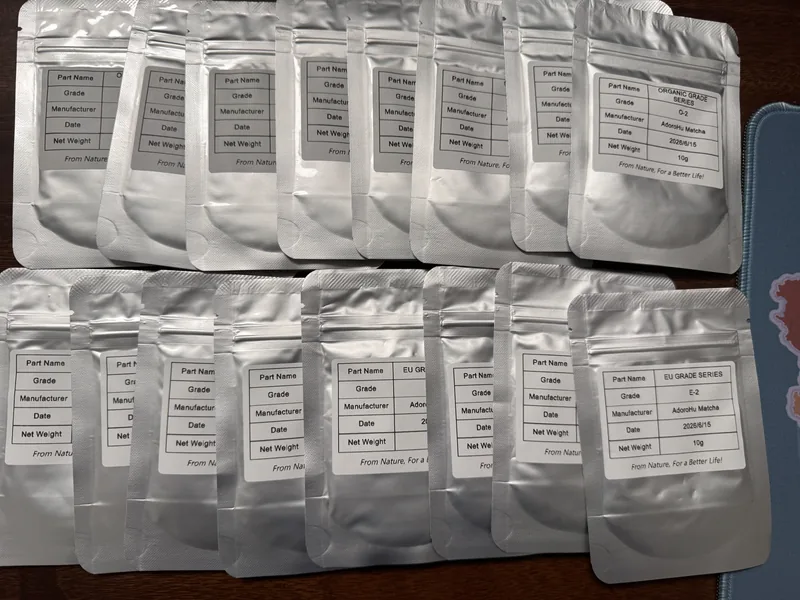
Culinary or lower-premium matcha usually fits commercial matcha energy balls because the base contains strong flavors and the tea must survive processing. AdoroHu’s EU Standard Series places E-1 and E-2 in culinary use, while E-3 and E-4 are premium grades. Its Organic Series uses O-1 and O-2 for culinary applications and O-3 for premium applications.
Here is the practical trade-off: begin with a culinary candidate, then move upward only when a blinded finished-product trial shows a worthwhile improvement. Starting with ceremonial grade often spends more on subtle aroma that nuts, dates, chocolate, or protein powder can cover.
| Product brief | Useful starting point | Decision risk |
|---|---|---|
| Dark cocoa or roasted nut base | Culinary series | Paying for aroma the base masks |
| Light coconut or cashew base | Culinary versus premium trial | Bitterness may dominate a pale base |
| Organic-certified concept | Organic series with scope review | Certification mismatch can delay claims |
Key Takeaway: Choose the grade through the finished snack, not from dry-powder appearance alone.
How should developers set a sensory target for matcha energy balls?
Developers should define color, tea intensity, bitterness, aroma, and aftertaste before adjusting a matcha energy ball formula. Without a written target, one evaluator may reward dark green while another rewards sweetness, and the team will chase two products at once.
A useful bench card compares coded samples after the same rest period. Score the interior and coating separately because surface matcha tastes sharper than powder dispersed through a fat-rich matrix. Also note whether the product leaves a dry, powdery finish.
Use these checkpoints:
- color in the cut center, not only on the outer coating;
- tea aroma before and after chewing;
- bitterness at first bite and in the finish;
- visible specks, streaks, or powder pockets;
- texture after the planned forming and chilling sequence.
Key Takeaway: A five-line sensory target turns preference into a repeatable approval decision.
How can matcha disperse evenly through a dense energy-ball base?
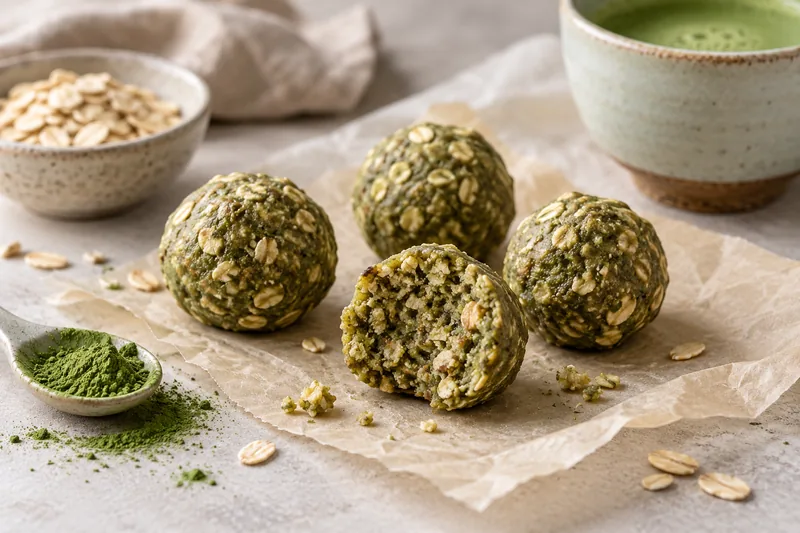
Matcha disperses most evenly when it is screened and preblended with a compatible dry ingredient before it meets the binder. Dense date and nut systems do not give loose powder much room to redistribute after the mass starts clumping.
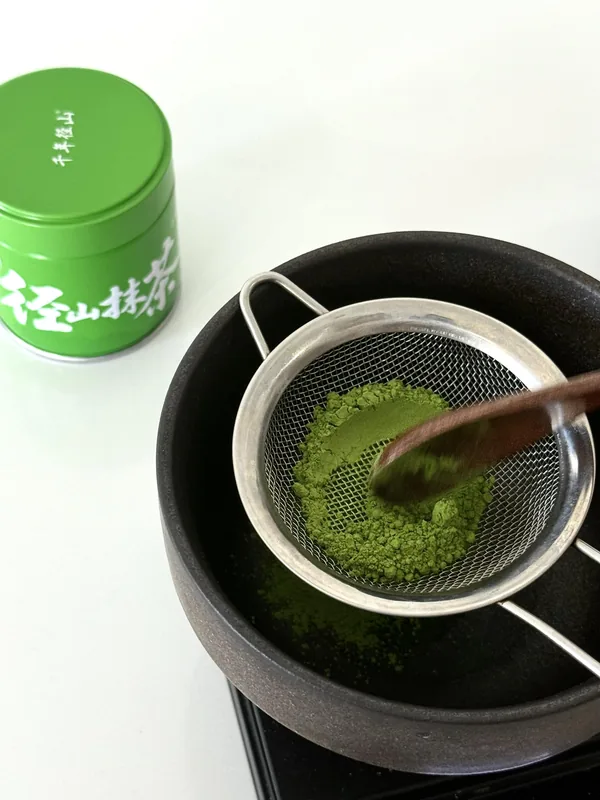
This is where powder processing matters. AdoroHu uses an ultrasonic screening system for ultra-fine matcha, supported by stone, ball, and continuous ball-milling equipment. Fewer persistent agglomerates mean less corrective mixing, which helps protect color and limits heat from friction.
In practice, avoid adding matcha onto a finished sticky mass. That sequence creates dark pockets, then tempts operators to overmix the entire batch. A controlled dry preblend gives the line a better chance of reaching uniform color within the normal mixing window.
Key Takeaway: Fix the addition sequence before increasing mixer time or matcha dose.
Which binder choices create the largest process risks?
Binder variability creates the largest process risk because it controls flow, adhesion, and shape retention in matcha energy balls. Date paste, nut butter, syrup, and coconut oil each respond differently to temperature and incoming moisture.
The decision becomes clearer when developers separate flavor from mechanics.
| Binder system | Likely strength | Watch during trials |
|---|---|---|
| Date or fruit paste | Strong cohesion and sweetness | Lot-to-lot firmness and dark color |
| Nut or seed butter | Rich mouthfeel and protein positioning | Oil separation and allergen controls |
| Syrup plus dry solids | Easy sweetness adjustment | Stickiness and weak warm-temperature hold |
| Fat-led system | Clean bite and rapid firming | Softening during handling or distribution |
A useful rule is to correct binder consistency before correcting matcha. Extra powder can make a wet batch seem workable at the bench, yet it may also raise bitterness and raw-material cost.
Key Takeaway: Treat binder condition as an incoming variable, not a fixed recipe assumption.
What should a pilot batch record for matcha energy balls?
A matcha energy ball pilot should record inputs, sequence, equipment settings, observations, and yield against the approved bench control. The record should be detailed enough for another operator to reproduce the batch without relying on memory.
Capture the matcha lot, binder lot, ingredient temperatures, mixing sequence, mix endpoint, portioning behavior, piece-weight spread, coating pickup, and post-process appearance. Photograph the cut center under consistent light. If the line uses a depositor or former, note smearing, sticking, and cleaning interruptions.
AdoroHu operates in-house microbiology and physical-chemical laboratories. For buyers, that capability matters because a supplier can connect a shipped lot to test documentation when a pilot result differs from the reference.
Key Takeaway: A pilot is valuable only when its records can explain why the next batch changed.
How do allergens change a matcha energy-ball production plan?
Allergens change the production plan when nuts, peanuts, milk, soy, or sesame enter the formula or share equipment. The matcha itself does not remove the need to review every carrier, coating, protein ingredient, and rework stream.
The FDA’s food-allergen guidance identifies nine major food allergens in the United States. That named list affects label review and preventive controls, so a nut-butter concept may require different scheduling and sanitation evidence than an oat-and-seed version.
Teams should confirm:
- the allergen status of each ingredient and processing aid;
- line scheduling and validated cleaning between products;
- rework rules and container identification;
- label declarations for the target market;
- supplier change notification for compound ingredients.
The related AHM guide to matcha allergen review helps procurement connect supplier documents with the finished-product assessment.
Key Takeaway: Lock the allergen route before approving a formula that depends on shared equipment.
How should packaging protect matcha energy balls?
Packaging should protect the snack from oxygen, light, moisture movement, crushing, and oil transfer throughout the intended distribution route. Matcha color is only one part of the decision; seal integrity and physical protection can decide whether pieces arrive attractive and separate.
Do not borrow a shelf-life statement from a consumer recipe. Run trials in the final film, tray, pouch, or carton and evaluate the actual formulation at planned checkpoints. AdoroHu supplies matcha in sealed food-grade liners inside 10 kg or 20 kg cartons, so production teams can plan controlled opening, resealing, and line-side handling for ingredient stock.
For the finished snack, compare headspace, barrier, portion format, and pack strength. The AHM article on matcha oxygen-barrier packaging provides a useful companion framework for the tea ingredient.
Key Takeaway: Validate the finished package with the finished formula and distribution route.
What supplier evidence should buyers request before approval?
Buyers should request evidence that identifies the product, lot, origin, specification, and applicable certification scope. A polished sample without current documents is not ready for a controlled launch.
Ask for a specification sheet, lot-specific Certificate of Analysis, allergen statement, traceability information, storage guidance, and relevant certification documents. If an organic claim is planned, confirm that the product and transaction documents fit the target market rather than relying on a logo in a sales deck.
AdoroHu lists USDA Organic (NOP), EU Organic, JAS Organic, BRCGS Food Safety, FDA registration, ISO 22000, Halal, and Kosher among its current certifications. Each one answers a different buyer requirement, so procurement should request only the evidence the product and market actually need.
Key Takeaway: Approve a documented ingredient identity, not a sample name or color impression.
When does a custom matcha blend help an energy-ball line?
A custom blend helps when the product brief cannot be met consistently with one standard grade. It may be useful when a brand needs a specific balance of green color, bitterness, organic status, and cost in a strong base.
Before requesting customization, send a useful brief: base ingredients, intended claims, processing sequence, target market, package, and acceptance sample. Vague requests for a “bright but inexpensive” powder force suppliers to guess. The custom formula development service is most useful when the buyer has already defined what success looks like.
Customizing too early can also slow development. First prove that the problem belongs to the matcha rather than binder variation, mixing order, or package exposure.
Key Takeaway: Customize against a measured gap, not against an undefined preference.
How should procurement compare matcha samples fairly?
Procurement should compare matcha samples in one locked base, with coded labels and the same processing conditions. Dry tasting can screen obvious defects, but it cannot predict how sweetness, fat, cocoa, protein, and coatings will change the result.
Use the same ingredient lots, batch size, equipment, rest time, portion weight, and evaluation light. Record the supplier code only after the panel has scored the samples. Then compare sensory results beside documents and projected cost per finished unit.
The practical judgment is firm: reject a powder that needs extra mixing or excess dosing to look uniform, even if its unit price is lower. The added labor, line time, and bitterness can erase the apparent saving.
Key Takeaway: Compare total production performance, not price per kilogram in isolation.
FAQ
- What type of matcha is best for commercial matcha energy balls?
- Culinary matcha is the usual starting point, while light-colored or mildly flavored bases may justify a controlled comparison with premium matcha.
- Should matcha be added directly to date paste or nut butter?
- A screened dry preblend usually reduces streaks and powder pockets before the binder makes the batch cohesive.
- Can a brand use ceremonial matcha in energy balls?
- It can, but the finished-product trial should prove that buyers can perceive enough added value to justify the higher ingredient cost.
- What documents should accompany a matcha sample?
- Request a current specification, lot-specific Certificate of Analysis, allergen statement, traceability information, storage guidance, and applicable certification evidence.
- How should a team set shelf life for matcha energy balls?
- Test the final formula in the final package through the intended distribution conditions and use measured quality and safety results to set the claim.
- When is a custom matcha blend worth considering?
- Consider it after a locked pilot shows that standard grades cannot meet the agreed color, flavor, claim, and cost targets.
Conclusion
Commercial matcha energy balls need a clear sensory target, controlled dispersion, documented pilots, and packaging trials. Compare grades in the finished base and approve the supplier evidence with the sample. Contact AdoroHu Matcha to discuss a matcha specification for your snack-development brief.