
Matcha oxygen barrier packaging should be selected from a defined shelf-life endpoint, matched barrier data, and converted-pack trials. A low film oxygen-transmission value cannot account for weak seals, powder contamination, folds, pinholes, headspace, or repeated opening. Buyers comparing wholesale matcha supply should validate the complete pack around the intended product and use pattern.
Match the test conditions before comparing oxygen-barrier numbers. Validate the converted pouch and its closure, not only a flat film sample. Approve the package when product checkpoints confirm that the oxygen-control system works through use.
In short: Oxygen control is a system of material, conversion, sealing, headspace, handling, and reclosure.
Key points:
- Compare OTR only when units, temperature, relative humidity, thickness, and method align.
- Challenge seals and converted pouches under realistic powder and distribution conditions.
- Connect package measurements with matcha colour, aroma, sensory, and shelf evidence.
What quality endpoint should matcha oxygen barrier packaging protect?
The package should protect a named endpoint such as acceptable colour, aroma, flavour, dispersibility, or finished-application performance through a stated period and use pattern. “Freshness” alone is too vague for package approval.
Define the product mass, initial condition, fill atmosphere, headspace, closure, storage, distribution, and number of openings. Link the work to the company’s matcha shelf-life validation rather than borrowing a competitor’s expiry period.
Key Takeaway: Start with an observable product endpoint and time horizon, then build the oxygen-control evidence around it.
Which oxygen-exposure routes belong in the package model?
Include transmission through material, seal leakage, pinholes, closure interfaces, oxygen in the powder and headspace, filling exposure, and oxygen introduced after opening. These routes can dominate at different stages.
| Route | Evidence | Buyer action |
|---|---|---|
| Film transmission | Method-bound OTR data | Compare like-for-like conditions |
| Seals and defects | Converted-pack integrity tests | Challenge production samples |
| Headspace | Residual-oxygen measurements | Control filling and verify drift |
| Repeated opening | Use simulation | Size the pack and closure for actual use |
Key Takeaway: A material number covers one exposure route, while package approval covers the whole system.
How should OTR values be compared?
Compare oxygen transmission rate only when method, units, temperature, relative humidity, specimen thickness, and conditioning agree. ASTM F1927 covers oxygen transmission through barrier materials at a specified temperature and relative humidity and warns that OTR is not the sole determinant of package protection.
The official ASTM F1927-20 record describes the method's controlled-humidity scope and its use as a referee method when purchaser and seller agree on sampling, standardization, conditions, and acceptance criteria.
Request the test report rather than a marketing value. Record specimen construction, orientation, lot, method version, conditioning, exposed area, replicates, and result. Reject a comparison that mixes dry and humid conditions or omits key conditions.
Key Takeaway: An OTR number without its test conditions is not a purchasing specification.
When do foil, metallized film, and EVOH structures behave differently?
They differ through structure, thickness, coating continuity, moisture response, flex durability, transparency, sealing layers, and conversion quality. No material name guarantees the finished package result.
Use the matcha packaging guide to define pack roles, then ask converters for the complete laminate structure and the evidence relevant to that structure. Consider flexing, folds, printing, zipper insertion, and seal geometry.
Practitioner decision: avoid approving a structure from a headline barrier value. The consequence can be a premium film that fails after conversion or normal handling.
Key Takeaway: Compare complete structures and conversion evidence, not generic material families.
How do humidity and flexing affect barrier performance?
Humidity can change the oxygen barrier of some materials, while flexing can create defects in thin barrier layers. Test conditions and distribution handling therefore belong in the comparison.
ASTM F1927 exists specifically to measure oxygen transmission at controlled relative humidity. Use relevant conditioning and handling challenges, then retest or inspect converted packs where the risk warrants it. Do not infer a universal degradation factor.
Key Takeaway: Barrier data should represent the humidity and mechanical history the pack may face.
How should seals and powder contamination be challenged?
Challenge the actual seal process across expected powder dust, jaw settings, dwell, pressure, temperature, line speed, and film-lot variation. Matcha at the seal interface can prevent full contact or create a leak path.
Define sampling across startup, steady production, changeover, and end-of-run. Pair visual inspection with a suitable integrity or leak method and destructive seal testing where appropriate. Record the failure location and mode.
Key Takeaway: Seal validation should reproduce the contamination and process variation of commercial filling.
What must be tested on the converted pouch?
Test dimensions, folds, gussets, zipper, valve if present, seals, print or coating effects, and damage after distribution simulation. Flat-film data does not measure these features.
ASTM F1307-20 covers steady-state oxygen transmission into complete packages that normally enclose a dry environment. Its official scope still says oxygen transmission is only one determinant of protection and calls for additional tests that correlate the measurement with package performance. For matcha, that makes a whole-pack result useful alongside integrity, handling, and product checkpoints rather than a stand-alone shelf-life verdict.
| Converted feature | Possible failure | Evidence |
|---|---|---|
| Bottom or side gusset | Fold cracking or weak seal | Integrity test after flexing |
| Zipper | Channel leak or poor reclosure | Open-close simulation |
| Powdery seal | Incomplete fusion | Contaminated-seal challenge |
| Printed laminate | Conversion damage | Lot-specific inspection and test |
Key Takeaway: Qualify production-representative finished packs from the intended converter and line.
How should nitrogen flushing and residual oxygen be verified?
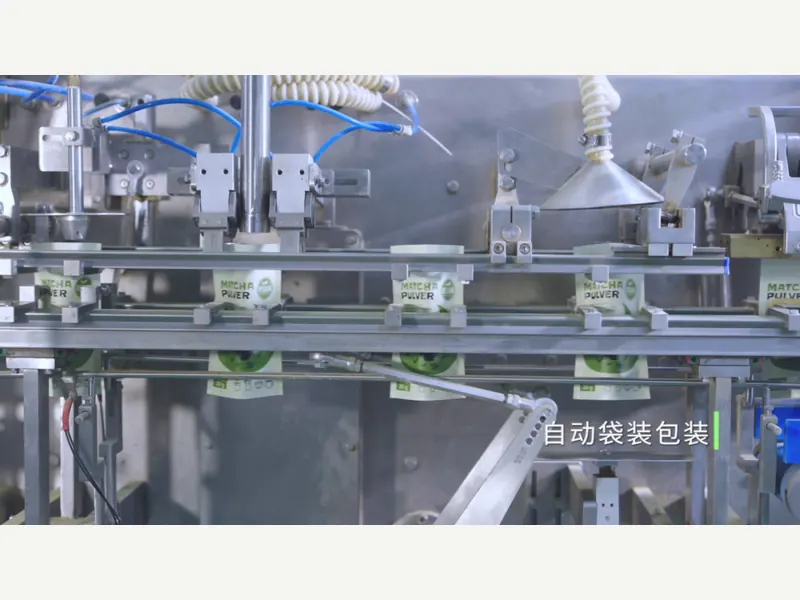
Verify nitrogen control by measuring residual headspace oxygen with a defined sampling plan and timing. Flushing equipment settings alone do not prove the result.
Track values across startup, normal production, interruptions, and later checkpoints. Relate the measurement to fill mass, headspace, package, sealing, and sampling method. A good initial result cannot compensate for a leaking package.
Key Takeaway: Treat residual oxygen as a measured process output tied to seal and shelf evidence.
When are oxygen absorbers appropriate?
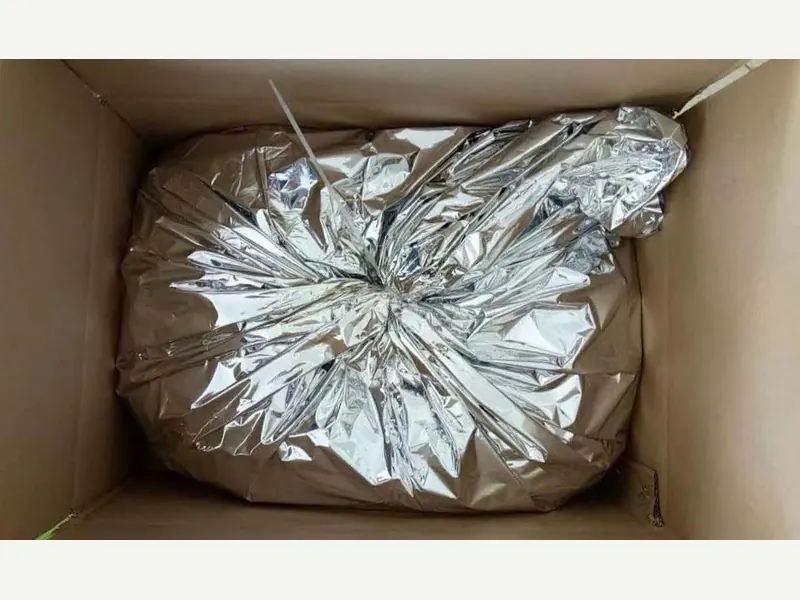
An absorber may support oxygen control when its capacity, activation, placement, regulatory suitability, package barrier, headspace, and use pattern fit the product. It cannot repair an unreliable seal or replace process control.
Assess total oxygen load, foreseeable moisture exposure, consumer instructions, accidental ingestion controls, and whether the pack will be repeatedly opened. Confirm supplier documentation and destination-market requirements.
Key Takeaway: Use an absorber as one validated component, never as a substitute for package integrity.
How should zipper performance be tested after opening?
Test reclosure through the expected number of openings, powder contamination, handling, and storage orientation. Observe whether users can clear the track and achieve consistent closure.
Compare pack sizes and working-pack practices. A large foodservice pouch may experience more cycles and longer open time than a small retail pack. Smaller packs can reduce exposure but change cost and waste.
Key Takeaway: Reclosure performance belongs in shelf-life work whenever the pack is not consumed at first opening.
Which shelf checkpoints decide approval?
Use checkpoints that connect package condition and oxygen measurements with product colour, aroma, taste, flow, moisture-related observations, and application performance. A 2026 original matcha study stored powder at controlled water activities from 0.11 to 0.93 under light-shielded or continuous laboratory LED exposure of about 450–500 lx. Higher water activity and light accelerated losses in the studied compounds, and gallated catechins had reported half-lives of about 30–40 days under the study's light exposure. Those exact bench conditions show why light and moisture controls belong in shelf work; they do not establish an OTR limit, commercial shelf life, or result for a new package.
Advance only when production-representative packs and relevant controls meet the predefined endpoints. Investigate whether a failure comes from material, conversion, seal, filling, headspace, handling, or opening.
Key Takeaway: Product results decide whether package measurements are commercially sufficient.
What belongs in the supplier specification and change control?
Specify the exact structure, thicknesses where appropriate, seal layer, dimensions, closure, test methods and conditions, converted-pack requirements, sampling, acceptance process, and change-notification duties. Preserve approved samples and reports.
Require review before changes to resin, foil or coating, adhesive, layer thickness, converter, equipment, dimensions, zipper, or test method. A nominally equivalent structure still needs evidence.
Build the approval file so another buyer can reconstruct the choice. Include the commercial artwork revision, laminate declaration, converter and manufacturing site, purchase specification, test reports, trial lot, filling-line settings, seal-window study, residual-oxygen record, shelf protocol, deviations, and signed decision. Link every sample and report to a material lot or finished-pouch lot. A glossy technical sheet without traceability should remain background information.
Use a change matrix to decide what must be repeated. A print-only revision may need a focused confirmation if ink or curing cannot affect the structure, while a new adhesive, metallization process, zipper, or seal layer may reopen barrier, integrity, migration, filling, and shelf questions. Document the rationale instead of treating every change as either harmless or a complete restart.
Procurement should also define what happens when routine incoming evidence misses the specification. Quarantine the affected pouch lot, confirm identity and method, review whether production used any units, and decide whether retesting can answer the question. Avoid averaging a failed lot with earlier passing results.
For recurring supply, trend OTR or related barrier results only when the methods remain comparable. Add seal and finished-pack failures to the same review because gradual conversion drift may appear there before material data changes. The resulting control plan gives the converter clear expectations and gives the matcha buyer evidence for a targeted investigation.
Before the first commercial order, run the pack through the intended filling and distribution sequence. Sample pouches from different machine lanes and production times, then inspect them after case packing, pallet handling, and a relevant transport challenge. Measure the package and product endpoints at the same checkpoints used in the approval protocol.
Document how operators respond to powder on the sealing area, a low residual-oxygen result that later rises, a zipper that will not clear, and isolated pinholes after flexing. These scenarios expose whether the process has containment and investigation steps rather than only a nominal specification.
Keep a production reference set under controlled storage. It can help reviewers compare construction, print, zipper, seal geometry, and handling damage when a later complaint arrives. A reference pouch is useful only when its lot and storage are traceable.
Practitioner decision: hold approval when the supplier cannot trace the tested material to the supplied structure. Untraceable data cannot support a defensible shelf-life decision.
Key Takeaway: The specification should bind commercial supply to the exact evidence used for approval.
FAQ
- What does OTR mean for matcha packaging?
- OTR measures oxygen transmission through a barrier specimen under stated conditions; it does not by itself measure seals, defects, headspace, or repeated opening.
- Is aluminium foil always the best oxygen barrier for matcha?
- Material selection depends on the complete structure, conversion, flexing, seals, use pattern, and validated product outcome, so a generic material ranking is insufficient.
- Can nitrogen flushing replace high-barrier packaging?
- No. Flushing may reduce initial headspace oxygen, while the package and seals must control later ingress.
- Should buyers compare supplier OTR datasheets directly?
- Only when method, units, temperature, relative humidity, thickness, and specimen construction are sufficiently matched.
- Do zipper pouches need testing after opening?
- Yes. Reclosure, powder in the zipper, opening frequency, and open time can change oxygen exposure during use.
Conclusion
Matcha oxygen barrier approval needs traceable material data, sound converted packs, controlled filling, and product shelf evidence. Contact AdoroHu Matcha to align the matcha, pack format, use pattern, and validation plan.
Institutional Author
AdoroHu Matcha