
Matcha French toast stays crisp outside and soft inside when a café controls bread condition, custard uptake, matcha dispersion, and the cooking endpoint. A loose recipe leaves too much to the operator: one slice drinks the bowl dry, another stays raw at the center, and a crowded griddle turns green surfaces brown. The matcha powder for baking guide explains powder selection; this guide owns the sliced-bread process.
A commercial matcha French toast standard should name the bread, slice thickness, absorbed custard, pan load, flip rule, cooked endpoint, and handoff. Those controls let purchasing, prep, and service compare the same product.
French toast is a bread-and-custard system. Specify how much custard each slice absorbs, then validate the center and surface together. Color cannot substitute for egg-custard cooking, and a cooked center cannot excuse a scorched exterior.
In short:
Key points:
- Fix bread condition and custard uptake before adjusting matcha.
- Validate surface color and egg-custard completion together.
- Test the first, middle, and last griddle batches before release.
What matcha French toast format should a café standardize?
A café should choose a same-day dip, a refrigerated long-soak pain perdu, or a topping-led variation before writing the formula. These formats use different bread, prep space, cold storage, cooking time, and service promises.
A same-day format supports made-to-order brunch and a shorter prep path. A long-soak format can produce a deeper custardy center, but it creates cold-holding, pan-space, and uptake controls. A matcha glaze can carry tea flavor separately, yet it adds a saucepan, another allergen record, and a second yield.
| Format | Main process | Main control |
|---|---|---|
| Same-day dip | Coat and cook | Soak repeatability |
| Long refrigerated soak | Hold before cooking | Uptake and cold control |
| Matcha glaze variation | Plain or matcha toast plus sauce | Sauce yield and handoff |
Key Takeaway: Approve one production format before combining recipe ideas from different sources.
Which bread condition and slice thickness fit matcha French toast?
The right bread has a defined age, crumb, thickness, and portion weight that absorbs custard without collapsing. Ranking recipes use thick day-old slices, half-inch French bread, and one-inch stale brioche, challah, shokupan, or babka. Those choices do not behave alike.
Build a bread screen with two realistic options. Weigh each slice, measure thickness, photograph the crumb, and note whether it is fresh, dried, or day-old. Apply the same custard and record absorbed weight, edge damage, center saturation, cooked height, and plate yield.
Drier, thicker bread can hold more custard and create a soft center. It also widens absorption variation and needs more cooking energy. Thin bread moves faster but can lose the contrast between crisp surface and custardy middle.
Key Takeaway: Specify bread by measurable condition and slice dimensions, not by style name alone.
How should a matcha French toast custard be scaled?
A matcha French toast custard should be written by weight and linked to target absorbed custard per slice. Published examples range from one egg and about 60 milliliters of milk for two slices to four eggs with 250 grams of milk and cream for six thick slices. Treat them as comparison inputs, not commercial standards.
For a proposed pilot, weigh the mixed custard, soak six coded slices, and weigh the remainder. Divide absorbed custard by saleable slices, then repeat with another bread condition. Record eggs, liquid, sugar, fat, matcha, salt, vanilla, starting custard weight, remaining custard, and spill loss.
| Formula control | Why it matters | Record |
|---|---|---|
| Egg-to-liquid ratio | Center set and richness | Grams per batch |
| Matcha concentration | Color and bitterness | Grams per custard kilogram |
| Absorbed custard | Yield and doneness | Grams per slice |
| Leftover custard | Cost and handling | Batch remainder |
Key Takeaway: Scale the custard from measured absorption and saleable yield, not the number of eggs alone.
How should matcha enter the French-toast custard?
Matcha should enter through a tested dispersion route that controls clumps without adding uncontrolled liquid. Ranking pages use a water paste, a milk paste, repeated sifting, and direct whisking. Each route changes prep time and foam.
Compare three small custards with the same formula. In one, wet matcha with a measured water portion. In another, use a measured milk portion. In the third, sift directly into the full liquid. Check dry pockets, surface foam, settled powder after five minutes, and visible streaks in cooked slices.
AdoroHu uses ultrasonic screening for ultra-fine matcha, but French-toast custard still needs a wetting step and mixing endpoint. Fine powder can disperse well while remaining suspended leaf material. The café recipe pilot guide offers adjacent menu-test context.
Key Takeaway: Choose the dispersion route that gives smooth custard with the fewest uncontrolled additions.
Which matcha grade fits French toast?
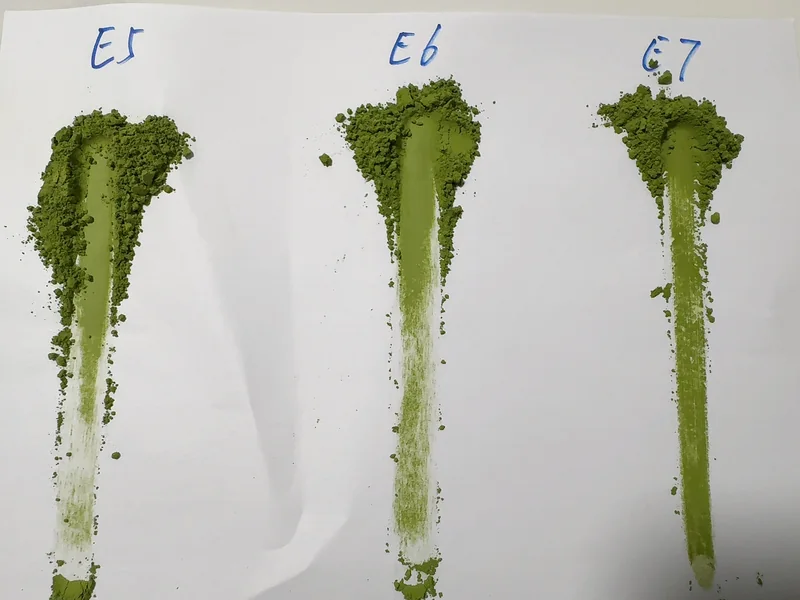
The right matcha grade survives egg, milk, bread, butter, heat, and toppings at a usable cost. Ceremonial grade is not an automatic requirement. A coded finished-slice trial gives purchasing a stronger answer than tasting powder in water.
AdoroHu’s EU Standard Series includes E-1 and E-2 culinary grades and E-3 and E-4 premium grades. The Organic Series includes O-1 and O-2 culinary grades and O-3 premium. Start with one culinary and one premium candidate from the matcha for baking application range.
Hold bread, custard, absorbed weight, cooking profile, and toppings fixed. Score center color, surface browning, tea aroma, bitterness, dairy balance, and cost per saleable slice. Approve the sample that performs in the full plate.
Key Takeaway: Select grade in the cooked slice, with sensory results and portion cost side by side.
How should matcha French toast custard uptake and soak time be controlled?
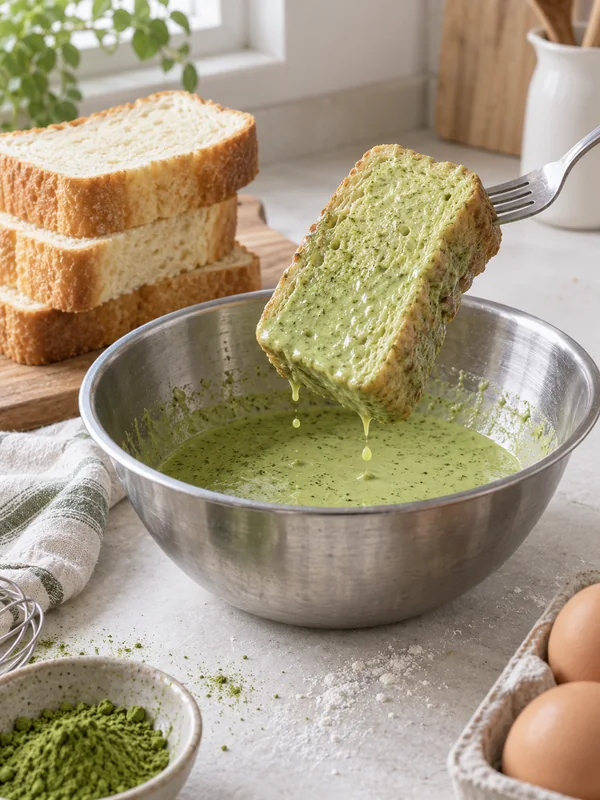
Matcha French toast custard uptake should be controlled by bread weight, soak method, time, flips, and a target absorbed-weight range. A quick coating and a four-hour refrigerated soak create different products. They need separate formulas and work instructions.
For same-day service, define seconds per side and whether staff press the slice. For a long soak, define pan depth, slice spacing, flip schedule, covered refrigeration, maximum batch size, and the person who releases the tray. Weigh representative slices before and after soaking.
Reject slices that shed crumb, tear on transfer, leave a dry center, or exceed the uptake range. Do not fix excessive uptake by cooking longer without checking the egg custard and surface; that can dry the bread while the center remains inconsistent.
Key Takeaway: Treat absorbed custard per slice as a production measurement, not an invisible recipe step.
What matcha French toast cooking endpoint protects color and cooks the egg custard?
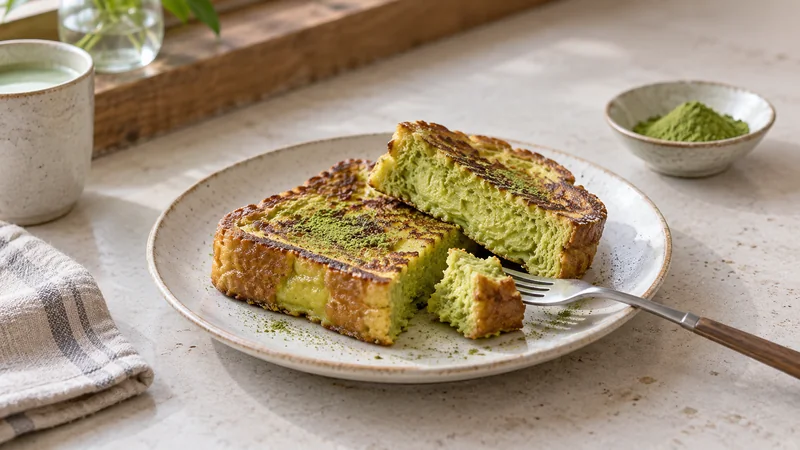
A matcha French toast cooking endpoint must satisfy the operation’s applicable egg-food requirement while protecting an acceptable green-brown surface. Published profiles favor low or medium-low heat, covered cooking, and several minutes per side. Those profiles are starting examples, not universal safety settings.
The FDA Food Code 2022 places raw eggs prepared to order for immediate service within section 3-401.11’s cooking framework. Different service or batch processes can fall under different provisions. Follow the locally adopted code and validate the actual slice thickness, griddle, custard, and service method with the responsible food-safety lead.
During the pilot, record griddle setting, surface temperature where useful, cook time, turn point, center condition, surface color, and the verified endpoint required by the operation. Lower heat may protect color but reduce throughput. Color never proves the egg custard is cooked.
Key Takeaway: Validate the center and surface together under the operation’s applicable egg-cooking rule.
How should a matcha French toast griddle load and batch sequence be standardized?
A matcha French toast griddle load should be fixed by slices per zone, preheat, cooking fat, recovery time, flip rule, and transfer path. A recipe tested with one slice may fail when six cold, wet slices pull heat from the surface.
Run the intended load and compare the first, middle, and last batch. Record time to first turn, sticking, color, center result, edge dryness, pan recovery, and rejected slices. Map hot and cool zones rather than asking staff to compensate silently.
Keep bread and custard pans away from the finished-food path. Use dedicated utensils and clear batch labels. If one operator must soak, cook, plate, and garnish, time the full sequence before promising a brunch throughput.
Key Takeaway: Release the griddle method only after normal staff repeat the same result across consecutive loads.
Can matcha French toast be held for brunch service?
Cooked matcha French toast can be held only after the café validates both applicable food controls and eating quality. A warm oven may support batch service, but time, temperature, airflow, rack contact, and stacking change the crust and center.
FDA Food Code section 3-501.16 addresses hot and cold holding for foods that meet the TCS definition. Section 3-501.19 permits time as a public-health control only with its required written procedures, marking, time, and disposition conditions. Local adoption and the actual process determine what applies.
Compare made-to-order service with a short staged hold approved by the operation. Check surface crispness, center softness, color, portion temperature, and reject rate at defined intervals. Do not turn a recipe blog’s oven setting or refrigerator note into a universal commercial limit.
Key Takeaway: Set a hold only when safety procedures and sensory results support the same service window.
What belongs in a matcha French toast allergen, supplier, and cost brief?
A matcha French toast brief should bind bread, egg, milk or alternative, cooking fat, toppings, matcha lot, and cleaning controls to one approved SKU. Wheat, egg, milk, nuts, and other topping allergens depend on the actual formula and facility, so the team must review each substitution.
Specify bread weight, custard batch, absorbed weight, matcha grams, cooking loss, rejected slices, topping weight, labor time, and projected covers. AdoroHu bulk formats include 10 kg and 20 kg cartons with sealed food-grade liners. These are pack facts, not an MOQ or shelf-life promise.
The matcha private-label service can support a defined application brief. Ask for the current specification, lot-specific COA, allergen statement, traceability information, and certifications relevant to the intended claim.
Key Takeaway: Cost and source the saleable plate from a controlled formula, not from dry matcha price alone.
FAQ
- Which bread works best for matcha French toast?
- Use a bread style, age, crumb, and slice thickness that reaches the target custard uptake without collapsing during cooking.
- Should matcha French toast use fresh or stale bread?
- Drier bread often absorbs custard more predictably, but the café should compare weighed uptake and cooked texture instead of relying on age alone.
- How do you stop matcha French toast from turning brown?
- Control surface heat and cook time while still validating the required egg-custard endpoint in the actual slice and equipment.
- How should matcha be mixed into French-toast custard?
- Compare a water paste, milk paste, and sifted direct-whisk method, then choose the route with the fewest clumps and most repeatable batch time.
- Can matcha French toast be soaked overnight?
- It can be developed as a separate refrigerated long-soak format, but its formula, uptake, cold holding, and cooking process must be validated independently.
- Can cooked matcha French toast be held for brunch service?
- Only after the operation validates the applicable food-control method and confirms that texture, color, and center quality remain acceptable through the hold.
Conclusion
Release matcha French toast as a measured bread, custard, griddle, and service process. Compare absorbed weight and cooked results across real batches before setting cost or throughput. Contact AdoroHu Matcha with the bread format, trial volume, certification needs, and finished-slice acceptance criteria.