
Matcha frozen yogurt becomes smooth and scoopable when a developer controls the cultured base, dissolved solids, matcha dispersion, freezing route, and service temperature together. A home formula may look creamy straight from a blender yet harden into an icy block after a night in storage. The matcha ice cream guide covers broader frozen-dessert texture; this guide focuses on the acidity and solids of a yogurt base.
The matcha frozen yogurt task starts with an approved cultured base and ends with repeatable scoops, color, melt, and container yield. It does not cover yogurt fermentation, frozen bark as if it were a tub product, or unsupported claims about probiotic survival.
Matcha frozen yogurt is a cultured-base freezing system. Define the product architecture first, then measure solids, acidity, air, hardening, scoop resistance, and melt. A soft result immediately after mixing does not prove stable commercial texture.
In short:
Key points:
- Specify the cultured base before changing matcha or sweetener.
- Match the freezing route to the intended draw and scoop.
- Release the product with timed scoop, melt, color, and cold-chain records.
What matcha frozen yogurt architecture is the team developing?
The team should choose a churned tub, soft draw, freeze-then-process product, still-frozen pan, or bark before setting the formula. Ranking pages mix all these formats, but they do not answer the same texture or service question.
A churned product uses agitation and air incorporation during freezing. A still-frozen pan relies more heavily on depth, freeze rate, and temper time. Frozen cubes processed after hardening can create an immediate creamy texture, while bark is a thin slab broken into pieces.
| Architecture | Main process | Release question |
|---|---|---|
| Churned tub | Freeze with agitation | Is overrun and draw repeatable? |
| Still-frozen pan | Static freezing | Does depth create hard or icy zones? |
| Freeze then process | Harden cubes, then blend | Does texture survive refreezing? |
| Bark | Thin slab, break into pieces | Are thickness and fracture controlled? |
Key Takeaway: Approve one physical product before borrowing formulas from another architecture.
Which cultured-base measurements matter for matcha frozen yogurt?
The matcha frozen yogurt base should be recorded by pH, total solids, fat, protein, sugar, viscosity, and batch identity before freezing. These measurements help explain why two yogurts behave differently under the same process. They do not replace a finished-product trial.
Compare a concentrated full-fat base with a lower-fat or milk-diluted base only if both fit the product brief. Full-fat Greek yogurt may bring more fat and solids. A nonfat yogurt plus milk may add water and change hardness, so the freezing route and sweetener must be held constant.
Keep fermentation ownership with the ordinary yogurt process. This article begins after the base is approved. For cold holding where the cultured base is a time/temperature control for safety food, follow the operation’s locally adopted requirements and food-safety plan.
Key Takeaway: Freeze a measured cultured base, not an unnamed container of yogurt.
How should matcha dose be balanced against yogurt acidity?
Matcha dose should be tested against the base’s tang, sweetness, fat, and serving temperature. Cold reduces aroma perception, while acidity can sharpen bitterness and shift the way green color appears. More powder does not automatically restore balance.
Run a coded dose ladder in one yogurt batch. A proposed pilot could compare three nearby matcha levels while holding sweetener, solids, fill depth, and freezing route fixed. Score tea aroma, yogurt tang, bitterness, sweetness, color, and aftertaste at the intended service temperature.
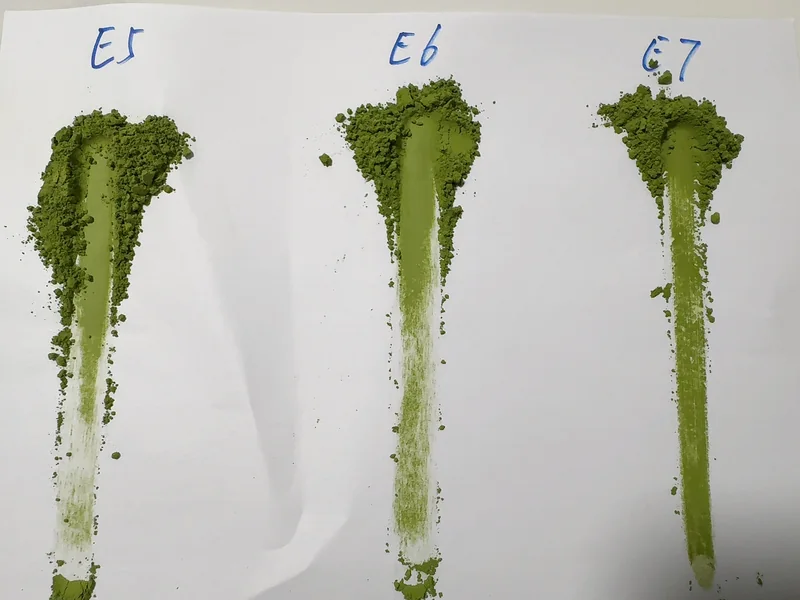
AdoroHu’s EU Standard Series includes E-1 and E-2 culinary grades and E-3 and E-4 premium grades. The Organic Series includes O-1 and O-2 culinary grades and O-3 premium. Compare suitable candidates from the culinary matcha range in the finished frozen yogurt.
Use the B2B matcha-for-desserts sourcing guide for the broader supplier screen, while keeping this trial focused on the cultured frozen matrix.
Key Takeaway: Select dose and grade in the cold cultured matrix, with usable cost beside the sensory result.
How do sweetener and solids change frozen-yogurt texture?
Sweetener and total solids affect hardness, freezing behavior, body, sweetness, and melt. Ranking formulas use honey, maple syrup, allulose, or other sweeteners in different yogurt bases. Those examples show useful variables, not interchangeable recipes.
Build a matched trial around the actual label brief. Record yogurt solids, added sweetener solids, added water, matcha, stabilizer if used, total mix weight, and container depth. Compare the formulas under the same freezing and hardening schedule.
A full-fat concentrated base may carry more body, while a nonfat base diluted with milk changes the water load. Churning can manage crystal growth and air; it cannot repair an uncontrolled solids balance. Do not choose a formula from softness immediately after processing.
Key Takeaway: Evaluate sweetener as a solids and freezing variable, not only a flavor choice.
How should matcha be dispersed into a viscous yogurt base?
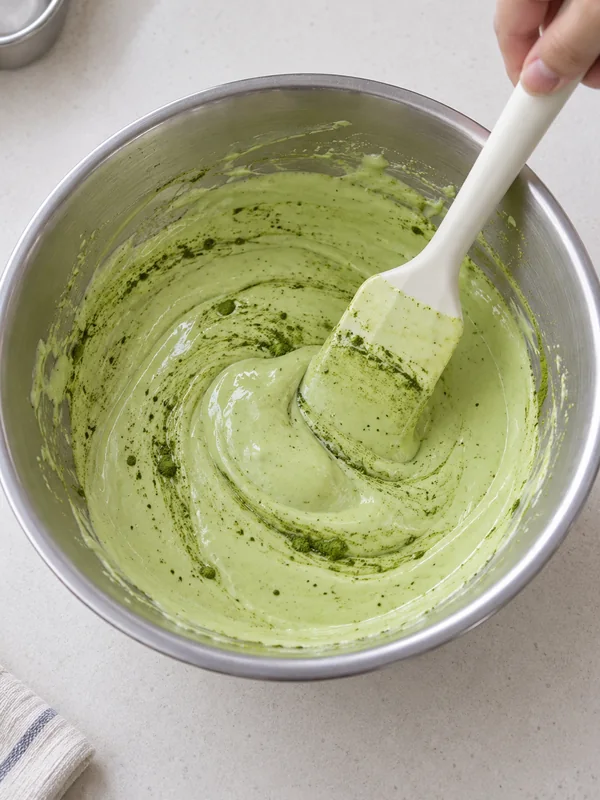
Matcha should be pre-dispersed through a measured route that prevents green specks and excess foam. Adding dry powder directly to thick yogurt can trap agglomerates that survive freezing. Excess high shear can add air before the intended freezing step.
Compare a small water preblend, a yogurt preblend, and direct sifting into the full base. Record added liquid, tool, speed, time, foam, visible specks, color uniformity, and settling before filling. Use the same hold time before freezing.
AdoroHu uses ultrasonic screening for ultra-fine matcha, but the developer still controls wetting and mixing. Fine leaf powder disperses; it does not become a fully dissolved ingredient. Set a visual and timed endpoint that normal operators can reproduce.
Key Takeaway: Choose the preblend that gives uniform color with controlled liquid and air.
Which freezing route fits the target matcha frozen yogurt?
The matcha frozen yogurt freezing route should match the intended air content, service format, equipment, and storage path. Published examples use periodic hand agitation, static pan freezing, frozen-cube processing, and optional ice-cream machines. Each route produces a different process history.
For a churned pilot, record mix temperature, draw condition, overrun, first-to-last container weight, and time to hardening. For still freezing, fix container material, fill depth, freezer position, and time. For freeze-then-process, test the texture both immediately and after the intended refreeze.
The practical tradeoff is control versus simplicity. Agitation or churning adds equipment but can manage air and crystal growth. Static freezing removes that step, while making freeze rate, depth, and temper time more important.
Key Takeaway: Validate one freezing route from mix through final service, not only its softest moment.
What matcha frozen yogurt draw and hardening endpoints keep it scoopable?
Matcha frozen yogurt draw and hardening endpoints should be defined by temperature, appearance, air, container weight, and later scoop performance. “Creamy” at draw is too vague because a soft mix can become excessively hard after storage.
Record draw temperature where applicable, overrun, fill weight, container depth, hardening start, hardening end, and core condition. After the intended frozen hold, temper samples for defined intervals and measure the first scoop. Publisher examples mention 5–15 minute temper windows; use them only as pilot references.
Reject a process that gives acceptable center texture but icy edges, or a good first container and dense last container. First, middle, and last fills expose mix warming, settling, and air drift.
Key Takeaway: Approve the hardening process by later scoop performance across the fill run.
How should matcha frozen yogurt scoop force, melt, and color be tested?
Matcha frozen yogurt scoop force, timed melt, and color should be tested at the intended service temperature. A structured test makes “smooth” and “scoopable” useful to production. It also shows whether a formula needs reformulation or a different temper window.
Use the same scoop, portion target, container depth, freezer location, and temper time. Record time to a complete scoop, cracking, curl formation, portion weight, shape after five minutes, first drip, pooled liquid, and color change. These times are proposed test points, not shelf-life claims.
| Check | Good evidence | Common failure |
|---|---|---|
| First scoop | Complete curl at target temper | Crumbles or bends scoop |
| Portion | Weight inside tolerance | Temper changes yield |
| Melt | Defined shape and drip record | Watery separation |
| Color | Stable comparison under fixed light | Olive or uneven zones |
Key Takeaway: Release texture with timed, repeatable observations rather than one soft sample.
When do inclusions belong in yogurt or frozen bark?
Inclusions belong in a scoopable product only when size, loading, distribution, hardness, and allergen controls fit the churn and scoop. Bark uses a different logic: toppings sit on a thin slab and must adhere through freezing and breaking.
Sesame, nuts, berries, sauces, and crunchy pieces can change water migration and serving texture. Trial one inclusion at a fixed loading against a plain control. Inspect first-to-last distribution, breakage, color bleed, frozen hardness, and scoop obstruction.
Do not use bark results to claim tub scoopability or overrun. Bark can help classify a separate product opportunity, but it does not validate churn, hardening, or melt for frozen yogurt.
Key Takeaway: Keep inclusion decisions inside the approved product architecture.
What belongs in matcha frozen yogurt cold-chain, supplier, and pilot records?
The matcha frozen yogurt record should connect cultured-base lot, matcha lot, formula, process, container, frozen storage, temper trial, yield, and release decision. It should preserve actual temperatures and times without converting them into unsupported shelf-life promises.
The FDA Food Code 2022 §3-501.16(A)(2) sets applicable TCS cold holding at 5°C/41°F or less, subject to local adoption and the operation’s plan. Section 3-501.11 separately requires food stored in a frozen state to remain frozen. The 41°F limit describes cold holding in a chiller; it is not the frozen-storage endpoint for the finished product. USDA freezing guidance explains that freezing does not reliably destroy microbes and that faster freezing can limit large ice crystals. It does not establish a commercial frozen-yogurt shelf life.
Ask suppliers for specifications, lot-specific COAs, allergen statements, traceability, storage guidance, and relevant certifications. AdoroHu bulk formats include 10 kg and 20 kg cartons with sealed food-grade liners. For a defined trial, the matcha private-label service can support a clear brief.
Key Takeaway: Release the product from linked ingredient, process, texture, and cold-chain evidence.
FAQ
- What makes matcha frozen yogurt different from matcha ice cream?
- It starts with a cultured yogurt base, so acidity, yogurt solids, water, and freezing behavior must be evaluated together.
- Which matcha grade works in frozen yogurt?
- Compare suitable culinary and premium samples in the finished cultured base, then choose by color, tang, bitterness, aroma, and usable cost.
- Why does matcha frozen yogurt become icy?
- Excess water, insufficient dissolved solids, slow freezing, weak agitation, or long hardening can produce large crystals and a hard scoop.
- Does matcha frozen yogurt need an ice-cream maker?
- Not always, but churned, periodically agitated, still-frozen, and freeze-then-process routes produce different air, crystal, and service results.
- Is frozen-yogurt bark the same as scoopable frozen yogurt?
- No. Bark is a thin frozen slab broken into pieces and does not validate overrun, tub hardening, scoop force, or melt behavior.
- Does freezing preserve probiotic activity or make the product safe?
- Do not assume either outcome; the finished process, cultures, storage, and food-safety plan need product-specific evidence.
Conclusion
Approve matcha frozen yogurt from the cultured base through frozen service, with scoop and melt evidence from the intended container. Keep bark, ordinary yogurt, and neutral ice cream in their own process lanes. Contact AdoroHu Matcha with the base specification, target format, trial volume, certifications, and release checks.