
Matcha semifreddo slices cleanly when you control the foam density, fold gently, limit free water, fill each mold by weight, and temper the frozen loaf for a tested interval. Uncontrolled folding and free water can leave icy pockets or broken edges, reducing saleable slices during service.
A matcha semifreddo production task differs from both chilled matcha mousse and churned ice cream. Semifreddo holds air from whipped components, freezes statically in a mold, and must release as a loaf or portion without losing its shape.
Define the product before adjusting the formula: an aerated, non-churned frozen dessert that releases from a mold and cuts into repeatable portions. Then measure density, fill weight, hardening, temper time, slice quality, and melt behavior in one pilot.
In short:
Key points:
- Select one foam architecture and validate its food-safety controls.
- Compare each final folded mix with a successful same-formula density baseline.
- Approve the product by slice and melt performance, not freezer time alone.
What makes matcha semifreddo different from mousse or ice cream?
Matcha semifreddo is a statically frozen, aerated dessert designed for mold release and slicing. Chilled mousse stops at refrigerated foam stability, while matcha ice cream develops its structure through churning and is normally served by scoop.
That difference changes the production brief. A semifreddo team must preserve air during folding, manage ice formation without continuous agitation, and set a temper window that allows cutting without collapse.
| Product | Main structure step | Release test | Service test |
|---|---|---|---|
| Semifreddo | Folded foam, static freeze | Mold releases without tearing | Clean slice holds on plate |
| Mousse | Whipped and chilled | Portion or piping stability | Refrigerated hold |
| Ice cream | Churn and harden | Scoopability | Scoop shape and melt |
Key Takeaway: Write the target as “aerated, molded, frozen, and sliceable” before choosing ingredients or equipment.
Which base architecture should a commercial semifreddo pilot use?
Choose either a pasteurized egg-and-dairy system or a defined plant-based foam system, then test it as its own architecture. Mixing evidence from egg custard, aquafaba, agar, whipped coconut cream, and dense cashew blends produces a brief that no operator can repeat.
Published examples show the range. Roaming Taste combines two eggs, one yolk, 265 grams of cream, and 12 grams of matcha. Chlo-eat builds a vegan loaf from coconut milk, coconut cream, and 57 grams of aquafaba. KISSA uses agar with coconut milk and whipped soy cream. These are formulation references, not AdoroHu factory measurements.
Use an egg-and-dairy route when classic cream richness and a validated egg control fit the operation. Use a plant-based route when the market requires it, but budget extra work for raw-material solids, drainage, foam strength, and allergen control.
Key Takeaway: Do not switch base families inside one pilot; each needs its own density, freezing, slicing, and safety limits.
How should matcha enter the semifreddo base without specks?
Disperse matcha into a small, smooth liquid phase before it meets the finished foam. Adding dry powder directly to whipped cream or aquafaba increases the risk of green specks and forces extra mixing that knocks out air.
Start with a sifted matcha intended for baking applications. Test a cool preblend against a warmed liquid preblend, then use the same matcha dose, base temperature, and shear time. The warmed route can hydrate powder faster, but the phase must cool before folding. A warm matcha phase softens fat and weakens foam.
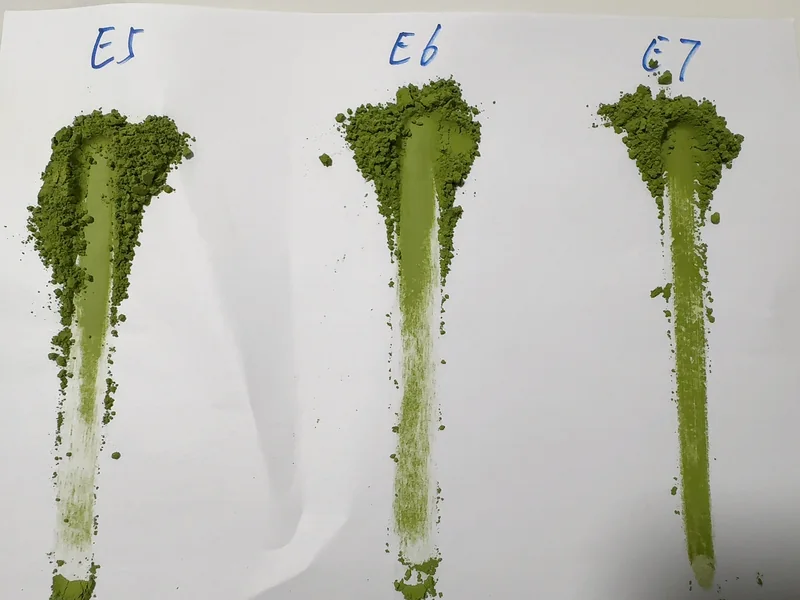
For each trial, photograph a fixed smear thickness under the same light and record visible specks.
Key Takeaway: Approve matcha dispersion before aeration, so later folding only combines phases instead of repairing clumps.
How can a matcha semifreddo kitchen measure foam retention during folding?
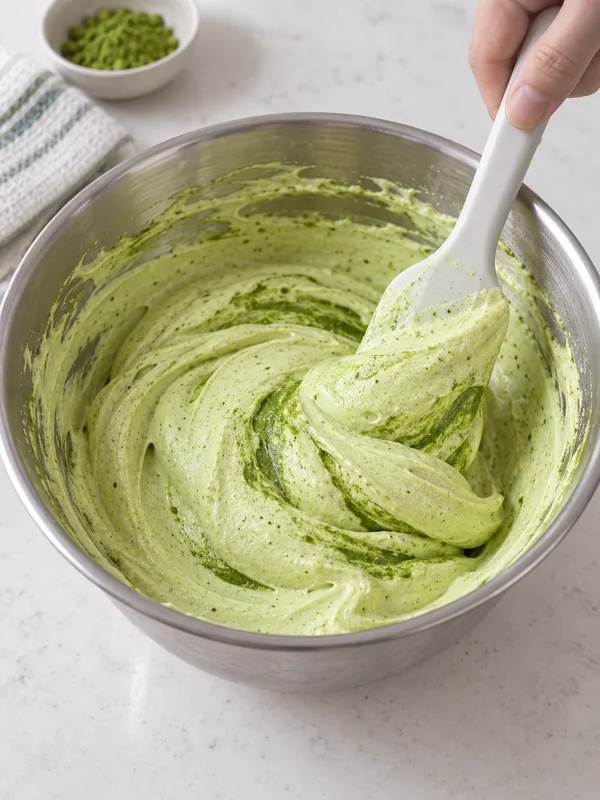
For matcha semifreddo, compare the final folded mixture with a successful final-mix baseline made from the same formula, phase ratio, ingredient temperatures, fixed-volume cup, level-fill method, and scale. A visual “light and fluffy” check misses batch-to-batch changes in whip endpoint, operator technique, and temperature.
Record the final-mix cup weight and compare it only with that matched baseline. If the formula, phase ratio, or temperature changes, establish a new baseline and calculate the expected mass balance from ingredient weights and finished yield. Different component phases cannot be compared by cup weight to prove foam loss.
| Pilot checkpoint | What to record | Why buyers should care |
|---|---|---|
| Successful final mix | Fixed-volume cup weight, formula, phase ratio, and temperature | Establishes the matched baseline |
| Current final mix | Same cup method plus visible streaks | Flags drift from the successful final mix |
| Formula change | Expected mass balance and a new baseline | Prevents false comparisons across compositions |
| Frozen center slice | Height, voids, and edge collapse | Links mix density to saleable portions |
The cup weight turns “fold gently” into a number that operators can compare.
Key Takeaway: Set a final-mix cup-weight band from successful same-formula pilots, and create a new baseline whenever composition or phase ratio changes.
How do water and inclusions affect a matcha semifreddo slice?
In matcha semifreddo, free water creates icy zones and weakens slice boundaries, so every fruit ripple, plant milk, syrup, or drained cream needs a defined input condition. Fruit is especially risky because a loose ripple can freeze softer or harder than the surrounding matcha base.
Roaming Taste cooks blackberries before folding a light swirl. Sun Potion keeps blueberry coulis outside the frozen slab. The second route protects the base but adds a plating step. Choose a ripple only after comparing it with a uniform control.
Run an A/B trial with equal mold fill. Keep one loaf uniform and add a weighed ripple to the other. Compare center and end slices for bleed, ice pockets, edge breakage, and melt at fixed time points. If the ripple damages the cut, thicken it, reduce its load, or move it to plating.
Key Takeaway: Treat every inclusion as water and solids entering the structure, not as decoration added after formula approval.
What matcha semifreddo folding sequence protects air and color?
For matcha semifreddo, the safest folding sequence lightens the dense matcha phase with a smaller foam portion, then adds the remaining foam in two additions. This reduces the density difference between phases and shortens the final fold.
Match the phase temperatures closely enough that fat stays workable and foam remains stable. Scrape the bottom and sides with broad turns, stop when streaks disappear, and record the number of folds during pilot work. Do not chase perfect color with another minute of mixing.
For a ripple, fill part of the mold first, add a measured ribbon, and finish with the remaining base. One or two deliberate passes create contrast. Full homogenization defeats the purpose and increases foam loss.
Key Takeaway: Stop folding when the base is uniform enough, then compare the final mix with its matched same-formula density baseline.
How should matcha semifreddo mold fill and release be standardized?
Standardize mold type, liner, fill weight, fill height, and leveling method for every matcha semifreddo loaf. A time-only recipe cannot compensate for one mold being deeper or heavier than another.
Weigh the empty lined mold, tare it, and deposit the target mass. Level without compressing the foam, record headspace, and cover the surface to limit drying and odor pickup. Place molds in the same freezer zone with space for cold-air circulation.
Amoda describes a brief 15–20 second warm-water assist for a vegan loaf. Treat that as a published example, not a production rule. Compare liner-only release with a controlled warm-water assist, and reject any method that melts corners before the center releases.
Key Takeaway: Fill by mass and approve release by edge condition, not by how quickly the loaf leaves the pan.
What freezing and egg-safety controls belong in matcha semifreddo?
Use pasteurized eggs or egg products, or a locally validated cook process, when an egg-based matcha semifreddo will be served without a later kill step. The FDA’s egg-safety guidance recommends pasteurized eggs for recipes such as homemade ice cream when eggs remain raw or undercooked.
An eight- or ten-minute double-boiler instruction does not prove safety without the product temperature and validated time curve. Freezing does not repair an unsafe base. USDA explains that freezing at 0°F inactivates microbes but does not reliably destroy them, so thawed or softened food still needs proper handling under the operation’s food-safety plan. See the USDA freezing guidance for that boundary.
Rapid, consistent freezing also protects quality by limiting large ice crystals. Record freezer condition, load, mold position, fill depth, and the product endpoint used for release. Do not turn a publisher’s four-, eight-, or overnight freeze into a universal safety or shelf-life claim.
Key Takeaway: Validate safety before freezing and validate frozen quality with product measurements, not elapsed time alone.
What matcha semifreddo temper and slice protocol produces repeatable portions?
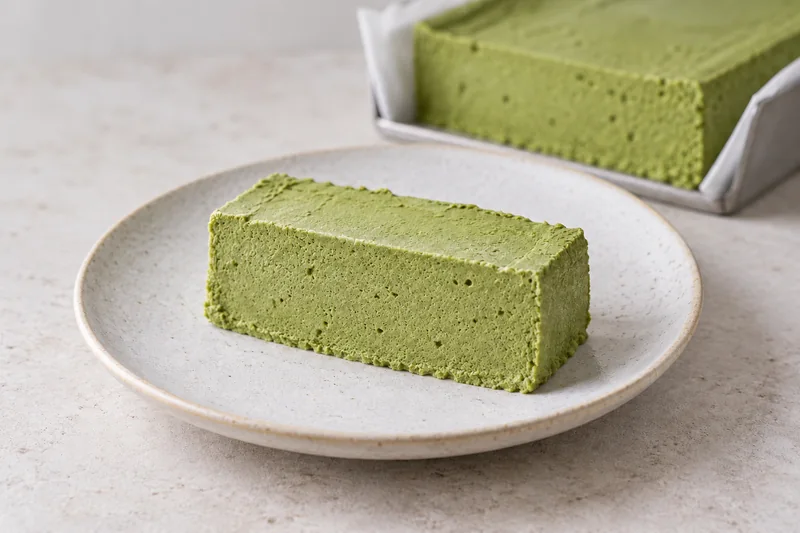
A repeatable matcha semifreddo slice needs a defined temper interval, slice thickness, knife condition, and target portion mass. “Leave it out until soft enough” gives the first and last portions different service quality.
Published methods illustrate useful starting points. Roaming Taste stands its dessert about five minutes. Amoda suggests roughly ten minutes and one-inch slices for its vegan loaf. Test both only as pilot conditions because formula, freezer, mold, and room temperature change the result.
| Check | Proposed pilot method | Acceptance question |
|---|---|---|
| Temper | Compare 5 and 10 minutes under recorded room conditions | Does the center cut without edge collapse? |
| Slice | Compare two defined widths and weigh portions | Does portion mass stay within the kitchen’s chosen band? |
| Knife | Compare dry-cold and warm-wiped blade routines | Which gives the cleanest face with least melt? |
Use a fresh center slice for the visual standard.
Key Takeaway: Choose the shortest temper that gives clean cuts and stable plated portions, then train the knife routine with the same standard.
How should a buyer approve matcha semifreddo melt, color, and cold-chain performance?
Approve matcha semifreddo with a timed plate trial and first, middle, and last slice comparison. The test should expose density drift, uneven inclusions, color variation, and service collapse before the formula reaches customers.
Photograph each slice at release and at fixed intervals on the same plate at the same room condition. Record edge rounding, liquid seepage, color, height loss, and whether the portion can still be lifted cleanly. Pair those observations with mold yield and rejected slice count because attractive texture has little value if portion loss is high.
For matcha sourcing, use the same lot throughout the pilot and document dose, color, and sensory result. The broader dessert matcha sourcing guide can support the purchasing brief, while this page should stay focused on the semifreddo process.
Key Takeaway: Release the formula only when all mold positions meet the same slice and timed-melt standard.
FAQ
- What is the main difference between matcha semifreddo and matcha ice cream?
- Matcha semifreddo preserves air from folded whipped components and freezes statically in a mold, while matcha ice cream develops structure through churning and is usually served by scoop.
- Should a commercial matcha semifreddo use pasteurized eggs?
- Use pasteurized eggs or egg products, or an operation-specific validated cook process, when the egg base will not receive a later validated kill step.
- How can a kitchen measure whether matcha semifreddo folding stayed on target?
- Compare the final folded mix with a successful baseline made from the same formula, phase ratio, temperature, fixed-volume cup, level-fill method, and scale.
- Can a fruit ripple be added before freezing?
- Yes, but use a weighed ripple and compare it with a uniform control for bleed, ice pockets, slice breakage, and timed melt before approving it.
- How long should matcha semifreddo temper before slicing?
- Test defined intervals, such as five and ten minutes, under recorded room conditions and choose the shortest interval that gives a clean cut without edge collapse.
- Does freezing make an undercooked egg base safe?
- No. Freezing is not a validated kill step, so egg safety must be controlled before the semifreddo enters the freezer.
Conclusion
Build the production brief around one base family, measurable foam retention, controlled mold fill, and a timed slice-and-melt trial. If you need help matching a powder specification to a commercial semifreddo pilot, contact AdoroHu Matcha with the base, matcha dose, mold format, and service target you plan to test.