
A matcha horchata works in a café when the rice base, matcha dispersion, sweetness, dose, and service hold are controlled as one drink. A good first glass can become a poor commercial formula if rice solids settle, cinnamon hides the tea, or each bartender remixes the batch differently.
Start with the customer and service format, then choose a matcha horchata base architecture that the team can reproduce. Buyers developing a menu item can compare suitable powder options through matcha for beverage applications and validate the finished drink on their own equipment. The process below creates a trial plan, not a universal recipe.
Matcha horchata combines two suspension-sensitive systems. Rice solids, spice, and matcha can separate at different rates, so appearance alone cannot define an acceptable hold. Measure the delivered portion after the same remix action used in service.
In short:
Key points:
- Choose a raw-rice or prepared-base route before adjusting matcha.
- Control matcha dispersion, total solids, dose, hold, and remix as linked variables.
- Approve the drink from repeated service portions, saleable yield, and sensory limits.
What should a commercial matcha horchata standard define?
A commercial matcha horchata standard should define the base, ingredient identities, weighed formula, process order, finished mass, portion, temperature, hold, remix, and discard rule. “Blend until smooth” does not tell another shift what result to reproduce.
Name the rice-base route and any dairy or plant component. Record the matcha code, cinnamon form, sweetener, water, ice, and final yield. AdoroHu identifies its EU Standard Series as E-1/E-2 Culinary, E-3/E-4 Premium, and E-5/E-6/E-7 Ceremonial; its Organic Series uses O-1/O-2 Culinary, O-3 Premium, and O-4/O-5/O-6 Ceremonial. These are sample identities, not automatic drink-performance grades.
Key Takeaway: Define the whole delivered drink and its service conditions, not only an ingredient list.
Should matcha horchata use a raw-rice or prepared beverage base?
Choose the matcha horchata route from flavor target, labor, strain loss, equipment, and service consistency. A raw-rice route gives control over rice, soak, grind, and filtration, but each step adds variation. A prepared rice beverage shortens prep and may improve repeatability, yet its stabilizers, sweetness, and solids become part of the formula.
| Decision | Raw-rice route | Prepared-base route |
|---|---|---|
| Main control | Soak, grind, extraction, filtration | Brand, lot, solids, sweetness |
| Likely loss point | Strainer and vessel retention | Package and transfer residue |
| Service risk | Variable sediment and yield | Reformulation or supplier variation |
| Best comparison | Recovered mass and texture | Incoming specification and dose |
Do not switch routes while evaluating matcha level. A route change alters water, sweetness, opacity, and particle load, making the comparison uninterpretable.
A peer-reviewed review, “Development of Next-Generation Nutritionally Fortified Plant-Based Milk Substitutes,” explains that plant beverages are suspensions whose stability depends on particle size, density, viscosity, and processing. That mechanism makes particle control and remix validation relevant to horchata, but the paper does not prescribe a café hold time or matcha dose. The buyer must test the selected rice system.
Key Takeaway: Freeze the base architecture before optimizing the tea.
How should matcha dispersion work in matcha horchata?
Disperse matcha in a controlled small phase before combining it with the full base. Dry powder added directly to a cold, viscous rice system can form persistent pockets that look like extra specks rather than incomplete wetting.
Sieve only if the operation can do it consistently, weigh the powder, add a recorded amount of liquid, and use a defined whisk, rotor, or blender action. Then combine in a fixed order and record finished mass. Compare immediate uniformity, foam, residue on the vessel, and the first and last poured portions.
The FDA Food Code is a model for retail food rules; local authorities control applicable hygiene and time-temperature requirements. Keep quality-hold testing separate from food-safety authorization.
Food-engineering literature describes powder wetting as displacement of air at a particle surface before liquid can penetrate and disperse agglomerates. That mechanism supports controlled pre-wetting and visible lump checks; it does not establish one whisk speed for every matcha or rice base. Record the actual tool, liquid temperature, order, and batch geometry because each changes the energy delivered to the suspension.
Key Takeaway: Standardize a pre-dispersion step and judge it by delivered portions, not the mixing vessel alone.
How can cinnamon and sweetness support matcha horchata?
Cinnamon and sweetness should frame the tea without erasing its aroma, color, or finish. Develop them after the base and matcha dose are stable because rice solids already soften bitterness and change perceived sweetness.
Run a small matrix with one matcha identity and process. Change one variable at a time: cinnamon form or level, then sweetener level. Evaluate blind in the intended serving format, including ice dilution. A practitioner should reject a “balanced” bench sample if the spice dominates after five service minutes; the customer receives the later state, not the first sip at the prep table.
FDA identifies milk and tree nuts among the major food allergens covered by US labeling law. A horchata change between dairy, almond, or other bases affects allergen controls and labeling as well as flavor. Use current FDA food-allergen guidance for US scope, then confirm destination-market rules. This source does not classify every plant beverage or authorize shared-equipment controls.
| Attribute | Low limit | Target description | High limit |
|---|---|---|---|
| Matcha aroma | Lost behind rice/spice | Recognizable on first sip | Harsh or powdery |
| Cinnamon | Indistinct | Warm supporting note | Dominant, drying finish |
| Sweetness | Thin or bitter | Integrates rice and tea | Masks tea and increases residue |
| Texture | Watery | Coherent, pourable | Pasty or chalky |
Key Takeaway: Set sensory limits in the served drink after realistic dilution and time.
How should matcha horchata solids and straining be controlled?
Control matcha horchata solids by weighing inputs and recovered output, then specifying the filtration setup. A strainer description needs mesh or screen identity, loading method, allowed pressure, and endpoint; squeezing one batch hard and letting another drain changes extraction and grit.
Record mass before and after filtration and inspect retained material. Excess removal may improve smoothness but cut yield and body. Insufficient filtration may leave coarse rice or cinnamon particles that settle faster than the matcha. The best setting is the one that meets texture and yield limits repeatedly.
Stokes-type settling theory predicts that particle size and density difference increase settling tendency while continuous-phase viscosity resists it. Horchata is too complex for that simple relation to calculate a hold time, but the mechanism explains why a repeatable grind and controlled strain step can change separation. Use the theory as a diagnostic model and verify the beverage through portion checks.
Compare retained solids from the same starting mass so a smoother drink is not mistaken for a more efficient extraction.
Key Takeaway: Treat straining as a measurable yield and texture operation.
What matcha horchata dose and assembly order stay consistent?
Set dose by mass or a verified volumetric tool, and define the assembly order. Ice, base, matcha concentrate, and toppings do not mix identically when their order changes.
Test at least the first, middle, and last portions from a batch after the prescribed remix. Weigh the delivered horchata component and finished drink, then compare color, solids, and sensory result. If the last drink is darker or grittier, increasing the matcha target will amplify the failure.
Key Takeaway: Approve the dose and assembly method from portions across the batch.
How should matcha horchata settling, hold, and remix be validated?
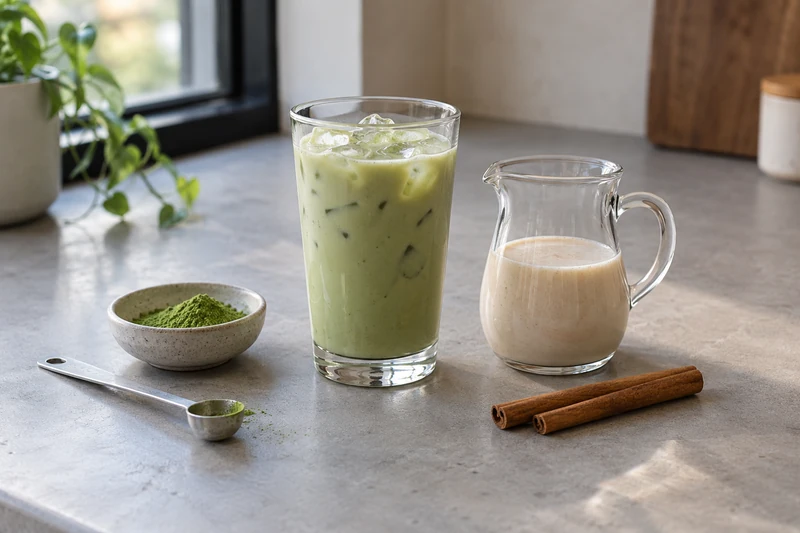
Validate the matcha horchata quality hold with the actual container, fill level, temperature, station, and service interruptions. Observe separation, foam collapse, sediment compaction, and flavor at planned checkpoints. Use the same remix action a bartender can perform during a rush.
| Checkpoint | Record | Failure signal | Action |
|---|---|---|---|
| After prep | Yield, temperature, appearance | Lumps or excessive foam | Investigate dispersion |
| During hold | Separation and remix count | Compacted sediment | Shorten hold or revise process |
| Portion check | Delivered mass and color | First/last drift | Change container or remix rule |
| End of trial | Residue and discard | High unusable heel | Rework batch size or tool |
Do not invent a shelf life from a café trial. A practical judgment is to set the first quality hold shorter than the longest acceptable result, leaving room for staff and temperature variation; extend it only with repeated evidence and separate safety review.
Key Takeaway: Bound the hold to tested conditions and a repeatable remix action.
How can a café calculate matcha horchata yield and waste?
Calculate matcha horchata recovered base, usable finished batch, conforming portions, rework, and discard. Theoretical servings hide retained rice, foam, strainer loss, and the unsaleable heel.
Use finished batch mass divided by the approved portion as the theoretical dose yield, then compare it with conforming drinks actually served. Cost the conforming drink, including discarded ingredients. This makes a slightly slower but more recoverable process visible in purchasing decisions.
Separate ingredient loss from service loss. Ingredient loss includes material retained in the blender, strainer, and transfer vessel. Service loss includes over-portions, remakes, spills, and the unusable end of the batch. The two categories lead to different corrective actions: a vessel or filtration change may improve recovery, while a marked dosing tool and shorter batch size may reduce service loss. Review both by shift, because a process that works in quiet prep may fail when remixes and portions compete for attention.
Use recovered mass to reconcile the record. Starting ingredients, retained waste, usable batch, sampled drinks, served drinks, and discard should account for the run within a reasonable measurement allowance. Large unexplained differences can indicate scale error, an unrecorded transfer, or inconsistent portioning. Do not hide the difference by changing the expected yield after production.
Key Takeaway: Use saleable portions after process loss as the commercial yield.
What trial record should approve matcha horchata for service?
The matcha horchata approval record should bind formula version, ingredient lots, equipment, process, finished yield, hold checkpoints, sensory decision, and approvers. Include exceptions, not only averages.
Build the service test around more than one operator and one traffic condition. Give each operator the same written standard, observe preparation without coaching, and collect portions at planned positions in the batch. Record whether the remix action was completed correctly and whether it interrupted ticket flow. A formula that needs constant expert judgment has not yet become an operating standard.
Set a change threshold for every controlled input. A different cinnamon source, base brand, blender jar, batch size, or ice specification may deserve a limited confirmation rather than a full redevelopment, but the record should explain why. Changes that alter solids, mixing energy, dilution, or delivered dose need direct comparison with the approved reference.
Compare trials through the published matcha café buying guide and the matcha mixing guidance while keeping this horchata decision focused on rice solids and service delivery. Revalidate after a material base, matcha, cinnamon, sweetener, equipment, container, or process change.
Key Takeaway: Release one defined system and route meaningful changes back through a controlled trial.
FAQ
- What is matcha horchata made from?
- It combines a rice-based horchata system with matcha, cinnamon, sweetener, and the chosen water, dairy, or plant components.
- Can a café make matcha horchata in advance?
- Yes, only after validating a bounded quality hold, container, temperature, remix action, dose, and discard rule under real service conditions and separately meeting applicable food-safety controls.
- Why does matcha horchata settle?
- Rice particles, spice, and matcha differ in size and density, so they can separate at different rates when the suspension rests.
- Should matcha be blended directly into horchata?
- A controlled pre-dispersion usually makes wetting easier to observe; the café should compare it with its direct-blend route using delivered portions.
- How should a café choose matcha for horchata?
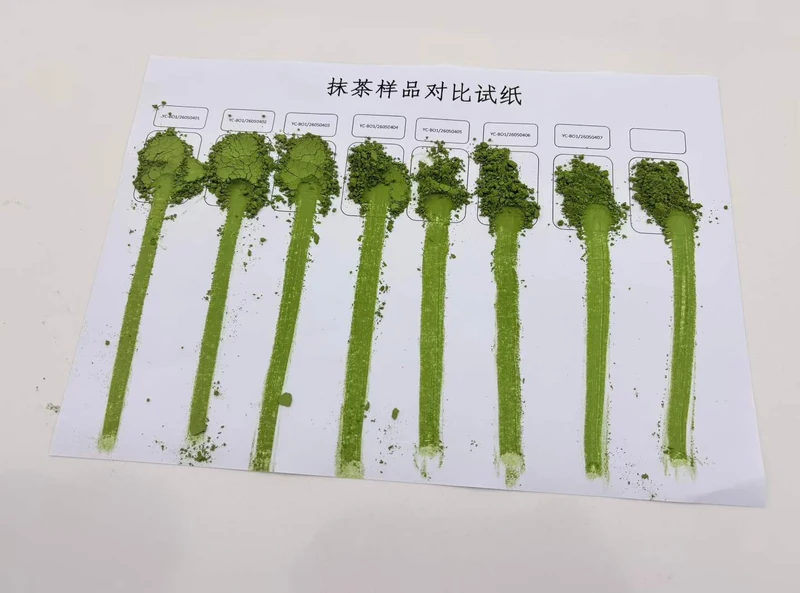
- Compare named powder samples in the fixed formula for aroma, color, finish, dispersion, hold behavior, yield, and cost per conforming drink.
- When should the formula be revalidated?
- Revalidate after a material change to the base, powder, spice, sweetener, equipment, container, portion, or process.
Conclusion
A workable matcha horchata standard connects base architecture, dispersion, solids, sensory balance, dose, hold, and saleable yield. Run the comparison with named lots and realistic service portions. Contact AdoroHu Matcha to coordinate powder samples and specification records for a beverage trial.