
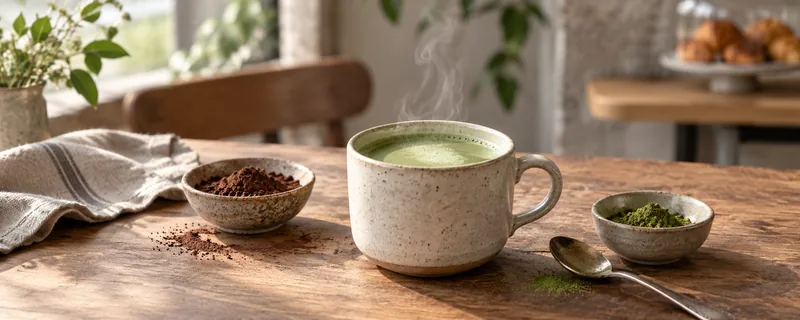
Matcha hot chocolate works commercially when cocoa intensity, tea identity, sweetness, milk base, dispersion, and service method are balanced together. A café sample can become muddy, bitter, weak, or slow to prepare when it moves to a menu or premix. The brief needs a clear flavor hierarchy.
For matcha hot chocolate, decide whether the drink should lead with cocoa, matcha, or an equal hybrid. AdoroHu’s matcha for latte applications gives beverage teams a practical starting point for milk-based development.
Commercial matcha hot chocolate needs a deliberate relationship between cocoa and tea. Cocoa brings roast and bitterness, matcha adds vegetal aroma and color, and milk and sweetener shape both. The best formula is the one staff or equipment can reproduce at service speed.
In short:
Key points:
- Set the cocoa-to-matcha flavor hierarchy before choosing a grade.
- Control separate dispersions when cocoa and matcha behave differently.
- Test the drink across milk bases, service formats, and actual hold conditions.
What flavor hierarchy should matcha hot chocolate use?
Matcha hot chocolate should be defined as cocoa-led, matcha-led, or balanced. That decision sets the powder choice, sweetness, color expectation, and menu language.
| Direction | Sensory target | Main risk |
|---|---|---|
| Cocoa-led | Familiar chocolate with tea finish | Matcha becomes invisible |
| Matcha-led | Green-tea aroma with cocoa depth | Cocoa muddies color |
| Balanced hybrid | Both flavors remain identifiable | Bitterness compounds |
| White-chocolate style | Pale, sweet base highlights green | Sweetness overwhelms tea |
The brief should name the first aroma, first sip, finish, and intended consumer. “Rich and green” is not precise enough for supplier or bar training.
Key Takeaway: Choose which flavor leads before adjusting ingredients.
Which matcha grade fits a cocoa beverage?
Culinary or premium matcha can fit a cocoa beverage depending on the hierarchy. AdoroHu’s E-1 and E-2 are culinary grades, E-3 and E-4 are premium, and O-1 and O-2 support organic culinary applications.
A cocoa-led drink often needs a firm culinary candidate. A matcha-led white-chocolate drink may show more value from premium grade. Ceremonial grade should not be automatic because chocolate, milk, and sweetener can hide delicate aroma.
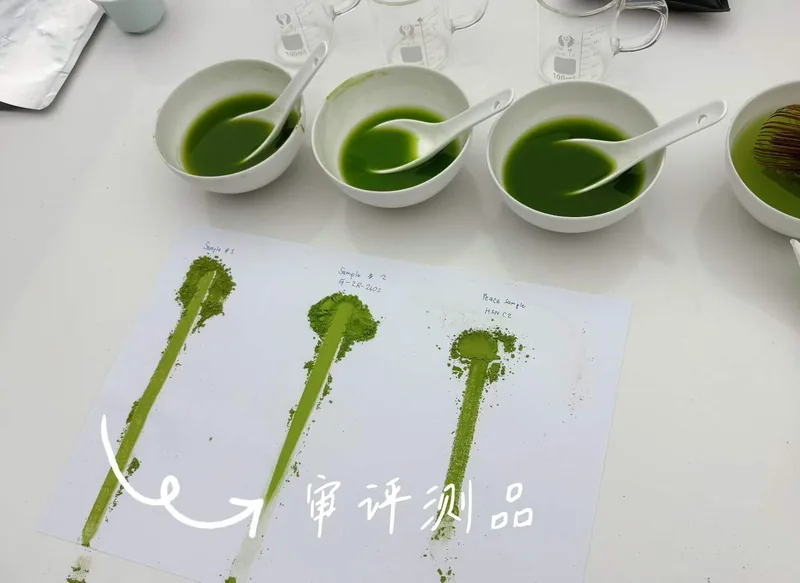
Run coded tests in the complete beverage. If premium does not produce a clear, valuable improvement at serving condition, culinary grade is the sounder commercial choice.
Key Takeaway: Approve grade in the finished cocoa system.
How should cocoa and matcha be dispersed?
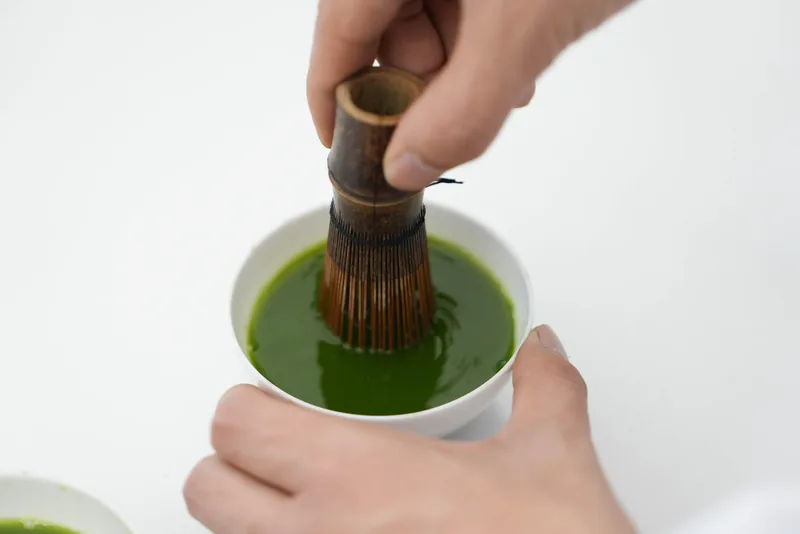
Cocoa and matcha should be dispersed through a sequence that respects their different wetting behavior. Combining two dry powders directly in a finished milk base can create floating islands, specks, and sediment.
AdoroHu uses ultrasonic screening for ultra-fine matcha, supported by several milling systems. Fine powder supports dispersion, but the beverage process still needs controlled wetting, mixing energy, and addition order.
The practical choice is often to test separate concentrates before blending. Avoid extra blending time as the default fix because it slows service and can change foam.
Key Takeaway: Design dispersion around both powders, not matcha alone.
How should bitterness and sweetness be balanced?
Bitterness and sweetness should be balanced with cocoa type, chocolate, matcha grade, milk base, and serving temperature held in view. Cocoa and matcha can reinforce bitterness, so a formula that tastes balanced with one cocoa may fail with another.
Build a coded matrix and score cocoa identity, tea identity, sweetness, bitterness, aroma, finish, and repeat-sip appeal. Evaluate the intended cup size and topping because whipped cream or marshmallow changes perceived sweetness.
Do not keep adding sweetener until bitterness disappears. That may produce a heavy drink with no clear tea character. A lower cocoa load or different matcha grade can be the better correction.
Key Takeaway: Preserve two recognizable flavors instead of hiding both under sugar.
How do dairy and plant bases change the drink?
Dairy and plant bases change color, body, aroma release, sweetness, and allergen scope. Matcha hot chocolate should be tested in every milk option the menu or product will offer.
| Base | Likely effect | Development question |
|---|---|---|
| Dairy milk | Familiar body and pale background | Does cocoa or tea dominate? |
| Oat base | Cereal sweetness and body | Does the drink become too sweet or thick? |
| Coconut base | Strong aroma and richness | Does coconut mask matcha? |
| Almond or cashew base | Light nut character | Are allergen controls acceptable? |
Lock the base supplier before final approval. Changes in solids and sweetness can move the whole balance. The AHM guide to choosing matcha powder for lattes adds a relevant milk-base and café-sourcing comparison.
Key Takeaway: Treat each milk base as a separate formulation route.
Which service format should drive development?
The service format should drive development because café-made drinks, vending systems, concentrate programs, and retail powders impose different constraints. The same formula may not meter, dissolve, or hold in each route.
For cafés, measure steps, tools, and preparation time. For premix, assess segregation, scoop consistency, and reconstitution. For concentrate, assess pumping, dilution, and flavor after hold.
AdoroHu offers custom instant blend development for briefs that need a coordinated powder system. Use it after the sensory target and equipment constraints are clear.
Key Takeaway: Build the formula for the real operator and equipment.
What should a café or plant pilot measure?
A pilot should measure dispersion, visible specks, sediment, foam, beverage weight, preparation time, flavor, and first-to-last serving consistency. These outputs connect the recipe with labor and customer experience.
Record matcha, cocoa, chocolate, and milk lots; concentrate age; mixing method; equipment setting; hold time; and cup temperature as observed process data. Avoid inventing a universal temperature or holding limit. Each system needs validation.
AdoroHu’s in-house microbiology and physical-chemical laboratories support matcha lot documentation when a drink result changes.
Key Takeaway: Measure service repeatability as well as sensory quality.
How should menu economics be compared without guessing prices?
Menu economics should compare ingredient use, labor steps, waste, and saleable servings using the operator’s actual costs. Public recipe prices or supplier list prices do not represent a café’s landed economics.
Create a simple internal model:
- matcha and cocoa cost per prepared serving;
- milk, sweetener, chocolate, and topping cost;
- preparation time and equipment occupancy;
- discard from expired concentrate or mis-made drinks;
- packaging cost for takeaway service.
Reject a cheaper powder if it needs more dose or more mixing to produce an acceptable drink. The unit price can hide service cost.
Key Takeaway: Compare cost per acceptable served drink.
Which allergen and label controls belong in development?
Milk, soy, and tree nuts may enter through chocolate, dairy, plant bases, toppings, or shared equipment. Menu language and packaged labels must reflect the complete system.
The FDA food-allergen resource identifies nine major food allergens in the United States. Use that defined scope for US review and assess each target market separately.
The AHM guide to matcha allergen review helps teams connect matcha statements with chocolate and milk-base declarations.
Key Takeaway: Review the whole cup, including toppings and shared tools.
What should procurement request from a matcha supplier?
Procurement should request a current specification, lot-specific Certificate of Analysis, allergen statement, traceability information, storage guidance, and relevant certification evidence. The sensory sample and documents should identify the same product.
AdoroHu lists USDA Organic (NOP), EU Organic, JAS Organic, BRCGS Food Safety, FDA registration, ISO 22000, Halal, and Kosher among its current certifications. Buyers should verify only the scopes relevant to the planned beverage and market.
Bulk 10 kg and 20 kg cartons use sealed food-grade liners, while 1–3 g sachets are available for single-serve programs. These formats support different service and portion-control strategies.
Key Takeaway: Match the powder, documents, and pack format to the service route.
FAQ
- What is matcha hot chocolate?
- It is a hot cocoa or chocolate beverage formulated so matcha contributes identifiable tea flavor, aroma, and color.
- Which matcha grade works best with cocoa?
- Culinary matcha is a practical starting point, while matcha-led or white-chocolate styles may justify a premium-grade comparison.
- How can operators prevent clumps?
- Use controlled wetting and mixing, and test separate cocoa and matcha concentrates when the powders behave differently.
- Can matcha hot chocolate use plant milk?
- Yes, but each base changes sweetness, body, flavor, color, and allergen controls and should be validated separately.
- Should matcha hot chocolate be a café drink or premix?
- Choose the route that fits service speed, equipment, portion control, and expected volume, then formulate for that route.
- What should a pilot measure?
- Measure dispersion, specks, sediment, foam, serving weight, preparation time, flavor, and first-to-last cup consistency.
Conclusion
Commercial matcha hot chocolate needs a clear flavor hierarchy, controlled dual-powder dispersion, milk-base trials, and service testing. Compare powders by the cost and consistency of an acceptable cup. Contact AdoroHu Matcha to discuss a café, premix, or concentrate brief.