
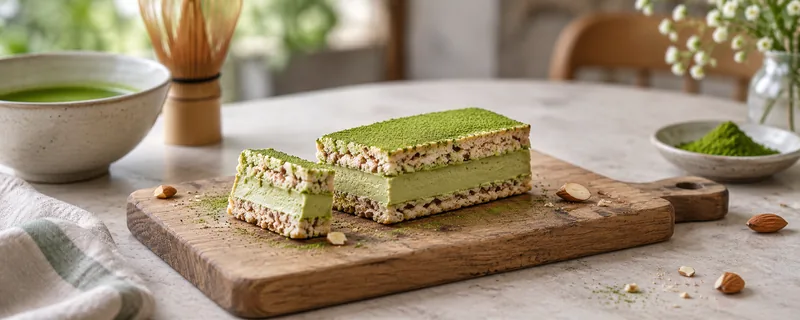
Matcha dacquoise works commercially when the almond-meringue layer, tea distribution, filling, and assembly schedule are designed as one product. A small batch can look crisp and green, then spread, crack, soften, or fade when scaled. That makes piece yield and finished texture unpredictable.
For matcha dacquoise, define whether the tea belongs in the shell, filling, or both before choosing a grade. AdoroHu’s culinary matcha for baking gives pastry teams a practical starting point for a heat-exposed almond-meringue component.
A dacquoise is an almond-meringue layer with a crisp exterior and tender center, so it behaves differently from a macaron or plain meringue. Commercial success depends on foam stability, controlled folding, even deposition, moisture management, and a filling that preserves the intended contrast.
In short:
Key points:
- Choose matcha against the baked almond-meringue layer, not its dry color.
- Standardize foam, folding, deposition, and assembly before changing the dose.
- Validate the filled product because moisture migration changes the eating texture.
How is matcha dacquoise different from macarons and plain meringue?
Matcha dacquoise contains a substantial ground-nut phase, which gives it a tender, chewy interior beneath a drier shell. Macarons depend on a smoother shell and defined feet, while plain meringue relies mainly on egg-white foam and sugar.
That difference changes the development brief. Dacquoise teams must manage almond flour particle distribution, foam retention, layer thickness, and filling contact. A method copied from macarons can produce the wrong structure even when the ingredients look similar.
| Product | Structural focus | Main matcha risk |
|---|---|---|
| Dacquoise | Nut-meringue layer with tender center | Powder and almond solids weaken foam |
| Macaron | Smooth shell, feet, hollow control | Color and surface defects become prominent |
| Plain meringue | Dry foam structure | Matcha can intensify bitterness in a lean matrix |
Key Takeaway: Write a dacquoise-specific process instead of borrowing a macaron standard.
Which matcha grade fits a commercial dacquoise shell?
Culinary matcha is the normal starting point because the shell is baked with sugar and almond flour. AdoroHu assigns E-1 and E-2 to culinary use, E-3 and E-4 to premium use, and O-1 and O-2 to organic culinary applications.
Compare candidates in the cooled shell and assembled pastry. A premium grade may help a pale filling and lightly baked shell, but ceremonial grade can waste delicate aroma that heat and nuts obscure.
The useful trade-off is direct: choose the lower-cost grade when the panel cannot identify a valuable difference after assembly. Spend on premium only when it improves the finished product, not the mixing bowl.
Key Takeaway: Approve grade in the assembled dacquoise at serving condition.
How should matcha be incorporated without deflating the foam?
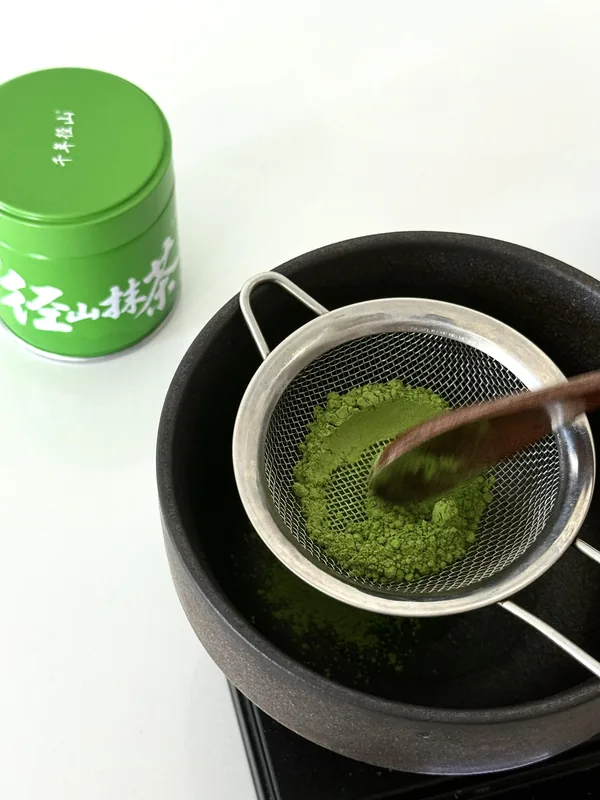
Matcha should be screened into a controlled dry blend with the almond flour and sugar before that blend meets the meringue. This distributes the powder while limiting the folding needed after foam formation.
AdoroHu uses ultrasonic screening for ultra-fine matcha, supported by stone, ball, and continuous ball mills. Fine screening reduces persistent clumps, but the bakery must still control blend uniformity and fold count.
Avoid adding matcha late to correct weak color. Extra folding then removes air and changes layer height. A better pilot compares preblend uniformity, foam density, deposited weight, and baked height together.
Key Takeaway: Build dispersion into the dry phase before the fragile foam is folded.
Which foam controls matter most at production scale?
Clean equipment, consistent egg-white condition, staged sugar addition, and a defined whipping endpoint matter most. The matcha dacquoise line should translate visual cues such as “stiff peaks” into a repeatable plant method.
Record raw-material temperature, mixer load, speed sequence, elapsed time, foam appearance, and density where practical. Then track how the foam changes during holding and folding. A large bowl held too long may deposit differently from the first portion.
| Check | What it reveals | Production consequence |
|---|---|---|
| Foam endpoint | Air structure before dry addition | Layer height and tenderness |
| Fold endpoint | Dry-blend incorporation | Streaks versus lost volume |
| Deposited weight | Portion consistency | Bake uniformity and yield |
| Hold-time sample | Foam deterioration | First-to-last tray variation |
Key Takeaway: Control the foam from mixer discharge through the final deposit.
How should deposition and layer thickness be standardized?
Deposition should target consistent weight, footprint, and thickness because thin and thick dacquoise pieces dry at different rates. Matcha color can also appear uneven when thickness varies across a sheet.
Choose piping, stencil, depositor, or sheet-and-cut based on the product format. Record nozzle or stencil dimensions, deposit weight, pan loading, and spread before baking. Measure pieces from multiple tray positions rather than inspecting one center sample.
Do not correct irregular deposits by overbaking the entire tray. That may make the thick pieces manageable while turning thinner pieces brown and brittle.
Key Takeaway: Standardize geometry before refining the bake endpoint.
What bake endpoint protects texture and matcha color?
The bake endpoint should create a dry exterior and stable layer while preserving the intended tender center. Time alone is weak control because oven load, layer thickness, airflow, and foam condition change the result.
Define acceptable top and base color, released moisture, layer height, edge condition, and cooled texture. Sample oven zones and record the cooling method. Matcha should not be used to disguise excessive browning with a higher dose.
The practical judgment is to reject a darker, drier shell if the assembled product loses the dacquoise contrast. Improve oven uniformity and deposit control before raising matcha.
Key Takeaway: Specify the cooled layer, not only the oven time.
How should filling choice affect the matcha plan?
Filling choice affects sweetness, tea intensity, moisture migration, allergens, and assembly life. Buttercream, ganache, cream cheese, and bean paste each change how the dacquoise softens after contact.
Decide whether matcha appears in the shell, filling, or both. Using it in both can strengthen identity, but it can also create a bitter finish and raise cost. A neutral shell with matcha filling may protect aroma, while a matcha shell gives stronger visual recognition.
The AHM guide to matcha macaron production provides a useful comparison when a team needs to distinguish dacquoise layer controls from macaron shell controls.
Key Takeaway: Balance matcha placement across the whole bite.
How should assembly timing be validated?
Assembly timing should be validated through controlled filled-product checkpoints because moisture moves from filling into the dacquoise. The ideal fresh contrast may become softer during distribution, which can be desirable or unacceptable depending on the brief.
Test shell-only retains and assembled samples in the final package. Record crispness, tenderness, cracking, filling squeeze, color, aroma, and cut appearance. Do not copy a home-recipe storage claim into a commercial specification.
Use the AHM framework for matcha water-activity testing to frame measurement, while qualified food-safety staff define the finished-product study.
Key Takeaway: Approve the texture at the intended time after assembly.
Which allergen decisions belong in dacquoise development?
Dacquoise normally brings egg and tree-nut allergens into the core structure, while fillings may add milk, soy, or other allergens. These ingredients affect line scheduling, cleaning, rework, and label review.
The FDA food-allergen resource identifies nine major food allergens in the United States. That defined scope gives US manufacturers a concrete basis for reviewing almond flour, egg whites, chocolate, dairy, and compound ingredients.
Map each ingredient and shared contact surface before artwork. The AHM article on matcha allergen review helps connect supplier statements with the finished-pastry assessment.
Key Takeaway: Resolve the allergen route before finalizing the shell and filling.
What should a dacquoise pilot record?
A pilot should record matcha, almond, and egg lots; dry-blend sequence; foam endpoint; fold time; deposit weight; oven zones; cooled dimensions; assembly time; and packed yield. These data explain whether a defect began in ingredients, foam, baking, or filling contact.
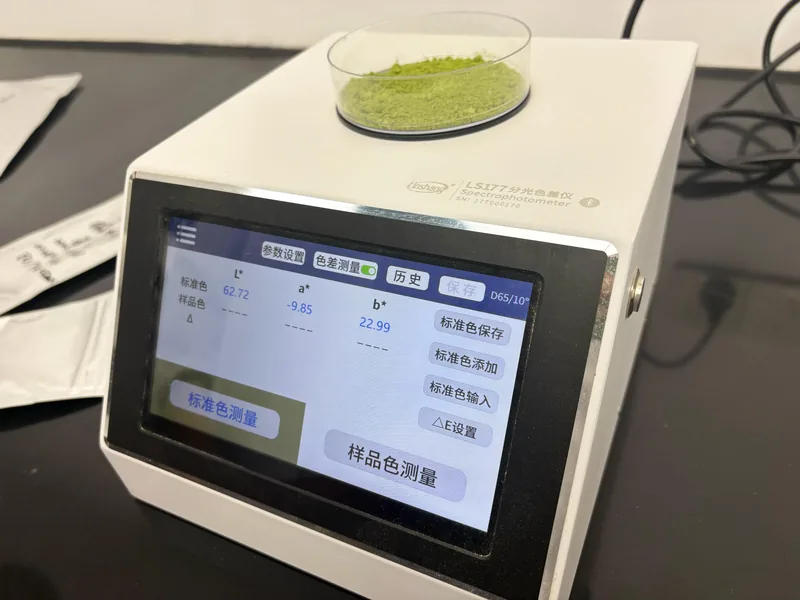
AdoroHu’s in-house microbiology and physical-chemical laboratories support lot documentation. Its bulk matcha is available in sealed food-grade liners within 10 kg or 20 kg cartons, which helps production teams plan controlled opening and line-side staging.
Retain samples from the first and last deposits. If those pieces differ, the batch average can hide a holding-time problem.
Key Takeaway: Link ingredient lots to first-to-last tray performance.
FAQ
- What makes matcha dacquoise different from a macaron?
- Dacquoise uses a substantial nut-meringue layer with a crisp exterior and tender center, while macarons target a smooth shell and defined feet.
- Which matcha grade is best for commercial dacquoise?
- Culinary matcha is the practical starting point, with premium grade tested only when the assembled pastry shows a valuable improvement.
- How can a bakery prevent matcha streaks in dacquoise?
- Screen matcha into a uniform almond-flour and sugar preblend before gently folding it into the meringue.
- Should matcha go in the shell or filling?
- Either can work, but the team should compare the whole bite for color, aroma, sweetness, bitterness, and moisture migration.
- How should commercial shelf life be set?
- Test the final filled pastry in its final package through intended distribution using defined quality and safety criteria.
- What should a pilot batch record?
- Record ingredient lots, foam and folding controls, deposit weights, oven-zone results, assembly timing, defects, and packed yield.
Conclusion
Commercial matcha dacquoise needs a stable almond-meringue process, controlled geometry, a defined bake endpoint, and an assembly study. Compare grades in the finished pastry and include allergen and yield consequences. Contact AdoroHu Matcha to discuss a baking-matcha sample plan.