
Matcha rice pudding becomes commercially repeatable when the base, tea-addition point, texture target, and package are developed together. A bench sample may look bright and creamy, then turn dull, speckled, or overly thick after a production hold. That gap creates rework and makes buyer approval unreliable.
For matcha rice pudding, define whether the product will be chilled, ambient, dairy, or plant-based before selecting powder. AdoroHu’s matcha for baking and food production gives development teams a practical starting point for comparing grades in a finished dessert base.
Commercial matcha rice pudding needs a written target for color, tea intensity, sweetness, viscosity, rice texture, and serving temperature. Add matcha through a controlled dispersion step and validate it after the full heat and hold sequence. Supplier documents and packaging trials belong in the same approval plan.
In short:
Key points:
- Choose the finished-product format before setting the matcha specification.
- Protect dispersion and color by controlling the matcha addition point.
- Approve samples through coded pilots, documentation, and package testing.
Which commercial format should define a matcha rice pudding brief?
The intended sales format should define the matcha rice pudding brief because chilled cups, foodservice pans, and shelf-stable packs face different process and packaging conditions. The same powder can perform differently after hot filling, refrigerated holding, reheating, or prolonged display.
Start with a one-page product definition:
- dairy or plant-based liquid system;
- chilled, frozen, ambient, or foodservice distribution;
- spoonable or pourable texture target;
- visible rice identity and acceptable separation;
- serving temperature and garnish plan;
- target market and label claims.
This decision prevents a common failure: approving a fresh bench cup, then asking it to survive a process it never encountered.
Key Takeaway: Define the commercial route before the flavor trial.
Which matcha grade works best in matcha rice pudding?
Culinary or premium matcha can work in rice pudding, depending on the base color and flavor intensity. AdoroHu’s EU Standard Series assigns E-1 and E-2 to culinary use and E-3 and E-4 to premium use. The Organic Series uses O-1 and O-2 for culinary applications and O-3 for premium applications.
Use a side-by-side finished-product trial. A rich coconut base may need a more assertive candidate, while a pale dairy base may expose bitterness sooner. Avoid choosing ceremonial grade by default; delicate aroma may not survive the heating sequence or justify its cost in a sweet, starchy matrix.
| Base and positioning | Starting comparison | Main question |
|---|---|---|
| Dairy, mainstream dessert | Culinary versus premium | Does premium improve aroma after chilling? |
| Coconut or strongly flavored plant base | Two culinary grades | Which one stays clear beside the base flavor? |
| Organic-certified product | Organic culinary versus premium | Does the certification scope fit the claim? |
Key Takeaway: Let the processed dessert, rather than the dry powder, decide the grade.
When should matcha enter the starch-thickening process?
Matcha should enter through a controlled slurry or preblend before starch gelatinization makes the rice-pudding base difficult to mix. Adding dry powder to a thick, nearly finished kettle often creates floating clumps and dark specks that more agitation cannot fully remove.
The best addition point depends on the equipment and validated process. A team can compare early, middle, and late additions at bench scale, then carry the chosen sequence into the pilot. Record the temperature, mixing time, shear method, and visual result at each option.
AdoroHu uses ultrasonic screening for ultra-fine matcha. That screening helps reduce persistent agglomerates, but the plant still needs a suitable wetting and addition sequence. Fine powder does not cancel poor process design.
Key Takeaway: Select the addition point through a controlled process trial, not habit.
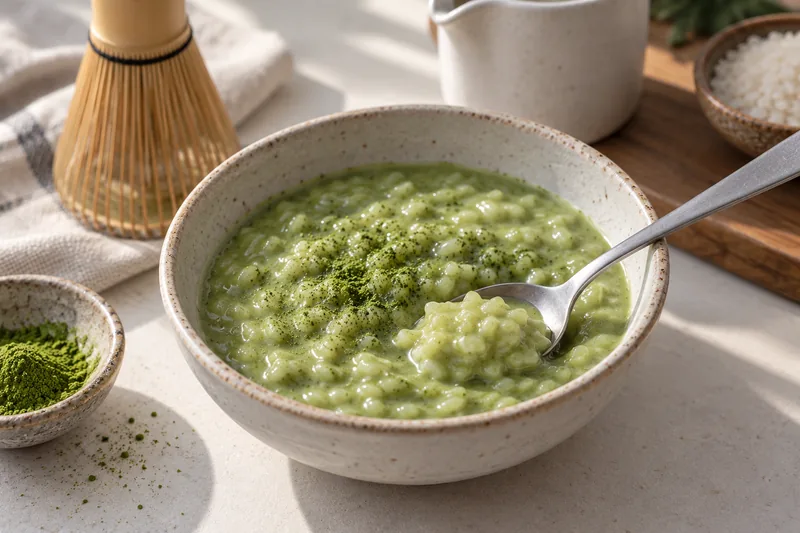
How do dairy and plant bases change matcha rice pudding?
Dairy and plant bases change matcha rice pudding through their fat, protein, sweetness, color, and native aroma. Those variables affect perceived bitterness and the shade of green more than a dry-powder comparison suggests.
Here is a useful development view:
| Base | Likely benefit | Development risk |
|---|---|---|
| Dairy milk or cream | Familiar richness and pale background | Heat history and protein interactions |
| Coconut base | Strong body and compatible flavor | Coconut may mask tea aroma |
| Oat base | Mild cereal character | Added solids can thicken the system quickly |
| Almond or cashew base | Clean premium positioning | Nut-allergen controls and flavor variation |
The practical judgment is to lock the base supplier and solids level before fine-tuning matcha. If the base changes later, the color and bitterness target may move with it.
Key Takeaway: Treat the liquid base as part of the matcha specification.
How can teams keep rice grains uniform while eliminating matcha specks?
Teams can keep rice grains intact and eliminate matcha specks by separating powder wetting from the final grain-folding step. Matcha rice pudding becomes harder to correct as starch hydration raises viscosity, while aggressive late shear can damage cooked grains and change the eating texture.
Use a small amount of compatible liquid to create a smooth concentrate, then introduce it at a controlled rate before final viscosity develops. Avoid dumping powder onto a static surface. After the matcha is uniform, use the gentlest mixing that distributes rice through the kettle without turning distinct grains into a paste.
AdoroHu’s milling system includes 20 stone mills, 56 ball mills, and 8 continuous ball mills. This range supports different powder profiles, while the buyer’s pilot confirms which candidate works with its own mixer, rice, starch, and base.
Key Takeaway: Finish matcha dispersion before rice texture becomes the limiting constraint.
What should a matcha rice pudding pilot record?
A pilot should record every variable that could change color, viscosity, rice texture, and fill performance. A useful batch sheet connects ingredient lots to process observations and the finished cup.
Record matcha and rice lots, base solids, hydration sequence, temperatures, hold times, mixing settings, fill temperature, net weight, visible separation, and texture at planned checkpoints. Photograph samples under one light source and compare them with an approved retain.
AdoroHu maintains in-house microbiology and physical-chemical laboratories. That capability matters when a buyer needs to connect a matcha lot with its test documentation while investigating a pilot difference.
Key Takeaway: A pilot record must explain both the kettle result and the packaged result.
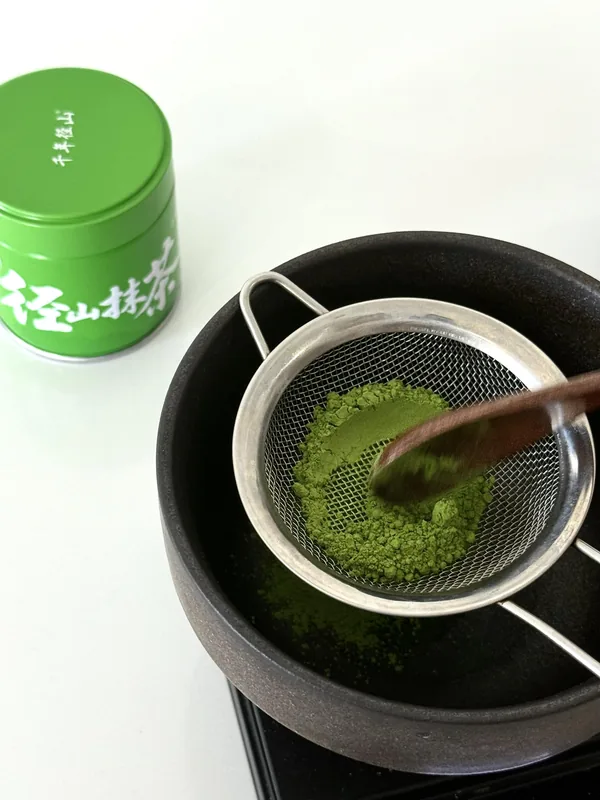
How should packaging trials be scoped for matcha rice pudding?
Packaging trials should use the final formula, fill route, seal, and distribution condition. Color, condensation, separation, seal contamination, and cup deformation can all affect commercial acceptance.
Do not assign shelf life from a competitor recipe or an ingredient data sheet. Define checkpoints and test the finished product using appropriate quality and safety methods. The AHM guide to matcha water-activity testing explains why one measurement must be interpreted within the product and process rather than used as a universal pass mark.
For chilled cups, include transport vibration and display light in the study. For foodservice, test the opened-container handling pattern and reheating method that operators will actually use.
Key Takeaway: Validate the package as part of the product system.
Which safety and allergen decisions belong in development?
Safety and allergen decisions belong in development as soon as the base, inclusions, and shared equipment are known. Dairy, tree nuts, sesame, soy, and compound toppings can change scheduling, cleaning, and label review.
The FDA’s food-allergen guidance identifies nine major food allergens in the United States. This named scope gives US teams a concrete starting point for the finished-product assessment, while export markets require their own review.
Map each ingredient, processing aid, rework stream, and line contact. Then confirm the declaration and preventive-control plan with qualified food-safety staff. Matcha supplier documentation supports that review but cannot replace the manufacturer’s finished-product assessment.
Key Takeaway: Resolve allergens and process safety before artwork and scale-up.
What supplier evidence should procurement request?
Procurement should request a specification, lot-specific Certificate of Analysis, allergen statement, traceability information, storage guidance, and relevant certification evidence. These records make a matcha rice pudding trial reproducible and support change control after launch.
AdoroHu’s current certification list includes USDA Organic (NOP), EU Organic, JAS Organic, BRCGS Food Safety, FDA registration, ISO 22000, Halal, and Kosher. Buyers should request the documents that match the product claim and target market rather than treating the list as one blanket approval.
Use the AHM guide to matcha sensory evaluation to connect paperwork with coded finished-product trials.
Key Takeaway: Approve the documented lot and specification, not only the supplier’s sample label.
How should buyers compare matcha samples fairly?
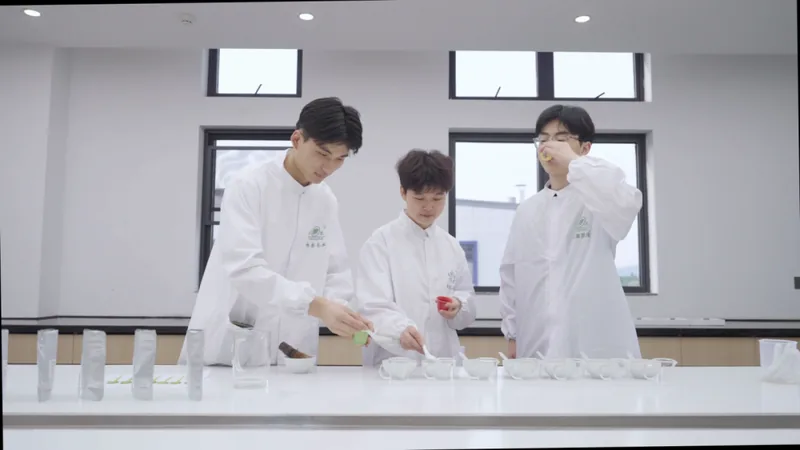
Buyers should compare samples in one locked formula and process, using coded cups and an agreed scorecard. The scorecard should cover green color, tea aroma, bitterness, sweetness balance, viscosity, rice texture, and aftertaste at the intended serving temperature.
Keep rice lot, base, batch size, equipment, heat sequence, rest time, and package constant. Reveal supplier identities only after scoring. Then review cost per finished unit beside processing behavior and supporting documents.
Reject a cheaper powder if it requires longer mixing or a higher dose to reach acceptable color. Those corrections can add line time and bitterness, erasing the apparent saving.
Key Takeaway: Compare total product performance under controlled conditions.
FAQ
- What grade of matcha is best for commercial matcha rice pudding?
- Culinary matcha is a practical starting point, while a pale or lightly flavored base may justify a controlled premium-grade comparison.
- Should matcha be added before or after cooking the rice pudding?
- Test controlled addition points because the best choice depends on heat exposure, viscosity, mixing equipment, and the validated production process.
- How can manufacturers prevent matcha clumps in rice pudding?
- Screen the dry ingredients, create a smooth compatible predispersion, and add it under repeatable agitation before viscosity becomes too high.
- Can matcha rice pudding use a plant-based base?
- Yes, but coconut, oat, almond, and cashew bases each change flavor, color, texture, allergen controls, and supplier requirements.
- How should shelf life be set for matcha rice pudding?
- Test the final formula in the final package through its intended distribution conditions using appropriate quality and safety methods.
- Which documents should come with a matcha sample?
- Request a current specification, lot-specific Certificate of Analysis, allergen statement, traceability information, storage guidance, and applicable certification evidence.
Conclusion
Commercial matcha rice pudding needs an application-led grade choice, controlled dispersion, complete pilot records, and package validation. Approve the powder only after it performs in the final base and process. Contact AdoroHu Matcha to discuss samples for a defined dessert-development brief.