
Matcha kefir stays smooth when the team starts with a released kefir base, then controls matcha dispersion, blending, and cold holding as one beverage process. Adding powder without that sequence can leave green specks, excess foam, or a drink that pours well on day one and separates later. Start with one kefir base and one culinary matcha, then change one factor at a time.
The useful commercial question is not whether matcha and kefir can be blended. A home recipe proves that the combination is possible. A production trial must show whether the chosen culture, solids, shear, package, and refrigerated distribution keep the intended flavor and pourability.
A reliable matcha kefir drink starts with a consistent commercial kefir base and adds pure matcha through controlled dispersion. The finished beverage then needs refrigerated checks for flavor, foam, sediment, color, and pourability. Results belong to the tested base, process, and package.
In short:
Key points:
- Define the purchased or released kefir base and beverage targets before adjusting matcha.
- Add matcha through a repeatable dispersion step that protects the base texture.
- Judge the drink through its intended cold hold, package, and serving method.
What should a commercial matcha kefir brief define?
A matcha kefir brief should define the base, culture process, target acidity, serving temperature, package, and acceptable pour. These choices set the test boundary. Without them, a thicker sample may be praised as stable even when the filling line needs a freer-flowing drink.
Record the matcha lot, kefir batch, culture start and stop observations, ingredient order, mixing equipment, package, and evaluation times. A buyer also needs an agreed sensory direction: clean tartness, recognizable matcha, controlled bitterness, and no powder pockets.
| Brief item | Decision to record | Buyer consequence |
|---|---|---|
| Kefir base | Dairy or named non-dairy substrate | Changes allergen review and matrix behavior |
| Culture endpoint | Plant-defined pH/acidity and time | Prevents blend trials from masking fermentation drift |
| Pour target | Measured method and temperature | Links bench texture to filling and service |
| Cold hold | Actual package and planned duration | Exposes separation before launch |
Key Takeaway: Freeze the product definition before comparing matcha dose or mixing method.
Which kefir base should define the matcha drink trial?
The matcha drink trial should use the exact kefir base intended for sale, including its flavor, solids, fat, sweetness, acidity, and pour at the planned serving temperature. A neutral dairy kefir, flavored kefir, and plant-based cultured drink can give the same matcha lot very different bitterness, color, and sediment behavior.
The published Jamie Oliver recipe blends matcha with either kefir or unsweetened fortified almond drink after first dispersing the powder in hot, non-boiling water. That provides direct evidence that the base is a material recipe choice. It does not prove that those bases are interchangeable in a commercial product.
Gürsoy and colleagues (2020) measured six finished commercial plain kefirs and found significant brand-to-brand differences in dry matter, protein, fat, pH, acidity, and rheology. All six behaved as pseudoplastic fluids in their test, and measured viscosity changed with temperature. Those results do not set a target for this drink; they show why procurement must identify the exact commercial base and why pour checks need a fixed serving temperature.
Keep kefir manufacture outside this trial. Use the existing matcha yogurt production guide for separate cultured-product production questions. Here, record the received or released kefir lot, initial pour, flavor, temperature, and package so the beverage team can attribute changes to the matcha application.
Key Takeaway: Compare matcha in the actual sale base; do not turn a beverage application trial into a fermentation-development project.
How should matcha be dispersed without damaging pourability?
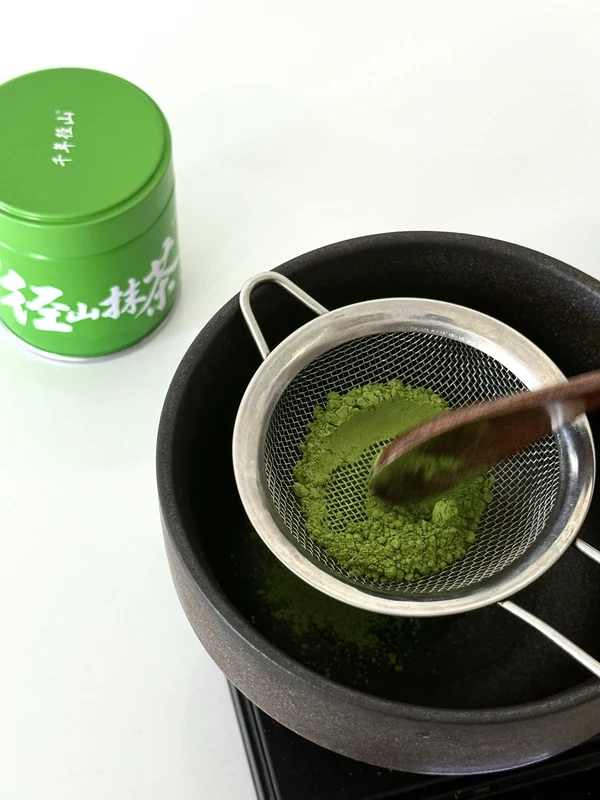
Matcha should be pre-dispersed into a controlled portion of compatible liquid, then folded into kefir with the least shear that removes visible pockets. Direct dry addition often creates floating islands or stubborn specks. Excess shear can thin a structured base, entrain air, and make a misleadingly foamy sample.
The Jamie Oliver reference blends matcha with hot, non-boiling water before adding kefir and ice. That is a useful household dispersion cue, but it does not establish a commercial temperature, water addition, or shelf-life result. A plant must test its own water contribution, sanitation controls, and chilled process.
An illustrative screening plan can compare three fixed addition methods while holding the formula constant:
| Method | Observe immediately | Recheck after cold hold |
|---|---|---|
| Direct powder | Lumps, floating powder, mix time | Sediment and ring formation |
| Small liquid slurry | Slurry smoothness, dilution | Pour and phase separation |
| In-line dispersion | Air pickup, temperature rise | Repeatability across run positions |
Key Takeaway: Choose the lowest-shear method that disperses the powder and remains repeatable at production scale.
How can acidity and matcha flavor be balanced?
Acidity and matcha flavor should be balanced through a matrix trial at the released culture endpoint. Tartness can sharpen perceived bitterness, while sweetness and fat can soften it. A stronger green color does not prove a better flavor balance.
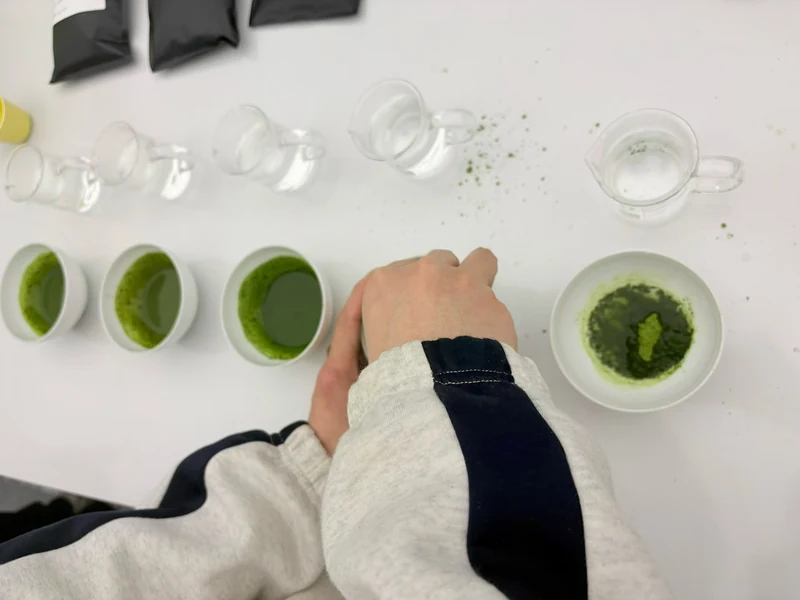
Keep the kefir endpoint fixed, then screen a narrow set of matcha additions and any permitted sweetness adjustment. Use coded samples at the intended serving temperature. Record aroma, tartness, bitterness, aftertaste, color, and whether the drink still tastes like cultured kefir.
AdoroHu supplies pure matcha powder, not a finished kefir or beverage premix. Its E-1/E-2 culinary and E-3/E-4 premium series provide different starting points, but the finished choice must be made in the customer’s formula. The practical tradeoff is clear: a higher-cost grade may improve the sensory result, yet it should not be selected if the acidic base masks that advantage.
Key Takeaway: Select the matcha grade by blind evaluation in the finished cold matrix, not by dry powder appearance alone.
What causes matcha kefir to separate during cold storage?
Matcha kefir can separate because of weak base structure, changing acidity, added water, particle settling, air incorporation, or mechanical damage during blending. The visible layer is a symptom, so the team should not assume that matcha alone caused it.
Track top serum, bottom sediment, color rings, pour behavior, and redispersion after a standardized inversion. Compare an unflavored control with the matcha sample from the same kefir batch. That control distinguishes normal kefir movement from a matcha-specific effect.
The matcha RTD stability guide explains wider beverage stability work. For kefir, keep the scope on a live or cultured refrigerated matrix and do not claim a universal shelf life from a short observation.
Key Takeaway: Use a matched control and timed cold observations before changing stabilizer, matcha, or shear.
How should foam and filling behavior be checked?
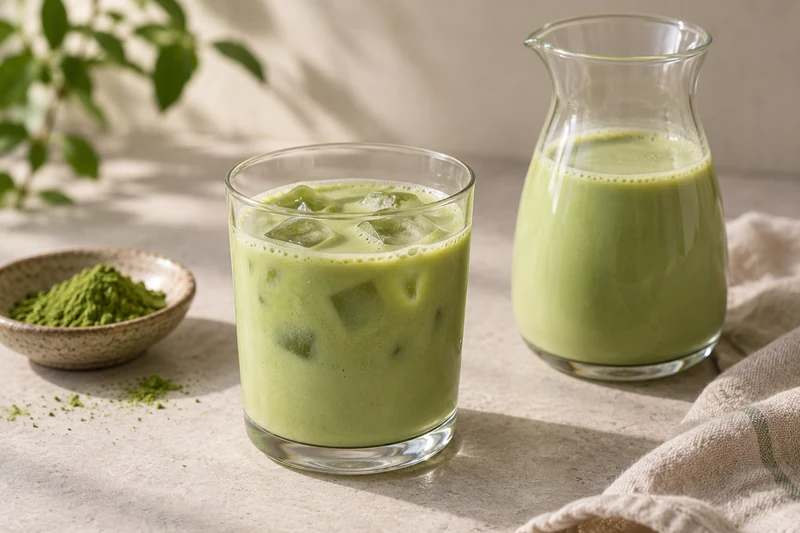
Foam and filling behavior should be checked at the actual product temperature with the intended transfer and filling setup. A blender can make an attractive bench foam that slows filling, changes fill weight, or leaves headspace variation on a line.
Measure foam height or density by one consistent plant method, record its collapse time, and compare the beginning, middle, and end of a run. Also watch for matcha deposits at dead legs, hopper walls, and filler nozzles. If deaeration or a hold step is proposed, confirm that it does not create new separation.
The commercial-kefir study measured approximately 500 mL portions at 4, 10, and 25°C across defined viscometer shear rates. Its brands did not behave identically, and apparent viscosity was higher at 4°C than at the warmer test temperatures. A filling trial should therefore use the actual base and product temperature; copying the published viscosity values would confuse a measurement example with a release specification.
| Observation | Likely question | Operational consequence |
|---|---|---|
| Persistent foam | Is shear or air ingress too high? | Slower filling and variable net content |
| Green deposit | Is dispersion or circulation inadequate? | Color and dose drift across the run |
| Pour changes with time | Is structure recovering or breaking? | Inconsistent consumer experience |
Key Takeaway: Approve the process with line-relevant transfer and filling evidence, not a blender cup alone.
What safety and allergen controls belong in the trial?
The trial should fit the facility’s hazard analysis, sanitation plan, allergen controls, and refrigerated process. Dairy kefir contains milk, one of the major U.S. food allergens described by the FDA allergen guide. A non-dairy product needs its own ingredient and cross-contact review rather than an assumption based on the word kefir.
Under 21 CFR 117.135, covered facilities identify and implement preventive controls as appropriate to hazards requiring control. Matcha addition does not replace that assessment. Any refrigerated holding control belongs to qualified food-safety owners.
Key Takeaway: Treat matcha blending and refrigerated holding as part of the controlled food process, with product-specific allergen and hazard decisions.
What should a matcha kefir pilot report contain?
A matcha kefir pilot report should connect every result to the formula, batch, process, package, and evaluation time. Include the unflavored control, matcha identity, culture endpoint, addition method, product temperature, shear settings, fill observations, cold-hold results, and sensory decision.
Use photographs under fixed lighting for color and separation, but keep measured observations separate from visual impressions. Record deviations rather than cleaning the data after the run. If the process changes, reopen only the affected decisions and repeat the relevant checks.
For future raw-material comparisons, the matcha sensory evaluation guide provides a disciplined framework. A useful report lets procurement see whether a new matcha lot passed the same finished-product test.
Key Takeaway: Release a formula only when another team can reproduce the test and understand why it passed.
FAQ
- Should a matcha kefir trial make its own kefir base?
- Not for this buyer task; use the intended released kefir base so matcha dispersion, flavor, pourability, and cold holding can be evaluated directly.
- Why does matcha kefir become foamy?
- High shear, air ingress, transfer design, and the base formula can all contribute, so compare line-relevant methods at the same temperature.
- Does matcha extend kefir shelf life?
- No shelf-life extension should be claimed without product-specific stability, safety, packaging, and sensory evidence.
- Which matcha grade should a kefir brand test first?
- Start with a culinary or premium grade that fits the target flavor and cost, then compare it blindly in the finished kefir.
- How can a team tell whether matcha caused separation?
- Compare the matcha drink with an unflavored control from the same kefir batch through the same refrigerated observation schedule.
- Does non-dairy kefir avoid allergen concerns?
- Not automatically; the substrate, other ingredients, processing line, and cross-contact controls determine the allergen review.
Conclusion
Build matcha kefir around the intended commercial base, a controlled dispersion step, and evidence from the actual cold chain. If you need a pure matcha sample for a defined kefir beverage trial, contact AdoroHu Matcha with the base, blending method, sensory target, and package details.