
Matcha muffins improve when a bakery controls powder dispersion, batter temperature, fill weight, and the top-to-crumb bake balance as one system. A home recipe can prove that the flavor works, but it cannot establish a repeatable commercial process. Start with a fixed base formula and compare a culinary matcha powder at measured additions before changing several ingredients at once.
Variation shows up quickly: one tray domes well but browns at the edge, while another stays green yet bakes dense. Buyers then struggle to decide whether the powder, formula, depositing, or oven caused the difference. A controlled trial separates those causes and creates a useful sample brief.
Commercial matcha muffins need a fixed formula, consistent fill weight, and a bake profile that evaluates the exposed top separately from the protected crumb. Approve the finished muffin for color, flavor, volume, and texture rather than approving raw powder by appearance alone.
In short:
Key points:
- Fix the base muffin before comparing matcha samples.
- Measure the top and crumb separately because they see different heat exposure.
- Release a formula only after repeat batches meet written sensory and process checks.
What should a commercial matcha muffin brief define first?
A useful matcha muffins brief defines the buyer, serving format, target crumb, top color, matcha character, and expected service window before formulation begins. Without that brief, a stronger tea note may be judged as “better” in one review and “too bitter” in the next.
Record the pan format, target unit weight, topping, packaging, and whether the muffin is sold fresh, chilled, or frozen. These choices change the relevant failure modes. A large exposed crown has a different color risk from a small muffin with a streusel cap.
| Brief field | Decision to record | Buyer consequence |
|---|---|---|
| Format | Standard, mini, or jumbo | Changes bake gradient and portion cost |
| Color | Acceptable top and crumb range | Prevents approval by raw-powder color alone |
| Flavor | Tea intensity and bitterness ceiling | Keeps sample reviews comparable |
| Route | Fresh, chilled, or frozen | Determines which hold checks matter |
Key Takeaway: Define the finished muffin and its route to sale before choosing the powder.
Which matcha grade should a muffin trial compare?
A muffin trial should compare matcha candidates in the same batter rather than assume a drinking grade will perform best. The published Justine Doiron formula uses 3 teaspoons of ceremonial matcha with 150 g flour. In a reader reply, the author says culinary grade was not tested and expects mainly a flavor-strength difference. That is useful evidence about the recipe’s choice and uncertainty, not proof that ceremonial grade is the commercial optimum.
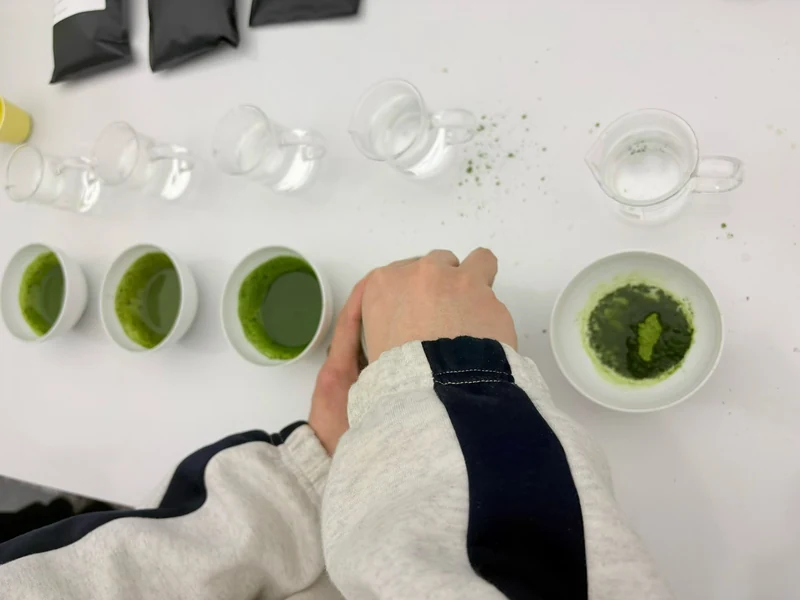
For most first trials, compare a practical culinary candidate with the current control. Keep flour, sweetener, fat, egg, liquid, and leavening unchanged. The matcha powder for baking guide explains why application testing matters more than a grade name.
My preference is to avoid paying for a higher grade before a blinded finished-product comparison shows a buyer-visible gain. Otherwise, the extra ingredient cost can disappear under browning and sweetness.
Key Takeaway: Choose matcha from finished-muffin evidence, not the prestige of the grade label.
How should matcha powder enter the muffin batter?
The published formula whisks matcha with flour, baking powder, and salt before wet ingredients enter. It then mixes the combined batter by hand for about one minute and describes the batter as thicker than boxed cake mix. Those observations support a dry-blend starting route and a controlled final mix, but another flour, fat, or mixer may need a different endpoint.
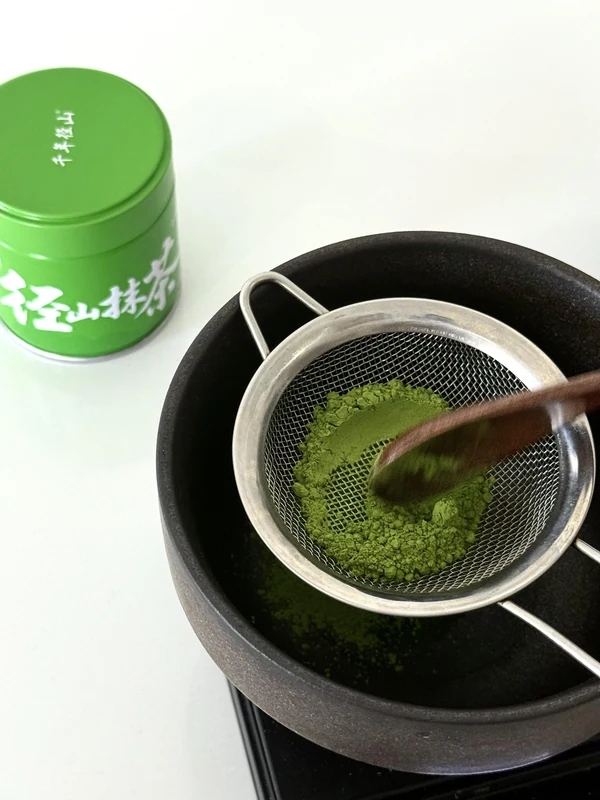
For a plant trial, record dry-blend time, final batter appearance, and the elapsed time before depositing. Sieve or pre-blend the matcha with a measured dry fraction, then inspect several units for streaks and pockets. Do not add a slurry unless the formula team also accounts for its liquid.
A practical check is to cut muffins from several depositor positions. Streaks or pockets point to dispersion or hopper management, not automatically to the matcha lot.
Key Takeaway: Lock the dispersion step and diagnose pockets before increasing mix time.
How can a bakery separate muffin-top browning from crumb color?
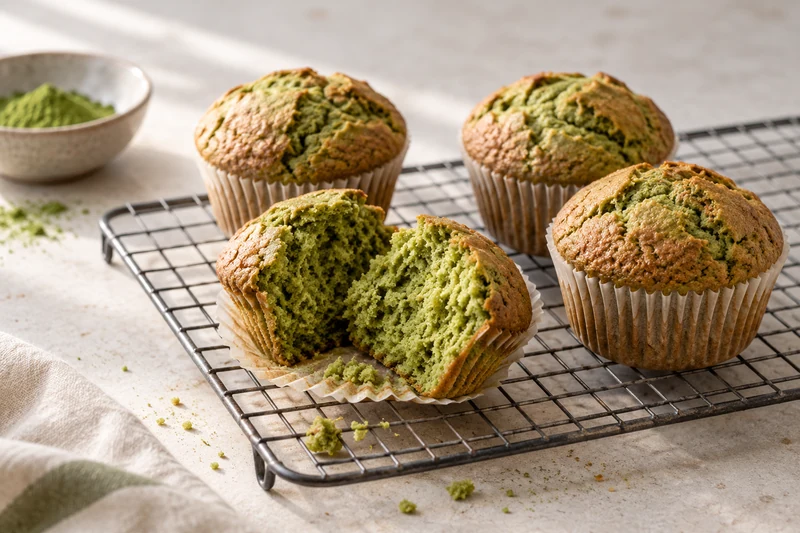
A bakery should score the exposed top and interior crumb as two separate matcha muffin attributes. The top receives direct oven heat and dries faster; the crumb stays wetter and is protected by the crust. A single color judgment hides this gradient.
Use the same lighting, cut position, and cooling time for every comparison. Photographing a hot muffin beside a cooled control creates a false difference. If instruments are available, use them consistently, but a defined visual scale still beats an unstructured “looks greener” comment.
| Observation | Likely place to investigate | Commercial risk |
|---|---|---|
| Dark top, acceptable crumb | Surface heat, sugar, bake time | Poor shelf appearance |
| Pale top, dense crumb | Leavening, batter temperature, fill | Low volume and heavy bite |
| Uneven green pockets | Powder dispersion, depositor hold | Unit-to-unit complaints |
| Good color, weak flavor | Dose or flavor masking | Product misses its promise |
Key Takeaway: Score the crown and crumb independently so the team changes the right variable.
Which production variables matter most for matcha muffins?
The published formula yields six standard muffins or three jumbo muffins, recommends a scoop for uniform depositing, and bakes at 350°F for 20–25 minutes. These home-scale details show that unit size, deposit consistency, temperature, and time are coupled. They do not define a commercial bake profile.
Run matched trays and rotate only if rotation is part of normal production. Record fill weight, batter temperature, pan position, and the elapsed time from final mixing to depositing. Rebuild the endpoint for the actual pan and oven instead of scaling the 350°F and 20–25 minute figures by batch size.
The experienced trade-off is speed versus diagnostic clarity. A large multivariable trial feels efficient, but it makes failures hard to explain. I would run a smaller controlled screen first, then confirm the winner at normal batch scale.
Key Takeaway: Stabilize depositing and oven variables before attributing differences to matcha.
How should a team judge texture and moisture after cooling?
A team should judge matcha muffin texture after a fixed cooling period and again at the intended selling point. A muffin can feel tender while warm, then become dry or rubbery after moisture redistributes. Matcha dose may interact with the base formula, but it should not be blamed without a control.
Measure unit weight loss when useful, and describe crumb resilience, crumbliness, gumminess, and surface tack with agreed terms. Compare the same storage and packaging conditions. For broader bakery controls, the matcha madeleines production guide offers a useful adjacent view of thin-edge browning and batch consistency.
Key Takeaway: Approve texture at the real point of sale, not only when the muffin leaves the oven.
What food-safety and allergen controls belong in the muffin plan?
The manufacturer should place matcha muffins inside its own hazard analysis, allergen program, sanitation controls, and validated process. The recipe is not a safety plan. In the United States, wheat, egg, milk, soy, sesame, peanuts, and tree nuts may become relevant depending on the formula; the FDA major-allergen guidance explains labeling expectations for the nine major allergens.
Covered facilities identify written preventive controls when their hazard analysis finds a hazard requiring one under 21 CFR 117.135. The rule does not supply a universal muffin bake, cooling limit, or shelf life. Those decisions belong to the actual product, process, facility, and qualified food-safety team.
For buyers, this distinction prevents a costly mistake: a successful bench bake does not prove commercial safety or shelf stability.
Key Takeaway: Keep formulation approval separate from facility-specific safety validation and labeling review.
What evidence should a buyer request before approving matcha muffins?
A buyer should request a controlled pilot record, the matcha specification used, finished-product observations, and the change rules that trigger another trial. The record should identify the formula version, ingredient lots, depositing conditions, bake profile, cooling point, and review panel.
Approval should cover the finished product and the ingredient evidence relevant to the buyer’s market. A supplier sample can support the trial, but it cannot guarantee the performance of a customer’s formula. If the product brief changes, repeat the affected checks rather than relying on the old result.
When you are ready to compare samples, send the formula constraints and target result through the AdoroHu Matcha contact page. AdoroHu supplies pure matcha powder as an ingredient, not finished muffins or a validated bakery process.
Key Takeaway: Approve a traceable formula-and-process combination, then define when it must be reviewed again.
FAQ
- Can culinary matcha work in commercial muffins?
- Yes. It should be compared in the finished base formula for color, flavor, volume, and texture before approval.
- Should a bakery use the greenest raw matcha sample?
- No. Raw color does not predict the exposed top and protected crumb after baking, so judge the cooled finished muffin.
- Why do matcha muffins develop green pockets?
- Green pockets usually point to incomplete dry blending, poor slurry dispersion, or inconsistent hopper mixing; verify the process before changing dose.
- Can a home matcha muffin recipe become a commercial specification?
- It can provide a benchmark, but commercial scale requires controlled depositing, oven, cooling, allergen, packaging, and repeat-batch checks.
- Does a successful bake establish shelf life?
- No. Shelf life needs product-specific evidence under the intended packaging and storage conditions.
- What should a buyer send when requesting matcha samples?
- Send the base formula, target tea intensity, color expectation, process route, unit format, and the checks used to approve the finished muffin.
Conclusion
Reliable matcha muffins come from a controlled base formula, a clear top-versus-crumb review, and repeatable production records. Compare pure matcha powders in the finished application, then approve the combination of ingredient, formula, and process that meets the buyer brief.