
Matcha mousse development should begin with one aerated-dessert architecture, because egg, cream, chocolate, gelatin, and plant systems whip and hold shape differently. Start with culinary matcha powder for chilled dessert trials in a fixed base and chill process.
The main risk is a mousse that looks stable after whipping but drains, collapses, firms unevenly, or changes color in storage. Buyers need a test plan that keeps temperature and shear controlled while measuring overrun, viscosity, firmness, shape retention, drainage, and color.
"Choose the mousse architecture before comparing matcha lots. Approve the finished mousse through the intended chill chain because day-zero overrun cannot predict drainage, collapse, or color after storage."
In short:
Key points:
- Fix the egg, dairy, chocolate, gelatin, or plant-based architecture first.
- Treat particle size, viscosity, overrun, firmness, and stability as separate endpoints.
- Compare matcha lots at the same whip temperature, mixer setting, and storage age.
Which matcha mousse architecture should be chosen first?
Choose egg-and-cream, white-chocolate, gelatin-set, or plant-based mousse before powder work. The continuous phase, fat network, protein, and stabilizer determine how air is incorporated and retained.
| Architecture | Main structure | Primary failure mode |
|---|---|---|
| Egg and cream | Protein foam plus fat network | Drainage or foam collapse |
| White chocolate | Cocoa butter plus cream | Excess firmness or graininess |
| Gelatin-set | Protein gel supporting foam | Rubbery texture or weeping |
| Plant-based | Fat emulsion plus plant protein/stabilizer | Weak overrun or phase separation |
Do not compare matcha lots across different architectures. The base can outweigh the powder effect and produce a false supplier ranking.
Key Takeaway: Lock the mousse architecture before matcha-dose trials.
When should matcha enter a mousse process?
Compare controlled aqueous predispersion with late dry addition while holding added liquid, temperature, and shear constant. Record specking, lumping, foam loss, and color after folding.
Predispersion may reduce visible clumps but can add water or shear. Dry addition may protect the base formula but leave specks. Treat each route as a separate process cell.
Approve addition at the production batch size, because folding time and temperature drift increase with scale.
Key Takeaway: Choose addition method through dispersion and foam-retention data.
Which emulsion measurements predict matcha mousse whipping?
Measure pre-whip particle size and apparent viscosity. The 2023 adjacent study Effects of monoacylglycerols with different saturation degrees on physical and whipping properties of milk fat-based whipping creams reported a 5.01 micrometre control particle size and treated emulsions from 2.84 to 1.16 micrometres.
The study contained no matcha and did not test finished mousse. Its value is the multi-endpoint method: emulsion structure before whipping can help explain overrun and stability afterward.
| Pre-whip measure | What it can reveal | What it cannot prove alone |
|---|---|---|
| Particle size | Emulsion structure and aggregation | Finished foam stability |
| Viscosity | Resistance to flow | Overrun or drainage |
| Temperature | Fat state and process consistency | Shelf performance |
Key Takeaway: Characterize the base before interpreting whipped performance.
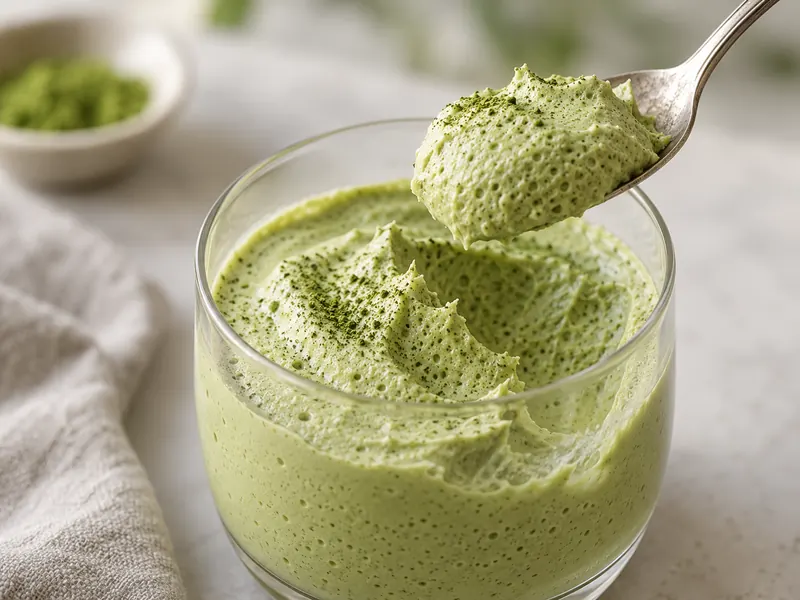
How should matcha mousse overrun be released?
Calculate overrun from unwhipped and whipped density or mass at a fixed volume. Keep batch temperature, mixer, tool, speed, time, and bowl fill constant.
The 2023 cream study measured overrun separately from conductivity, firmness, shape retention, and foam stability. Follow that logic: a high overrun can coexist with weak hold or excessive drainage.
Use the matcha ice cream process guide only as adjacent aerated-dessert context. Frozen ice cream does not set a chilled-mousse target.
Key Takeaway: Release overrun with stability and texture, never alone.
Why is viscosity alone insufficient for matcha mousse?
In the adjacent cream experiment, apparent viscosity increased from 298 cP in the control to 350–490 cP in treated emulsions. The same work still measured overrun, conductivity, firmness, shape retention, and foam stability because viscosity did not answer every performance question.
For matcha mousse, record viscosity before whipping and firmness after setting. Add drainage and shape-retention tests at fixed times.
The practical decision is to reject a lot comparison performed at different mix temperatures. Temperature changes fat state and viscosity, which can shift whipping behavior independently of matcha.
The commercial matcha dessert sourcing guide covers broader ingredient selection.
Key Takeaway: Pair viscosity with overrun, firmness, drainage, and shape retention.
What temperature challenge should matcha mousse pass?
Run the intended chill chain plus a bounded cycling or abuse challenge. Measure drainage, collapse, color, texture, and sensory quality before and after the challenge.
The 2023 cream study used temperature cycling and centrifugation to probe emulsion stability rather than relying on day-zero overrun. Those methods belong to its adjacent cream matrix, but they support a stronger mousse test design.
Set the challenge from the product's real filling, transport, service, and display conditions. Do not claim a shelf life from a cream study.
Key Takeaway: Challenge the actual chilled product under a defined temperature history.
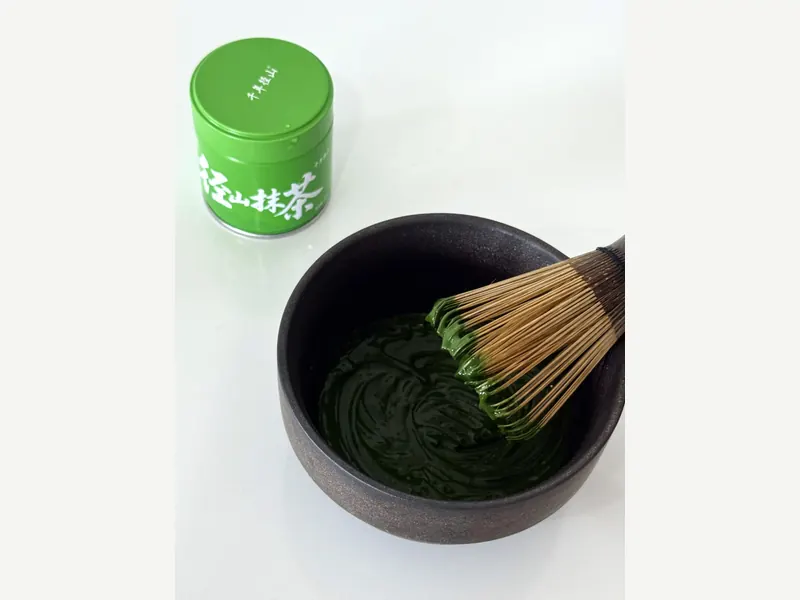
How should matcha mousse color be protected?
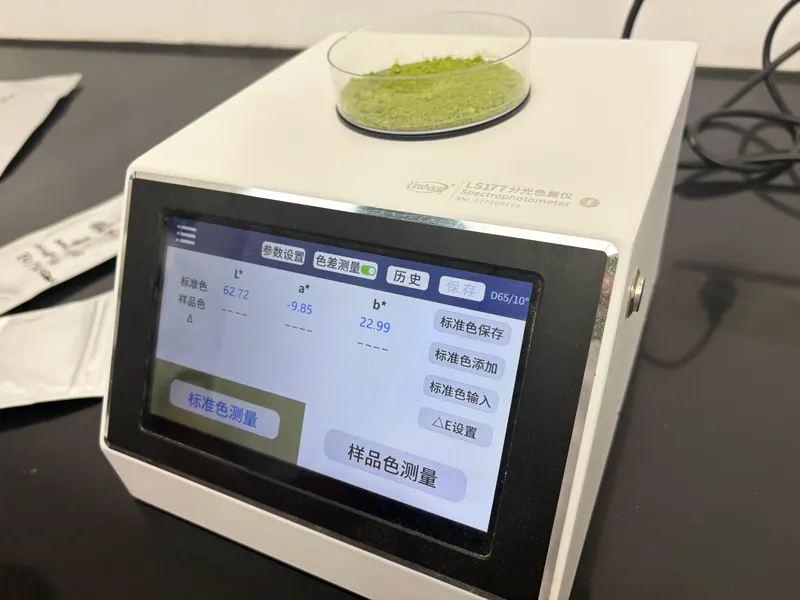
Measure L*a*b* values or color difference after mixing, after whipping, after setting, and through storage. Aeration changes light scattering, so color comparisons require matched overrun and sample depth.
The 2020 study Effect of storage temperature on the antioxidant activity and catechins stability of Matcha (Camellia sinensis) found that higher storage temperature reduced its green-color response in stored powder. It supplies no mousse temperature or color limit.
Reject supplier comparisons made at different whip temperatures, overruns, or storage ages. Those conditions can change appearance without a powder difference.
The commercial dessert recipe guide provides adjacent menu context.
Key Takeaway: Compare mousse color only at matched aeration, temperature, and age.
What belongs in a matcha mousse pilot-release sheet?
Record architecture, ingredient lots, matcha lot and dose, addition method, mix temperature, mixer and tool, whip speed and time, pre-whip particle size and viscosity, overrun, firmness, drainage, shape retention, color, package, and complete chill history.
AdoroHu supplies raw matcha and has in-house microbiology and physical-chemical laboratories. These capabilities support ingredient documentation and sampling, not a claim that AdoroHu manufactures finished mousse.
Contact AdoroHu with the mousse architecture, process temperature, target overrun, package, and chill chain.
Key Takeaway: Bind mousse release to the complete formula, whip process, and chill history.
FAQ
- What matcha grade should a mousse manufacturer test first?
- Start with a culinary grade and approve it in the fixed mousse architecture, whipping process, package, and chill chain.
- Does higher mousse viscosity guarantee better stability?
- No. Viscosity, overrun, firmness, drainage, shape retention, and foam stability answer different questions.
- Should matcha be added before or after whipping?
- Compare controlled predispersion and late addition under matched liquid, temperature, and shear, then choose the route that passes dispersion and foam-retention tests.
- Can whipping-cream research define matcha mousse shelf life?
- No. The cited cream study supplies adjacent test-design evidence, while the finished matcha mousse requires its own shelf validation.
- Does AdoroHu manufacture finished mousse?
- AdoroHu supplies matcha ingredients and raw-powder laboratory capabilities; finished-mousse manufacturing is outside the documented supply role.
Conclusion
Commercial matcha mousse needs a fixed architecture, controlled whipping, and chilled evidence for overrun, firmness, drainage, shape, and color. Use the AdoroHu contact page to plan raw-powder samples for the selected system.