
Triangle test design tells a matcha quality team whether assessors can distinguish an incoming lot from an approved reference under controlled conditions. A weak design can turn cup variation, visible color, serving order, or lingering bitterness into a false lot signal.
When evaluating premium matcha powder, the triangle test must begin with one declared objective: evidence of a perceptible difference or evidence supporting a predesigned similarity claim. A non-significant difference test does not prove that two lots are identical or acceptably similar.
Each assessor receives three coded samples: two are alike and one is different. The assessor must identify the odd sample, even when uncertain. The result supports discrimination under the test conditions; it does not reveal which lot is preferred, better, sweeter, greener, or more authentic.
In short:
Key points:
- Declare difference or similarity as the objective before choosing the design and assessor count.
- Prepare homogeneous samples, use all six serving orders, and control visual and carryover cues.
- Interpret correct identifications through the predeclared decision rule without converting discrimination into preference.
What decision should a triangle test support for a matcha lot?
A triangle test should support a defined disposition question: can assessors perceive a difference between the approved reference and an incoming lot under the intended preparation? ISO 4120:2021 describes a forced-choice method for investigating perceptible sensory difference or similarity between two products.
The method fits changes in ingredients, processing, packaging, handling, or storage when the comparison isolates that change. It does not replace chemical, microbiological, authenticity, or specification tests. Use the matcha authenticity evidence guide for identity claims that sensory discrimination cannot prove.
Write the consequence of each possible outcome before testing. A supported difference might trigger descriptive profiling, an application trial, or supplier investigation rather than rejection. An unsupported difference might allow the lot to continue through other release gates while preserving the test limitation. This prevents the sensory result from becoming a vague vote after the team already knows which code belongs to the new lot.
| Decision | Triangle-test role | Evidence still required |
|---|---|---|
| Investigate a supplier lot change | Detect perceptible difference | COA, specification, process and lot records |
| Approve a process adjustment | Screen sensory effect | Process validation and stability evidence |
| Claim acceptable similarity | Predesigned similarity test | Chosen sensitivity and risk design |
| Choose the better product | Not answered | Preference or quality assessment |
Key Takeaway: Use the triangle test for perceptible discrimination, then combine it with the separate evidence that governs lot release.
Why must difference and similarity objectives be separated?
Difference and similarity objectives require different hypotheses and risk controls. A difference test asks whether evidence supports a perceptible difference. A similarity test asks whether the products are sufficiently similar under a predeclared sensitivity boundary. ISO 4120 distinguishes these uses.
If a difference test is non-significant, the safe statement is that the planned test did not support a detectable difference. That result may reflect true closeness, inadequate sensitivity, uncontrolled variation, or insufficient information. It cannot be relabeled as proof of similarity after the responses are known.
The practitioner trade-off concerns risk. A highly sensitive design may require more resources but reduces the chance of missing a meaningful change. A quick screen costs less but may leave the release decision unresolved. Set the risk design according to the consequence of an undetected lot change, not the available meeting time.
Key Takeaway: Decide whether you seek difference or similarity before recruitment; a failed difference test is not a similarity test.
How should the two matcha products be prepared?
Both products should be prepared homogeneously with the same dose, water or matrix, temperature, mixing method, rest time, vessel, serving volume, and evaluation window. Matcha suspends rather than fully dissolves, so settling and foam can create within-sample differences that have nothing to do with the lot.
Use one preparation batch per product only when it is demonstrably uniform for the serving period. Otherwise, define mixing and remix rules and record preparation order. Samples should be similar enough in appearance that irrelevant visual cues do not disclose identity when the objective concerns overall aroma, taste, or mouthfeel.
Condition the approved reference and incoming lot under the same documented storage and opening conditions. A freshly opened reference compared with an older, repeatedly opened test bag creates an exposure difference. Conversely, an aging reference can drift until a normal incoming lot appears unusual. Preserve opening time, container, headspace handling, and sample temperature in the test record.
The broader matcha sensory evaluation workflow helps control dose and service. The triangle article’s narrower task is arranging and interpreting three forced-choice samples.
Key Takeaway: Remove preparation variation before asking assessors to detect lot variation.
How should the six triangle serving orders be used?
The six possible orders are AAB, ABA, BAA, BBA, BAB, and ABB. Allocate them as evenly as the final design permits so the odd sample and each product appear across positions. Neutral random codes should replace product names, and the code key should remain controlled.
Balancing matters because first-sample contrast, adaptation, and position habits can shift responses. Record the assigned order and presented codes for every assessor. If service mistakes occur, apply the predeclared invalid-response rule rather than quietly changing the code key.
| Order family | Odd sample position | Control purpose |
|---|---|---|
| BAA or ABB | First | Balances first-position oddity |
| ABA or BAB | Middle | Balances middle-position oddity |
| AAB or BBA | Last | Balances last-position oddity |
Key Takeaway: Use and record all six order patterns; three cups alone do not create a balanced triangle test.
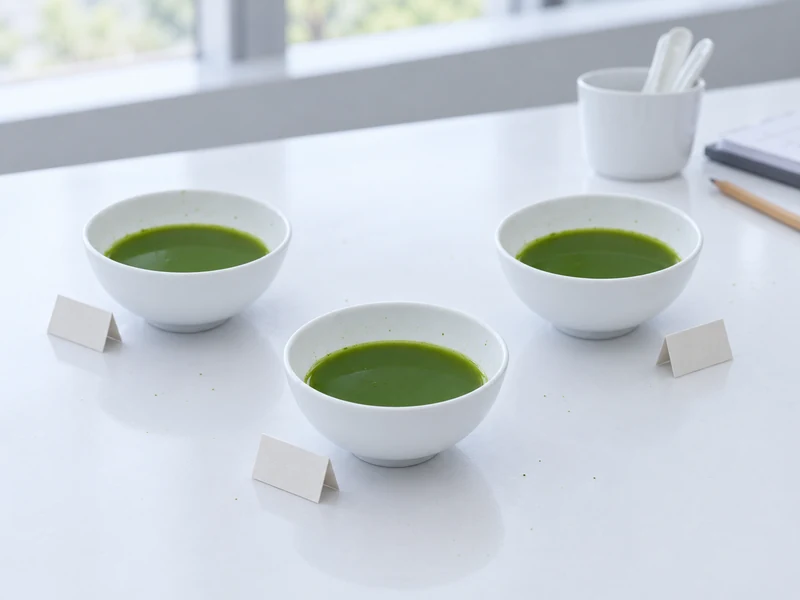
Who should assess the matcha samples?
Assessors should be capable of following the forced-choice task and should be screened or instructed according to the study purpose. The triangle method does not ask them to describe quality or state a preference. It asks them to select the odd sample even when they must guess.
Give a short practice explanation without using the test products or revealing the expected difference. The instruction should make clear that “no difference” is not a response option. Collect the odd-sample choice before optional comments so assessors do not rationalize their selection around a vocabulary list. If assessors have dietary, allergen, caffeine, or other participation constraints, address them through the study’s recruitment and consent process.
Choose assessors and test conditions that reflect the intended sensory decision. Internal staff may suit a controlled technical investigation, but familiarity with supplier, color, or project history must be blinded. Do not treat repeated judgments from one person as independent consumer responses without a suitable repeated-measures design.
Avoid inventing a universal panel size. ISO 4120 bases sensitivity on alpha risk, beta risk, and the chosen proportion of distinguishers. A qualified analyst should select the sample size and critical rule for the actual objective.
Key Takeaway: Recruit for the planned discrimination task and determine assessor count from the risk design, not a generic number.
How should carryover and visible cues be controlled?
Carryover should be controlled through portion size, pacing, palate-cleansing instructions, and a test matrix that does not overwhelm the assessor. ISO notes limited use for triangle testing when flavors create strong carryover. Matcha bitterness and astringency can linger, so rushed repeated tasting may mask or exaggerate differences.
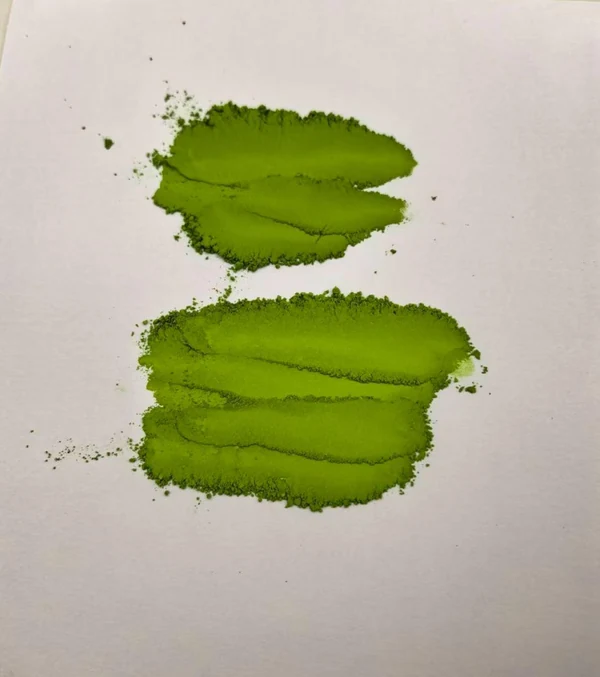
Visible color, foam, sediment, cup fill, and temperature can also disclose identity. Decide whether color is part of the intended overall difference. If it is not, standardize presentation or mask the cue using a method that does not create a new sensory difference.
The practical compromise is between realism and control. Testing the intended drink improves application relevance, while heavy flavor systems may reduce sensitivity. Testing a simpler preparation increases control but may not predict the finished application. Record that limitation rather than claiming both benefits.
Key Takeaway: Control carryover and irrelevant identity cues, while stating how the chosen matrix limits application of the result.
What does the one-third guessing probability mean?
The one-third probability means a person choosing randomly has one correct position among three possible odd-sample positions. Under a simple independent chance model, correct responses can be represented by a binomial distribution with probability one third. It does not mean that one third of assessors can perceive the difference.
The executed design must provide the critical count based on its planned risks and assessor count. Do not borrow a threshold from an online example, another panel size, or a prior study. Keep raw responses, invalid exclusions, order allocation, and the analysis output together.
Independence also matters to the chance model. Conversation among assessors, visible response sheets, or a server who reacts to a choice can make responses dependent. Schedule the room and collection method so each assessor decides privately. When the design includes repeated sessions, use analysis appropriate to that structure instead of feeding every row into a simple independent binomial calculation.
Key Takeaway: One third describes chance success for a forced guess; the actual decision threshold comes from the predeclared design.
How should a significant triangle result be interpreted?
A significant difference result supports the conclusion that the products were perceptibly distinguishable under the stated conditions. It does not identify the attribute, direction, magnitude, preference, or quality consequence. A changed lot may be distinguishable yet fully acceptable.
Follow a significant result with a decision-specific investigation. Review descriptive attributes, process records, instrumental color, particle behavior, or the intended application as appropriate. Do not say the new lot is worse merely because assessors found the odd cup.
| Result | Supported statement | Unsupported statement |
|---|---|---|
| Difference criterion met | Samples were distinguishable under the design | New lot is inferior |
| Difference criterion not met | Planned test did not support a difference | Lots are identical |
| Similarity criterion met | Similarity supported at declared sensitivity | No consumer will notice |
| Many comments name bitterness | Follow-up hypothesis | Triangle test proves bitterness direction |
Key Takeaway: Discrimination triggers investigation; it is not a preference vote or automatic rejection.
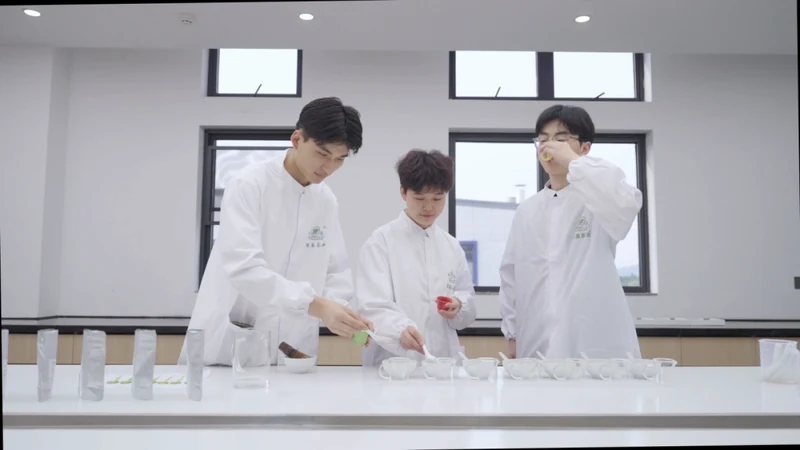
How should a non-significant result be reported?
A non-significant difference result should be reported as insufficient evidence of a perceptible difference under the planned conditions. Include assessor count, correct-response count, decision rule, deviations, preparation, and limitations from the executed study. Insert actual values only after the test.
Do not write “no difference,” “same product,” or “equivalent lots.” If the business needs evidence of similarity, design that objective in advance with the meaningful-difference boundary and beta risk. Retrofitting similarity after a non-significant outcome biases the decision.
Key Takeaway: Absence of supported discrimination is not proof of identity or acceptable similarity.
What records should support a triangle-test lot decision?
The record should bind product A and B identities, lot codes, sample conditioning, formula, preparation batch, neutral codes, serving orders, assessor eligibility, response sheets, exclusions, analysis settings, result, limitations, and disposition. Preserve the approved-reference storage and opening history because reference drift can create an apparent lot change.
Quality, product development, and procurement should sign the consequence they own. Quality controls method execution, product development evaluates application relevance, and procurement manages the supplier response. If the result changes the purchase decision, keep it with the lot-release file rather than only in a presentation.
The report should reproduce the objective verbatim and distinguish planned exclusions from post-test data loss. Include a serving-order balance check and describe any clue that may have revealed identity. State the exact application boundary: straight prepared matcha, latte matrix, or another format. A future reviewer can then decide whether the evidence applies to a reformulated or differently served product.
Key Takeaway: Make the triangle result reproducible and traceable to the exact lots, conditions, analysis, and disposition.
When should a triangle test be repeated?
Repeat the test when a documented execution failure invalidates the comparison, when a materially different application becomes the decision context, or when a new lot or process change creates a new question. Do not repeat merely to search for a preferred statistical outcome.
If the first valid test supports a difference, a descriptive or application test may be more useful than another triangle test. If it does not support a difference but the consequence of missing one remains high, revisit the sensitivity design before collecting more responses.
Key Takeaway: Repeat for a new question or invalid execution; use a different method when the next decision concerns cause, magnitude, preference, or quality.
FAQ
- Does a significant triangle test prove that the new matcha lot is worse?
- No. It supports perceptible discrimination under the test conditions, but it does not establish direction, magnitude, preference, or quality superiority.
- Does a non-significant difference test prove that two matcha lots are similar?
- No. Similarity requires a predesigned similarity objective, sensitivity boundary, and risk design; a non-significant difference result alone is insufficient.
- Why must assessors choose an odd sample when they are unsure?
- The triangle test is forced choice. Required guessing creates a known one-third chance probability that the planned statistical rule accounts for.
- Can the triangle test identify whether bitterness caused the difference?
- No. It detects discrimination without identifying the responsible attribute; use a suitable descriptive or directional follow-up method.
- Should all six serving orders be used?
- Yes. AAB, ABA, BAA, BBA, BAB, and ABB should be allocated as evenly as the design permits to balance product and odd-sample position.
- Can one assessor complete several triangle sets?
- Only under a suitable planned repeated-measures design. Do not count repeated judgments as independent responses by default.
Conclusion
A triangle test protects lot decisions when its objective, preparation, six orders, risk design, and interpretation are fixed before service. Follow ISO 4120:2021 for the current methodology, and keep difference, similarity, preference, and quality conclusions separate. For matcha supply discussions tied to a defined application, contact AdoroHu Matcha.