
Matcha oat milk works best when buyers approve the oat base, matcha dose, and process together. A base that pours well on its own can produce excessive thickness, separation, or muted tea flavour after formulation. Finding that mismatch during a launch can mean another ingredient purchase and another production trial.
For matcha latte applications, the following comparisons help separate oat-base effects from matcha and processing effects. A matcha oat milk brief should identify the acceptable drink before the team starts adjusting sweetness or stabilizers.
Choose an oat base by testing its composition and process history with the intended matcha. Evaluate drinkability, separation, redispersibility, flavour, and the intended serving or storage conditions together; improving one attribute can worsen another.
In short: Oat-base approval is a formulation decision that needs a defined sensory target and a reproducible process.
Key points:
- Record enzyme history, oat solids, protein, beta-glucan, oil, and declared additives.
- Compare separation with viscosity and mouthfeel before selecting the most stable-looking sample.
- Validate café use and packaged-drink storage through separate trials.
Which matcha oat milk use must the brief define?
Define whether the matcha oat milk is a freshly prepared latte, a concentrate, or a packaged beverage before choosing a base. Specify serving temperature, dilution, ice, steaming, hold time, and any shaking instruction. For a packaged product, also identify the process, package, and intended distribution.
Start with the buyer's actual failure costs. A café may reject slow pouring or foam that disappears before service; a packaged drink may fail because sediment cannot redisperse. These are different acceptance questions even when the ingredient list looks similar.
| Intended use | Trial to reproduce | Acceptance question |
|---|---|---|
| Hot café latte | Steam, pour, and service hold | Does texture remain pleasant through service? |
| Iced latte | Cold mixing, ice dilution, and standing | Does the drink remain balanced and easy to remix? |
| Concentrate | Storage followed by intended dilution | Does dilution reproduce the approved drink? |
| Packaged beverage | Intended process, fill, package, and storage | Do quality and applicable safety criteria remain satisfied? |
Key Takeaway: Choose the intended use first so the oat-base comparison measures a relevant failure.
Which oat-base specifications matter for matcha compatibility?
Record oat source, solids, protein, beta-glucan, oil, minerals, additives, pH, and processing history for each matcha oat milk candidate. Patra, Olsen, and Rinnan's 2022 spectroscopy study compared wholemeal-oat and oat-bran drinks with and without beta-glucanase treatment. It connected beta-glucan network changes with separation and found protein-related separation under acidic conditions, including pH 4.2 without the beta-glucan network.
That experimental pH is not a universal stability boundary for commercial matcha oat milk. It shows why an ingredient name alone cannot establish equivalence between bases. The study varied oat material and processing, so these belong in the procurement comparison alongside nutrition-panel values.
Before substitution, obtain a specification revision and retain the approved base for a side-by-side trial. If a supplier changes enzymes, minerals, or processing while the consumer-facing name stays unchanged, repeat the relevant compatibility test rather than relying on the old approval.
Key Takeaway: Approve the specified oat base and its relevant process history, not merely its trade name.
How should enzyme history influence matcha oat milk selection?
Use enzyme history to explain differences in body, sweetness, and separation before adjusting the matcha oat milk formula. Ibrahim, Andreson, Ben-Othman, and Jõudu's 2024 oat-drink study applied neutral or acidic protease after alpha-amylase treatment. Its acidic-protease treatment for 60 minutes, AP60, produced beta-glucan of 0.52 g/100 mL and water-soluble protein of 1.56 g/100 mL.
In an analytical centrifuge test at 1721 × g for 60 minutes at 24°C, AP60 separated at 2.13% per hour versus 19.24% per hour for the control. These rates describe the accelerated test, not ordinary bottle settling. However, assessors found its sticky, gluey mouthfeel less acceptable. The useful purchasing trade-off is therefore stability versus drinkability, not copying an enzyme schedule into a matcha recipe.
For the next comparison, hold the matcha lot, dose, and mixing procedure constant across bases. Prefer the base that meets the target texture with manageable settling over the thickest sample merely because it separates least. That choice avoids spending the next development round trying to dilute away an unacceptable mouthfeel.
Key Takeaway: Evaluate the stability gain from oat processing alongside pourability and mouthfeel before selecting the base.
How should matcha dose and sweetness be screened in oat milk?
Screen matcha dose in one approved oat base before changing sweetness, salt, or flavour. Oat solids and enzyme-derived sugars can affect the balance, so “unsweetened” and “same added sugar” do not necessarily mean comparable tasting systems. Record the complete formula and the base's specification.
Next, compare coded samples at the intended serving temperature. Judge tea aroma, bitterness, cereal notes, body, and aftertaste separately. Use the latte matcha selection guide to shortlist powders, then make the grade decision in this base.
Avoid buying a higher-priced matcha to correct a dominant cooked-oat note. First compare the base alone and the processed base against their controls; otherwise, the powder spend can rise while the source of the objection remains. Add sweetness after the base and tea combination is understood, so it does not conceal a weak matcha candidate during selection.
Key Takeaway: Establish base–matcha compatibility before using sweetness to refine the finished balance.
Which mixing sequence should a matcha oat milk pilot compare?
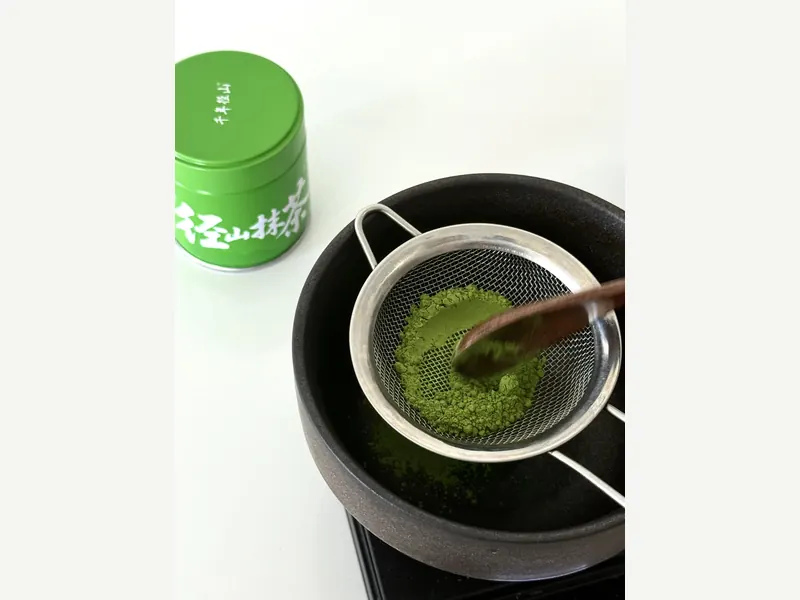
Compare direct powder addition with a controlled pre-dispersion method using the same final matcha oat milk composition. Record the pre-wet liquid, ratio, temperature, mixing device, duration, addition order, and delay before transfer. A pre-dispersion trial must not accidentally receive more water than its comparator.
In practice, inspect both lumps and aeration. A smoother-looking sample immediately after vigorous mixing may contain foam that hides the surface or changes the measured fill. Let the defined process, including any deaeration or rest, finish before comparing appearance and viscosity.
Choose a sequence the intended equipment can reproduce. A bench method requiring repeated manual scraping is a poor production candidate unless the pilot equipment has an equivalent control. Scale the purpose of mixing, including wetting and particle breakup, rather than copying a bench rpm as though the mixer geometry were unchanged.
Key Takeaway: Compare practical mixing sequences at equal composition and record the conditions needed to reproduce the result.
Which measurements distinguish matcha oat milk separation failures?
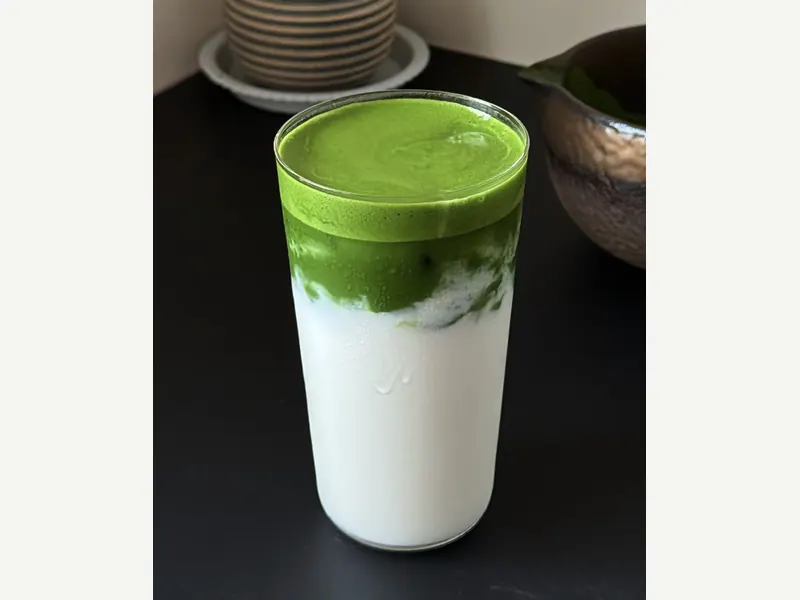
Measure layer formation, redispersibility, viscosity, and mouthfeel together when assessing matcha oat milk. In Ibrahim and colleagues' oat-drink study, beta-glucan content correlated positively with viscosity, with a Pearson correlation coefficient of 0.921, and negatively with separation rate, at −0.947. Its visual storage comparison used 17 days at 4°C without shaking.
These associations support paired measurements, not a prediction formula for a new beverage. For example, lower separation accompanied by excessive thickness may still fail the brief. The study's storage interval also does not establish a matcha oat milk expiry date.
| Observation | Record before shaking | Follow-up comparison |
|---|---|---|
| Green material at the bottom | Layer height and packing | Matcha dispersion and redispersion |
| Pale serum layer | Layer height, pH, viscosity | Base composition and process |
| Cream-like top layer | Layer volume and appearance | Oil system and homogenization |
| Uniform but gluey drink | Flow behaviour and sensory score | Base processing and solids |
After that, apply one defined inversion procedure and inspect recovery. Photographs taken only after shaking can conceal the failure the customer sees first.
Key Takeaway: Pair separation readings with viscosity and redispersion so an apparent stability improvement does not hide a texture failure.
How should oat-base shear processing enter matcha trials?
Treat oat-base shear history as a controlled variable in matcha oat milk development, especially when comparing an oat-bran ingredient with a finished commercial base. Rosa-Sibakov and colleagues' 2022 study examined oat-bran concentrate suspensions and acid milk gel models. Its microfluidization procedure used 5% by mass oat-bran suspensions in distilled water at 1850 bar. In 20 mL suspension samples, the microfluidized materials had only 0.5–1.3 mL of sediment after 24 hours at room temperature, supporting a controlled comparison of mechanical processing.
This is a specific research treatment of an oat-bran system, not a matcha beverage homogenization setting. It gives buyers a reason to request the base's mechanical-processing history and compare its function after processing. The pressure cannot be transferred directly to a different ingredient, machine, or finished drink.
For a practical screen, keep the base and matcha lots fixed while comparing feasible homogenization conditions with the manufacturer. Measure viscosity, layers, and mouthfeel after the complete process. Select the treatment by the finished drink's response rather than assuming more shear always improves it.
Key Takeaway: Reproduce and record base-processing differences before attributing a stability change to matcha grade.
How should café steaming differ from packaged matcha oat milk validation?
Validate café steaming against service performance and packaged matcha oat milk against its intended manufacturing and storage system. A successful foam and pour trial answers a short-term service question. It does not establish stability after a commercial heat treatment or months in a closed package.
For café work, record steam treatment, final serving conditions, foam decay, and flavour during the service hold. For packaged work, record thermal history, cooling, fill, package, and storage checkpoints with the manufacturer. The RTD formulation guide provides the broader beverage brief.
Where U.S. preventive-control requirements apply, 21 CFR 117.165 requires verification appropriate to the facility, food, and preventive control. A visual separation study provides quality evidence; it does not replace the applicable safety verification or justify an unvalidated thermal change.
Key Takeaway: Keep service approval and packaged-product approval as separate decisions with their own evidence.
How can sensory controls identify the problem in matcha oat milk?
Use an oat-base blank, the finished matcha oat milk, and a consistent matcha-in-water reference to locate the source of a sensory objection. Serve them under the planned tasting conditions and score specific attributes. Cereal notes, cooked flavour, chalkiness, bitterness, astringency, and gluey body require different corrective trials.
For example, if the objection appears in the base before matcha addition, first compare another base or its processing history. If it appears only after the complete formula is heated, compare matched pre- and post-process samples. This sequence avoids changing powder, flavour, and stabilizer together without learning which change helped.
Keep coded sample identities linked to their formula and process records. A favourite sample whose exact revision cannot be reproduced is unsuitable as the purchasing reference, regardless of how well it scored in one tasting.
Key Takeaway: Use ingredient and process controls to assign each sensory defect to a specific next trial.
What evidence should approve a matcha oat milk ingredient change?
Approve a matcha oat milk ingredient change only after the revised base or powder passes the relevant comparison against the retained reference. Record supplier item, lot, specification revision, formula, mixing, process, and intended use. A nutrition-panel match alone is insufficient when processing history or functional behaviour differs.
Before release, decide which prior evidence remains applicable. A new oat base can warrant renewed mixing, sensory, and separation work; a package or heat change can require a broader finished-product review. Assign the extent of validation to the responsible technical team and retain the rationale.
For private-label matcha powder, keep the raw-ingredient specification connected to the beverage trial. AdoroHu Matcha supplies the powder; the beverage manufacturer must establish the finished product's process and shelf performance.
Key Takeaway: Tie substitution approval to a reproducible comparison and state which finished-product evidence must be renewed.
FAQ
- Why can matcha settle in oat milk?
- Matcha contains dispersed leaf particles, and settling depends on the particles, oat-base structure, aggregation, viscosity, process, and storage.
- Does more beta-glucan always make a better drink?
- No. A reduction in separation can accompany excessive thickness or an unacceptable mouthfeel, so both must be assessed.
- Can a successful café latte establish packaged shelf life?
- No. Café service and packaged storage involve different processes and conditions and need separate validation.
- Should buyers copy published enzyme or homogenization settings?
- No. Published settings describe specific research matrices; use them to identify variables for controlled trials in the intended product.
- Can two oat bases with similar nutrition panels be substituted directly?
- No. Compare their relevant composition, processing history, and performance with the intended matcha before approving a substitution.
Conclusion
Send the approved oat-base specification and intended use with the matcha sample request, then compare candidates under one recorded formula and process. To arrange raw matcha powder comparisons for that work, contact AdoroHu Matcha.
Institutional author: AdoroHu Matcha