
Packaging seal integrity results become consistent when the buyer defines the failure mode, package state, test purpose, sampling point, acceptance rule, and response. One passing peel test cannot prove that a pouch has no leak path, and one leak test cannot explain whether the sealing process is stable.
For bulk or retail matcha, connect the packaging seal integrity plan to the exact film, closure, fill, sealer, and distribution route. Buyers comparing matcha private label packaging should establish these controls before relying on a supplier’s generic “sealed” statement.
Seal strength and package integrity answer different questions. Strength measures the force needed to separate a defined seal specimen. Integrity asks whether an unintended path can allow product or the external environment to cross the package boundary.
In short:
Key points:
- Define the defect and package state before selecting a test.
- Combine line controls, visual inspection, strength evidence, and leak-path detection as needed.
- Reverify after material, equipment, setup, product, or distribution changes.
What does packaging seal integrity mean for matcha?
Packaging seal integrity means the closed package maintains the intended boundary without an unacceptable channel, hole, contamination path, weak area, or closure failure under defined conditions. The definition must name the package and hazard or quality concern.
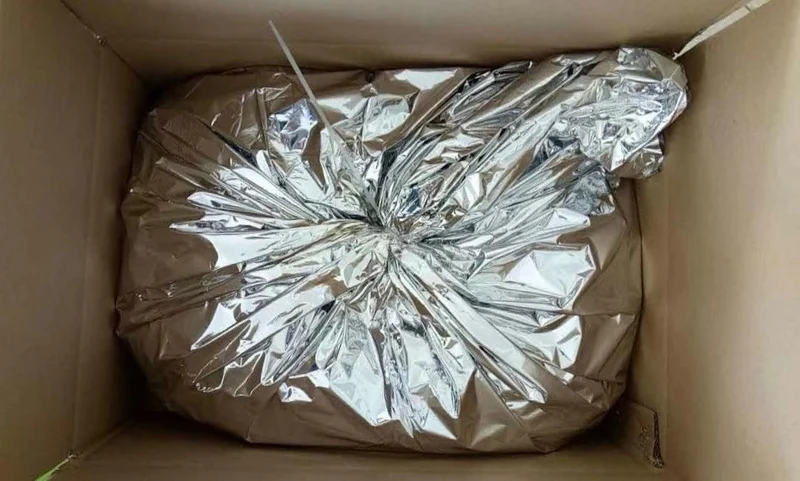
AdoroHu’s approved packaging facts distinguish bulk cartons with sealed food-grade liners, retail zip-lock stand-up pouches or tins and aluminium boxes, and single-serve sachets. These are different closure systems, so an integrity plan must bind the exact format and component revision. The profile confirms available formats; it does not claim that every format passed one common leak method.
Integrity does not prove the barrier performance of the film itself. Oxygen transmission, moisture barrier, light protection, and seal continuity are related but separate characteristics. Use the matcha packaging materials guide for material questions while keeping this test plan focused on the completed seal.
Key Takeaway: Define integrity as a package-specific boundary requirement with explicit failure modes.
What packaging seal failures should a buyer map first?
Map channels, wrinkles, product contamination in the seal, incomplete fusion, punctures, cuts, delamination, closure misalignment, and transport damage. Each defect has a likely origin and may need a different detection method.
| Failure mode | Possible process source | Consequence to assess |
|---|---|---|
| Channel or wrinkle | Jaw alignment, tension, fold | Continuous leak path |
| Product in seal | Fill control, dust, handling | Local weak or open area |
| Incomplete seal | Temperature, pressure, dwell | Low strength or leakage |
| Puncture | Product edge, handling, transit | Package-wall breach |
| Delamination | Material or heat incompatibility | Progressive boundary loss |
Inspect real failed packages before writing an acceptance plan; generic defect names often hide very different geometries.
Key Takeaway: Start with the physical failure and its consequence, then choose detection.
How do packaging seal strength and integrity differ?
Seal strength quantifies the force response of a prepared seal specimen under a defined method. Integrity detects or locates an unintended opening in the complete package or seal region. A strong strip can sit beside a narrow channel, while a leak-free sample can still have insufficient margin for distribution stress.
ASTM describes F88/F88M as a method for seal strength of flexible barrier materials. Use the current purchased standard and qualified laboratory interpretation; do not copy a force limit from another package.
F88/F88M-23 also makes specimen geometry and loading configuration part of the result. The buyer should therefore record specimen width, cut location, seal orientation, grip arrangement, and failure mode with the force data. Comparing values from different specimen preparations as though they were one series can create a false trend.
Key Takeaway: Use strength and integrity evidence for their separate decisions.
Which packaging seal integrity test fits each failure mode?
Select the method by package type, expected defect, sensitivity need, destructive or nondestructive use, production speed, and ability to reproduce the actual package state.
| Method family | Useful question | Limitation to manage |
|---|---|---|
| Visual inspection | Is there an observable fold, contamination, or incomplete area? | Cannot detect every hidden channel |
| Bubble emission | Does gas escape from a submerged pressurized package? | Destructive and setup-sensitive |
| Vacuum decay | Does package pressure behavior indicate leakage? | Needs validated fixtures and package volume |
| Dye penetration | Can liquid enter a suspected seal path? | Destructive; interpretation and contamination matter |
| Ultrasonic inspection | Is seal structure locally inconsistent? | Equipment and defect signature require validation |
| Peel strength | How does a defined seal strip separate? | Does not test the entire package for leaks |
Do not choose the most sensitive instrument by default. Choose a method that detects the defect that matters at a useful production point.
ASTM D3078-02(2021)e1 covers gross leaks in flexible packaging that contains headspace gas. It draws a vacuum around an immersed pack and observes bubble emission. Its scope warns that small leaks may be missed and that product or viscoelastic effects can plug openings. That makes it a bounded gross-leak method, not proof that a powder pouch has no smaller channel.
ASTM F2338-24 uses vacuum decay: pressure rise in an evacuated chamber indicates gas leaving the package or volatile liquid behavior near a leak. The official ASTM F2338 record includes flexible nonporous packages and packages containing solids among possible applications. Fixtures, package volume, contents, and validated sensitivity still belong to the specific method setup.
ASTM F2096 uses internal pressurization and bubble emission for gross leaks in packaging, a different mechanism from D3078’s vacuum chamber. It is destructive and requires a controlled pressure and observation method. Do not interchange its setup or detection claims with D3078 merely because both show bubbles.
ASTM F1929-23 is a dye-penetration method for porous medical-package edge seals formed between transparent and porous materials. Its official scope says it is visual, localized, and nonquantitative. That makes F1929 poor support for an ordinary nonporous matcha pouch; ASTM F3039 is the dye-penetration family to evaluate for nonporous packaging. Method names must follow package construction.
Key Takeaway: Match the test principle to the package, defect, and decision.
How should a packaging sealing line be qualified?
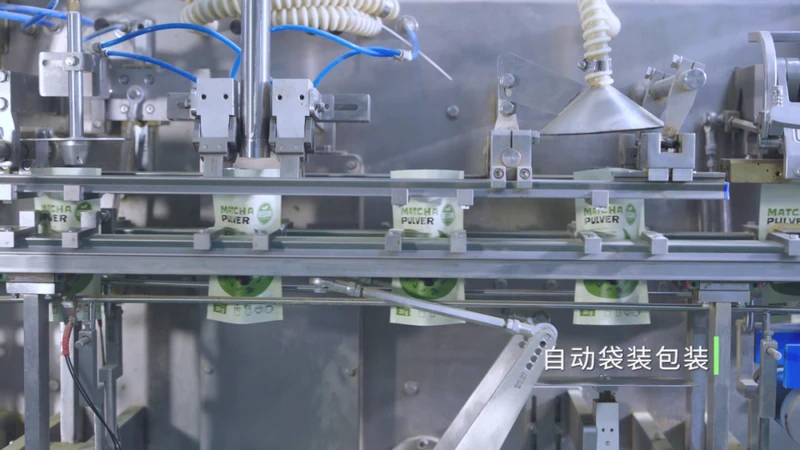
Qualification should challenge the operating window for temperature, pressure, dwell, speed, alignment, material lot, and representative product contamination. Record actual settings and package positions, not only machine recipes.
Use the method evidence to assign different jobs. F88 can track how a defined seal specimen separates, D3078 or F2096 can expose certain gross leaks, and validated vacuum decay can support nondestructive detection. None independently establishes film oxygen transmission, distribution survival, or shelf life. Qualification needs a package-specific combination whose blind known-defect trials demonstrate the intended decisions.
ASTM F2338 describes vacuum decay as useful for optimizing sealing parameters and comparatively evaluating packages and materials. In qualification, that supports a designed comparison across challenged settings after the fixture and package-specific response are validated. It does not authorize copying a detection limit or acceptance threshold from another package system.
Include sound controls, known defects, and repeat measurements during method development. If operators cannot distinguish the challenged defects from sound packages under the written procedure, the method is not ready for an acceptance rule. Record false indications and invalid tests rather than removing them from the development history.
Test across lanes, jaw positions, startup, steady state, restart, and planned extremes. A centerline trial alone can miss edge cooling or transient packages. Set a proven operating range from acceptable packages rather than widening limits to match current variation.
Document how the line reaches steady state and how packages produced during warm-up are handled. Record planned stops, film splices, roll changes, cleaning, and alarm resets because these events can change tension, temperature recovery, or seal-area contamination. Sample by event as well as by clock when the process history indicates an elevated risk. This creates evidence around the moments most likely to produce a defect instead of concentrating all tests in stable production.
Key Takeaway: Establish an operating window from challenged, traceable package evidence.
What should routine packaging seal inspection include?
Routine inspection should combine setup verification, seal-area cleanliness, visual checks, relevant measurements, and periodic integrity or strength testing. Frequency should follow process risk, speed, capability, and change history; no universal sample count fits every line.
| Control point | Record | Escalation trigger |
|---|---|---|
| Startup | Material, recipe, jaw condition | Wrong revision or contamination |
| In-process | Position, appearance, settings | Drift or repeated defect |
| Test sample | Method, result, package identity | Failure or unusual trend |
| End/restart | Last-good and first-good package | Unbounded affected quantity |
Key Takeaway: Make routine checks traceable to time, line, position, material, and disposition.
How should seal-integrity acceptance criteria be established?
Acceptance criteria should come from product protection needs, package design, method capability, sealing-process evidence, and distribution validation. Separate an instrument limit from a product acceptance limit.
ASTM F1929 states that its dye-penetration procedures are visual, localized, and nonquantitative and that no leak size can be inferred. Although its porous medical-package construction is not the normal matcha-pouch case, the scope demonstrates why acceptance language must follow the chosen method. A qualitative pass/fail observation cannot be rewritten as a quantitative leak-rate limit.
Define valid tests, invalid-test handling, retest authority, trend limits, and lot disposition before testing. Repeating samples until one passes destroys the link between the observed failure and affected production.
Confirm that the measurement system can distinguish the conditions used for the decision. Challenge it with known acceptable and deliberately created defect samples where appropriate, and record operator, fixture, calibration or verification status, environmental conditions, and software settings. A highly repeatable instrument can still give the wrong business answer if the fixture masks a seal area or the defect set does not represent production.
Use alert and action rules carefully. A drift inside the acceptance limit may justify maintenance or increased sampling without automatically rejecting a lot. A result outside the limit requires the predefined containment and disposition path. Keep these two responses separate so operators do not quietly widen acceptance to avoid line interruption.
Key Takeaway: Predefine valid results, acceptance, retest, and disposition authority.
When should packaging seal integrity be reverified?
Reverify after changes that can alter the seal interface or package stress: film structure, coating, supplier, thickness, ink coverage, pouch geometry, closure, sealer, jaw, controls, line speed, fill, headspace, cleaning, or distribution route.
Treat unexplained cosmetic change near the seal as a verification trigger even when routine tests pass. Discoloration, imprint, or wrinkle changes can be early evidence of a shifted thermal or mechanical process.
Key Takeaway: Use a defined change list plus observed drift to trigger review.
How should distribution stress enter seal-integrity testing?
Test packages before and after representative conditioning and distribution simulation. Compression, vibration, drop, altitude, temperature, and handling can reveal weaknesses that leave the line apparently intact.
The test plan must match the actual case pack and route. Do not claim a distribution simulation proves shelf life or every shipment condition; it provides bounded evidence for the challenged configuration.
Key Takeaway: Verify seals after realistic package and route stresses, with scope stated.
What records support a packaging seal investigation?
Retain package lot, film lot, artwork and specification revision, line and lane, operator, machine settings, timestamp, sample point, method revision, equipment status, raw result, photographs, retained samples, and disposition. Link complaints back to this history.
When a failure occurs, bound the affected quantity using the last verified acceptable check, the first confirmed failure, line events, and restart evidence. Quarantine that range while the team examines actual packages and process history. A failure investigation should compare defect location with jaw position, lane, pouch orientation, and product contamination; these relationships can distinguish a material issue from a local machine or handling cause.
Close the investigation only after recording correction, root-cause evidence where available, affected-lot disposition, and verification of the action. Replacing a rejected sample is a commercial response, not proof that the sealing process was corrected.
Use the matcha quality complaint workflow to preserve lot and sample evidence. Contact AdoroHu Matcha for relevant product and packaging records when planning a supplied format.
Key Takeaway: Preserve enough identity and raw evidence to reconstruct the seal decision.

FAQ
- What does packaging seal integrity mean?
- It means a defined package boundary has no unacceptable channel, hole, contamination path, weak area, or closure failure under specified conditions.
- How do you check seal integrity?
- Select visual, leak, imaging, penetration, or strength methods according to the package, expected defect, sensitivity, and decision.
- Is seal strength the same as integrity?
- No. Strength measures force on a specimen; integrity addresses unintended paths through the complete seal or package.
- Can visual inspection prove a pouch is leak-free?
- Visual inspection finds observable defects but cannot establish that every hidden leak path is absent.
- How often should seals be tested?
- Set frequency from process risk, speed, capability, change history, and applicable requirements rather than a universal count.
- What changes require revalidation?
- Reassess material, geometry, closure, sealer, jaw, settings, speed, fill, cleaning, case pack, and route changes that can affect the seal.
Conclusion
Consistent seal decisions come from a failure-mode map, qualified operating window, suitable methods, disciplined sampling, and change-triggered verification. Keep strength, leak detection, barrier, and distribution claims within the evidence each test provides.