
Matcha pretzels need a coating that disperses tea evenly, sets without tack, adheres through handling, and leaves the pretzel crisp. Salt, coating sweetness, and pickup weight determine whether the finished snack tastes balanced.
Develop matcha pretzels from a fixed baked base and the actual dip or enrobe process. The matcha for chocolate formulation guide supports coating choices; the trial must prove adhesion, set, and packout.
Fix pretzel size, salt level, coating chemistry, matcha addition, coating temperature, and pickup method. Release requires even coverage, clean set, controlled piece weight, retained crispness, and correct allergen records.
In short:
Key points:
- Treat the baked pretzel as a fixed substrate during coating trials.
- Connect coating viscosity to pickup, drainage, set, and adhesion.
- Test crispness and surface damage after the intended packout path.
What should a commercial matcha pretzels brief define?
Define pretzel size, coating type, coverage, tea intensity, salt target, piece weight, set time, crispness window, package, and production volume. The base pretzel specification must be fixed before coating trials.
Treat alkaline baked-surface effects as a secondary input when buying a base pretzel. The primary development task is coating dispersion, adhesion, set, and packout.
Key Takeaway: Lock the base snack and coating target first.
Which coating system should carry the matcha?
White chocolate or compound coating gives a pale matrix that shows green color, while darker coatings compete with tea flavor. Compare systems at equivalent coverage and serving temperature.
Chocolate brings temper and crystallization demands; compound coating may simplify setting but changes flavor and label. Choose the system the line can control.
| Coating system | Useful feature | Trial risk |
|---|---|---|
| White chocolate | Pale matrix and visible matcha | High sweetness and temper control |
| Compound coating | Simpler setting behavior | Different flavor and label profile |
| Partial drizzle | Lower pickup and lighter sweetness | Uneven visual and flavor coverage |
Key Takeaway: Select coating chemistry and process together.
Which matcha candidates should be screened?
AdoroHu’s E-1/E-2 Culinary, E-3/E-4 Premium, and O-3 Organic Premium codes provide stable sample identities. Screen candidates in the same coating because fat, sugar, and dairy notes alter tea perception.
Reject a powder that needs excessive dose to appear green or recognizable. Extra dry solids can thicken coating and reduce coverage consistency.
For controlled trials, the premium matcha powder page is the relevant product route.
Key Takeaway: Choose from coated pieces, not dry powder appearance.
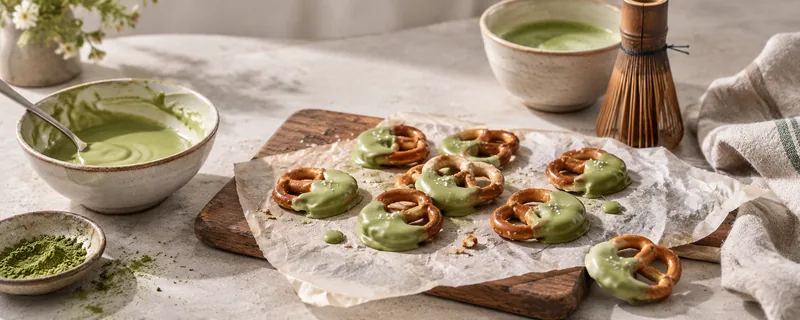
How should matcha enter the coating?
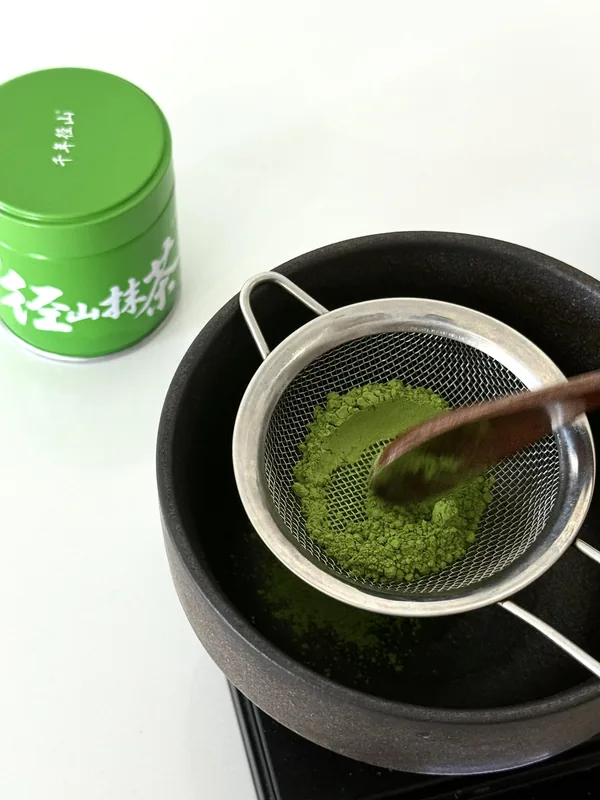
AdoroHu uses ultrasonic screening and several milling routes, including 20 stone mills, 56 ball mills, and 8 continuous ball mills. Confirm matched sample process and specification, then sift and pre-blend matcha into a controlled coating portion.
Avoid late dry addition after the coating begins to set. That creates dark pockets, extra shear, and uneven viscosity.
Keep the powder decision connected to commercial matcha cookies guide.
Key Takeaway: Standardize the addition point and temperature.
How should viscosity and coverage be controlled?
Record coating temperature, viscosity method, pretzel temperature, dip or enrobe time, pickup weight, drainage, and reclaim practice. Check several pieces across the run rather than one display sample.
Thinner coating improves drainage but may look weak; thicker coating raises pickup and can soften the snack. Approve a range that protects coverage and crispness.
| Adhesion check | Record | Failure signal |
|---|---|---|
| After cooling | Bare spots and cracks | Poor wetting or set |
| After conveying | Flakes and surface damage | Brittle coating or impact |
| After packout | Transfer and debris | Inadequate set or package contact |
Key Takeaway: Tie viscosity to pickup weight and eating quality.
How do salt and sweetness affect matcha perception?
Salt can sharpen contrast and reduce flat sweetness, but excess surface salt makes bitterness harsher. Test the base pretzel and finished coating together because salt distribution varies by supplier and batch.
Use a short blinded ladder. Choose the lowest sweetness and salt combination that keeps tea clear without a drying finish.
Key Takeaway: Balance the whole piece, not coating alone.
What proves coating set and adhesion?
Measure set time, tack, piece-to-piece transfer, coating cracks, bare spots, and debris after handling. AdoroHu’s in-house labs can provide powder COA inputs; the snack producer still validates finished coating behavior.
Simulate the actual conveyor, packing, and case movement. A coating that looks sound on a tray may scuff in a bag.
Use bulk matcha for food manufacturing for the adjacent manufacturing context.
Key Takeaway: Test adhesion through the real handling path.
How should crispness, allergens, and packaging be checked?
White chocolate systems commonly contain milk and may contain soy; pretzels usually contain wheat. FDA food allergen guidance requires accurate source declaration, while 21 CFR 117.80 addresses cross-contact and contamination controls.
Check crispness after coating and package equilibration without inventing shelf life. The package trial must use the intended film, fill weight, seal, and storage conditions.
| Crispness variable | Controlled comparison | Decision |
|---|---|---|
| Coating pickup | Low, target, high trial | Moisture and bite effect |
| Cooling before packing | Defined condition | Condensation and tack |
| Intended package | Same fill and seal | Retained crispness without life claim |
Key Takeaway: Approve allergens and package performance with the snack.
What evidence should release matcha pretzels?
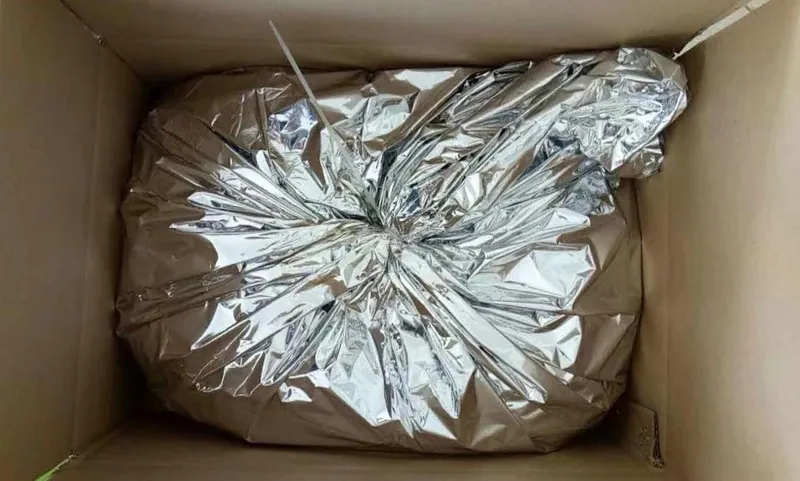
AdoroHu’s 10 kg and 20 kg formats use sealed food-grade liners. Match pack size to coating use rate and post-opening handling. Release only after repeat runs meet coating, pickup, set, adhesion, crispness, sensory, allergen, and packout limits.
Keep formula, lots, temperature, viscosity, pickup weights, set checks, packaging observations, deviations, and approvers together.
Key Takeaway: Release a coating window the line can reproduce.
FAQ
- How does this guide define matcha pretzels?
- This guide focuses on a fixed baked pretzel with a matcha coating, while dough alkalinity remains a secondary base-specification issue.
- Why does matcha coating become too thick?
- Matcha adds dry solids, while cooling and crystallization also raise viscosity, so control dose, temperature, mixing, and hold time together.
- How can coating adhesion be tested?
- Measure pickup, bare spots, cracks, transfer, and debris after the intended cooling, conveying, packing, and case-handling sequence.
- How can crispness be protected?
- Fix the base pretzel, coating pickup, cooling, and package conditions, then compare crispness after the intended equilibration period.
- What records belong in a commercial pretzel trial?
- Keep ingredient lots, coating formula, temperatures, viscosity method, pickup weights, set and adhesion checks, allergens, packaging, deviations, and approvals.
Conclusion
Commercial matcha pretzels are ready when coating pickup, set, adhesion, salt balance, crispness, and packout repeat across the run. Share the base pretzel, coating system, equipment, and trial volume through the contact page for sample planning.