
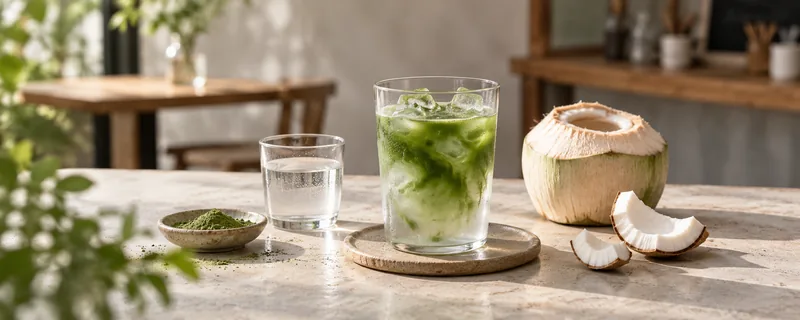
Matcha coconut water has little body to slow tea sediment, while a coconut-cloud version adds foam density, drainage, and layer integration. The mixed drink and cloud format need separate assembly and service decisions.
Develop matcha coconut water with one exact coconut-water SKU, ice mass, and serving vessel. The matcha coconut milk formulation covers a richer base; this drink needs thin-base dispersion and optional cloud-layer controls.
Fix the coconut water, matcha concentrate, sweetness, assembly order, and service time before comparing samples. Release the mixed or cloud drink only when flavor, sediment, layer behavior, and allergens stay within the intended window.
In short:
Key points:
- Approve mixed and layered formats as separate service protocols.
- Measure sediment in the thin phase and drainage in the cloud phase.
- Evaluate the first several sips, not only the untouched visual layer.
What should a matcha coconut water brief define?
Define whether the product is a fully mixed drink or a layered cloud, plus serving size, ice, tea intensity, sweetness, foam, visual life, and service time. These are different menu systems.
Lock the coconut water specification and cloud ingredients before adjusting matcha. Brand-to-brand mineral and sugar differences can change flavor and density.
Key Takeaway: Choose mixed or layered architecture first.
How should coconut water bases be compared?
Run matched formulas with the same matcha, ice, sweetener, and process. Record ingredient statement, soluble-solids method if used, pH, sweetness, salt perception, aroma, and sediment.
A sweeter base may need less added sugar but can flatten tea. Choose the base that delivers balance at the lowest complexity.
| Format | Main control | Failure to watch |
|---|---|---|
| Fully mixed drink | Dispersion and remix | Fast green sediment |
| Matcha-over-coconut layer | Density and pour order | Immediate mixing or streaks |
| Coconut cloud over matcha | Foam structure and drainage | Stable-looking foam that drinks poorly |
Key Takeaway: Compare exact coconut-water SKUs.
Which matcha candidates should be screened?
AdoroHu’s E-1/E-2 Culinary, E-3/E-4 Premium, and O-3 Organic Premium codes provide stable sample identity. Compare them in the same coconut water and at the intended temperature.
Thin bases expose roughness quickly. Select the lowest dose and grade combination that keeps tea clear without a dry finish.
For controlled trials, the premium matcha powder page is the relevant product route.
Key Takeaway: Choose from the finished drink.
How should matcha be dispersed in a thin base?
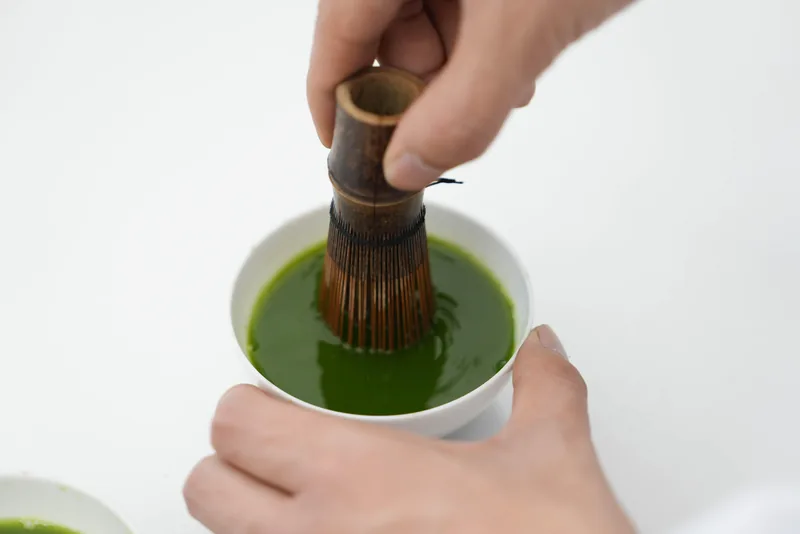
AdoroHu uses ultrasonic screening and multiple milling routes, including 20 stone mills, 56 ball mills, and 8 continuous ball mills. Confirm matched process and specification, then standardize sifting, concentrate ratio, temperature, and shear.
Coconut water does little to slow settling. Evaluate immediately and at the end of service, including any remix instruction.
Keep the powder decision connected to matcha beverage brands guide.
Key Takeaway: Design for suspension and service time.
How should sweetness and acidity be balanced?
Adjust sweetness only after locking the coconut water because the base contributes its own sugar, minerals, and acidity. Use a small blinded ladder and record tea aroma, bitterness, salt perception, and finish.
Avoid using sweetness to hide a harsh powder. That increases cost and makes base-lot changes harder to detect.
| Coconut-water variable | Record | Sensory consequence |
|---|---|---|
| Exact SKU | Sugar, minerals, ingredients | Base-to-base flavor drift |
| Ice mass | Weighed amount | Dilution and temperature |
| Sweetener addition | Formula weight | Tea clarity and salt perception |
Key Takeaway: Use sweetness to balance, not rescue.
What makes a coconut cloud layer stable?
A cloud needs defined fat, protein or stabilizer system, aeration method, density, portion, and hold. Test layer height, drainage, mixing at consumption, and flavor balance with the lower coconut-water phase.
A stable foam can still be a poor drink if it refuses to integrate. Approve both the visual layer and the first several sips.
Key Takeaway: Test cloud appearance and drinking behavior.
What measurements belong in the trial?
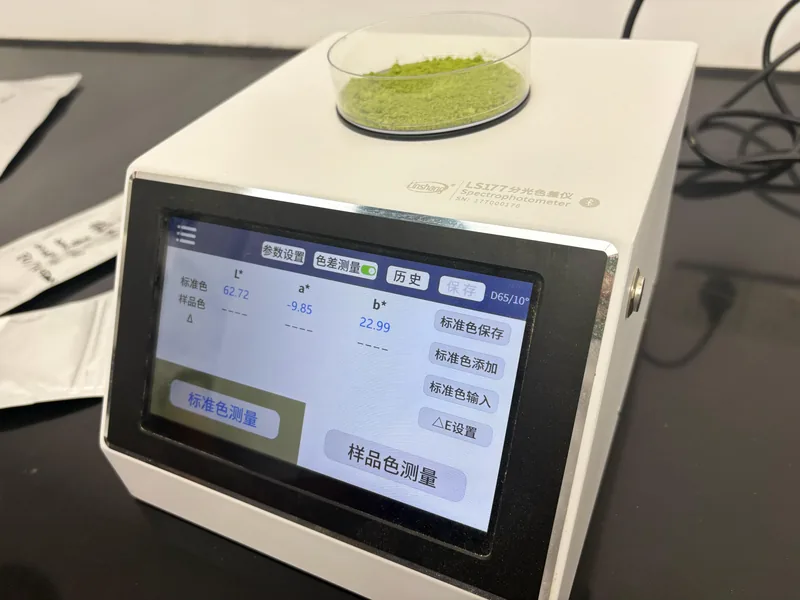
AdoroHu’s in-house labs can support lot-linked powder COA inputs; the café or beverage developer validates the finished drink. Record ingredient masses, pH, temperature, layer height where relevant, sediment, color, service time, and sensory result.
Use the same vessel, ice mass, lighting, and elapsed time. Layered drinks are especially sensitive to uncontrolled presentation.
Use matcha café recipe guide for the adjacent manufacturing context.
Key Takeaway: Measure the served format.
How should sanitation and allergens be reviewed?
Cloud components may add milk, soy, coconut, or other label-relevant ingredients. FDA food allergen guidance and 21 CFR 117.80 support accurate labeling and controls against cross-contact, contamination, and deterioration.
Do not infer shelf stability from coconut water, refrigeration, or visual freshness. Follow the approved process and service discard rules.
| Cloud assembly check | Observe | Decision |
|---|---|---|
| Layer height | Immediately and during service | Visual hold |
| Drainage | Liquid release into lower phase | Texture change |
| First several sips | Foam-to-liquid integration | Actual drinking experience |
Key Takeaway: Review the complete drink, not matcha alone.
What evidence should release matcha coconut water?
AdoroHu’s 10 kg and 20 kg formats use sealed food-grade liners. Match pack size to café or batch use and post-opening storage. Release only after repeat trials meet flavor, dispersion, sediment, layer, service, allergen, and operational limits.
Keep formula, exact base, lots, process, vessel, ice, timing, deviations, and approvers together.
Key Takeaway: Release the exact mixed or cloud service protocol.
FAQ
- Is matcha coconut water the same as matcha coconut milk?
- No. Coconut water is thinner and usually provides less fat and suspension support, while coconut milk creates a different body and flavor system.
- Why does matcha settle quickly in coconut water?
- Matcha is suspended rather than dissolved, and the thin base provides little resistance to particle settling.
- What is a coconut matcha cloud?
- It is a layered service format with coconut water below and a separate matcha or cream foam above, requiring density and drainage control.
- Can one formula serve mixed and layered drinks?
- The same ingredients may appear in both, but dispersion, portioning, density, foam, and drinking behavior need separate approval.
- What records belong in a commercial coconut-water trial?
- Keep exact coconut-water SKU, formula, lots, ice, mixing, layer or sediment checks, service time, allergens, deviations, and approvals.
Conclusion
Matcha coconut water is ready when the thin drink stays balanced and the optional cloud layer assembles, drains, and integrates as intended. Share the exact coconut water, format, service method, and trial volume through the contact page for sample planning.