
A matcha specification change should enter a controlled review before the buyer accepts new material, documents, or production settings. Otherwise, a small revision to colour, sensory tolerance, process, test method, packaging, or origin evidence can reach production before its effects are understood. Start by comparing the proposal with the current approved specification and the buyer's intended application, using the existing matcha specification sheet as the baseline.
The immediate pressure is usually commercial: supply must continue, labels and purchase orders have deadlines, and the supplier may propose a short effective date. Rushing the decision can create rejected finished goods, conflicting COAs, or an untraceable mix of old and new material. A written review keeps those consequences visible before anyone changes the approved state.
“Treat every proposed change as a claim that needs evidence, ownership, and an effective date. Approve the revised state only after the evidence matches the risk and the intended application. Keep the old and new revisions traceable through the first commercial lots.”
In short:
Key points:
- Define exactly what changes and what remains unchanged.
- Match the evidence burden to quality, safety, regulatory, sensory, and operational impact.
- Release the new revision only after approvals, document updates, and first-lot verification agree.
What counts as a material matcha specification change?
A material matcha specification change is any revision that can alter product identity, acceptance, regulatory status, application performance, or the evidence used for release. The trigger may sit in the specification itself or in a linked process, method, package, supplier site, formulation, or certificate.
The reviewer should compare revisions field by field. A wording correction with no changed meaning can follow a document-only path. A different analytical method, sensory range, ingredient statement, organic claim, liner, sterilisation step, or manufacturing location deserves an impact assessment because it can change how the buyer releases or uses the powder. The public scope of ISO/TR 21380:2022 also shows why product identity and manufacture belong in the discussion, while its abstract does not provide a complete commercial pass/fail specification.
| Change class | Typical example | Buyer response |
|---|---|---|
| Document only | Typo or clearer field name with unchanged meaning | Confirm equivalence and archive the revision |
| Quality or process | Revised sensory range, grind, screen, blend, or heat step | Assess application and lot-comparison evidence |
| Safety or regulatory | Changed test, allergen statement, claim, origin evidence, or certification scope | Escalate to qualified QA or regulatory review |
| Packaging or logistics | New liner, carton, seal, storage instruction, or shelf-life basis | Review barrier, handling, label, and validation effects |
Key Takeaway: Materiality follows the possible consequence, not the number of edited words.
What must a supplier include in a matcha change notification?
A useful change notification states the current condition, proposed condition, reason, affected products and lots, evidence, and requested effective date. It should also name what the supplier believes is unchanged so the buyer can test that claim.
Ask for a redlined specification, linked process or packaging documents, affected grade codes, inventory transition plan, and the person authorised to answer technical questions. If samples or reports support the proposal, their identities must connect to the revised product. For buyers planning a supplier transition, the same discipline prevents an apparently equivalent powder from entering production without a documented comparison.
Reject vague notices such as “quality improvement” or “minor update” until the underlying difference is visible. Those phrases cannot support a disposition decision.
Key Takeaway: A notice is complete when another reviewer can reproduce the comparison without guessing.
How should buyers classify quality, safety, regulatory, sensory, and operational impact?
Buyers should classify each affected pathway separately, then use the highest credible consequence to set the review route. One proposal can be low impact for powder appearance but high impact for a private-label claim or production line.
Use a cross-functional screen rather than a single quality score. QA can own product acceptance, regulatory staff can assess destination-market and artwork effects, and operations can test dosing, dust, dispersion, or bake performance. Procurement still owns the commercial transition but should not override technical holds.
| Impact area | Review question | Evidence that may be needed |
|---|---|---|
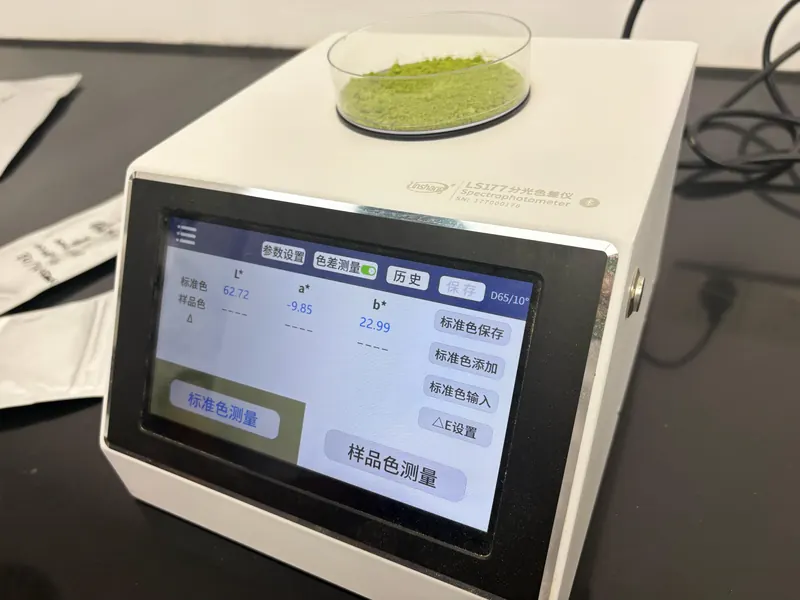
| Quality | Could the revision move a controlled attribute or approved reference? | Comparative COAs, retained samples, sensory or instrumental results |
| Safety | Could it affect a hazard, control, test, or exposure? | Hazard review, method rationale, supplier records, qualified laboratory evidence |
| Regulatory | Does a market claim, label, certificate, or import record change? | Current scope documents and market-specific review |
| Sensory/application | Could users see, taste, mix, fill, or process it differently? | Blind comparison and pilot in the intended formula |
| Operational | Must receiving, ERP, artwork, production, or inventory controls change? | Transition plan, revised master data, line trial |
Key Takeaway: Choose the review path by the most serious plausible effect, then document why lower paths were ruled out.
When can existing validation evidence transfer to the revised specification?
Existing evidence can transfer only when the changed factor does not undermine the study material, method, package, process, or intended use behind that evidence. The supplier should map each prior report to the proposed state instead of presenting an undifferentiated document bundle.
For example, a shelf-life study on one liner may not support a different barrier structure. A sensory approval may not transfer if the blend or processing step changes. A laboratory method comparison needs more than matching units when extraction, detection, or reporting rules differ. Review the original purpose, tested samples, acceptance criteria, and deviations before declaring evidence applicable.
AdoroHu's production assets include 20 stone mills, 56 ball mills, 8 continuous ball mills, and an ultrasonic screening system. These are distinct available routes, not evidence that results from one route automatically transfer to another. A proposed milling or screening revision should name the affected equipment route and show whether particle behaviour, colour, sensory performance, and application evidence remain applicable. That lets the buyer target a bridge comparison instead of accepting an unsupported equivalence claim.
This is also where shelf-life validation should remain separate from a generic specification claim. Stability evidence must fit the product and package being approved.
Key Takeaway: Transfer evidence by a documented equivalence argument, not by file age or familiar report titles.
When is bridge testing enough, and when is full requalification required?
Bridge testing is enough when a focused comparison can answer the remaining uncertainty without reopening the entire approval. Full requalification is appropriate when identity, hazard control, certification scope, intended use, or several interacting variables change.
Choose bridge testing for a bounded change such as a new method with demonstrable comparability, provided the product and decision criteria remain stable. Choose requalification when the proposed state changes the basis of approval or makes prior performance evidence unreliable. A conditional approval may support a limited pilot, but it should name the quantity, duration, controls, and exit decision.
Practitioner decision: avoid accepting a paper bridge when the risk appears only in the finished application. The operational consequence is late discovery during mixing, filling, baking, or consumer use.
Key Takeaway: Test the uncertainty that could change the decision; reopen qualification when the approval basis itself changes.
How should retained samples and the approved reference be used?
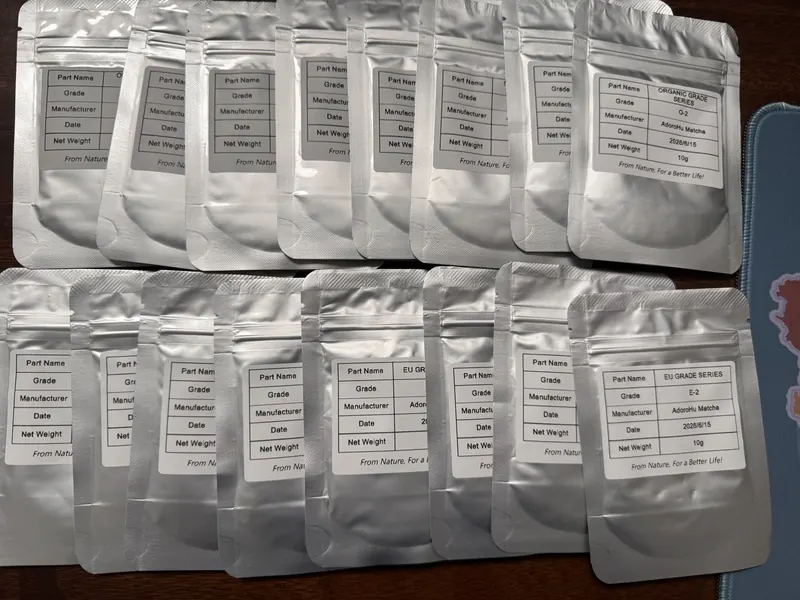
Retained samples should anchor a controlled side-by-side comparison between the approved state and the proposed state. Record lot identity, storage history, opening history, preparation, assessor conditions, and the reason the reference is still suitable.
Aged powder is not a permanent truth standard. Colour, aroma, moisture exposure, and handling can move over time, so a suspect retained sample can create a false difference or hide a real one. When the reference must be replaced, bridge it to the previous reference while enough suitable material remains.
For AdoroHu's E-1 to E-7 and O-1 to O-6 series, code identity and tier remain useful commercial descriptors, but a revision decision should still name the actual attributes under review. A deeper colour within a series does not replace application testing or prove universal quality.
Key Takeaway: A retained sample supports comparison only when its identity and condition remain controlled.
Who approves, rejects, or conditionally accepts the change?
Approval authority should follow the affected risk and be defined before the supplier's deadline. Procurement coordinates the response; qualified technical owners approve the parts that fall within their responsibility.
Create a short responsibility matrix covering specification owner, QA, regulatory, product development, operations, artwork, and procurement. State who can place or remove a hold. If one function has insufficient evidence, the overall status stays pending even when other reviewers accept their portions.
| Decision | Required record | Operational result |
|---|---|---|
| Approve | Signed assessment, evidence list, revision and effective date | Controlled implementation may begin |
| Reject | Reason tied to requirement or unresolved consequence | Current approved state remains in force |
| Conditional approval | Defined pilot scope, extra checks, owner, expiry and exit criteria | Limited use under named controls |
| Request evidence | Open questions and required response format | No implementation until review resumes |
The approval record should show the evidence reviewed, unresolved questions, decision owner, and implementation conditions. It should not prescribe one universal verification frequency when supplier performance, ingredient risk, and intended use differ.
Key Takeaway: Nobody should infer approval from silence, a purchase order, or an approaching production date.
How should purchase orders, COAs, artwork, and contracts move to the new revision?
All controlled records should move on one explicit effective-date rule tied to lot, production date, shipment, or another traceable event. A calendar date alone can fail when old inventory remains in transit or at a contract packer.
Update the master specification, purchase-order language, COA template, item master, receiving instructions, quality agreement, artwork, and approved reference as applicable. Record how old stock will be consumed, segregated, returned, or relabelled. The receiving team needs a simple way to identify which revision applies to each delivery.
Practitioner decision: avoid simultaneous acceptance of two revisions unless the inventory rule can distinguish them. The consequence is an ambiguous release decision and weak complaint traceability.
Key Takeaway: The effective date is a traceability rule that every receiving and production record can apply.
What should be checked in the first commercial lots after implementation?
The first commercial lots should receive heightened checks that target the predicted effects of the change. The plan may include document identity, COA fields, packaging, sensory comparison, process behaviour, finished-product colour, yield, complaints, or market-specific records.
Define how many initial lots or how much time the heightened period covers based on risk and normal variability; do not borrow a universal number. Compare observations with both the revised criteria and the pre-change baseline. If testing is used as a verification activity in a U.S. food-safety context, 21 CFR 117.165 supports written procedures that identify analytes, lot relationship, method, laboratory, frequency, and corrective actions when the rule applies.
Close the change only after the implementation evidence is reviewed and any unexpected result has a disposition. Early lot release and final change closure are different decisions.
Key Takeaway: Verify the predicted effects in real commercial lots before returning to routine controls.
How should emergency changes and deviations be handled?
Emergency changes and deviations should use an expedited, time-limited route with the same traceability as planned changes. Urgency can shorten the meeting schedule, but it cannot make the impact or decision owner disappear.
Record the immediate reason, affected lots, temporary controls, authorised use, expiry, and follow-up evidence. Hold material when safety, legality, or identity is unresolved. If continuity requires an alternate grade or package, test the actual application and record customer or artwork effects before use.
AdoroHu Matcha operates production in Jingshan, Hangzhou and international business and export operations in Shenzhen. Buyers evaluating a proposed revision can discuss the intended product, evidence package, and transition needs for wholesale matcha supply, but the buyer's qualified team should set its own acceptance and market requirements.
Key Takeaway: An emergency route is faster governance with an expiry, not an undocumented exception.
FAQ
- Can a supplier implement a matcha specification change before buyer approval?
- Only when the governing agreement and the buyer's authorised process allow it; otherwise, keep the current approved revision in force until the decision is documented.
- Does a new COA template always require requalification?
- No. Compare the fields, methods, units, limits, lot linkage, and meaning; use a document-only route only when the underlying evidence and acceptance decision remain equivalent.
- Can a colour difference be approved from photographs?
- Photographs can support a documented visual review, but uncontrolled lighting, background, exposure, and sample depth make them weak evidence for specification equivalence.
- Who owns the effective date for a revised matcha specification?
- The buyer and supplier should agree on a traceable transition rule, while the buyer's controlled-document owner ensures receiving, production, QA, and commercial records use it consistently.
- What happens when first-lot checks fail after approval?
- Place affected material under the defined disposition process, investigate the mismatch, apply corrective action, and decide whether to suspend, revise, or withdraw the change.
Conclusion
A disciplined change review protects supply continuity because the buyer knows which evidence, documents, and lots belong to each approved state. To discuss a proposed matcha specification, comparison sample, or transition package, contact AdoroHu Matcha with the intended application and the fields under review.
Institutional Author
AdoroHu Matcha