
Matcha soy milk needs controlled trials of tea dose, soy protein, addition order, and heat before a formula is approved. A smooth first sample can develop aggregates or an unacceptable texture after processing. If the cause is missed, replacing matcha lots may add cost while the same failure returns.
Use the RTD formulation and supply guide for the wider beverage brief. This matcha soy milk guide focuses on separating protein interactions from ordinary powder settling, then connecting those findings to a reproducible buying and manufacturing decision.
Test matcha soy milk in the intended soy base and process, with tea dose and addition order controlled. Evaluate particle growth, sediment, viscosity, flavour, and the applicable soy-allergen controls before approving the formula or an ingredient substitution.
In short: Soy protein and tea polyphenols can interact, so the final beverage must establish which combinations remain acceptable through its intended use.
Key points:
- Distinguish soymilk experiments from isolated-protein and gel models.
- Use matched controls to separate matcha sediment, protein aggregation, and base defects.
- Connect the final formula to the correct allergen label and manufacturing controls.
Which matcha soy milk product should the team specify first?
Specify the matcha soy milk's use, market, serving conditions, and manufacturing route before selecting the soy base. A hot latte, an iced drink, a concentrate, and a packaged RTD create different texture and stability questions. Record dilution, steaming, service hold, package, and distribution where relevant.
Start with a sensory and physical target that purchasing and development can share. Name the desired matcha intensity, tolerated soy notes, viscosity, foam behaviour, sediment, and redispersibility. “Works with soy milk” cannot serve as a lot acceptance criterion.
| Product decision | Conditions to reproduce | Evidence to collect |
|---|---|---|
| Café service | Mixing, steaming or ice, and service hold | Pour, foam, flavour, and visible separation |
| Concentrate | Intended storage and later dilution | Recovery of the approved finished drink |
| Packaged beverage | Commercial process, fill, package, and storage | Physical, sensory, package, and safety results |
| New soy-base source | Same matcha and formula as the reference | Compatibility and declaration comparison |
Key Takeaway: Define the finished drink and its acceptance criteria before requesting interchangeable soy-base quotations.
Which soy-base details must matcha buyers keep constant?
Keep soy protein and solids, oil, minerals, pH, additives, and process history documented during matcha soy milk comparisons. Protein quantity alone does not describe the state of the protein after processing. A base change can alter several variables at once even when its nutrition label looks familiar.
Before a trial, obtain the item code, lot, specification revision, ingredient declaration, allergen statement, and relevant change-notification terms. Retain the approved base for a controlled comparison. Measure the formula's pH using the same calibrated procedure before and after processing rather than inferring it from the soy ingredient alone.
For a substitution, hold matcha dose, sweetener, mixing, and heat constant initially. If both the base and process change together, the buyer cannot tell whether a later aggregate or cooked note came from the ingredient or manufacturing. That uncertainty makes corrective purchasing slower.
Key Takeaway: Treat the specified soy base and its process history as controlled inputs to matcha approval.
Why should matcha addition order be tested around soy heating?
Test matcha addition order because heat can change how soy protein interacts with tea components. Ge and colleagues' 2022 soymilk study examined isolated epigallocatechin gallate, or EGCG, at 25°C and after heating at 100 and 121°C. It found protein binding and aggregation, with different structural effects when EGCG was added before or after heating.
The study also reported a condition using 2 mM EGCG after heating at 100°C for 10 minutes. That concentration and schedule belonged to an experiment on soy proteins and trypsin inhibitors; they are not a matcha recipe or a commercial thermal-process recommendation.
For the next pilot, compare feasible addition sequences within the manufacturer's qualified process. Keep the final composition equal and examine pre- and post-process particle growth, viscosity, colour, and flavour. Choose the sequence supported by the complete beverage result, rather than assuming late addition must preserve quality or is automatically operationally safe.
Key Takeaway: Treat addition order as a controlled process variable, with equal composition and a valid manufacturing route.
How should matcha dose be varied against soy protein?
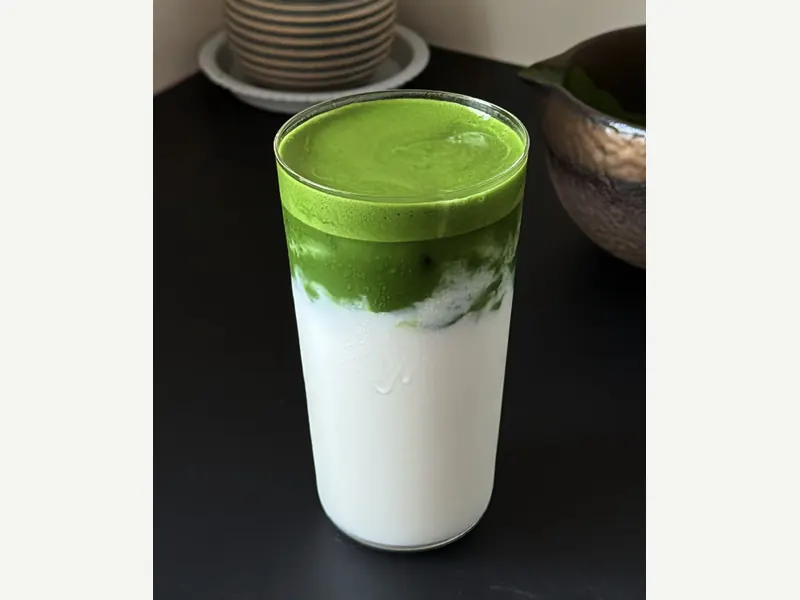
Vary matcha dose against a fixed soy base before adding other formula changes. Dai and colleagues' study, published online in 2023 and in the January 2024 volume of Food Hydrocolloids, compared soy protein isolate with catechin and EGCG. Increasing polyphenol concentration promoted interactions associated with insoluble aggregates; the EGCG complex also differed from the catechin complex.
This was an isolated-protein system rather than whole matcha in commercial soymilk. Its useful implication is to test a dose response instead of assuming a proportional improvement in flavour or colour as more matcha is added. Whole powder introduces particles and multiple compounds, so its dose cannot be calculated from an isolated EGCG experiment alone.
Use the latte powder selection guide to shortlist candidates, then compare them in the chosen soy base. Prefer the lowest dose that meets the finished sensory target without unacceptable aggregation; buying more intense powder or adding more tea is not a substitute for compatibility testing.
Key Takeaway: Look for the point where added matcha stops improving the drink and begins worsening texture or separation.
Which mixing controls keep a matcha soy milk trial interpretable?
Control pre-wetting, dilution, shear, addition rate, and aeration so mixing differences do not obscure matcha soy milk compatibility. A concentrated slurry changes the local conditions where it enters the soy base. Record both its composition and how it is incorporated, then keep the final formula matched across trials.
In practice, compare the drink after the complete mixing and rest procedure rather than immediately after a high-shear burst. Note visible lumps, surface foam, wall deposits, and material left in the vessel. A nominal powder dose is misleading if an unmeasured portion never reaches the finished sample.
Choose a sequence that the pilot plant can reproduce without unusual manual intervention. If the bench procedure needs repeated scraping or an exceptionally slow addition, quantify that step and test it at the next scale. Otherwise, a laboratory success can become inconsistent yield and texture on the line.
Key Takeaway: Record how much matcha reaches the drink and how it is incorporated, not only the weighed recipe.
How can buyers distinguish matcha sediment from soy flocculation?
Distinguish matcha soy milk failures by observing the unshaken sample, its layer pattern, and its response to a standardized redispersion step. Bottom green sediment suggests a particle-rich layer; visible clusters or serum separation warrant investigation of the protein system. These are starting observations, not a definitive diagnosis from appearance alone.
Next, compare the base-only control, matcha-in-water reference, and complete beverage. If the base separates by itself, changing matcha grade may miss the cause. If the defect emerges only in the combination, compare dose, addition order, and processing while holding the other variables constant.
| Observation | Useful measurement | First controlled comparison |
|---|---|---|
| Green bottom layer | Sediment height and redispersion | Powder dispersion at equal dose |
| Clusters with clear serum | Particle or microscopy assessment, pH | Base alone versus full formula |
| Top cream-like layer | Layer volume and emulsion appearance | Base and homogenization conditions |
| Thickening without a distinct layer | Viscosity or flow curve | Formula before and after processing |
Key Takeaway: Name the observed failure and use controls before choosing a stabilizer or replacing the powder.
When should matcha soy milk thickening trigger closer investigation?
Investigate unexpected matcha soy milk thickening when it changes pouring, redispersion, or mouthfeel, even if it reduces visible settling. Zhao and colleagues' 2026 study examined tea polyphenols in soy protein isolate gels. Moderate addition improved gel strength and hydration in that model, while excessive addition compromised strength and structural stability through excessive cross-linking.
A stronger gel is not the same outcome as a drinkable beverage. The model helps explain why a favourable interaction in one food structure cannot be assumed beneficial for a fluid soy drink. Its primary abstract supports a non-linear response in gels, not a successful commercial matcha RTD process.
If a pilot becomes thicker, measure flow behaviour and sensory texture before calling the change a stability improvement. Prefer a drink that pours and tastes as specified over a nearly motionless sample chosen solely for low sediment. Escalate unexplained thickening to a targeted ingredient-and-process comparison before approving the formula.
Key Takeaway: Accept thicker texture only when it meets the beverage brief; reduced settling alone is insufficient.
How should sensory controls separate soy and matcha defects?
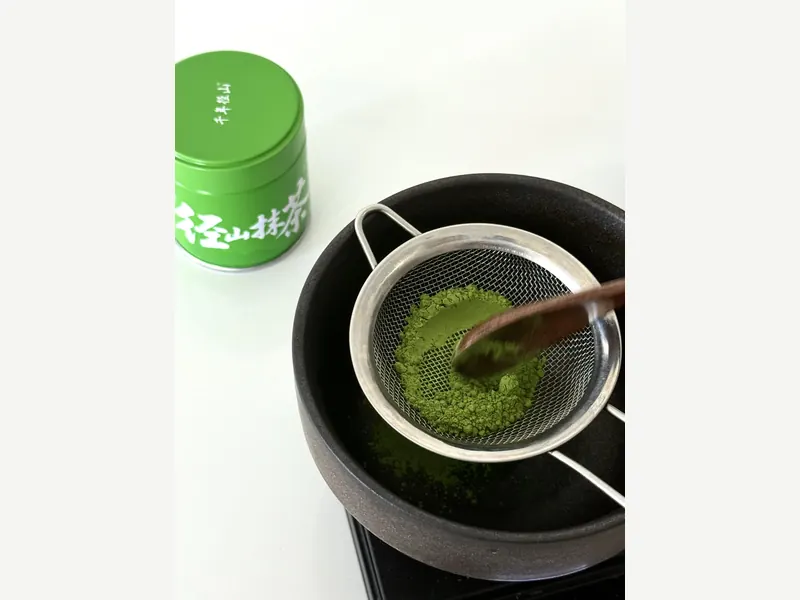
Use coded controls to decide whether an objection in matcha soy milk comes from the soy base, tea, processing, or their combination. Compare the base alone, the completed drink, and relevant pre- and post-process samples at the intended serving temperature. Score beany and cooked notes separately from bitterness, astringency, chalkiness, and oxidized flavour.
For example, a cooked note already present in the heated base should first trigger a base or process comparison. If bitterness appears mainly when the tea dose rises, investigate dose and powder choice before masking it with sweetness. Add sweetener and aroma refinements after the principal compatibility problem is understood.
Record the sensory reason for rejecting a sample, not only its overall score. A procurement team can request a different flavour profile from that description; it cannot reliably act on “sample B was better” without the formula and process record.
Key Takeaway: Translate each sensory rejection into a named ingredient or process comparison.
Which soy-allergen controls belong in a matcha soy milk launch?
For a U.S. matcha soy milk launch, connect the soy-containing formula to the required allergen declaration and the manufacturing controls that prevent unintended cross-contact. FDA identifies soybeans as a major food allergen and describes declaration through the ingredient list or an adjacent “Contains” statement under the applicable rules. Confirm the exact finished label against the current FDA food-allergen guidance.
FDA's CPG 555.250 identifies manufacturing considerations including cleaning, ingredient segregation, rework, and production scheduling. For the buyer, these translate into specific handoffs: the approved soy ingredient and formula must reach the label reviewer, while the manufacturer must assess shared equipment and changeovers. An accurate front label does not demonstrate that line controls are adequate.
Before release, reconcile the current formula, ingredient declarations, approved artwork, and packaging used on the line. Repeat that review after a base or flavour change. U.S. requirements do not constitute label approval for every other destination market.
Key Takeaway: Keep soy declaration, ingredient changes, and manufacturing cross-contact controls connected throughout launch approval.
What evidence should release a matcha soy milk formula or substitution?
Release a matcha soy milk formula or ingredient substitution only against the agreed physical, sensory, processing, safety, and labeling criteria. Identify the exact base and powder lots, formula revision, mixing sequence, process, package, and intended use. A successful initial tasting covers only one part of that decision.
Before signing off, determine whether the evidence spans the intended storage or service conditions and whether another preparation reproduces the result. Keep unexplained aggregation, viscosity drift, and declaration discrepancies open with named owners. An unresolved issue should not disappear merely because the next sample looks smoother.
For private-label matcha powder, specify the ingredient characteristics needed for the approved comparison. AdoroHu Matcha supplies raw powder; the beverage brand and manufacturer retain responsibility for the finished soy drink's process, label, and shelf-life evidence.
Key Takeaway: Approve an identified formula and use case, with all unresolved compatibility and labeling issues closed or explicitly held.
FAQ
- Can soy protein interact with tea polyphenols?
- Yes. Primary studies have observed binding and aggregation under defined conditions; the consequence must be tested in the intended matcha soy milk formula.
- Should a published EGCG dose become a matcha recipe?
- No. Isolated EGCG experiments differ from whole matcha powder and do not establish a commercial tea dose or thermal process.
- Does thicker matcha soy milk necessarily have better stability?
- No. Thickening can reduce visible settling while making pouring or mouthfeel unacceptable, so both need assessment.
- Must soy be declared for a U.S. matcha soy milk product?
- Soybeans are a U.S. major food allergen; confirm the finished declaration and applicable labeling requirements for the specific product.
- Can an approved soy base be replaced using nutrition values alone?
- No. Compare relevant composition, process history, allergen documentation, and performance in the approved formula before substitution.
Conclusion
Prepare a comparison that holds the soy base and process steady while testing matcha candidates and dose. To request raw matcha samples for that controlled trial, contact AdoroHu Matcha with the intended drink and ingredient specification.
Institutional author: AdoroHu Matcha