
Paired preference test design helps a matcha brand decide which of two finished sweetness formulations its target consumers prefer. Teams waste trials when they ask trained staff which sample is sweeter, then report that answer as consumer liking.
For a formula built with premium matcha powder, preference must be tested on the complete product in its intended serving condition. A paired preference test answers a choice question; it does not measure sweetness intensity, explain the reason for the choice, or predict every buyer segment.
A paired preference test presents two controlled products and asks target consumers which they prefer. Keep product identity blind, balance serving order, and define the target population before collecting responses. If the business question is which sample tastes sweeter, use an attribute-directed comparison instead.
In short:
Key points:
- Recruit consumers who represent the intended user, rather than substituting a trained quality panel.
- Change only the sweetness formulation under study and balance the order of the two coded samples.
- Interpret preference for the recruited population without claiming why the winning sample was chosen.
What business decision should a paired preference test answer?
A paired preference test should answer whether target consumers prefer finished formula A or finished formula B under defined use conditions. Write the decision before preparing samples: advance A, advance B, or retain both because the evidence is insufficient for the planned choice.
The question must stay affective. “Which do you prefer?” concerns liking. “Which is sweeter?” concerns attribute discrimination. ISO 11136 defines consumer hedonic testing around how much consumers like or relatively like products, while ISO 5495 addresses paired comparison of a sensory attribute. Mixing those constructs produces a result that neither product development nor procurement can use confidently.
| Business question | Appropriate approach | What the result supports |
|---|---|---|
| Which finished drink is preferred? | Consumer paired preference | Relative preference in the recruited target |
| Which sample tastes sweeter? | Directional paired comparison | Direction of perceived sweetness difference |
| How much sweeter is it? | Intensity scale | Estimated magnitude on the selected scale |
| Are the formulas detectably different overall? | Discrimination method | Evidence of perceptible difference |
Key Takeaway: Define one decision and one response; preference, sweetness direction, intensity, and overall difference are separate questions.
Who should participate in a paired preference test?
Participants should be consumers recruited to represent the target population for the intended matcha product. ISO 11136 distinguishes consumers from expert, trained, and selected assessors. A quality team can help control preparation, but its technical experience does not make it a substitute for the people expected to buy or drink the product.
Define the target in operational terms that matter to the launch: product use, serving format, relevant purchase behavior, and any segment that will receive a separate decision. Avoid inventing quotas after seeing the result. If café operators and retail consumers face different products or usage conditions, analyze them as distinct planned populations rather than pooling them into a convenient average.
The trade-off is cost versus relevance. Employees are fast and inexpensive, but familiarity with the formula or project can bias choice. Target consumers take more recruitment effort, yet their response matches the commercial question. Choose the slower route when the result will control a consequential formulation decision.
Recruitment records should preserve the screen used, eligibility outcome, and planned analysis group without collecting irrelevant personal data. A participant who regularly drinks unsweetened matcha may interpret sweetness differently from someone recruited for a dessert-style drink. That does not make either answer wrong; it means the population definition controls where the result applies. If the product is sold through cafés, the buyer may also need a separate operator study for preparation robustness. Do not merge an operator workflow test with the consumer liking endpoint.
Key Takeaway: Use the population named in the decision; a convenient internal panel cannot establish target-consumer preference.
How should the two matcha formulas be controlled?
The two samples should differ only in the planned sweetness formulation while preparation, matcha lot, milk or water base, solids, temperature, mixing, hold time, serving volume, vessel, and evaluation window remain controlled. Otherwise, a preference count may reflect temperature, sediment, aroma loss, or cup presentation rather than the intended formula difference.
Use the actual product matrix. Sweetness can change how consumers perceive bitterness, astringency, aroma, and body, so testing sweetener in water cannot replace testing the finished matcha drink. The existing matcha sensory evaluation guide explains why preparation must be fixed before samples can be compared.
Prepare a written batch sheet and a deviation rule. If one formula is served outside the allowed condition, quarantine that session rather than silently retaining it. This protects the comparison without pretending that a laboratory service condition guarantees market performance.
Make enough product from a controlled preparation to avoid changing batches partway through one planned comparison, unless batch is an explicit design factor. Check fill volume and serving temperature at defined intervals. If visible color differs because the formulas truly differ, decide whether consumers should see that difference in normal use. Masking a real purchase cue can reduce realism, while exposing an unintended preparation cue can reveal identity. Record that choice before service.
Key Takeaway: Lock the full formula and service conditions so preference is not confounded by uncontrolled preparation differences.
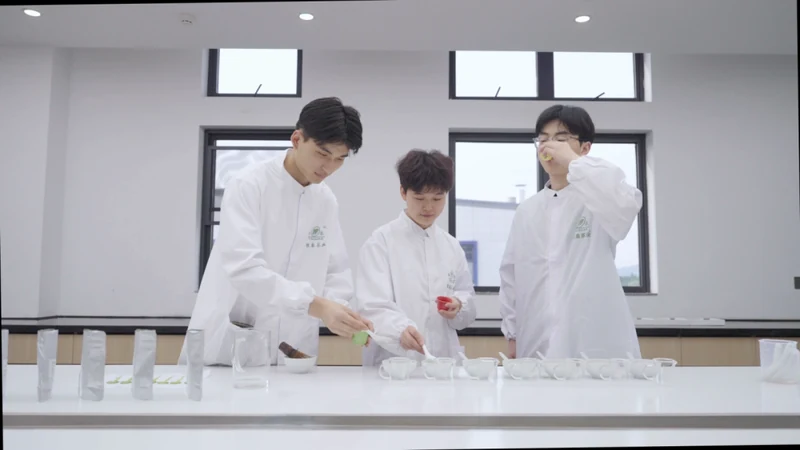
How should sample identity and serving order be blinded?
Sample identity should be concealed with neutral codes, and the two possible serving orders should be balanced across participants. Blinding reduces expectations tied to ingredient cost, supplier, color name, or project ownership. Balancing prevents the first or second position from being overrepresented in the result.
Respondents should evaluate independently in a controlled area without discussing choices. ISO 11136 notes that controlled testing can isolate intrinsic product response from brand, price, and advertising and can prevent communication among participants. Keep the code key away from servers where practical, and record order, code, serving time, and response together.
| Control | Record | Failure it prevents |
|---|---|---|
| Neutral sample codes | Code-to-formula key | Brand or formula expectation |
| Balanced A–B and B–A orders | Assigned order per respondent | Position bias |
| Independent response | Session and respondent record | Group influence |
| Fixed service window | Preparation and serving time | Temperature or settling confound |
Key Takeaway: Blind identity and balance order before service; do not attempt to repair presentation bias during analysis.
What should the response form ask?
The primary response should ask consumers to choose the product they prefer, using wording that does not direct them toward sweetness. Require one choice only when the planned method and consumer task support forced choice. Record any permitted “no preference” response according to the predeclared analysis rather than recoding it after collection.
Secondary questions can help explain the choice, but they must remain analytically separate. A sweetness intensity rating, just-about-right category, or short reason list can generate a follow-up hypothesis; it does not prove that sweetness caused preference. The guide to authentic matcha taste can help teams name relevant attributes without turning them into leading prompts.
Response wording deserves a dry run. “Which is best?” can invite assumptions about quality, price, or health. “Which would you buy?” adds packaging and value judgments that a blind liquid comparison does not provide. “Which sample do you prefer?” is narrower. Translate and test the wording for the actual audience when needed, preserving the same construct across language versions.
Keep the form short enough that the primary choice occurs before fatigue or analytical questioning changes the tasting task. Do not ask participants to become technical assessors midway through the session.
Key Takeaway: Protect the preference choice as the primary endpoint and treat explanatory ratings as secondary evidence.
How should the analysis plan be fixed before testing?
The analysis plan should define the target population, primary comparison, treatment of missing or invalid responses, decision risk, and reporting groups before testing begins. Use a qualified sensory or statistical method to determine recruitment and the decision threshold for that design. Do not invent a universal panel count or critical value.
This discipline matters because the same preference split can support different decisions under different designs. Segment analysis also creates multiplicity and small-group risks. Predefine essential segments and label exploratory cuts honestly rather than searching every demographic combination for a favorable result.
The practitioner choice is clear: a smaller informal test may guide an early prototype, but it should not carry the language of a launch decision. A formal decision needs a planned consumer sample and analysis. The extra time reduces the risk of reformulating around noise.
Key Takeaway: Set the statistical and commercial decision rules before seeing responses; sample size and thresholds belong to the actual design.
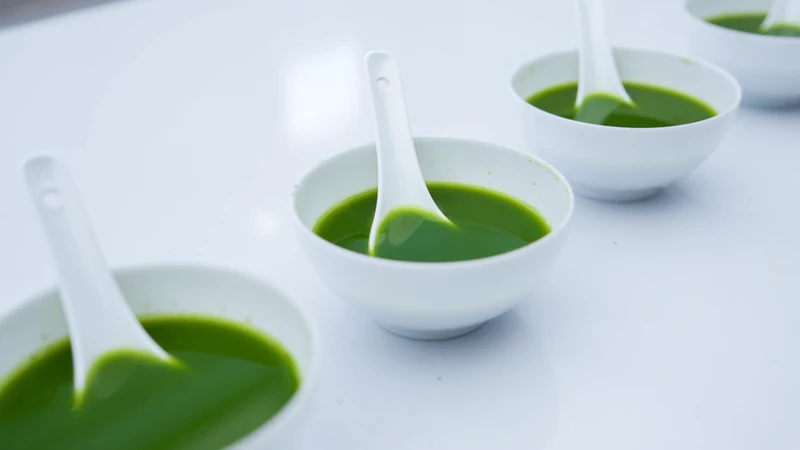
How should preference and sweetness results be kept separate?
Preference and sweetness results should be reported as different endpoints because liking does not reveal attribute direction. ISO 5495 supports a directional paired comparison for a named attribute such as sweetness; that method can indicate which sample is perceived as sweeter but not how far apart the samples are. ISO 11136 covers consumer hedonic response.
A brand may run both studies when both questions matter. Use target consumers for preference and an appropriate attribute-assessment design for sweetness, then report each result in its own sentence. Do not infer “preferred because sweeter” unless a planned analysis directly supports that relationship.
| Observed result | Safe interpretation | Unsupported leap |
|---|---|---|
| A meets the predeclared preference decision criterion | The planned analysis supports preference for A in the recruited target population under the test conditions | A is objectively better |
| B is selected as sweeter | B has greater perceived sweetness direction | B is preferred |
| Sweetness is not discriminated | No supported sweetness-direction result | Products are identical |
| Preference varies by planned segment | Segment-specific follow-up may be useful | Every market needs a different formula |
Key Takeaway: Report liking and sweetness as separate constructs, even when they were collected in the same session.
When should the team repeat or expand the test?
Repeat or expand the test when the formula, target population, serving condition, or business decision changes materially. A result from one cold oat-based drink should not automatically govern a hot dairy drink, a ready-to-drink bottle, or another market segment.
Investigate operational anomalies before repeating. Review batch sheets, code balance, serving times, incomplete forms, and deviations. If the test was valid but indecisive, decide whether the difference is commercially unimportant, whether more evidence is worth its cost, or whether another formulation should enter development.
Avoid endless retesting to force a winner. A genuinely weak preference may mean either formula is acceptable, allowing cost, process robustness, or supply risk to decide. That is a useful commercial outcome when it follows a valid plan.
Key Takeaway: Repeat for a changed decision or credible execution problem, not merely because the first valid result lacked a preferred winner.
How should a paired preference result enter the formulation decision?
A paired preference result should enter a decision record with the tested formulas, consumer definition, service protocol, response wording, analysis method, deviations, result, limitations, and accountable owner. The record should state what happens next without converting preference into a product-quality claim.
Procurement should preserve the matcha lot and ingredient versions used in the test. Product development should preserve formula and process versions. Marketing should receive only claims supported by the study scope. If a later ingredient change moves bitterness, aroma, or body, the earlier preference evidence may no longer apply.
Record alternative explanations rather than hiding them. A preferred formula may also differ in viscosity, color, aroma release, or sediment because changing sweetener concentration affected the matrix. Those effects belong in the formulation file and may justify a controlled follow-up. The preference result remains valid for the products served, but it should not be reduced to a single-ingredient story without evidence.
The final decision can consider preference alongside unit cost, process capability, stability, and supply continuity. Preference is valuable evidence, but it is one input rather than a universal score for the product.
Key Takeaway: Bind the result to the exact formulas, consumers, and conditions, then combine it with operational evidence through a named approval decision.
FAQ
- Is a paired preference test the same as asking which sample is sweeter?
- No. Preference measures relative liking among target consumers, while a directional paired comparison asks which sample has greater intensity of a named attribute such as sweetness.
- Can trained sensory assessors replace consumers in a paired preference test?
- Trained assessors can support analytical work, but consumer preference should be measured with consumers recruited for the relevant target population.
- Does the preferred sample prove that its sweetness level caused the choice?
- No. The preference choice alone does not identify the cause; sweetness, bitterness, aroma, body, aftertaste, and other features may contribute.
- Should formula identity be visible during the test?
- No when the objective is intrinsic preference. Use neutral codes and balanced serving orders so brand, price, and formula expectations do not direct the response.
- Can a non-significant preference result prove the formulas are equally liked?
- No. Interpret the result under the predeclared design and risk limits; insufficient evidence for a preference is not automatic proof of equal liking.
- When should a matcha brand repeat the test?
- Repeat it when the formula, target consumer, serving condition, or business decision changes materially, or when a documented execution problem invalidated the earlier comparison.
Conclusion
A paired preference test is useful when it stays focused on target-consumer liking and preserves the exact formula and service context. Use ISO 11136 for consumer hedonic scope and ISO 5495 to keep attribute comparison separate. To discuss formulation evidence for a commercial matcha project, contact AdoroHu Matcha.