
Retention samples work for matcha buyers when each sealed sample remains identifiable, sufficient, and suitable for the investigation it may need to support. Keeping an unmarked pouch on a shelf creates storage cost, yet it may provide no defensible comparison when a complaint arrives months later.
A practical retention samples policy begins with purpose. Buyers of premium matcha powder should connect lot identity, quantity, container, storage, access, duration, testing scope, and disposal to one written decision path.
Retention samples are controlled portions kept from a defined lot so a later investigation can compare identity, condition, or test results. There is no universal retention period for all conventional foods or matcha. Set the period from product category, jurisdiction, shelf life, complaint exposure, analyte stability, contracts, and the tests the retained quantity must support.
In short:
Key points:
- Retain enough identified material for the intended repeat and confirmatory tests.
- Protect the sample in a suitable sealed container under defined storage conditions.
- Use written access, review, extension, and disposal triggers instead of an arbitrary number of months.
What purpose should retention samples serve for a matcha lot?
Retention samples should serve a defined investigation or verification purpose tied to a specific lot. Typical purposes include comparing a customer-returned sample, checking a suspected storage change, confirming identity, repeating a stable analytical test, or supporting a supplier discussion. One sample does not automatically serve every purpose.
The purpose changes the sample quantity, packaging, storage, and access rules. A sensory comparison may need enough unopened material for controlled preparation. A laboratory repeat may require multiple test portions plus reserve mass for confirmation. A package complaint may require an intact finished pack rather than loose powder in a jar.
Write the intended uses before deciding how much to keep. This avoids the common failure of retaining a token amount that cannot support the later method. It also prevents unnecessary storage of material with no defined decision value.
| Intended use | Retained form | Main decision supported |
|---|---|---|
| Customer complaint comparison | Sealed lot sample plus complaint sample | Whether observed condition is shared or isolated |
| Repeat laboratory analysis | Sufficient protected mass | Whether a stable test result can be reproduced |
| Package investigation | Original or equivalent finished pack | Whether closure or barrier condition contributed |
| Sensory review | Controlled, unopened portion | Whether aroma, color, or flavor shifted under storage |
Key Takeaway: Define what the retained material may need to prove before choosing its quantity, container, or duration.
How should retention samples remain tied to lot identity?
Retention samples should carry an identity that links the physical material to the production lot, package, supplier, receipt, and sampling event. At minimum, record the lot or batch code, product and grade, package identity, sampling date, sampler, seal number, quantity, storage location, and disposition date.
If the label falls off or the seal number is missing, a later result may not be attributable to the purchased goods. The material can still be tested, but its evidentiary value drops because substitution or mix-up cannot be excluded.
Use a durable external label and a protected electronic record. Avoid writing only on a removable cap. Where one lot has multiple packages or sublots, record whether the retain represents an individual unit, a composite, or the finished lot average.
Key Takeaway: A sample without durable lot and seal identity is stored powder, not a controlled retain.
How much matcha should be kept as a retention sample?
The retained quantity should cover all planned test portions, preparation losses, repeat analysis, and an independent confirmation when that confirmation is meaningful. Calculate the amount from the actual method list rather than choosing a round pouch size.
Build a quantity worksheet with each method’s required mass, duplicate or repeat needs, homogenization loss, container residue, and minimum unopened reserve. If different investigations require different storage or packaging, split the lot retain into separately sealed portions instead of repeatedly opening one large container.
The FDA dietary-supplement CGMP example requires at least twice the quantity needed for all specification tests, but that rule is specific to packaged and labeled dietary supplements. It does not impose a two-times rule on conventional matcha ingredients. Still, the logic is useful: a retain that supports only the first test leaves no material for confirmation.
Keep multiple sealed portions when opening changes oxygen, moisture, aroma, or custody. It uses more packaging and space, but it avoids turning every later test into a test of a repeatedly opened sample.
Key Takeaway: Derive retained mass from the test plan and keep enough protected material for a credible repeat or confirmation.
Which container should protect retention samples?
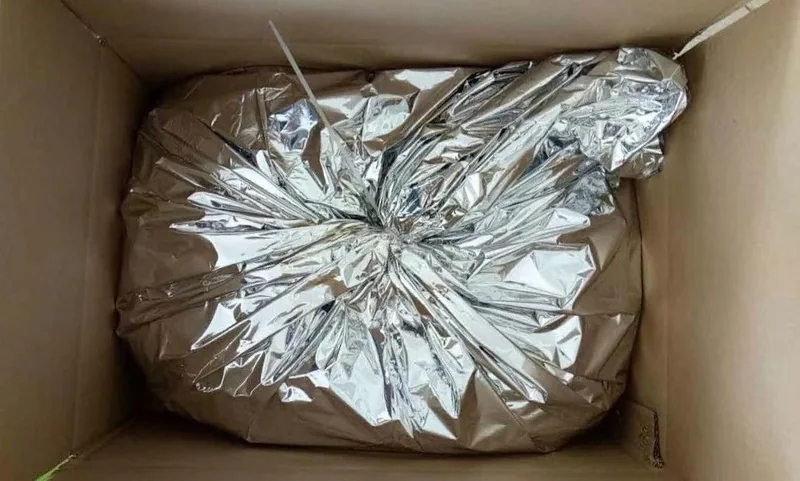
The container should preserve the characteristics relevant to the investigation without adding contamination, moisture, oxygen, light, or odor. For a package-performance question, retain the original finished package where possible. For bulk ingredient material, use a documented compatible container and state how it differs from the commercial pack.
Container choice creates a real trade-off. A laboratory jar may improve handling and resealing but fail to simulate the commercial barrier. An original pouch preserves package relevance but may provide only one opening event. Keeping both can separate powder stability from package performance when the risk justifies the cost.
The U.S. dietary-supplement rule uses the same or an essentially equivalent protective container-closure system for reserve samples. That requirement remains supplement-specific, yet it shows why container equivalence matters. Buyers should not claim a pouch shelf-life conclusion from material stored in a different barrier system.
Key Takeaway: Match the container to the investigation; use separate retains when powder condition and package performance require different evidence.
What storage conditions keep retention samples meaningful?
Storage conditions should preserve the sample under a defined, monitored environment relevant to the product and intended comparison. Record temperature range, humidity control where relevant, light exposure, location, excursion handling, and whether the condition follows the label, commercial warehouse, or another justified state.
For matcha, uncontrolled light, heat, moisture, and repeated air exposure can change color, aroma, flow, and analytical condition. A complaint comparison becomes weak if the retain sat beside a sunny window while the shipped goods remained in sealed cases.
Do not assume colder is always better. Refrigeration can create condensation during handling, while freezing can create a condition unlike the commercial supply chain. Choose the storage state that protects the investigation’s purpose, then document every planned deviation.
| Storage choice | Useful when | Main risk to control |
|---|---|---|
| Labeled or normal commercial condition | Comparing expected market life | Warehouse excursions and light exposure |
| Controlled ambient cabinet | Preserving routine ingredient retains | Cabinet mapping, access, and humidity |
| Refrigerated storage | Method or product requires it | Condensation during removal and opening |
| Separate stress condition | Supporting an investigation or study | Confusing stress evidence with normal shelf life |
Key Takeaway: Store retains under a named condition that matches the decision, and log excursions rather than silently accepting them.
How long should matcha retention samples be kept?
Matcha retention samples should be kept until the latest justified trigger among investigation need, remaining shelf life, customer or contract commitment, applicable regulation, and internal disposition policy. There is no universal conventional-food period that can be copied safely across products and markets.
The FDA dietary-supplement CGMP guide gives a specific U.S. supplement rule: retain for one year past shelf life when shelf-life dating is used, or two years after distribution of the last batch associated with the sample. It also requires a reserve sample for each distributed lot of packaged and labeled dietary supplement. Those dates do not automatically govern conventional matcha powder.
For a conventional ingredient policy, calculate an expiry date from the supported product life and realistic complaint-notification window, then check contracts and applicable jurisdictions. A matcha shelf-life validation establishes the product evidence; the retention policy determines how long a comparable sample remains available.
Avoid a flat “keep everything for two years” rule unless it fits the actual category and commitments. It may waste space for short-life material or destroy evidence too early for a long-life product.
Key Takeaway: Use a documented trigger calculation, and label supplement-specific FDA durations as supplement rules rather than universal food law.
Who should control access to retention samples?
Access should be limited to authorized roles under a sign-out, resealing, quantity, and return procedure. Every opening changes custody and may change the sample itself, so the record should identify who accessed it, why, when, how much was removed, and which seal replaced the original.
This control prevents two costly problems: unexplained sample depletion and disagreement over whether later exposure changed the result. Separate sealed aliquots reduce access events and make independent testing easier. They also let the buyer and supplier hold matched portions without sharing one container.
Use an inventory that flags low remaining quantity, expired retains, missing seals, excursions, and open investigations. Access control should be strict enough to protect evidence but fast enough to support a time-sensitive complaint.
Key Takeaway: Treat every opening as a custody event, and use sealed aliquots when repeated access would compromise the comparison.
How should retention samples support a complaint investigation?
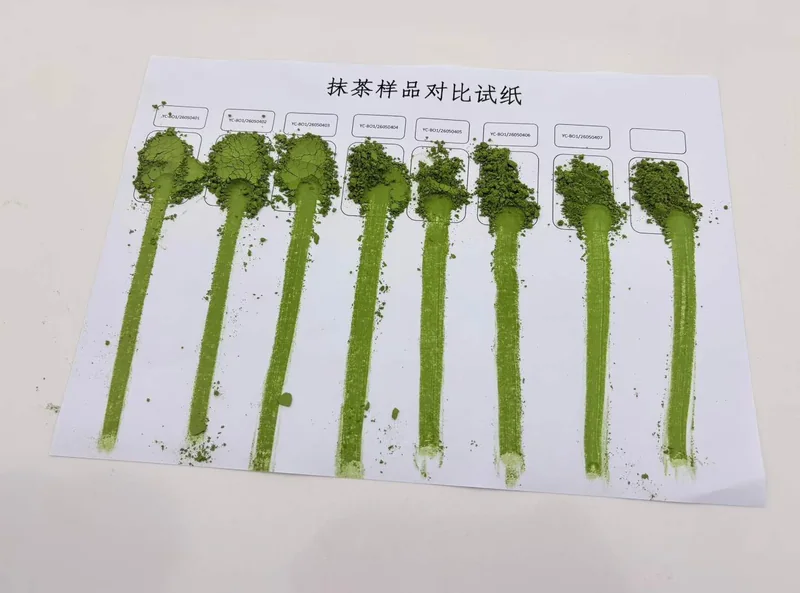
Retention samples should support a controlled comparison among the customer sample, retained lot sample, unopened control where available, records, and relevant test method. They do not automatically prove the condition at delivery because customer storage, transport, opening, and use may differ.
Begin by confirming identity, seals, dates, condition, and chain of custody for both samples. Photograph packaging and record visible differences before opening. Then define the comparison method, preparation, environment, and decision rule.
The matcha quality complaint guide covers notice, evidence, and corrective action. The retention program has a narrower job: preserve a credible lot-linked comparator. Mixing those scopes can lead staff to treat a passing retain as automatic proof that the customer is wrong.
Test matched samples side by side when the method and remaining quantity allow it. Avoid testing them weeks apart under different preparation conditions; the timing difference can become a second dispute.
Key Takeaway: Use the retain as one controlled comparator within the investigation, not as automatic exoneration of the lot or supplier.
Which tests can still be meaningful on an older retained sample?
Only tests whose analyte, matrix, container, and storage history remain suitable can be interpreted confidently on an older retained sample. Identity, moisture, aroma, color, microbiology, and chemical measurements do not all remain stable or answer the same question after storage.
Before testing, ask whether the result describes the original lot condition, the sample’s stored condition, or both. Review method suitability, analyte stability, detection limits, container interactions, and any excursion. A repeat number can be analytically correct yet irrelevant to the original release decision.
The FDA BAM Chapter 1 food-sampling workflow instructs laboratories, in its stated Salmonella compliance context, to keep the remainder of a sample unit in a sterile container and refrigerate perishable or growth-supporting samples. The passage does not provide a general manufacturer retention duration or a universal conventional-food rule. Its consequence is narrower: residual material and storage condition matter when a later method-specific compliance step may be required.
Key Takeaway: Approve older-sample testing only after stating what time point and condition the result can legitimately represent.
How should expired retention samples be reviewed and disposed of?
Expired retention samples should be reviewed against open complaints, legal or regulatory holds, contract commitments, investigations, and remaining shelf life before controlled disposal. An automated date should trigger review, not blind destruction.
The review record should state lot, quantity, condition, seal status, expiry basis, open-case check, approval, disposal method, date, and operator. If an investigation is open, extend the hold with a new reason and review date rather than editing the original expiry silently.
| Disposition state | Action | Required evidence |
|---|---|---|
| Period complete, no open issue | Approve controlled disposal | Expiry basis and open-case check |
| Complaint or investigation open | Extend hold | Case ID, owner, new review date |
| Seal broken without record | Quarantine and assess | Deviation and remaining-use decision |
| Storage excursion | Evaluate test suitability | Excursion details and technical approval |
| Quantity below test need | Restrict intended use | Remaining mass and method requirements |
Disposal should prevent accidental return to production or sale. That operational detail matters because an unlabeled or expired retain can otherwise re-enter stock during housekeeping.
Key Takeaway: Make disposal a documented quality decision with an open-case check, not a routine shelf-clearance task.
How should buyers audit a supplier’s retention-sample program?
Buyers should audit the program by tracing one current lot from receipt or production through labeling, storage, access, investigation readiness, and planned disposal. A completed record exposes gaps that a polished policy can hide.
Ask the supplier to demonstrate:
- how quantity was calculated from the intended test set;
- how container equivalence and storage were chosen;
- how lot, seal, location, access, and remaining mass are tracked;
- how the period is derived for the product category and market;
- how open complaints stop disposal;
- how expired or compromised retains are handled.
Then test the system with a scenario: a color complaint arrives near the end of shelf life, one aliquot has been opened, and the remaining mass is limited. The program should identify which sample can be used, what comparison is valid, and who approves the test.
Key Takeaway: Audit one lot and one realistic investigation scenario; policy language alone cannot prove the retain will work when needed.
FAQ
- What is a retention sample for matcha?
- A retention sample is an identified, controlled portion from a defined matcha lot kept for a later comparison, investigation, or suitable repeat test.
- How long must conventional matcha retention samples be kept?
- No universal period applies to every conventional matcha product; derive the period from product category, jurisdiction, shelf life, complaint exposure, contracts, and intended tests.
- Does the FDA two-year retention rule apply to all food?
- No. The cited FDA duration applies to packaged and labeled dietary supplements under the U.S. dietary-supplement CGMP rule, not universally to conventional foods or ingredients.
- How much matcha should a retention sample contain?
- Keep enough for the planned methods, preparation loss, a repeat, and any justified independent confirmation, using the actual method quantities.
- Should matcha retention samples stay in the original package?
- Keep the original package when package performance matters; otherwise use a documented compatible protective container and record how it differs from the commercial pack.
- Can a retained sample settle a customer complaint by itself?
- No. It is one comparator that must be reviewed with the customer sample, custody, storage, records, method, and other investigation evidence.
Conclusion
Retention samples protect a buyer only when their identity, quantity, container, storage, access, duration, and disposal remain controlled. To align a retention request with your matcha lot, package, and specification, contact AdoroHu Matcha with the intended tests and complaint window.