
Matcha cashew milk becomes commercially useful when cashew solids, dilution, and matcha sediment are separated in the trial plan. A creamy first sip can hide coarse nut particles, green settling, or an emulsion that thins during service.
Develop matcha cashew milk against one exact cashew base and one use case. The commercial matcha coconut milk formulation is useful adjacent reading, but cashew solids and their dilution response need their own matched trials.
Fix cashew source, solids, dilution, matcha dose, and mixing before comparing samples. Release the drink only when body, sediment, flavor, and allergen controls remain acceptable through the intended service window.
In short:
Key points:
- Separate cashew-particle sediment from matcha settling before changing stabilizer.
- Compare whole-cashew and prepared-base routes only when production can support both.
- Release a formula with a defined dilution, remix, and allergen-control record.
What should a matcha cashew milk brief lock before trials?
Lock the service format, serving size, cashew source, sweetness target, tea intensity, texture, and hold time. A café concentrate, fresh blended drink, and packaged beverage need different evidence. Record whether the cashew base is made in-house or purchased because particle size, solids, oil, salt, and stabilizers change the result.
A precise brief prevents the team from fixing base variation by repeatedly changing matcha. Choose one commercial use case and one base specification for the first screening round.
Key Takeaway: Lock one use case and one cashew-base specification.
Should the team use whole cashews or a prepared cashew beverage?
Whole-cashew processing gives control over nut loading and body, while a prepared beverage offers simpler operations and a supplier specification. The tradeoff is control versus repeatability. Whole nuts add soaking, milling, filtration, sanitation, and allergen-cleaning decisions; carton bases may add gums, oils, flavors, or sugar.
Compare both routes only if the project can support both processes. Otherwise, choose the route the plant can repeat and document. A richer prototype is not useful when production cannot reproduce its particle reduction.
| Cashew route | Variable to record | Main commercial consequence |
|---|---|---|
| Whole-cashew base | Nut solids, milling, filtration, yield | More control, more process and allergen work |
| Prepared beverage | Exact SKU, added gums, oils, sugar | Faster setup, supplier-dependent behavior |
| Diluted concentrate | Concentrate-to-water ratio, remix | Easier service only if body stays uniform |
Key Takeaway: Choose the base route that the production line can control.
How should cashew solids and matcha dose be screened together?
AdoroHu’s grade ladder identifies E-3/E-4 as conventional Premium and O-3 as Organic Premium. Use those codes for controlled samples, then let the finished cashew-base trial decide. Use a small matrix rather than changing one ingredient until the drink tastes acceptable. Cross two or three cashew-solids levels with two or three matcha doses, while holding water, sweetener, temperature, and mixing constant. Score tea identity, nut masking, thickness, grit, and aftertaste.
This reveals whether more matcha solves a weak tea note or merely adds astringency. It also shows whether excessive cashew body delays flavor release.
For sourcing trials, compare representative samples against the application target rather than relying on labels alone. The premium matcha powder page provides the relevant product route.
Key Takeaway: Screen cashew solids and matcha dose as interacting variables.
How can matcha be dispersed without leaving green pockets?
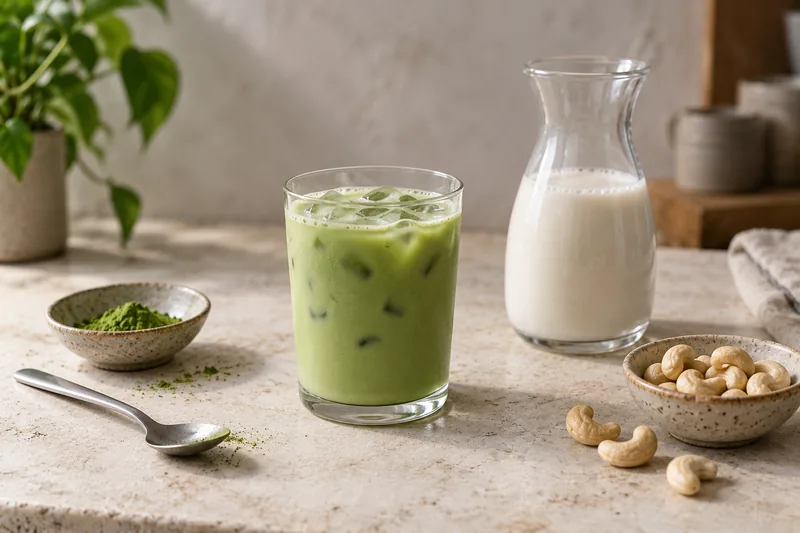
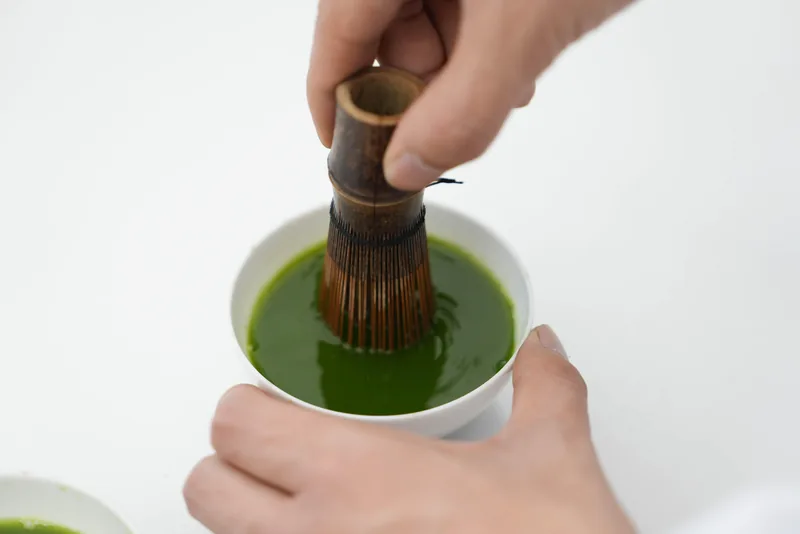
AdoroHu uses ultrasonic screening and multiple milling routes, including 20 stone mills, 56 ball mills, and 8 continuous ball mills. Confirm that comparison lots follow the agreed process and specification. Disperse sifted matcha in a controlled liquid phase before adding the full cashew base. Record liquid temperature, concentrate ratio, mixer type, time, and order of addition. The site’s matcha solubility testing guide explains why a visually smooth cup can still be an unstable suspension.
For a whole-cashew process, avoid assuming the nut-blending step will disperse matcha consistently. Cashew particles and matcha particles respond differently to shear, so verify the finished sample after holding.
Key Takeaway: Standardize pre-dispersion and verify the held sample.
What measurements reveal sediment and body problems?
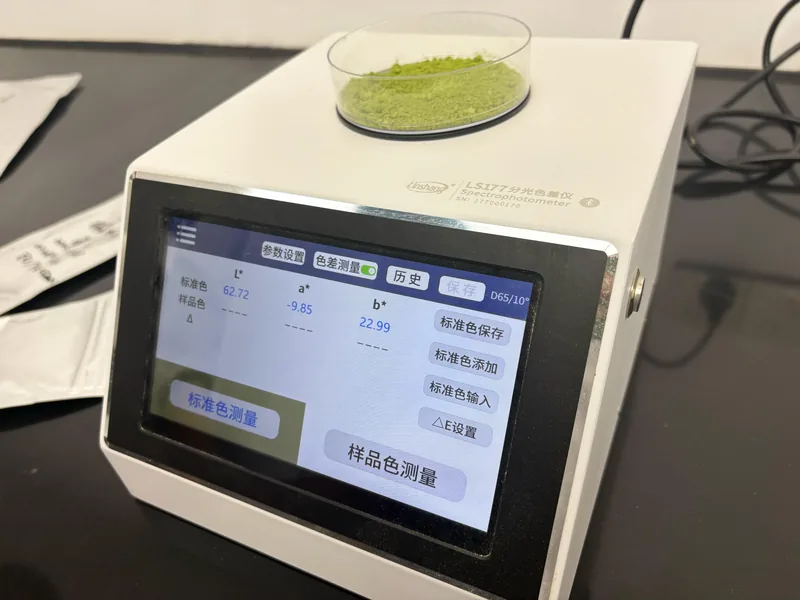
AdoroHu’s in-house microbiology and physical-chemical laboratories can provide lot-linked powder COA inputs. The buyer still owns finished-drink validation. Record finished mass, pH, viscosity under defined conditions, sediment depth, ring formation, and sensory texture at fixed times. Use the same clear vessel and lighting for visual checks. A useful result identifies whether the sediment is predominantly nut material, matcha, or a combined layer.
Do not approve on viscosity alone. A thick drink may suspend particles but feel pasty, while a thinner drink may remain acceptable with a clear shake instruction.
| Separation observation | Likely contributor to test | Next controlled trial |
|---|---|---|
| Coarse pale layer | Cashew particle reduction or filtration | Hold matcha constant; change base process |
| Fine dark-green layer | Matcha wetting or suspension | Hold cashew solids constant; change dispersion |
| Oil ring or thinning | Emulsion system and dilution | Compare exact base and service dilution |
Key Takeaway: Pair physical readings with a defined sensory decision.
How should sweetness and flavoring be balanced?
Build a sweetness ladder around the intended label and serving format. Vanilla and salt can soften bitterness, but they can also make different matcha grades taste artificially similar. Blind the samples and select the lowest sweetness that preserves a recognizable tea finish.
For a tea-forward position, avoid using sweetness to rescue a harsh powder. That choice raises sugar, hides raw-material drift, and makes later reformulation harder.
Key Takeaway: Use sweetness to balance a sound formula, not conceal a poor matcha.
When is filtration useful for matcha cashew milk?
Filtration can remove coarse cashew particles, but an aggressive filter may strip body and retain matcha unevenly. Define the filter, mesh, pressure, yield loss, and before-and-after sensory result. Measure product loss because trapped solids change both cost and formula composition.
Choose finer filtration only when grit is the actual failure. If the problem is matcha agglomeration, fix dispersion instead of filtering valuable product away.
Keep this decision connected to the wider application context in matcha powder for beverage brands.
Key Takeaway: Match filtration to the particle causing the defect.
What allergen controls belong in the development record?
Cashews are tree nuts, one of the FDA’s nine major food allergens. Packaged products must identify the specific tree nut, and shared equipment needs cross-contact controls. The FDA food allergen page and 21 CFR 117.80 support label, segregation, cleaning, rework, and verification planning.
Treat allergen review as part of formula approval. A late label or cleaning discovery can invalidate packaging, scheduling, and cost assumptions.
| Release item | Cashew-specific evidence | Stop condition |
|---|---|---|
| Base identity | Approved SKU or whole-cashew process | Unapproved substitution |
| Dilution | Weighed ratio and finished body | Out-of-window texture |
| Allergen control | Cashew label, cleaning, line review | Missing or mismatched record |
Key Takeaway: Approve allergen controls with the formula.
What evidence should release the commercial formula?
AdoroHu’s 10 kg and 20 kg formats use sealed food-grade liners. Match pack size to opening frequency, use rate, and post-opening storage. Release the formula only after repeated batches meet written limits for flavor, body, sediment, process time, yield, and allergen controls. Keep the base specification, matcha lot, batch sheet, equipment settings, deviations, photos, and approver names together.
Packaged products need representative safety and stability work. A successful bench blend cannot support an untested shelf-life claim.
Key Takeaway: Release a reproducible operating window, not a single good blend.
FAQ
- Does cashew milk work well with matcha?
- Yes. Cashew milk can give matcha a creamy body, but the nut solids, sweetness, and tea dose need matched trials to prevent aroma masking or grit.
- Should cashews be soaked before commercial blending?
- That depends on the milling process and validated sanitation plan; define the treatment from equipment capability and finished particle results rather than copying a home recipe.
- Why does matcha cashew milk separate?
- Separation can come from matcha suspension, cashew particles, oil-water instability, or all three, so inspect the layer before changing stabilizer.
- Can a carton cashew beverage replace an in-house base?
- It can when its ingredient system, solids, flavor, and supply consistency fit the brief, but it must be revalidated as a distinct base.
- What documents should a matcha supplier provide for trials?
- Request a current specification, lot-linked quality documents, storage guidance, and enough representative sample for repeated matched trials.
Conclusion
A commercial cashew drink needs a locked cashew specification, controlled matcha dispersion, and a measured dilution window. Share the base, process, target texture, and trial volume through the contact page to plan a focused sample comparison.