
Matcha cream cheese works commercially when tang, tea intensity, sweetness, texture, and application temperature are specified together. A bench spread can become streaked, loose, grainy, or overly bitter after larger-scale mixing. That affects piping, filling weight, hold, and appearance.
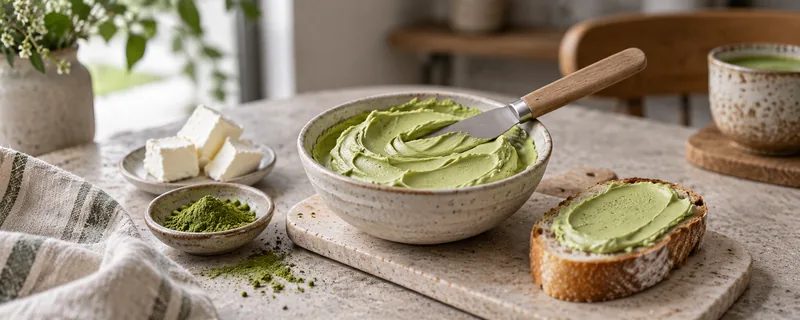
For matcha cream cheese, decide whether the product is a spread, pastry filling, frosting, foam, or cookie component before choosing powder. AdoroHu’s culinary matcha for food applications gives developers a practical range for dairy-rich systems.
Matcha cream cheese is a tangy dairy or dairy-style system, distinct from buttercream and cheesecake. Its acidity, water phase, and cold texture change how matcha tastes and disperses. Commercial development should start with the application and process, then set the grade and dose.
In short:
Key points:
- Match the formulation to spreading, piping, filling, whipping, or baking.
- Control cream-cheese condition and matcha predispersion before changing dose.
- Validate the filled or topped product under its actual service conditions.
How is matcha cream cheese different from buttercream and cheesecake?
Matcha cream cheese has a tangy dairy phase and different water balance from buttercream, while cheesecake is a complete baked or set dessert system. Those distinctions change sweetness, viscosity, process tolerance, and matcha perception.
| System | Primary structure | Main matcha decision |
|---|---|---|
| Cream cheese spread or filling | Cream cheese with limited modifiers | Balance tang, bitterness, and spread |
| Buttercream | Fat and sugar matrix | Protect aroma in a sweeter system |
| Cheesecake | Full batter that sets or bakes | Manage heat and whole-product texture |
| Cream-cheese foam | Aerated, pourable topping | Control suspension and service flow |
Key Takeaway: Write an application-specific cream-cheese brief instead of adapting a buttercream formula.
Which matcha grade fits a tangy cream-cheese system?
Culinary or premium matcha can fit cream cheese, depending on sweetness and use. AdoroHu’s E-1 and E-2 are culinary grades, while E-3 and E-4 are premium. Organic O-1 and O-2 serve culinary applications, and O-3 is premium.
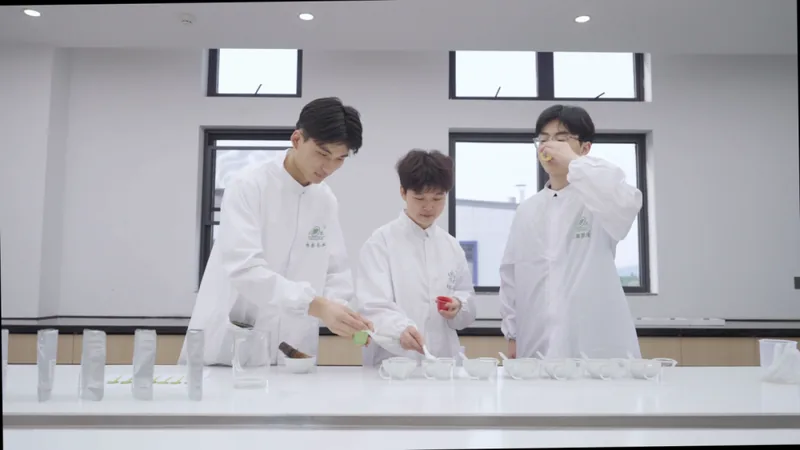
Compare grades in the finished filling at service temperature. Tang can sharpen perceived bitterness, while sugar and fat can mute aroma. A premium candidate may help a lightly sweet spread, but a strongly flavored pastry may not justify it.
Avoid ceremonial grade by default. If a coded panel cannot identify a valuable improvement after assembly, the higher ingredient cost has no product case.
Key Takeaway: Approve grade in the finished dairy system.
How should matcha be dispersed into cream cheese?
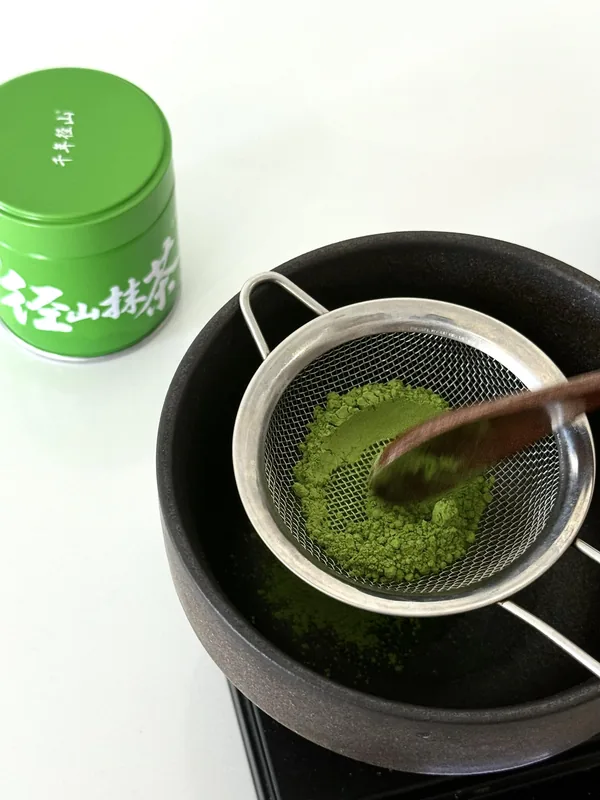
Matcha should be screened and predispersed through a repeatable route before it enters a cold, viscous cream-cheese mass. Direct addition often creates dark specks that extra mixing cannot remove cleanly.
AdoroHu uses ultrasonic screening for ultra-fine matcha and several milling systems. That supports fine powder, while the developer still chooses whether to use a dry preblend or compatible liquid concentrate.
The practical judgment is to avoid long corrective mixing. It can warm and loosen the filling, so the operator solves a color problem by creating a texture problem.
Key Takeaway: Build a smooth matcha addition before the cream cheese reaches final viscosity.
How does cream-cheese condition affect texture?
Cream-cheese temperature and mechanical history affect mixing, aeration, spread, and final set. Material that is too firm may leave lumps, while material that is too warm may lose piping definition.
Define the incoming condition, mixer load, speed sequence, scrape points, and endpoint. Record filling temperature at deposit and after hold. If stabilizers or powdered sugar are used, lock their suppliers and addition sequence before refining matcha.
| Symptom | First question | Operational effect |
|---|---|---|
| White lumps | Was cream cheese conditioned consistently? | Uneven appearance and nozzle blockage |
| Green streaks | Was matcha predispersed? | Rework and excess mixing |
| Loose deposit | Did mixing warm the mass? | Fill-weight and assembly drift |
| Grainy finish | Did dry solids hydrate evenly? | Poor mouthfeel and weak gloss |
Key Takeaway: Control ingredient condition before reformulating.
How should tang, sweetness, and bitterness be balanced?
Tang, sweetness, and bitterness should be balanced in the final pastry, bagel, cookie, or beverage, not in the mixing bowl alone. Bread, cake, chocolate, and fruit change the perceived profile.
Build a coded matrix around matcha grade and sweetener level while holding cream cheese constant. Score tea identity, tang, bitterness, sweetness, color, aftertaste, and application fit.
Do not raise sugar automatically to hide bitterness. That can erase the tang that distinguishes cream cheese from buttercream. A different grade or matcha placement may solve the problem more cleanly.
Key Takeaway: Protect the characteristic tang while making matcha recognizable.
What process controls protect piping and filling performance?
Process controls should keep matcha cream cheese within a defined temperature, viscosity, and hold window. Piping and depositing depend on the product reaching the nozzle in the same condition as the approved pilot.
Record batch time, product temperature, hopper hold, line interruptions, deposit weight, tailing, smearing, and first-to-last piece appearance. If the product is aerated, track density or another suitable plant measure.
Reject a formula that works only when operators constantly adjust line speed or chill the hopper by feel. That creates hidden labor and inconsistent fill.
Key Takeaway: Specify the condition at deposit, not only at mixer discharge.
How should baked and unbaked applications be separated?
Baked and unbaked applications should use separate acceptance standards because heat changes color, flavor, viscosity, and the surrounding product. A cookie center, laminated pastry filling, and chilled frosting should not share one universal evaluation.
For baked fillings, inspect leakage, color, set, and flavor after cooling. For unbaked frosting or spread, inspect piping, smear, weeping, and service texture. If the same filling serves both routes, validate each independently.
The AHM article on matcha cheesecake formulation provides a useful comparison for a complete baked dairy system.
Key Takeaway: Approve each thermal route as its own product use.
How should the final product and package be tested?
The final product should be tested in its intended package and distribution route. Cream-cheese fillings can transfer moisture, soften adjacent layers, smear onto packaging, or lose piping definition.
Inspect the assembled product at defined checkpoints for color, aroma, texture, migration, leakage, adhesion, and visual cleanliness. Do not borrow a storage period from a recipe site. Qualified food-safety staff must define the study for the final dairy product.
The AHM guide to matcha water-activity testing can inform the measurement plan without turning one value into a universal shelf-life answer.
Key Takeaway: Validate matcha cream cheese inside the finished product.
Which allergen controls belong in development?
Milk is central to conventional cream cheese, while soy, tree nuts, or other allergens may enter through flavors, plant alternatives, chocolate, or shared equipment. These choices affect label review and sanitation.
The FDA food-allergen resource identifies nine major food allergens in the United States. Use that defined scope for US development and assess export markets separately.
The AHM guide to matcha allergen review helps procurement connect powder statements with the complete filling formula.
Key Takeaway: Review every compound ingredient and shared contact surface.
What should a matcha cream-cheese pilot record?
A pilot should record matcha and dairy lots, ingredient condition, addition sequence, mixer load, time, product temperature, density where relevant, deposit behavior, assembled-product results, and packed yield.
AdoroHu’s in-house microbiology and physical-chemical laboratories support lot documentation. Its 10 kg and 20 kg bulk cartons use sealed food-grade liners, helping plants plan controlled opening and staging.
Retain samples from mixer discharge and the end of the line. That comparison reveals whether holding and handling changed the filling.
Key Takeaway: Connect ingredient lots to application performance through the full run.
FAQ
- What is matcha cream cheese used for commercially?
- It can serve as a spread, frosting, pastry filling, cookie center, or beverage foam when each application has its own texture standard.
- Which matcha grade is best for cream cheese?
- Culinary matcha is a practical starting point, while lightly sweet spreads may justify a controlled premium-grade comparison.
- How can manufacturers prevent matcha clumps in cream cheese?
- Screen and predispense the powder through a controlled dry blend or compatible concentrate before final mixing.
- Why does matcha cream-cheese filling become loose?
- Ingredient condition, extended mixing, product warming, added liquid, and hold time can all reduce deposit definition.
- Can the same filling be used baked and unbaked?
- It may be possible, but each thermal route needs separate validation for color, texture, leakage, and flavor.
- How should commercial shelf life be set?
- Test the final assembled product in its final package through intended distribution using appropriate quality and safety methods.
Conclusion
Commercial matcha cream cheese needs an application-led texture target, controlled dispersion, defined deposit condition, and finished-product testing. Compare matcha with the tangy dairy system intact. Contact AdoroHu Matcha to discuss a sample plan for your filling or topping brief.