
Author: AdoroHu Matcha
Matcha microbiological testing should give buyers a documented basis to hold, release, investigate, or reject a specific lot. A broad COA line or supplier assurance cannot do that alone. Buyers need a plan that connects the hazard, destination market, intended use, sampling design, method, laboratory, result, and disposition. Our matcha specification guide shows where those agreed requirements belong.
The problem is easy to underestimate because matcha is dry. Low water activity may limit microbial growth, yet organisms can survive in low-moisture foods. If a matcha microbiological testing plan omits lot linkage or method details, QA may receive a plausible report that still cannot support release. The solution is a risk-based approval program with rules written before results arrive.
A defensible microbiology decision begins with the product, process, market, and intended use. The buyer then defines what will be tested, how the sample represents the lot, which method and laboratory apply, and what each result triggers. A result applies to the tested sample and linked lot; it never proves that every unit is organism-free.
In short:
Key points:
- Set analytes, criteria, units, methods, sampling, and actions for the named product and market.
- Read indicator counts, pathogen results, and “not detected” language according to their different meanings.
- Predefine hold, confirmation, investigation, retest, release, and rejection authority before testing starts.
What should determine a matcha microbiological testing plan?
A matcha microbiological testing plan should start with the hazard analysis, process history, intended use, destination market, and buyer specification. A ready-to-drink application, a bakery ingredient, and a product whisked directly into water can create different exposure and downstream-control questions. Supplier history, packaging, storage, and the buyer’s own process also affect the plan.
For U.S. receiving facilities where the rule applies, 21 CFR 117.410 ties supplier approval and verification to risk and supplier performance. It allows tools such as sampling and testing, audits, and record review, but it does not prescribe one matcha panel or frequency.
Inputs QA should settle first
- Identify the exact ingredient, lot definition, origin, packaging, and storage condition.
- Document the finished application and whether a later validated control exists.
- Name the destination market, responsible operator, specification owner, and release authority.
- Review supplier performance, complaints, deviations, and relevant process changes.
This is the practical choice: use a narrow panel only when the hazard assessment supports it. Copying a generic panel can miss a material risk or create tests that do not change a decision.
Key Takeaway: Build the plan around the actual lot and use, then record why each test belongs.
Which microorganisms belong in matcha microbiological testing?
The organisms belong in matcha microbiological testing only when each one answers a defined hygiene, spoilage, or pathogen question. Total plate count, coliforms, E. coli, yeast and mold, and Salmonella are often discussed, but they do different jobs. A buyer should never read them as interchangeable measures of “cleanliness.”
| Result category | What it can help assess | What it cannot prove |
|---|---|---|
| Total plate count or aerobic count | Broad process-hygiene and trend signal under a named method | Absence of a specific pathogen |
| Coliforms or E. coli | A defined hygiene indicator question | Sterility or automatic lot safety |
| Yeast and mold | Spoilage pressure and process/storage trend | Pathogen clearance |
| Salmonella presence/absence | Whether the organism was detected in the tested sample unit | That the whole lot is free of Salmonella |
TPC deserves special care. A low or stable count may support process trending, while an elevated count may trigger investigation. Neither conclusion establishes pathogen clearance. The panel should also define whether the organism name, method, units, and reporting basis align across supplier and buyer data.
Key Takeaway: Assign every organism a decision purpose; do not use an indicator count as a pathogen verdict.
How should buyers set microbiological limits for matcha?
Buyers should set microbiological limits from the named market, product category, intended use, risk assessment, customer requirements, and agreed method. There is no universal microbiological threshold that applies to every matcha product in every market. A limit without its units, method, and sampling basis is incomplete.
A workable specification separates acceptance criteria from monitoring or investigation levels. It also names whether a result is presence/absence or a count, the sample amount, and the action for an out-of-specification result. If a customer contract or regulation supplies a criterion, QA should verify its current applicability rather than copying it from another product.
The safer specification choice is specific but bounded: “not detected in 25 g” describes the tested sample under the stated method. It is not a guarantee that an entire lot contains no target organism.
Key Takeaway: Write criteria with the market, sample basis, unit, method, and action; omit unsupported universal limits.
How should a sampling plan represent a matcha lot?
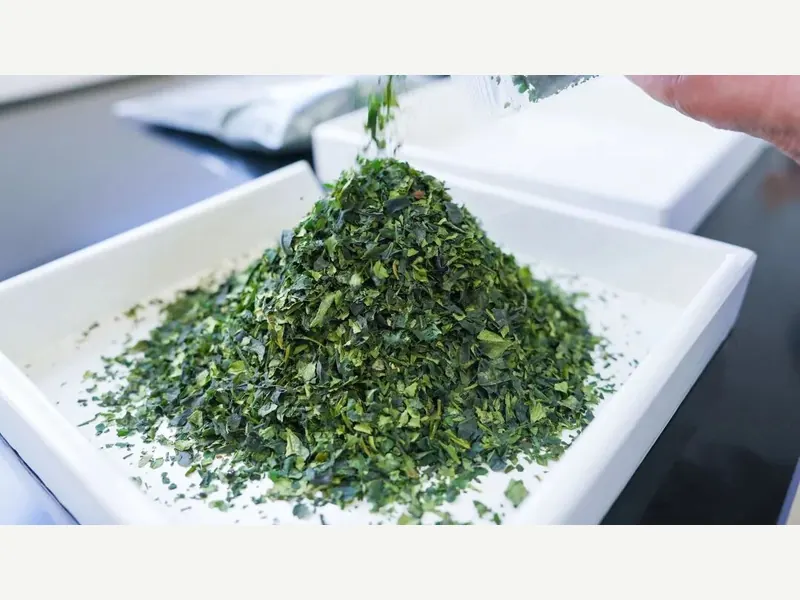
A sampling plan should connect laboratory portions to the physical structure of the matcha lot. One convenient scoop may miss variation between bags, pallet positions, production intervals, or handling steps. More increments can improve representation, but compositing can also hide which unit produced a signal.
| Sampling decision | Question to record | Operational consequence |
|---|---|---|
| Lot definition | Which production, packaging, and shipment records form one lot? | Prevents a result from being applied to unrelated material |
| Increment locations | Which bags, positions, or time points are represented? | Reduces blind spots from localized contamination |
| Individual or composite samples | Does QA need unit-level traceability or an efficient lot screen? | Changes investigation speed and interpretability |
| Sample amount and retention | What does the method require, and what remains for confirmation? | Avoids an unusable or exhausted sample |
| Chain of custody | Who collected, sealed, shipped, and received it? | Protects sample identity and condition |
Avoid treating an AQL plan designed for attributes inspection as a universal food-safety sampling rule. Microbial hazards can be unevenly distributed, so sample count and composition must follow the decision risk and qualified technical review.
Key Takeaway: Define the lot first, then make every sample traceable to the material it is meant to represent.
What method details make a microbiology result usable?
A microbiology result becomes usable when the report identifies the analyte, sample basis, method, laboratory, units or detection language, and the linked lot. Without those fields, matcha microbiological testing may generate a number that cannot be compared with the agreed criterion.
The method version matters because enrichment, incubation, enumeration range, confirmation steps, and reporting conventions can differ. “Pass” alone hides those details. For presence/absence testing, buyers should distinguish a presumptive signal from a confirmed result and know whether confirmation is included in the laboratory scope.
Under applicable U.S. preventive-controls requirements, 21 CFR 117.165 states that written product-testing procedures used for verification must be scientifically valid and identify factors including the analyte, lot relationship, sample number and frequency, method, laboratory, and corrective actions. It does not impose one analyte list on all matcha.
Key Takeaway: Reject report shorthand that separates a result from its sample, method, laboratory, or lot.
When should matcha buyers use an accredited microbiology laboratory?
Matcha buyers should use an appropriately accredited microbiology laboratory when independence, market acceptance, method scope, or dispute resolution makes it necessary. Accreditation alone is not enough. The relevant method or analyte should fall within the laboratory’s current scope, and the report must still match the specification.
Laboratory review checklist
- Confirm the laboratory identity, accreditation body, current scope, and named method.
- Verify sample receipt condition, lot code, sample amount, and report version.
- Ask how presumptive findings, confirmation, subcontracting, and amendments are handled.
- Set who receives urgent results and who may authorize release.
An in-house laboratory can support faster process checks and trend review. AdoroHu states that our facility has an in-house microbiology laboratory, but that capability does not prove a named test was run, that a method is accredited, or that a lot passed. Buyers should request the actual lot-linked evidence they need.
Key Takeaway: Match laboratory competence and scope to the method; never infer a result from the existence of a lab.
How should microbiology COAs and buyer verification work together?
Microbiology COAs and buyer verification should form layered evidence rather than substitute for each other. The COA can provide lot-linked supplier data. Buyer verification can test confidence through independent analysis, records review, an audit, or a higher frequency after adverse trends.
Start by reconciling the supplier name, product, lot, dates, methods, units, specifications, results, and authorization. Then compare the document with purchase specifications and the pre-shipment inspection plan. A screenshot, template, or report without lot identity should not release material.
Use risk to set verification frequency. New suppliers, method changes, unexplained shifts, complaints, and corrective-action failures justify closer checks. Consistent evidence may support a reduced frequency, provided the rationale and review date remain documented.
Key Takeaway: Use the COA as one controlled record and scale buyer verification with risk and performance.

Do processing controls replace matcha microbiological testing?
Processing controls do not automatically replace matcha microbiological testing, and testing does not validate a process control. Buyers should review both within the food-safety plan. A stated heat step, clean workshop, or screening system is useful process context only after its purpose, operating conditions, monitoring, and verification are understood.
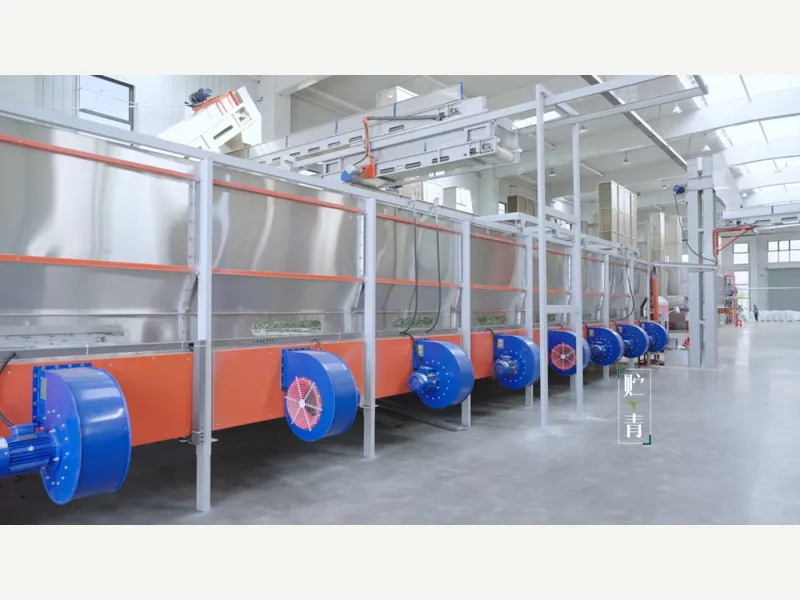
AdoroHu states that our facility has two Class-100,000 clean production workshops, milling equipment, ultrasonic screening, and Japanese flash high-temperature sterilisation capability. These statements do not establish sterility, a validated lethality program, or control of a named organism. Milling and screening mainly address physical processing; they should not be presented as microbial kill steps.
Low water activity also needs careful interpretation. It may restrict growth under defined conditions, but it can allow survival. Packaging integrity, moisture exposure, sanitation, storage, and later handling still affect risk. Shelf-life validation answers a different question from lot-release microbiology, though the evidence should inform both programs.
Key Takeaway: Review process controls and test evidence together, while keeping capability claims separate from validation and results.
What should happen after a microbiology presumptive or out-of-specification result?
A presumptive or out-of-specification result should trigger an immediate hold under predefined authority. QA should secure the affected inventory, verify sample and record identity, contact the laboratory, and decide whether confirmation or a broader investigation is required. Commercial pressure should not rewrite the rule after the result arrives.
| Result state | Immediate action | Release condition |
|---|---|---|
| Presumptive pathogen signal | Hold the linked lot and obtain the laboratory’s confirmation path | Only under the written plan after qualified review |
| Confirmed result against a release criterion | Maintain hold, investigate scope, and evaluate rejection or other lawful disposition | No release merely because a second sample differs |
| Indicator or spoilage result outside specification | Hold, check method and sample integrity, investigate process and trend | Documented resolution against predefined rules |
| Administrative mismatch | Hold until lot, method, units, report status, and authorization reconcile | Corrected, authenticated evidence and QA approval |
The investigation should cover adjacent lots, retained samples, sanitation, environmental or process records where relevant, transport, laboratory communications, and prior trends. A negative retest can add evidence, but it may also reflect heterogeneous distribution. Do not test a lot repeatedly until it appears to comply.
Key Takeaway: Hold first, investigate the full evidence chain, and release only under the rule written before the event.
How should trend data change matcha microbiological testing?
Trend data should change matcha microbiological testing when it shows shifts in counts, detections, report quality, supplier performance, or process stability. Review results by product, supplier, facility, method, season or period, and lot. Mixing unlike methods or reporting bases can create a false trend.
Useful triggers include repeated movement toward an internal alert level, a confirmed detection, changing laboratory methods, late or amended reports, complaints, moisture events, and weak corrective actions. The response may be increased testing, independent confirmation, supplier CAPA, audit, specification review, or disqualification. Stable history can support a justified frequency review, but it cannot guarantee the next lot.
For buyers comparing a B2B matcha supply option, ask to see how deviations change controls and verification. A tidy set of past COAs has limited value if no one can explain escalation and disposition.
Key Takeaway: Trend comparable data and connect each trigger to a named verification or supplier-management action.
FAQ
- Is there one universal microbiological limit for matcha?
- No. The applicable criteria depend on the destination market, product category, intended use, customer specification, method, units, and sample basis.
- Does a low total plate count prove that matcha is pathogen-free?
- No. Total plate count is an indicator result under a named method; it does not prove the absence of Salmonella or another specific pathogen.
- What does “not detected in 25 g” mean on a matcha report?
- It means the target was not detected in the tested 25 g sample under the stated method. It is sample-specific evidence, not a whole-lot guarantee.
- Can a buyer release a held lot after one negative retest?
- Only if the predefined, risk-based investigation and retest procedure supports that decision. A negative retest alone should not override a confirmed or valid out-of-specification result.
- Does an in-house microbiology laboratory prove that every matcha lot was tested?
- No. Laboratory capability does not prove that a named method was used or that a specific lot passed. Buyers need authenticated, lot-linked records.
Conclusion
A strong program turns microbiology data into controlled lot decisions before commercial pressure enters the room. Define the hazards, sampling, method, laboratory, criteria, and exception rules for the product and market, then keep every conclusion within the evidence. To discuss a risk-based specification and supporting documentation for your application, contact AdoroHu Matcha.