
Matcha oatmeal needs one defined format before buyers set texture or powder specifications. Hot-fill porridge, instant cups, and overnight oats use different oat cuts, hydration temperatures, shear, and hold times. Start with culinary matcha powder for oatmeal trials in the intended system.
Oat variation can move hydration and viscosity before matcha is introduced. Without an oat-lot control, teams may reject a powder for a change caused by beta-glucan, starch, particle size, or processing history.
Choose hot-fill, instant, or overnight oatmeal first. Then control oat lot, liquid ratio, matcha addition point, hydration, shear, viscosity, separation, color, flavor, and the real hold window.
In short: Matcha oatmeal approval begins with format-specific hydration and time-resolved texture tests.
Key points:
- Do not use one viscosity target across hot, instant, and overnight formats.
- Qualify oat raw material before assigning texture drift to matcha.
- Measure texture and color through the actual hold, not only after cooking.
Which matcha oatmeal format should be developed first?
Choose hot-fill porridge, instant cup, or overnight matcha oatmeal before setting dose and texture. Oat cut, pre-processing, hydration temperature, liquid ratio, shear, and hold time create different matrices. A target that works for an instant cup can be unsuitable for cold overnight hydration.
Define serving temperature, preparation instructions, fill or soak process, hold, and package. The commercial matcha recipe testing guide offers a broader testing framework, while this trial must use an oatmeal-specific texture target.
| Format | Main hydration condition | Primary release question |
|---|---|---|
| Hot-fill porridge | Cook and hot hold | Does viscosity remain spoonable through service? |
| Instant cup | Consumer-added hot liquid | Does rehydration reach target texture consistently? |
| Overnight oats | Cold soak | Does the product hydrate without separation or dry centers? |
Key Takeaway: Choose the commercial format before writing a viscosity specification.
How much can oat raw material change matcha oatmeal texture?
Qualify oat lots before blaming matcha for viscosity drift. The 2012 paper Hydration and Pasting Properties of Oat (Avena sativa) Flour found protein from 11.13% to 14.37%, starch from 56.37% to 64.86%, and beta-glucan from 3.44% to 4.76% across the tested oats.
These composition ranges preceded any matcha addition. Record cultivar or supplier lot, cut, particle distribution, moisture, protein, starch, and beta-glucan where relevant. Run the retained oat control with each powder trial so raw-material drift remains visible.
Key Takeaway: Treat oat identity and composition as controlled formulation inputs.
Which hydration test should matcha oatmeal use?
Measure water absorption, solubility, and time-resolved viscosity at the matcha oatmeal's actual temperature. Across cultivars in the 2012 oat-flour study, water absorption index ranged from 2.83 to 3.35 g/g and water solubility index from 8.67% to 11.08%. Daeyang measured 3.35 g/g WAI and 8.67% WSI.
These are cultivar results, not a single-oat range or finished-porridge target. Fix sample mass, liquid, temperature, mixing, rest time, and separation method. Pair hydration measures with the product's spoonability, dry-center, and separation checks.
| Measurement | Required control | Product implication |
|---|---|---|
| WAI | Sample, temperature, centrifugation method | Water uptake potential |
| WSI | Same hydration and separation method | Soluble-material release |
| Time viscosity | Geometry, shear, temperature, elapsed time | Preparation and hold behavior |
| Separation | Vessel, time, temperature | Liquid release or settling |
Key Takeaway: Preserve cultivar scope and test hydration under the product's actual preparation conditions.
Why can instant and old-fashioned matcha oatmeal need different formulas?
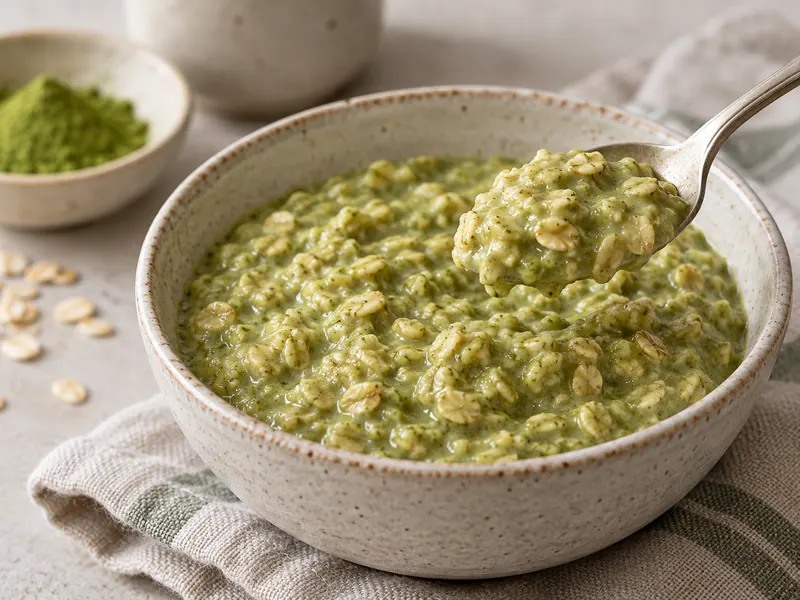
Instant and old-fashioned matcha oatmeal can need different formulas because processing changes oat structure. The 2014 paper The role of meal viscosity and oat β-glucan characteristics in human appetite control: a randomized crossover trial reported beta-glucan molecular weights of 3.89 × 10^5 Da for instant oatmeal, 3.78 × 10^5 Da for old-fashioned oatmeal, and 2.21 × 10^5 Da for ready-to-eat cereal.
The research compared defined study foods and human appetite outcomes; it does not validate a commercial matcha product or benefit claim. Use the format contrast to justify separate hydration, viscosity, and sensory trials rather than treating “oatmeal” as one interchangeable base.
Key Takeaway: Keep oat format fixed during formula comparison because processing history can dominate texture.
How should matcha oatmeal viscosity be specified?
Specify matcha oatmeal viscosity with geometry, shear rate, temperature, and elapsed time after hydration. In the 2014 crossover, initial simulated oral and gastric digestion viscosities were 7,397.17 cP for instant oatmeal, 1,063.33 cP for old-fashioned oatmeal, and 175.17 cP for ready-to-eat cereal.
Those are simulated-digestion measurements, not production porridge values and not human-benefit evidence for matcha oatmeal. Use their scale contrast only to justify format-specific testing. Establish plant and consumer targets from the intended recipe, equipment, serving temperature, and hold.
Key Takeaway: Define viscosity by method and format, and never transfer simulated-digestion values into production limits.
When should matcha enter a hot oatmeal process?
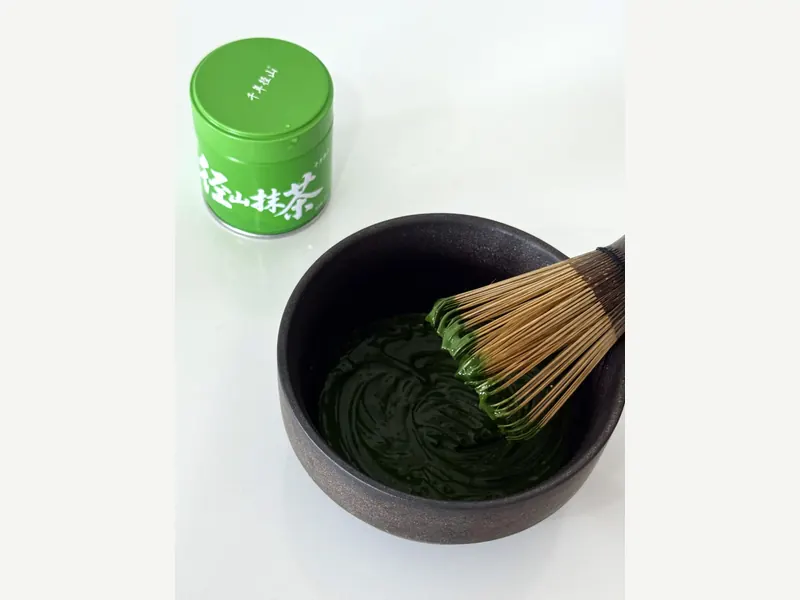
Compare dry premix, early hydration, and late addition at equal final solids. Dry premix may improve dosing consistency; early hydration increases heat exposure; late addition may preserve color but must pass dispersion and flavor-uniformity checks.
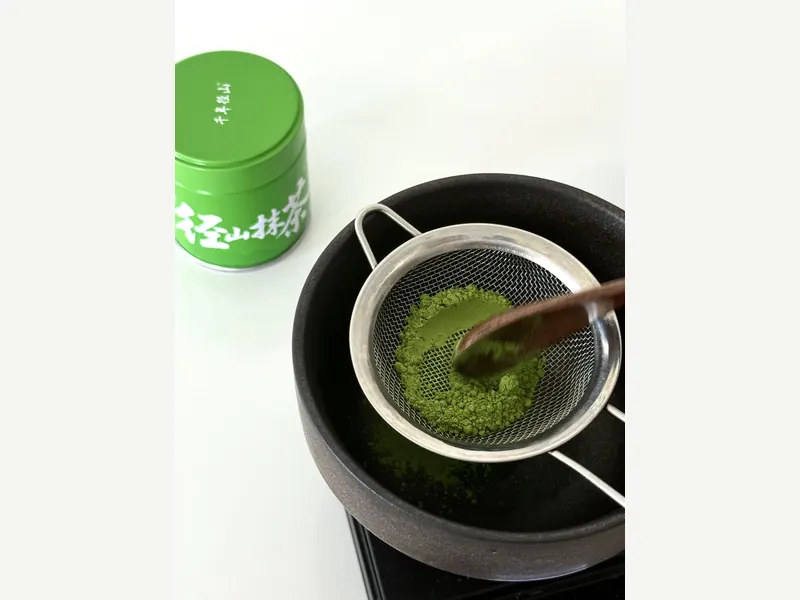
Record addition temperature, pre-dispersion liquid, shear, time before fill, and final solids. Use the how to use matcha consistently guide for general handling, then choose the addition point from the actual oatmeal.
Key Takeaway: Select addition timing through matched dispersion, color, flavor, and hold results.
How should a matcha oatmeal team handle hot-hold drift?
Measure matcha oatmeal viscosity and color at fill and through the real hot-hold window. In the 2012 oat study, beta-glucan correlated positively with water absorption, peak viscosity, and trough viscosity. This supports oat-lot control but does not predict a finished porridge curve.
Sample at fixed times and locations, recording temperature, evaporation, mixing, and covered or uncovered conditions. Reject a formula that meets texture only immediately after cooking. The matcha bakery heat and color guide provides adjacent color context without setting an oatmeal heat limit.
Key Takeaway: Approve texture and color across the actual hold window.
What belongs in a matcha oatmeal pilot-release sheet?
Record oat type and lot, particle size, liquid ratio, matcha lot and dose, addition point, hydration temperature and time, shear, hot hold or cold soak, viscosity method, separation, color, and sensory results. Include sample age and serving temperature.
AdoroHu Matcha supplies raw powder; the oatmeal manufacturer owns finished-product manufacture, safety, preparation instructions, and shelf validation. Keep the retained oat and powder controls linked to every revision.
Key Takeaway: A release sheet must connect both raw-material lots with hydration, process, hold, and finished-product results.
FAQ
- Can hot-fill, instant, and overnight matcha oatmeal share one viscosity target?
- No. Their oat processing, hydration temperature, shear, and hold conditions differ.
- Do WAI 2.83–3.35 g/g and WSI 8.67–11.08% describe one oat cultivar?
- No. They are ranges across tested cultivars; Daeyang measured 3.35 g/g WAI and 8.67% WSI.
- Are the reported 7,397.17, 1,063.33, and 175.17 cP values production porridge specifications?
- No. They were initial simulated oral and gastric digestion viscosities for three study foods.
- Do those viscosity values prove a human benefit from matcha oatmeal?
- No. They do not validate a commercial matcha product or support a matcha health claim.
- When should matcha be added to oatmeal?
- Compare dry premix, early hydration, and late addition at equal solids, then select the route through dispersion, color, flavor, and hold performance.
Conclusion
Fix the oat format, qualify the oat lot, define the hydration and viscosity methods, and test the real hold before powder approval. To arrange raw-powder samples, contact AdoroHu about raw-powder samples.
Institutional author: AdoroHu Matcha