
A matcha forecast gives your supplier advance visibility of expected consumption. In return, that visibility may improve allocation consideration, commercial terms, and planning lead times. Here’s the exchange most buyers never realise is available: your forecast is worth something to the supplier, and it can be traded.
The mechanism is straightforward once you see it from their side. A producer plans cultivation, shading, processing capacity, and allocation months before you place an order, and every customer whose demand they can predict reduces the risk they carry. Buyers who supply reliable forecasts let a supplier commit capacity confidently; buyers who don’t force the supplier to price uncertainty in. Volatile or unreliable forecasting may therefore affect pricing, minimums, or a supplier’s willingness to guarantee capacity.
This guide covers what forecast sharing buys you, how accuracy is judged, and what it costs to get it wrong, with any matcha supplier.
The information a usable forecast contains
Sharing forecasts with a matcha supplier means providing regular, structured estimates of your expected volume by grade over a defined horizon, updated on a rolling basis. It may improve how your account is considered ahead of the harvest, support discussion of minimums or pricing where the supplier can plan efficiently, and encourage earlier warning of supply constraints.
Accuracy can be tracked with measures such as MAPE (mean absolute percentage error) and forecast bias, and consistently unreliable forecasts may lead a supplier to price in more risk or become less willing to make capacity commitments. For matcha, forecasts must be submitted before the harvest allocation window, since capacity cannot be added later.
In short: reliable forecasts can support allocation discussions, MOQ flexibility, and better planning terms; unreliable ones may cause a supplier to price in more risk or avoid firm capacity commitments.
Key points:
- Your forecast has commercial value to the supplier and can be traded for terms.
- Matcha forecasts must land before harvest allocation, since capacity cannot be added later.
- Poor forecast accuracy is priced in as risk premiums, higher minimums, or no capacity guarantee.
Why do matcha suppliers value your forecast?
Suppliers value forecasts because they convert uncertain demand into plannable production, which for an annually harvested crop is worth more than it is in most categories. Here’s the asymmetry to understand: your supplier makes irreversible decisions months before you place an order.
Consider what the producer must decide in advance. How much area to shade and when, how much tencha to process, how to schedule milling capacity, and how to divide the resulting output among customers. Every one of those decisions is made before your purchase order exists. A buyer who provides a credible forward view lets the supplier plan against real demand rather than a guess, which improves their production efficiency and lowers their risk of holding unsold stock or turning away business they could have served.
Signalling upcoming capacity limitations works in the other direction too, since suppliers issue their own forward views in response, giving you early warning of constraints. The result is a converging process: both sides revise toward a workable plan through successive updates rather than negotiating from scratch each cycle. This is why forecast sharing sits naturally alongside the commitment mechanics in our guide to matcha allocation contracts.
Key Takeaway: Suppliers make irreversible decisions on shading, processing, and allocation months before your order exists, so a credible forward view lets them plan against real demand rather than guesswork, and their return signal on capacity gives you early warning of constraints.
What does forecast sharing actually buy a matcha buyer?
It may improve allocation consideration, commercial flexibility, and access to earlier planning information. Here’s the return on a genuinely modest effort: a consistent forecast shared on an agreed cadence can improve planning conversations.
Negotiate a return for better visibility
Four returns are realistic and worth negotiating for explicitly. Allocation priority: when harvest output must be divided, suppliers favour customers whose demand they planned around, so a documented forecast is evidence of exactly that. Commercial terms: stable, accurate forecasts enable firm long-term agreements, volume discounts, and capacity commitments, because the supplier’s risk is lower and some of that saving is available to you.
MOQ and scheduling flexibility: a supplier confident in your forward volume can be more accommodating on per-shipment minimums and delivery timing, since they know the annual total is coming. Early warning: in a collaborative arrangement the supplier reciprocates with visibility of capacity constraints, harvest conditions, or price movements, which gives you time to react rather than discovering a problem when you order.
The practical advice: ask for these explicitly rather than assuming goodwill, and treat the forecast as a negotiating asset in the way described in our guide to matcha wholesale negotiation.
Key Takeaway: Reliable forecasts may improve how your account is considered when harvest output is divided and support discussions of pricing, firm agreements, MOQ or scheduling flexibility, and reciprocal early warning of constraints; ask for these explicitly rather than assuming goodwill follows automatically.
When must a matcha forecast be submitted?
Forecasts must reach the supplier before harvest allocation is decided, which makes matcha forecasting deadline-driven rather than continuous. Here’s the constraint that separates matcha from most categories: a late forecast cannot be fixed by a later order.
Anchor your forecast calendar to the harvest rather than your fiscal year. In continuous-production categories, a forecast submitted late is merely less useful, since the supplier can still respond by producing more. In matcha, total availability is fixed by the harvest and divided during a defined allocation window, so a forecast arriving after that point cannot influence how much is reserved for you.
This produces a practical rule: identify the allocation window for your grades, work backwards to when the supplier needs your numbers to act on them, and set your internal forecasting deadline earlier than that. Buyers who forecast on a fiscal calendar unrelated to the agricultural one tend to submit systematically late without realising it.
The rolling element still matters within that structure: update the forecast at regular intervals through the year so the supplier sees your demand evolving, but treat the pre-allocation submission as the fixed point that determines your volume. The seasonal timing that governs this is set out in our guide to matcha lead times.
Key Takeaway: Submit forecasts before the harvest allocation window, since a late forecast cannot be corrected by a later order when total availability is already fixed; work backwards from the allocation window rather than forecasting on a fiscal calendar unconnected to the agricultural one.
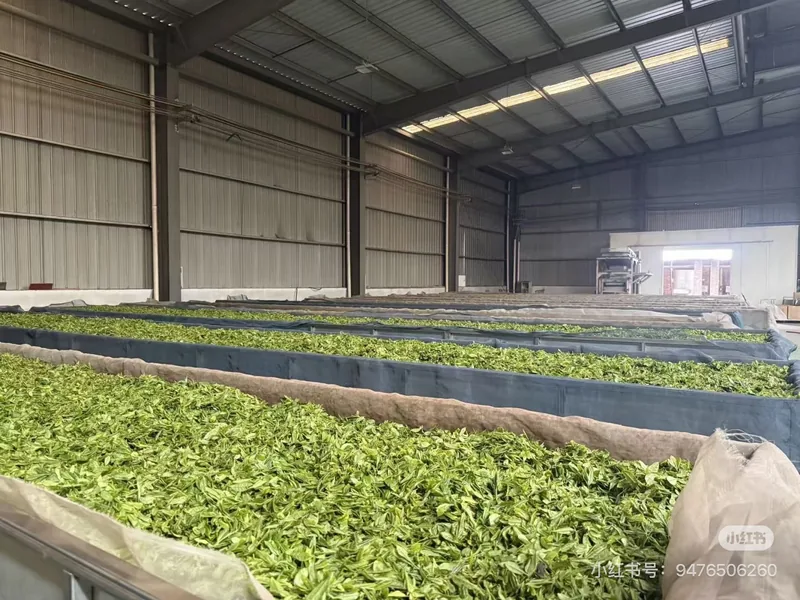
What should a matcha forecast actually contain?
A useful forecast states volume by grade over a defined horizon, with an indication of confidence. Here’s what separates a forecast a supplier can act on from a number they will discount: specificity about what, when, and how certain.
Include five elements.
- Volume by grade and format, since ceremonial and culinary tiers come from different material and cannot be substituted late.
- Timing, broken into periods, monthly or quarterly, rather than a single annual total, so the supplier can plan production and delivery scheduling.
- Confidence level, distinguishing committed base volume from probable and speculative additional demand.
- Assumptions behind the numbers, such as a new product launch, a seasonal promotion, or a customer contract in negotiation, which lets the supplier judge how firm each layer is.
- Comparison against the prior forecast, showing what changed and why, which is how trust is built over successive cycles.
The layering point deserves emphasis. A forecast that presents one number invites the supplier to guess how much of it is real, whereas one distinguishing a confident base from optimistic upside lets them plan the base firmly and treat the rest as opportunity. That structure also protects you, because it makes clear what you are and are not committing to, which matters when the forecast informs a volume commitment as described in our guide to bulk matcha buying.
Key Takeaway: State volume by grade and format, broken into monthly or quarterly periods rather than an annual total, with confidence layers separating committed base from probable and speculative demand, the assumptions behind each, and what changed since the last forecast.
How is forecast accuracy measured, and why does it matter commercially?
Accuracy is measured mainly by MAPE and by bias, and it matters because suppliers price your reliability into your terms. Here’s the commercial translation: accuracy is not an internal planning metric, it is part of your negotiating position.
Measure error and bias consistently
Two measures do most of the work. MAPE, the mean absolute percentage error, is the average percentage by which your forecast missed actual demand, so a MAPE of 15% means your forecasts were off by 15% on average, but it should be interpreted alongside bias and the limits of percentage error for low-volume periods.
Forecast bias identifies whether you systematically over-forecast or under-forecast, which matters distinctly from raw error size: a buyer who consistently over-forecasts trains their supplier to discount their numbers, while one who consistently under-forecasts finds themselves short at peak. The consequences of poor accuracy are concrete. High error requires more safety stock, raising carrying costs and, for matcha, freshness risk. It produces erratic ordering, expediting costs, and stockout exposure.
And on the supply side it may lead a supplier to add a risk premium, impose different minimums, or decline a capacity guarantee. Tracking your own accuracy also gives you something useful at review meetings, alongside the supplier-side measures in our guide to matcha supplier KPIs.
The ISO 9001 Auditing Practices Group guidance on external providers highlights defined purchasing criteria, performance monitoring, and verification of specified requirements. Buyers can apply that control logic to forecast definitions and supplier-performance review.
Key Takeaway: Track MAPE (average percentage error) and bias (systematic over or under-forecasting); poor accuracy raises your safety stock and carrying costs, and on the supply side it may result in risk premiums, higher minimums, or less willingness to guarantee capacity.
How often should you update a matcha forecast?
Update on a regular rolling cycle suited to your sales and the supplier’s planning calendar; quarterly is one possible cadence, with a firmer pre-harvest submission. Here’s the balance to strike: frequent enough that the supplier sees change early, structured enough that they can distinguish signal from noise.
Design the rhythm around three tiers. For example, a rolling forecast updated quarterly and covering the next twelve months, keeps the supplier current as your demand evolves, and each update should incorporate what you learned from their previous response rather than being generated in isolation. A firmer pre-harvest submission, timed ahead of the allocation window, is the one that determines your reserved volume for the coming cycle.
And exception updates, issued whenever something material changes, a large new customer, a discontinued product, an unexpected demand shift, since waiting for the next scheduled cycle wastes the supplier’s ability to respond. The discipline that makes this work is consistency: a forecast supplied reliably on the agreed cadence, even when little has changed, is more valuable than a detailed one supplied sporadically, because it establishes a pattern the supplier can plan against. This same rhythm supports the replenishment planning covered in our guide to matcha reorder management.
Key Takeaway: Choose a rolling forecast cadence suited to your business and the supplier calendar (quarterly over twelve months is one example), add a firmer submission before the harvest allocation window, and send exception updates whenever something material changes; consistency matters more than detail, since a reliable rhythm establishes a pattern the supplier can plan against.
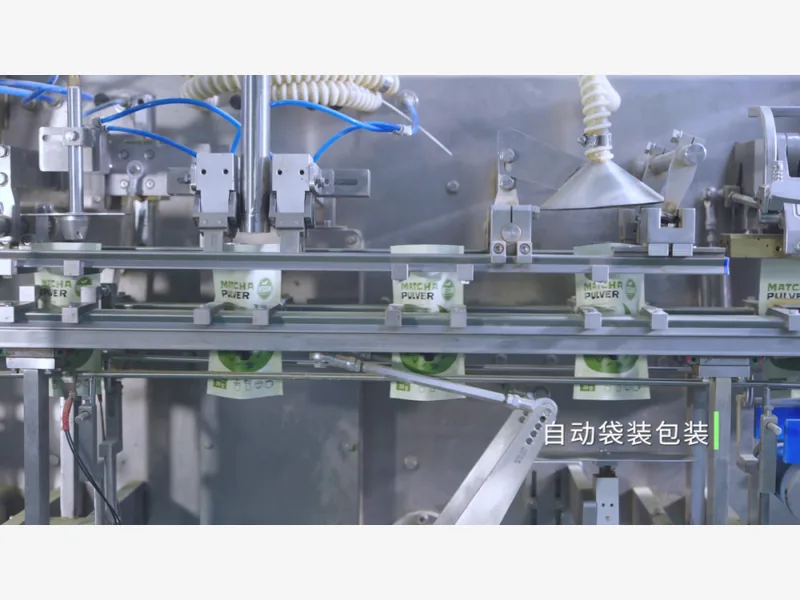
What are the risks of sharing forecasts with a matcha supplier?
The main risks are commercial transparency and the consequences of being held to numbers you cannot deliver. Here’s the trade-off to manage: the information that makes you valuable to a supplier also reduces your information advantage.
Limit commercial exposure and reliance
Three risks are worth managing rather than avoiding. Commercial exposure: your volumes, seasonality, growth trajectory, and grade mix reveal a good deal about your business, including to a supplier who also serves your competitors, so agree confidentiality terms and consider what level of granularity is genuinely necessary. Commitment creep: a forecast is not an order, but suppliers may treat it as one, so state explicitly what is a forecast and what is a commitment, and confirm that in writing.
Over-forecasting: inflating numbers to secure allocation or better pricing works once and then damages your credibility permanently, since a supplier who plans production around volume you never take will price that risk into every subsequent quote. The related discipline: keep your forecast honest even when honesty is inconvenient, because the value of the whole exercise rests on the supplier believing your numbers.
Where forecasts feed into binding volume terms, the distinction between forecast and commitment should be written into the agreement, as covered in our guide to matcha supply contracts.
Key Takeaway: Manage commercial exposure with confidentiality terms and appropriate granularity, state explicitly in writing what is forecast versus commitment, and never inflate numbers, since a supplier who plans around volume you never take prices that risk into every future quote.
How does forecast sharing relate to vendor-managed inventory?
Forecast sharing is the foundation VMI depends on, and it delivers much of the benefit without the complexity. Here’s the sequencing that matters: a supplier who cannot use your forecast well is not ready to manage your inventory.
The relationship is one of degree. Forecast sharing gives the supplier visibility while you retain all decisions about what and when to order. Collaborative planning adds a joint review where you agree the plan together but you still place the orders. Vendor-managed inventory transfers the replenishment decision to the supplier, operating on the same data but with authority attached.
The practical implication for most matcha buyers: forecast sharing captures the majority of the benefit, better allocation, better terms, better supplier planning, at a fraction of the operational cost, and it serves as a proving ground. If a supplier handles your forecast well, responds with useful capacity signals, and plans accurately against it, they may be a candidate for a deeper arrangement later.
If they do not use the data well, that is valuable information before you consider transferring decisions to them, a judgement examined in our guide to vendor-managed inventory for matcha. The same logic extends to complementary lines such as hojicha powder, where forecast visibility helps even at modest volumes.
Key Takeaway: Forecast sharing gives visibility while you keep all decisions, collaborative planning adds joint review, and VMI transfers the decision itself; forecast sharing captures most of the benefit at far lower cost and serves as a proving ground for whether a supplier uses your data well enough to be trusted with more.
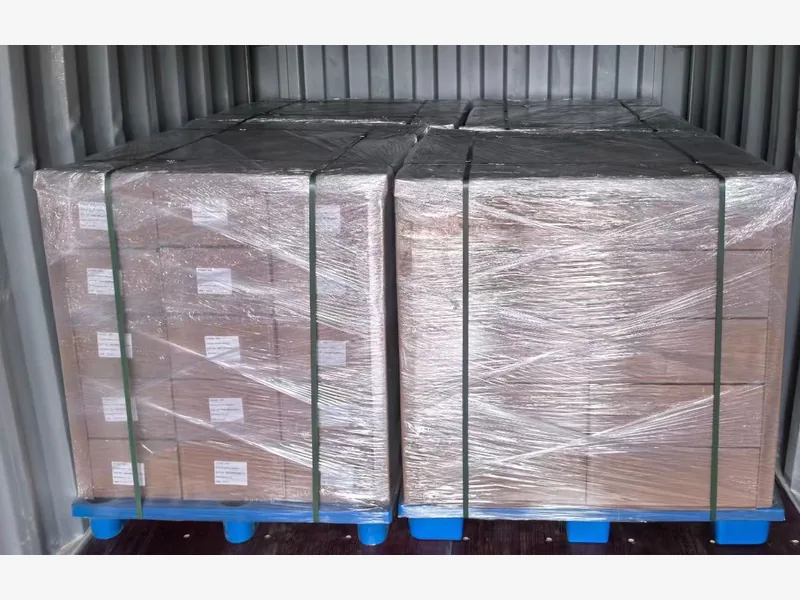
FAQ
What does sharing forecasts with a matcha supplier achieve?
It may improve how your account is considered when harvest output is divided, support discussion of commercial terms, minimum order quantities, and delivery scheduling, and encourage reciprocal early warning of capacity constraints or price movements. Suppliers value forecasts because they must plan cultivation, processing, and allocation months before your order exists.
When should you send a matcha forecast?
Before the harvest allocation window for your grades, since total availability is fixed by the harvest and cannot be increased afterwards. Work backwards from that window to when the supplier needs your numbers to act on them, and set your internal deadline earlier still. Then update on an agreed rolling basis through the year (quarterly is one possible cadence), with exception updates whenever something material changes.
How accurate does a matcha forecast need to be?
Accuracy can be tracked with measures such as MAPE, the average percentage error, and forecast bias, which shows systematic over- or under-forecasting. There is no universal target. Volatile or unreliable forecasts may cause a supplier to price in more risk, change minimums, or avoid firm capacity commitments, while consistent accuracy can support better planning discussions.
Is a forecast the same as a commitment to buy?
No, but the distinction must be stated explicitly, because suppliers may treat a forecast as firmer than you intend. Structure your forecast in confidence layers, separating committed base volume from probable and speculative demand, and confirm in writing which figures constitute a commitment. Where forecasts feed into binding volume terms, that boundary belongs in the supply agreement.
Should you share forecasts if the supplier also serves competitors?
Usually yes, but with managed granularity and confidentiality terms. Your volumes, seasonality, and grade mix reveal commercially useful information, so agree how the data may be used and consider whether the supplier needs product-level detail or only aggregate volume by grade. Whether the planning benefit outweighs the exposure depends on the data requested, the relationship, and the agreed confidentiality protections.
Conclusion
Sharing forecasts with a matcha supplier is one of the few things a buyer can do that costs almost nothing and changes their commercial standing, because it converts the supplier’s largest uncertainty, how much demand to plan for, into something they can act on.
The decisive takeaway is that matcha makes forecast timing binding rather than merely helpful: since the harvest fixes total availability and allocation is decided in a defined window, a forecast that arrives afterwards cannot influence what is reserved for you, however accurate it turns out to be. Honest numbers, submitted on a reliable rhythm ahead of that window, can influence planning and allocation consideration in a way that a late negotiation cannot recreate.
To discuss forward planning and allocation for your grades and volumes, contact AdoroHu Matcha to request samples and a wholesale quote.