
A matcha RFQ (request for quotation) is the document you send to shortlisted suppliers specifying exactly what you need, so the quotes that come back can be compared against each other rather than guessed at. Here’s the failure that wastes weeks of sourcing time: send a vague enquiry asking for “matcha prices” and you will receive four quotes for four different products, priced on four different bases, none of which can be meaningfully compared.
That non-comparability is the real cost. One supplier quotes ex-works, another includes freight, so the cheaper number is actually more expensive. One quotes a grade that meets your colour requirement and another quotes one that does not, but both are labelled “premium.” One assumes 25 kg cartons and another assumes retail pouches, producing a price gap that reflects packaging rather than tea. A properly written RFQ eliminates all three problems before they start, and it takes about an hour to build once. This guide covers how, whichever matcha supplier you are approaching.
The inputs suppliers need for comparable quotes
A matcha RFQ should specify: the product by measurable parameters rather than grade name alone (particle size, colour target, moisture, L-theanine where relevant, certification required); quantity and the period it covers; packaging format and pack size; destination market and port; the Incoterm you want quoted; required payment terms; delivery timing including whether it falls in peak season; documentation to be included, such as a batch COA; and a standardised pricing table that every supplier must complete.
Invite a manageable number of pre-qualified suppliers, give a realistic response window, and state the deadline, format, and contact point.
In short: specify measurable parameters, packaging, Incoterm, destination, and timing, then require every supplier to answer on the same standardised pricing table.
Key points:
- An RFQ normally requests offers; its legal effect depends on its wording, the parties’ conduct, and the governing law.
- Quote comparability depends on the Incoterm and packaging being fixed by you, not the supplier.
- Invite a manageable number of pre-qualified suppliers: fewer limits options, more creates unmanageable admin.
What is an RFQ and when should you use one for matcha?
An RFQ is a formal request for pricing against defined requirements, used when you already know what you need. Here’s the distinction that determines whether you should be sending one at all: an RFQ asks “what will this cost?”, not “what can you offer?”
Use the right instrument for the stage you are at. An RFI (request for information) gathers general capability information when you are still mapping the market. An RFP (request for proposal) invites suppliers to propose solutions when the requirement is complex or open-ended. An RFQ is for standardised, well-defined purchases where price and terms are the decision variables, which is exactly the situation once you know your grade, volume, and packaging.
This matters for matcha because sending an RFQ too early, before you have defined the specification, produces quotes that cannot be compared and wastes the goodwill of good suppliers. One further point worth knowing: an RFQ normally requests offers rather than settling every contract term; its legal effect depends on its wording, later documents, the parties’ conduct, and the governing law, which is covered in our guide to matcha purchase orders.
Key Takeaway: Use an RFI to map the market, an RFP for complex open-ended requirements, and an RFQ once your grade, volume, and packaging are defined and price is the decision variable; the RFQ should be treated as a commercial request whose legal effect must be checked against the later documents and governing law. Consult qualified counsel on contract formation in the governing jurisdiction.
How should a matcha RFQ describe the product?
Describe the product by measurable parameters, because grade names alone produce incomparable quotes. Here’s the root cause of most matcha price confusion: “premium grade” means different things to different producers, so four suppliers quoting “premium” may be quoting four different products.
Give suppliers enough detail to price accurately.
- Application: state what the matcha is for, latte, baking, RTD, or direct drinking, since this determines which grade is appropriate.
- Measurable targets: particle size, colour target (a CIELAB a* value or an agreed visual standard), moisture maximum, and L-theanine minimum where flavour profile matters.
- Certification required: organic under which scheme, plus any other certification your market or customer demands.
- Origin requirement, if you have one.
- Reference sample: if you have an approved sample, say so and offer to send it, since matching a physical reference is more precise than any written description.
The principle that drives quote quality: the more detailed the specification, the more accurate and comparable the quotes. This is also why the specification should exist before the RFQ goes out, as set out in our guide to matcha spec sheets. A supplier quoting against measurable parameters is committing to something; a supplier quoting against a grade name is committing to a word.
Key Takeaway: Specify application, measurable targets (particle size, colour value, moisture maximum, L-theanine minimum), required certification, and a reference sample where you have one; grade names alone produce four quotes for four different products, since “premium” has no shared definition.
What commercial terms must the RFQ fix for quotes to be comparable?
Fix the Incoterm, packaging, and destination yourself, because leaving these to the supplier makes comparison impossible. Here’s the mismatch that ruins most quote comparisons: one supplier includes shipping while another quotes ex-factory, so the lower number is not the lower cost.
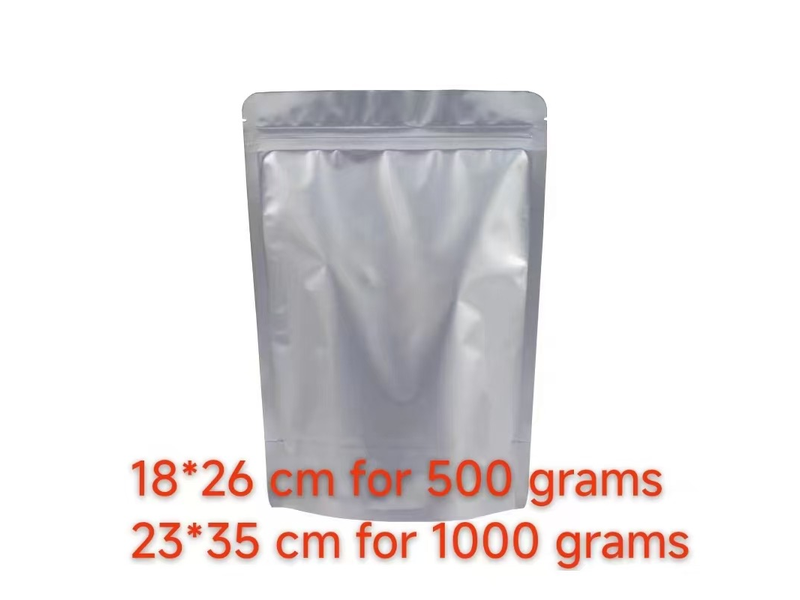
Specify these commercial variables explicitly. The Incoterm and named place, such as FOB Ningbo or CIF Rotterdam, so every quote covers the same scope of cost and risk; the implications of each are covered in our guide to matcha Incoterms. Packaging format and pack size, since bulk cartons and retail pouches carry very different costs, and a quote silently assuming a different format is not comparable. Destination market and port, which affects freight, documentation, and applicable residue limits.
Payment terms you expect, so suppliers price the financing cost consistently rather than one quoting on prepayment and another on a deposit structure, as discussed in our guide to matcha payment terms. And currency. The judgment: every variable you leave open is a variable each supplier will resolve differently, and each difference destroys a little more of your ability to compare.
Key Takeaway: Fix the Incoterm with named place, packaging format and pack size, destination market and port, expected payment terms, and currency; every commercial variable you leave open will be resolved differently by each supplier, making the quotes non-comparable.
How should the RFQ handle quantity and volume tiers?
State the quantity you actually intend to buy and request pricing at defined volume tiers. Here’s the practice that produces useful pricing without inflating your requirement: ask for a tier table rather than a single number.
Structure quantity in three parts. Your realistic initial order, which is what you will actually purchase first. Your expected annual or seasonal volume, which lets suppliers price with the relationship in mind rather than treating you as a one-off. And a requested tier table, asking for price per kilogram at several volume breaks, which shows you where the economics change and gives you a factual basis for later negotiation.
Also state your requirement around minimum order quantities, and ask suppliers to state theirs by packaging format, since minimums often differ between bulk and retail packs, a point explored in our matcha MOQ guide. The caution worth heeding: do not inflate your stated volume to attract better pricing, because suppliers who quote on a volume you never place will either withdraw the price or lose trust in your forecasts, and both outcomes cost more than the discount was worth.
Key Takeaway: State your realistic initial order, your expected annual volume, and request a price tier table across volume breaks; ask suppliers to state minimums by packaging format, and never inflate stated volume, since a price quoted on volume you never place will be withdrawn or damage trust.
What timing and delivery information belongs in a matcha RFQ?
Include your required delivery window and state whether it falls in peak season, because matcha lead times are seasonal. Here’s the information gap that produces unrealistic quotes: a supplier quoting a standard lead time without knowing your date may be quoting something they cannot deliver when you need it.
Give three timing details. Your required delivery or arrival window, stated as a date range rather than “as soon as possible.” Whether this is a one-off or a recurring requirement, and if recurring, the frequency, since a supplier can plan production capacity for a repeating order. And your flexibility, if any, on splitting deliveries, since staggered instalments may unlock better pricing while keeping the product fresher.
Ask suppliers to quote their lead time explicitly and to state separately what it becomes during first-harvest peak, because the difference between regular and peak-season lead times is substantial and a single blended figure hides it, as set out in our guide to matcha lead times. The practical benefit: a supplier who answers this question precisely is demonstrating that they plan production rather than react to orders.
Key Takeaway: State a delivery date range rather than “as soon as possible”, say whether the requirement is one-off or recurring, and ask suppliers to quote regular-season and peak-season lead times separately, since a blended figure hides the difference that matters most.
What documentation should the RFQ ask suppliers to include?
Ask suppliers to confirm which documents come with each shipment and whether any carry an extra charge. Here’s the cost that surfaces later if you do not ask now: testing and certification are real expenses, and a low quote may simply exclude them.
Request confirmation on four points. Standard documentation included per shipment, specifically whether a batch-specific COA from an accredited third-party laboratory is provided as standard, since this is fundamental to acceptance and is explained in our guide to reading a matcha COA. Certification documents, including whether per-lot organic transaction certificates are issued. Testing scope, which parameters are tested as standard and which are available on request, and at what cost, since a broad pesticide screen against your destination market’s limits is more expensive than a narrow default panel.
And sample provision, whether samples are free or chargeable and whether the cost is credited against a first order. The judgment worth applying: two quotes differing by a modest amount per kilogram may be identical once one includes full third-party testing and the other does not, so ask for the documentation position in the RFQ rather than discovering it afterwards.
For U.S.-bound orders, use the FDA guidance on importing human foods as an initial documentation checklist, then confirm the requirements for the product and shipment with the responsible parties.
Key Takeaway: Ask which documents are standard per shipment, especially a third-party batch COA and per-lot organic transaction certificates, which test parameters are included versus chargeable, and the sample policy; a cheaper quote excluding full testing may cost more than a dearer one that includes it.
How many suppliers should receive your matcha RFQ?
Send the RFQ to a manageable number of pre-qualified suppliers, enough for genuine competition without creating unmanageable administration. Here’s the balance point: too few limits your options and weakens your position, while too many generates more evaluation work than the exercise is worth.
Build the list before writing the RFQ. Pre-qualify candidates so you are quoting genuine possibilities rather than anyone with a website, checking basic criteria such as legal registration, manufacturing rather than trading status, relevant certifications, and export experience to your market, as covered in our matcha supplier checklist. Give a realistic response window: short deadlines produce rushed, inaccurate quotes and cause the better suppliers to opt out entirely, which is precisely the opposite of what you want.
Be transparent that you are running a competitive process, since suppliers price differently when they know they are being compared. And state submission requirements clearly: deadline, format, where to send it, and who to contact with questions. The point about response time deserves emphasis, because a supplier who asks clarifying questions before quoting is usually the one who will quote accurately.
Key Takeaway: Send to a manageable number of pre-qualified suppliers, checking registration, manufacturing status, certification, and export experience first; give a realistic response window, since short deadlines produce rushed quotes and cause the best suppliers to opt out entirely.
How do you structure the pricing table for comparable quotes?
Provide a standardised pricing table that every supplier must complete, rather than accepting free-format quotes. Here’s the mechanism that makes comparison possible: if you set the format, every response arrives in the same shape.
Build the table with a row per line item and columns for the elements you need to compare: unit price per kilogram at each volume tier, packaging cost if separate, any testing or documentation charges, freight if the Incoterm includes it, and total landed value under the stated Incoterm. Ask for itemised rather than bundled pricing, since a single all-in number hides where the cost sits and gives you nothing to negotiate against.
Add fields for the commercial terms you need to compare alongside price: lead time in regular season, lead time in peak season, minimum order quantity, payment terms offered, and validity period of the quote. The additional benefit: a standardised table exposes suppliers who cannot or will not break down their costs, which is itself informative. Understanding what genuinely drives cost makes evaluating these responses far more productive, which is the purpose of our breakdown of matcha pricing factors.
Key Takeaway: Supply a standardised table every supplier must complete, with itemised unit price by volume tier, packaging, testing and documentation charges, freight, and total landed value, plus fields for both lead times, MOQ, payment terms and quote validity; itemisation gives you something to negotiate against.
What mistakes make matcha RFQs produce unusable quotes?
The most damaging mistake is leaving commercial variables open so each supplier fills them differently. Here’s the pattern: every unspecified element becomes a difference that has nothing to do with the supplier’s actual competitiveness.
Watch for these errors and their effects.
- Requesting a price with no specification, receiving quotes for different products.
- Not fixing the Incoterm, so quotes cover different cost scopes and cannot be compared.
- Omitting packaging format, producing price differences driven by packing rather than tea.
- Allowing free-format responses, forcing you to reconstruct comparability manually.
- Setting a very short deadline, generating rushed quotes and losing the better suppliers.
- Inflating stated volumes, which produces prices that will not survive your real order.
- Failing to ask about documentation and testing scope, so cheap quotes hide excluded costs.
- Sending an RFQ before the specification exists, which is an RFI dressed as an RFQ.
Each is fixed at the drafting stage in a single line. The same structure works for complementary lines such as hojicha powder, and a reusable RFQ template with these fields built in removes the risk of omitting one under time pressure.
Key Takeaway: Avoid quoting without a specification, leaving the Incoterm or packaging open, allowing free-format responses, setting short deadlines, inflating volumes, and omitting documentation scope; every unspecified element creates a price difference unrelated to actual competitiveness.
FAQ
- What should a matcha RFQ include?
- Product description by measurable parameters rather than grade name alone, required certification, quantity with volume tiers, packaging format and pack size, destination market and port, the Incoterm you want quoted, expected payment terms, delivery window including whether it falls in peak season, documentation and testing requirements, and a standardised pricing table. Add submission instructions covering deadline, format, and contact point.
- Is a matcha RFQ legally binding?
- Not necessarily by itself. An RFQ usually invites suppliers to quote, but its legal effect depends on its wording, later documents, the parties’ conduct, and the governing law. Have counsel review the transaction form used for the relevant market.
- How many suppliers should I send a matcha RFQ to?
- Choose enough pre-qualified suppliers to create a meaningful comparison while keeping the evaluation manageable; the right number depends on market depth, team capacity, and sourcing risk. Pre-qualify on legal registration, manufacturing versus trading status, relevant certifications, and export experience to your market before sending.
- Why do matcha quotes come back non-comparable?
- Usually because commercial variables were left open. One supplier quotes ex-works while another includes freight; one assumes bulk cartons and another retail pouches; one quotes a grade meeting your colour requirement and another does not, though both are called “premium.” Fixing the Incoterm, packaging, specification, and destination in the RFQ removes all of these differences.
- What is the difference between an RFQ, an RFI, and an RFP?
- An RFI gathers general capability and market information when you are still exploring. An RFP invites suppliers to propose solutions to a complex or open-ended requirement. An RFQ requests pricing against clearly defined requirements, and suits standardised purchases where price and terms are the deciding factors, which is the situation once your grade, volume, and packaging are settled.
Conclusion
A matcha RFQ produces useful results when it removes every variable that could differ between responses: a specification with measurable parameters instead of a grade name, a fixed Incoterm and named place, a defined packaging format, a stated destination, explicit documentation requirements, and a standardised pricing table each supplier must complete.
The decisive takeaway is that comparability is entirely within your control, since every element you leave open will be resolved differently by each supplier and will show up as a price difference that has nothing to do with which one is actually the better partner. To receive a quotation against your specification, volume tiers, and destination market, contact AdoroHu Matcha with your requirements and request samples.